Artwork
Bernhard of Anhalt, Duke of Saxony, son of Albrecht the Bear, died 1212
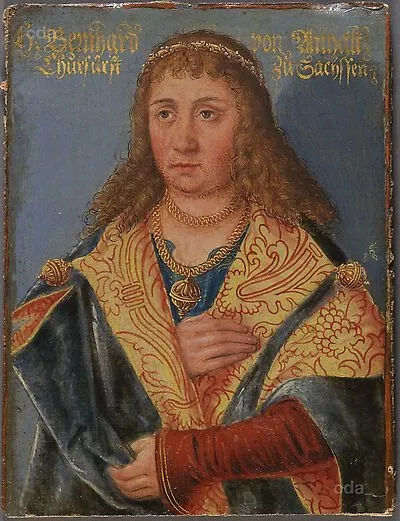
Bernhard of Anhalt, Duke of Saxony, son of Albrecht the Bear, died 1212 is an unspecified painting by the Northern Renaissance artist Lucas Cranach the Younger. It is held in the collection of the Kunsthistorisches Museum.
About this work
Overview
The work belongs to the Kunsthistorisches Museum’s collection in Vienna, where it serves as a historical record of dynastic identity.
Painted in 1590 by Lucas Cranach the Younger, this portrait depicts Bernhard of Anhalt, a 13th-century nobleman who died in 1212. Though Bernhard lived centuries earlier, Cranach rendered him in the style of late Renaissance portraiture, reflecting a period when noble lineages were visually reinforced through imagery. The work belongs to the Kunsthistorisches Museum’s collection in Vienna, where it serves as a historical record of dynastic identity.
Subject & Meaning
Bernhard of Anhalt, son of Albrecht the Bear and Duke of Saxony, was a key figure in the expansion of Ascanian power. The portrait, created long after his death, functions as a symbolic representation of ancestral legitimacy rather than a likeness. His regal attire and solemn expression emphasize his status and the enduring prestige of his lineage, aligning with the political needs of Cranach’s patrons to assert noble continuity.
Technique & Style
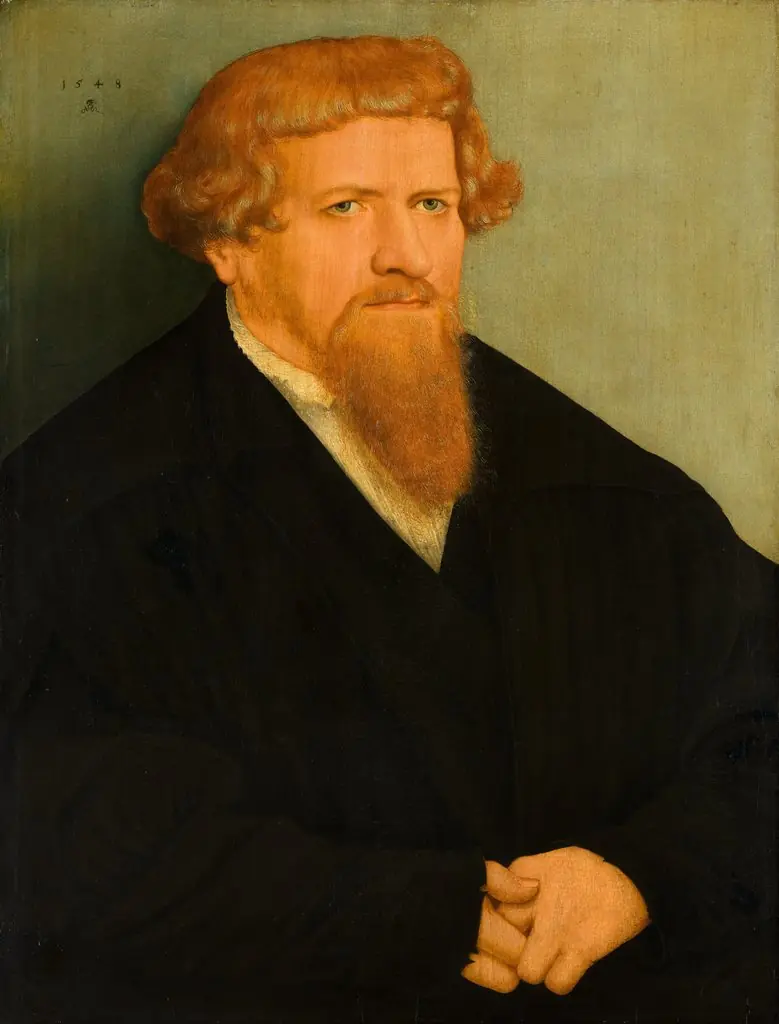
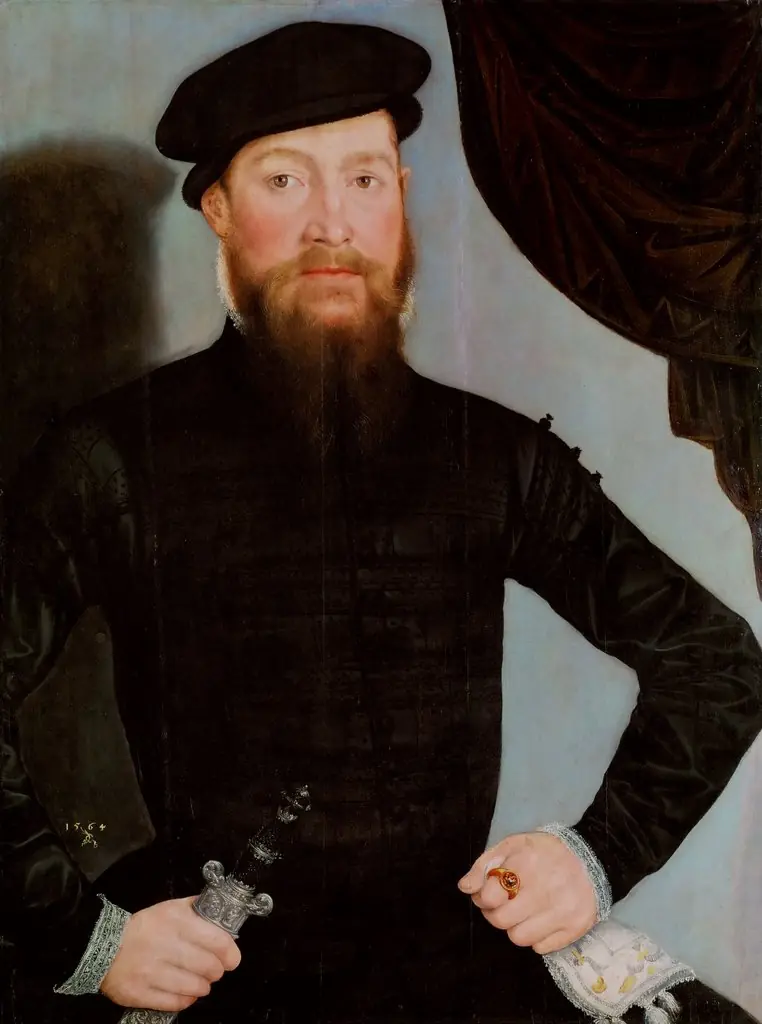
Cranach the Younger employed precise brushwork to render the textures of fur, gold embroidery, and silk, characteristic of his workshop’s attention to material detail. The dark blue background isolates the figure, focusing attention on his elaborate costume and composed posture. The facial rendering is restrained, avoiding idealization, while the inscription above confirms identity—typical of Cranach’s method of combining realism with heraldic clarity.
History & Provenance
Commissioned in the late 16th century, the portrait likely originated as part of a series documenting Ascanian ancestors for a ruling family seeking to legitimize their authority. It entered the Habsburg collections before being transferred to the Kunsthistorisches Museum. Its survival reflects the continued interest in dynastic imagery during the Reformation era, when visual genealogies served political and religious agendas.
Context
In late 16th-century Germany, portraits of medieval ancestors were frequently commissioned to reinforce territorial claims and noble heritage. Cranach’s studio, long associated with Protestant elites, produced such images to connect contemporary rulers with revered forebears. Bernhard’s depiction, though anachronistic, aligns with this trend, merging historical memory with contemporary artistic conventions of dignity and authority.
Legacy
The portrait remains a documented example of how Renaissance artists reimagined medieval figures to serve early modern political narratives. While not a contemporary likeness, it preserves the visual language of nobility and the Cranach workshop’s role in shaping dynastic iconography. Its presence in a major European museum underscores its value as a cultural artifact of identity construction.
Artist & collection
Artist
Lucas Cranach the Younger (German: Lucas Cranach der Jüngere, IPA: ; 4 October 1515 – 25 January 1586) was a German Renaissance painter and portraitist, the son of Lucas Cranach the Elder and brother of Hans Cranach.

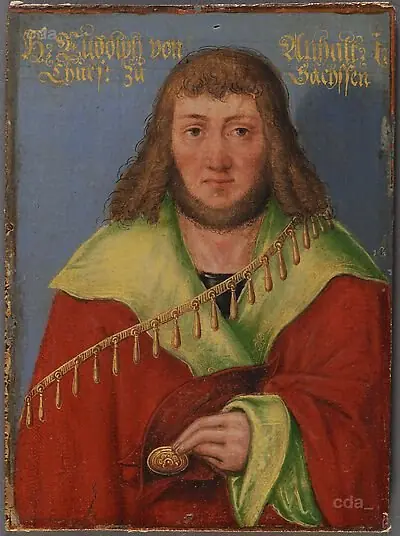 Rudolf I., Duke, son of Albrechts II., died 1356
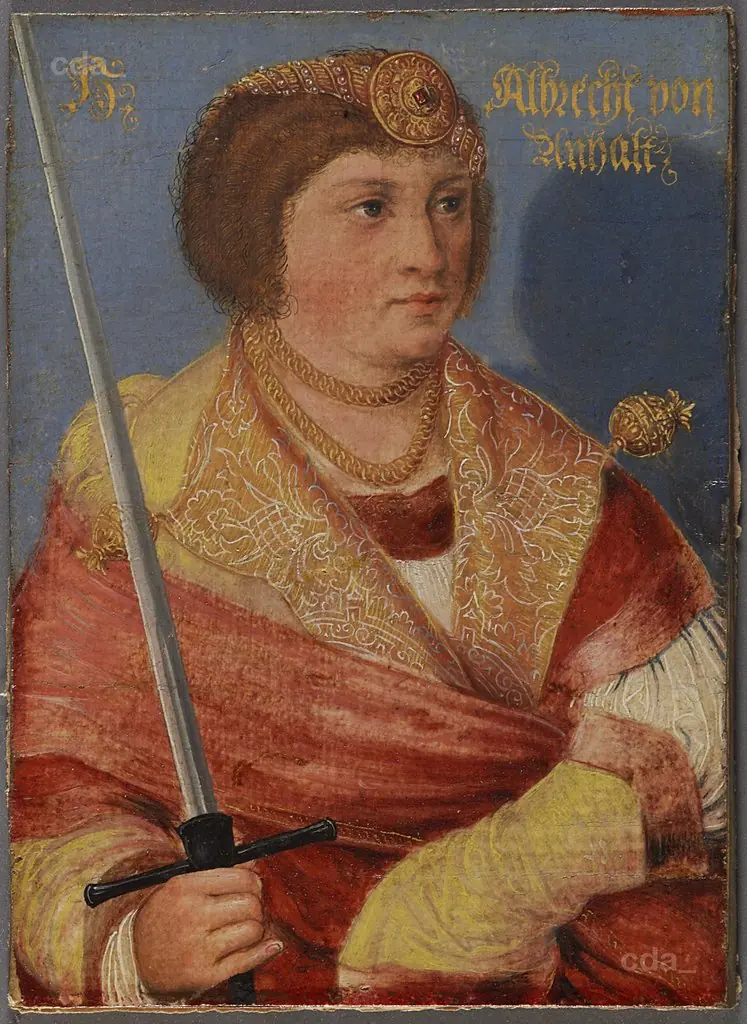 Albrecht III., Elector, son of Wenzeslaus, died 1422
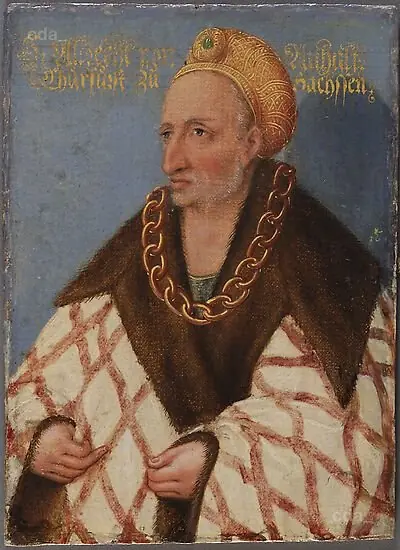 Albrecht I., Duke, son of Bernhard, died 1261
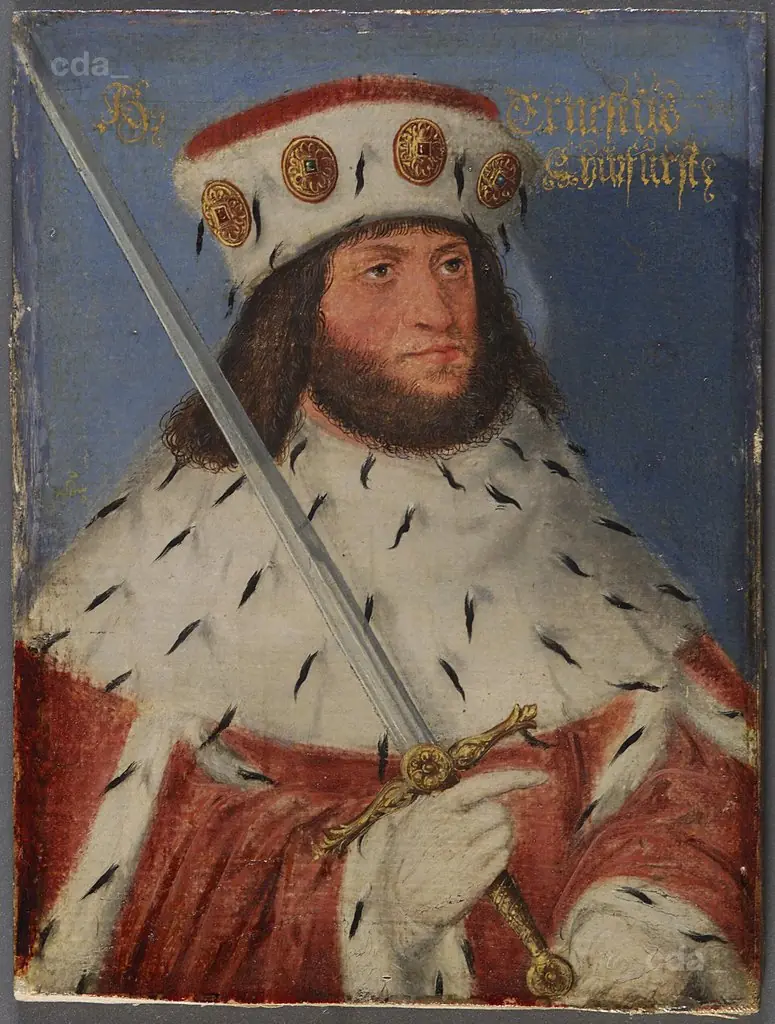 Ernst, son of Friedrich II., died 1486
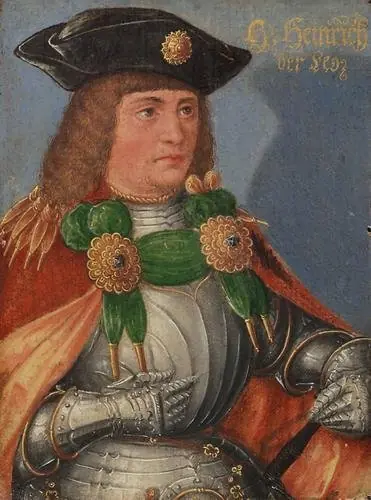 Heinrich the Lion, Duke, grandson of Heinrich the Black, died 1195
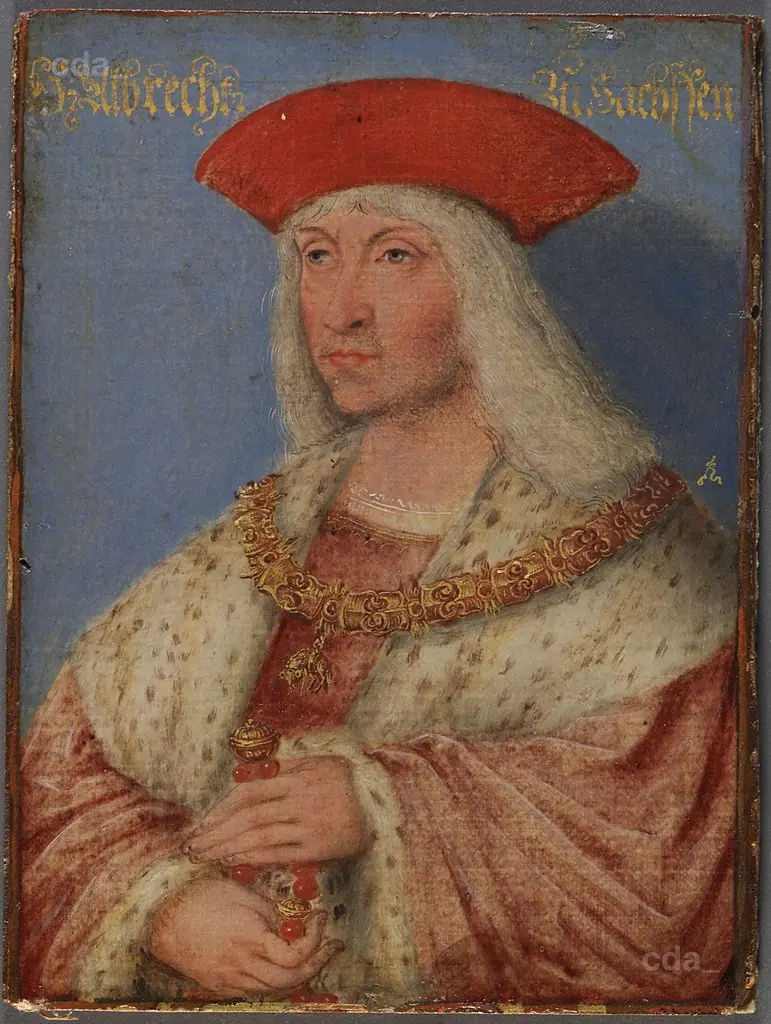 Albrecht the Bold, son of Friedrich II., died 1500
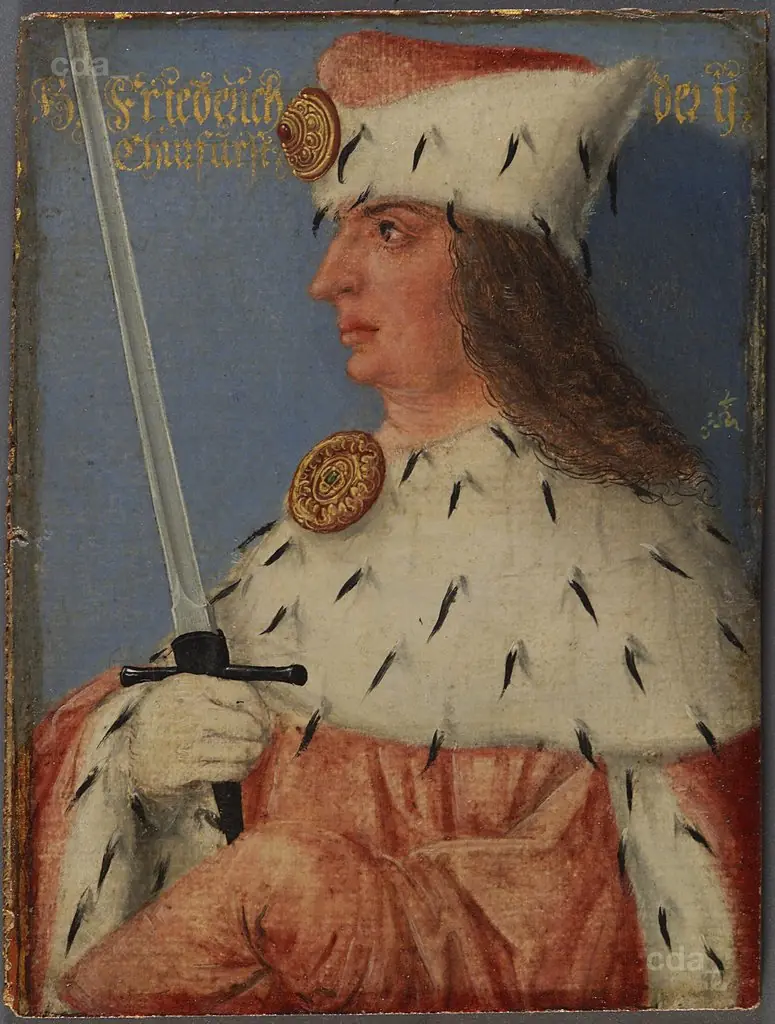 Friedrich II. the Gentle, son of Friedrich I., died 1464