Artwork
The Stag Hunt of the Elector Johann Friedrich of Saxony, or Frederic the Wise
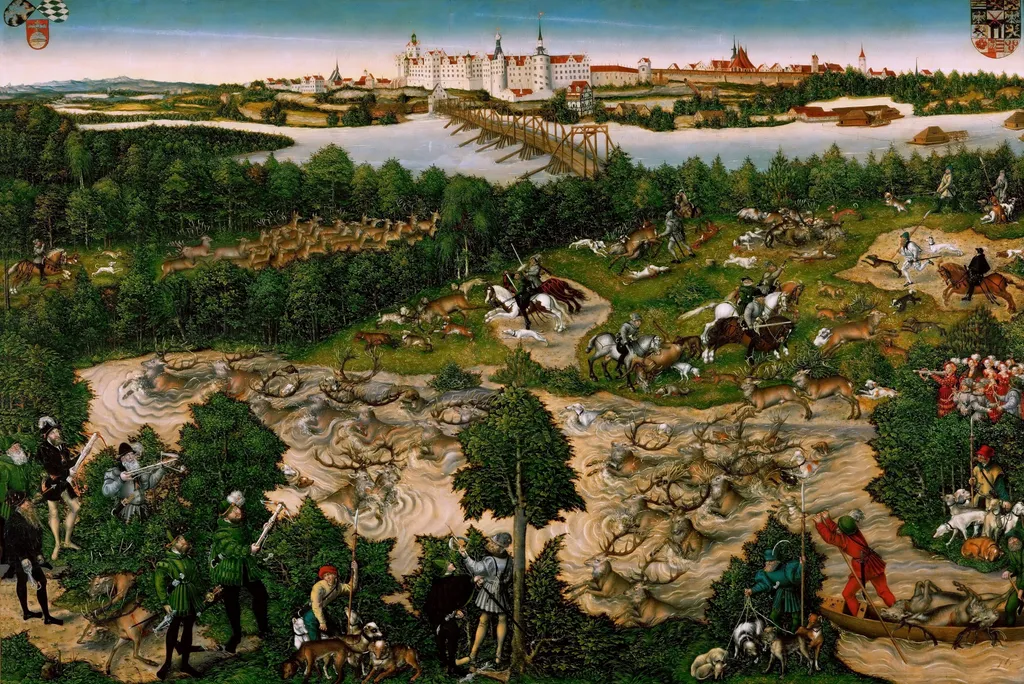
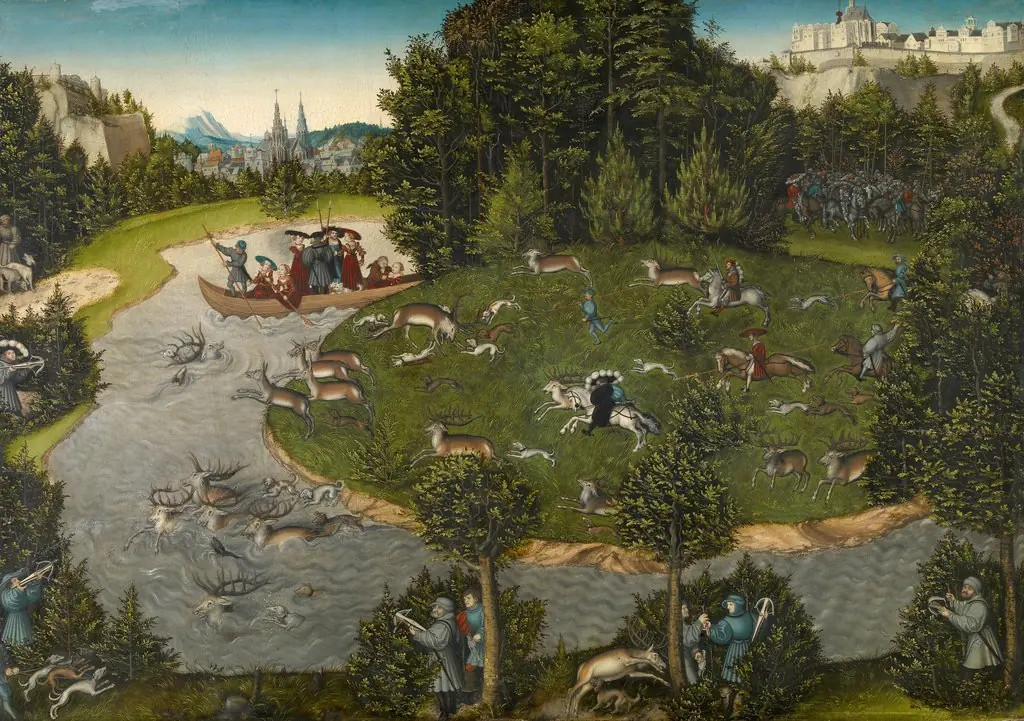
The Stag Hunt of the Elector Johann Friedrich of Saxony, or Frederic the Wise is an oil painting by the Northern Renaissance artist Lucas Cranach the Younger. It dates from 1544 and is held in the collection of the Kunsthistorisches Museum.
About this work
Overview
Painted in 1544 by Lucas Cranach the Younger, this oil-on-panel work captures a hunting expedition organized by Johann Friedrich I, Elector of Saxony.
Painted in 1544 by Lucas Cranach the Younger, this oil-on-panel work captures a hunting expedition organized by Johann Friedrich I, Elector of Saxony. Set in the landscape near Torgau, the scene reflects the aristocratic pastimes of the German Protestant elite during the Reformation era. The painting is part of the Kunsthistorisches Museum’s collection in Vienna, where it remains a key example of Northern Renaissance courtly imagery.
Subject & Meaning
The painting portrays a formal stag hunt, a ritualized activity symbolizing noble power and control over nature. The presence of the Elector and his retinue underscores political authority, while the slain deer signify the success of the hunt as both sport and status display. The inclusion of Torgau’s castle in the distance ties the event to a specific seat of power, reinforcing the connection between land, leadership, and lineage.
Technique & Style
Cranach employs bold, textured brushwork to render foliage, water, and animal forms with rhythmic energy. The palette is dominated by muted earth tones—olive greens, russet browns, and ochres—creating a naturalistic yet stylized atmosphere. Depth is achieved through layered brushstrokes and atmospheric perspective, with the distant castle rendered in softer hues. The composition balances dynamic movement with structured spatial organization, typical of Northern Renaissance conventions.
History & Provenance
Commissioned shortly after Johann Friedrich’s defeat at the Battle of Mühlberg in 1547, the painting may have served as a commemorative record of his earlier authority. It remained within Saxon collections before entering the Habsburg holdings and eventually the Kunsthistorisches Museum. Its survival through political upheavals reflects its value as both artistic and historical testimony to the Elector’s courtly life.
Context
Created during the Protestant Reformation, the painting reflects the cultural priorities of Saxony’s ruling family, who supported Luther and cultivated courtly traditions distinct from Catholic centers. Hunting scenes like this were common among German nobility, blending leisure with political messaging. The landscape setting, rooted in local geography, distinguishes it from idealized Italianate compositions, emphasizing regional identity.
Legacy
As a work by Lucas Cranach the Younger, it exemplifies the continuation of his father’s workshop style, adapted to serve the visual needs of Protestant aristocracy. Though less celebrated than his father’s religious works, this painting contributes to understanding how secular power was visually articulated in 16th-century Germany. It remains a reference for studies of Northern Renaissance court culture and landscape representation.
Own this work as a print
Artist & collection
Artist
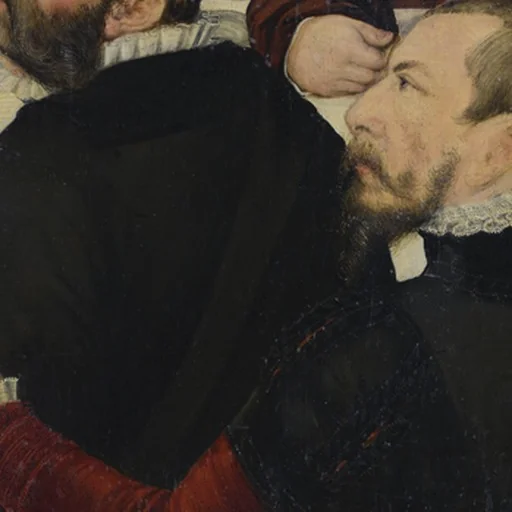
Lucas Cranach the Younger (German: Lucas Cranach der Jüngere, IPA: ; 4 October 1515 – 25 January 1586) was a German Renaissance painter and portraitist, the son of Lucas Cranach the Elder and brother of Hans Cranach.

 A Stag Hunt with the Elector Friedrich the Wise of Saxony
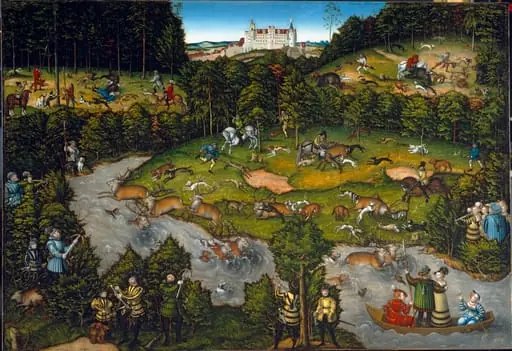 Hunting near Hartenfels Castle
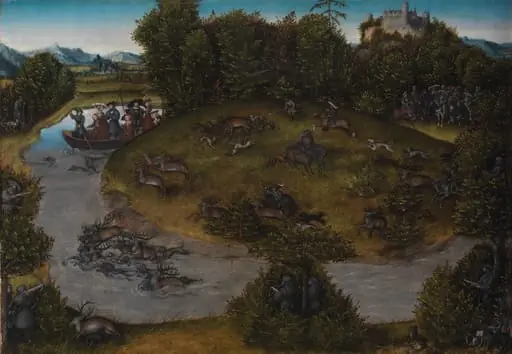 The Stag Hunt of the Elector Frederic the Wise (1463-1525) of Saxony
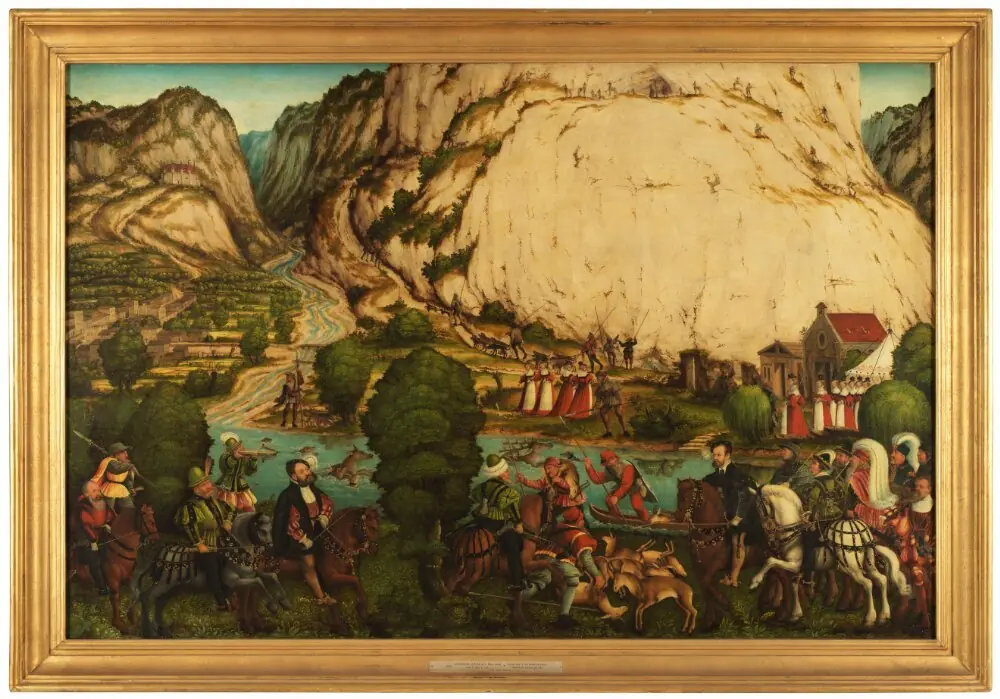 Emperor Charles V and the Elector John-Frederick of Saxony hunting
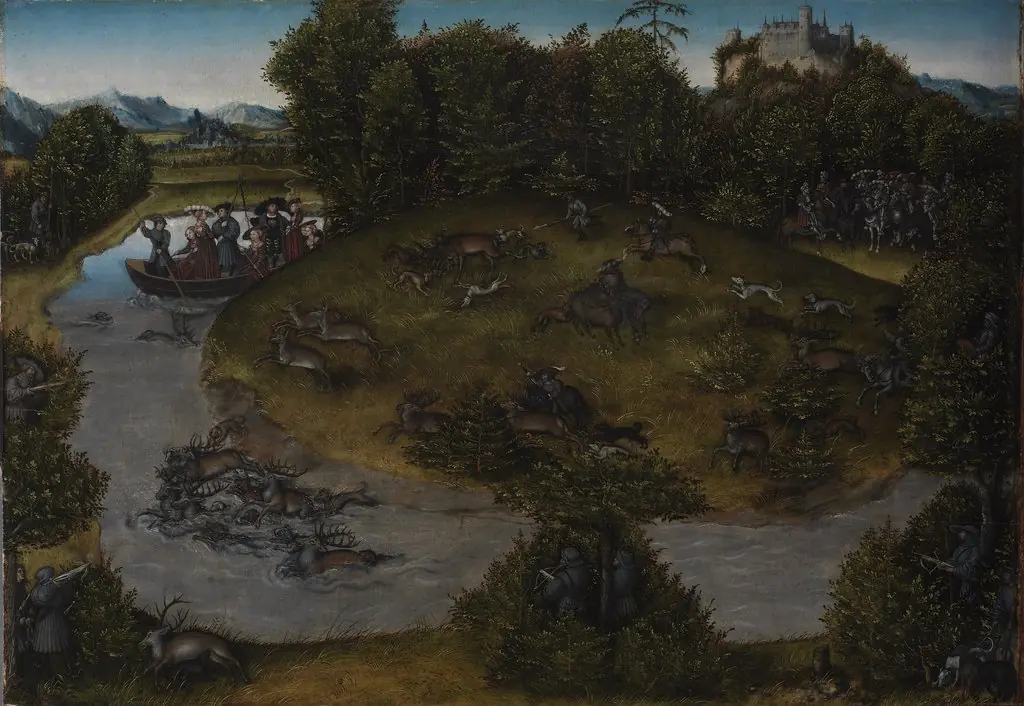 The Stag Hunt of the Elector Frederic the Wise (1463-1525) of Saxony
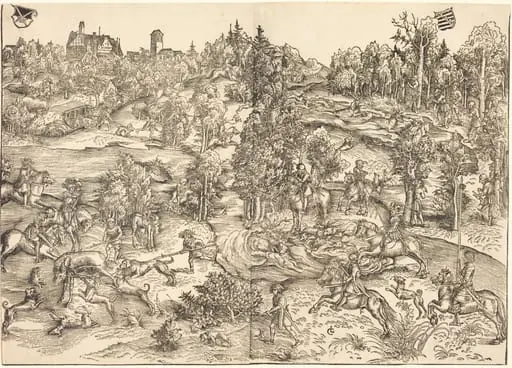 The Stag Hunt