Artwork
Ernst, son of Friedrich II., died 1486
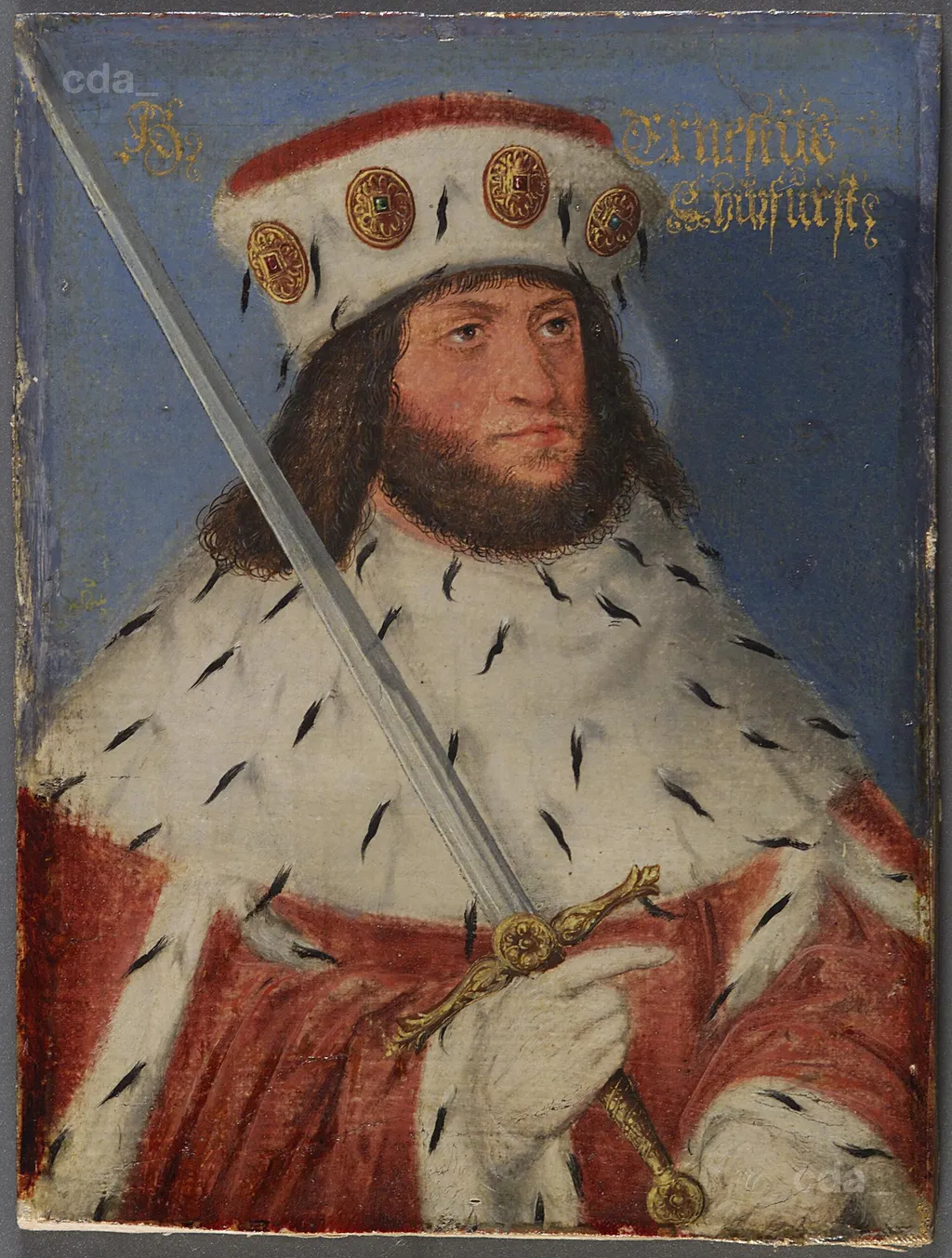
Ernst, son of Friedrich II., died 1486 is an unspecified painting by the Northern Renaissance artist Lucas Cranach the Younger. It is held in the collection of the Kunsthistorisches Museum.
About this work
Overview
Though Ernst lived over a century earlier, the painting was created as a posthumous tribute, likely for familial or dynastic purposes.
Painted in 1590 by Lucas Cranach the Younger, this portrait commemorates Ernst, son of Friedrich II, who died in 1486. Though Ernst lived over a century earlier, the painting was created as a posthumous tribute, likely for familial or dynastic purposes. It is part of the collection at the Kunsthistorisches Museum in Vienna and reflects Cranach’s role as a court artist continuing his father’s legacy in Northern Renaissance portraiture.
Subject & Meaning
The portrait depicts Ernst, a member of the Saxon nobility, rendered with symbolic elements of authority: a fur-lined cloak, ornate headwear with gold buttons, and a longsword with a gilded hilt. His direct gaze and solemn expression convey dignity and gravitas. The inclusion of these attributes, though anachronistic to his lifetime, serves to reinforce his status and the enduring prestige of his lineage in the late 16th century.
Technique & Style
Cranach the Younger employed precise brushwork to render textures—fur, silk, and metal—with quiet realism. The dark blue background, faintly inscribed with gold lettering, frames the figure without distraction. The palette is restrained yet rich, emphasizing the contrast between the red cloak, white undergarment, and black detailing. The composition follows Northern Renaissance conventions, prioritizing clarity and symbolic detail over idealized form.
History & Provenance
Commissioned more than a century after Ernst’s death, the painting likely originated in the Saxon court as part of a series honoring ancestral rulers. Lucas Cranach the Younger, working in Wittenberg, had access to family records and portraits, enabling him to reconstruct Ernst’s likeness. The work remained within Habsburg collections and entered the Kunsthistorisches Museum’s holdings through established imperial acquisitions.
Context
In late 16th-century Germany, noble families commissioned posthumous portraits to affirm lineage and legitimacy, especially amid religious and political upheaval. Cranach the Younger, continuing his father’s workshop, produced numerous such images for the Wettin dynasty. This portrait aligns with a broader trend of using art to bridge generational memory and reinforce dynastic continuity during a period of shifting power.
Legacy
The painting stands as an example of how Renaissance artists preserved historical memory through stylized representation. While not a contemporary likeness, it reflects the values and visual language of its own time. Cranach the Younger’s work in this genre helped shape the visual identity of German nobility for later generations, influencing how ancestry was depicted in courtly art.
Artist & collection
Artist
Lucas Cranach the Younger (German: Lucas Cranach der Jüngere, IPA: ; 4 October 1515 – 25 January 1586) was a German Renaissance painter and portraitist, the son of Lucas Cranach the Elder and brother of Hans Cranach.

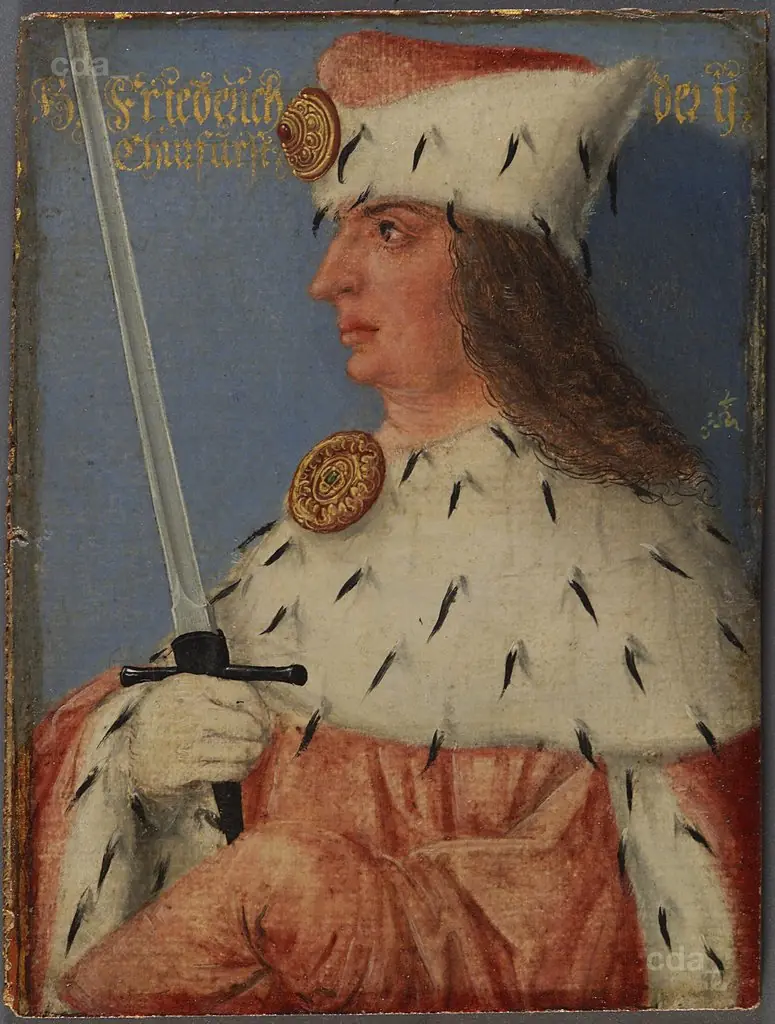 Friedrich II. the Gentle, son of Friedrich I., died 1464
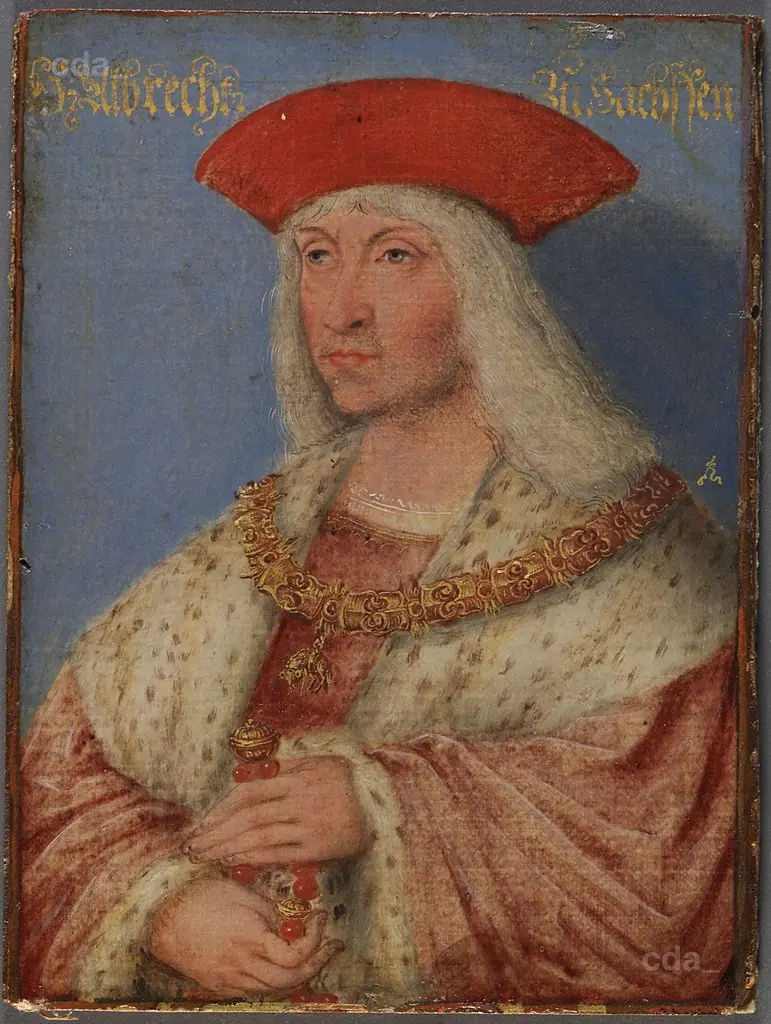 Albrecht the Bold, son of Friedrich II., died 1500
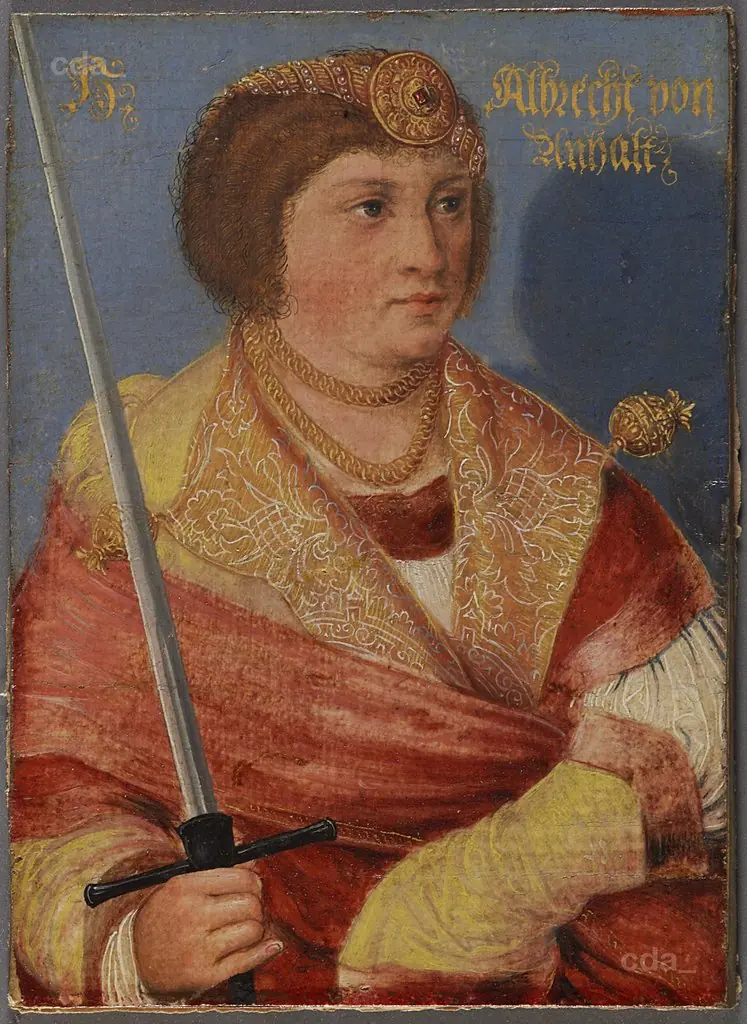 Albrecht III., Elector, son of Wenzeslaus, died 1422
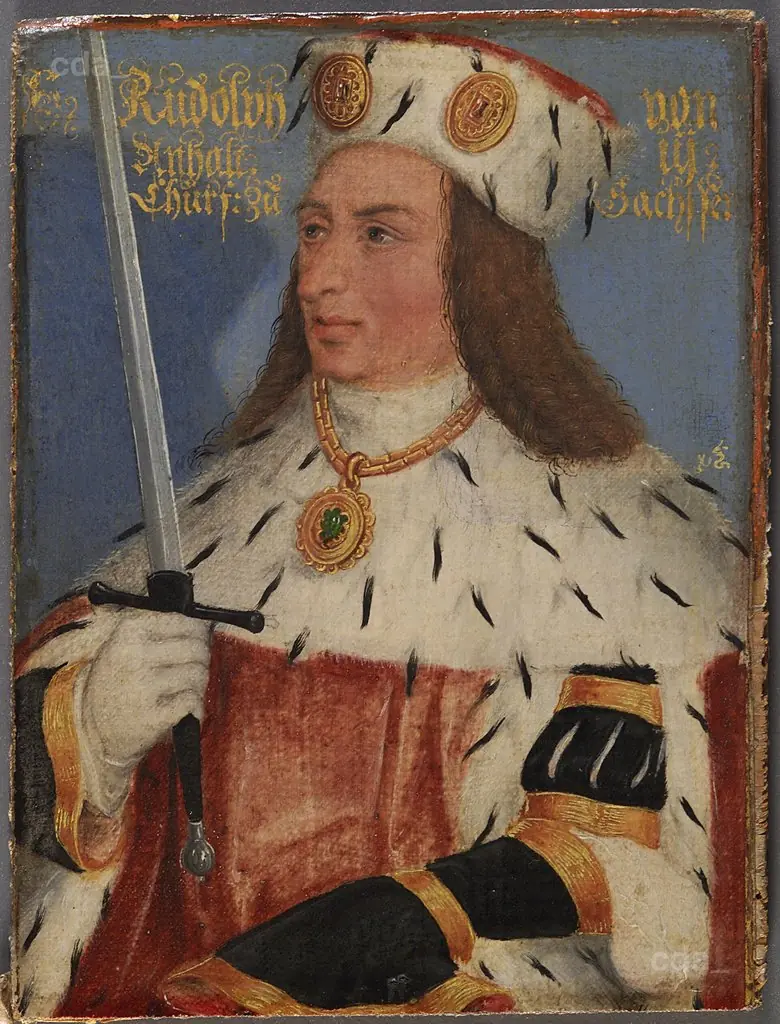 Rudolf III., Elector, son of Wenzeslaus, died 1419
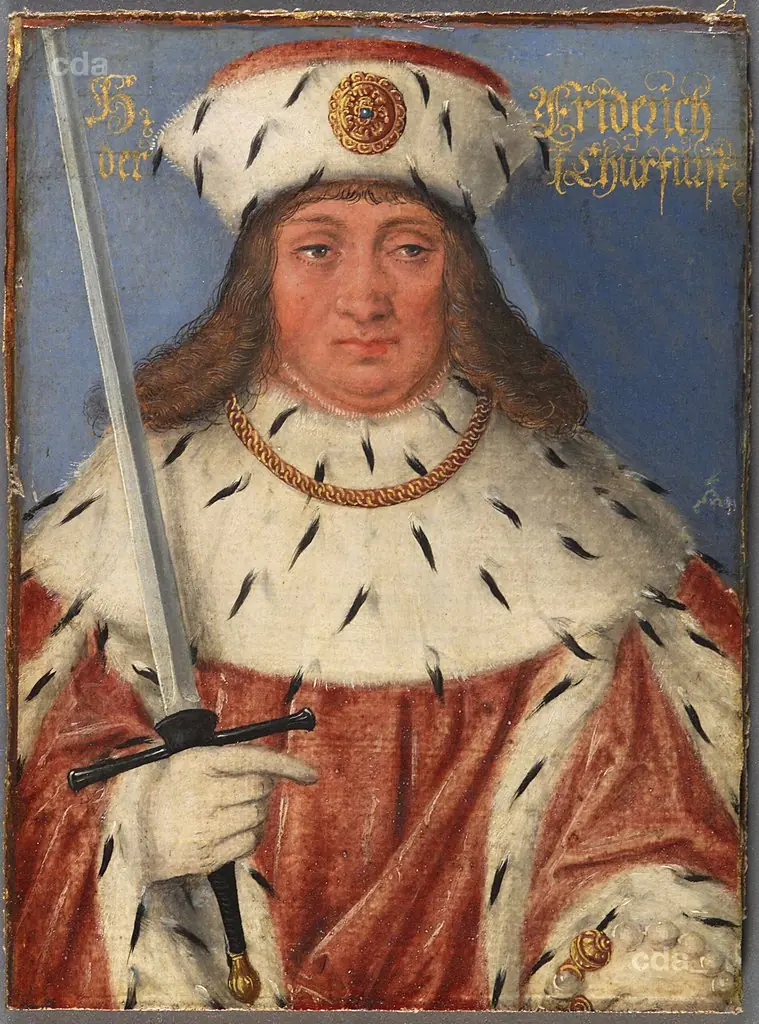 Friedrich I. the Strict, son of Friedrich the Brave of Meissen and Thuringia, died 1428
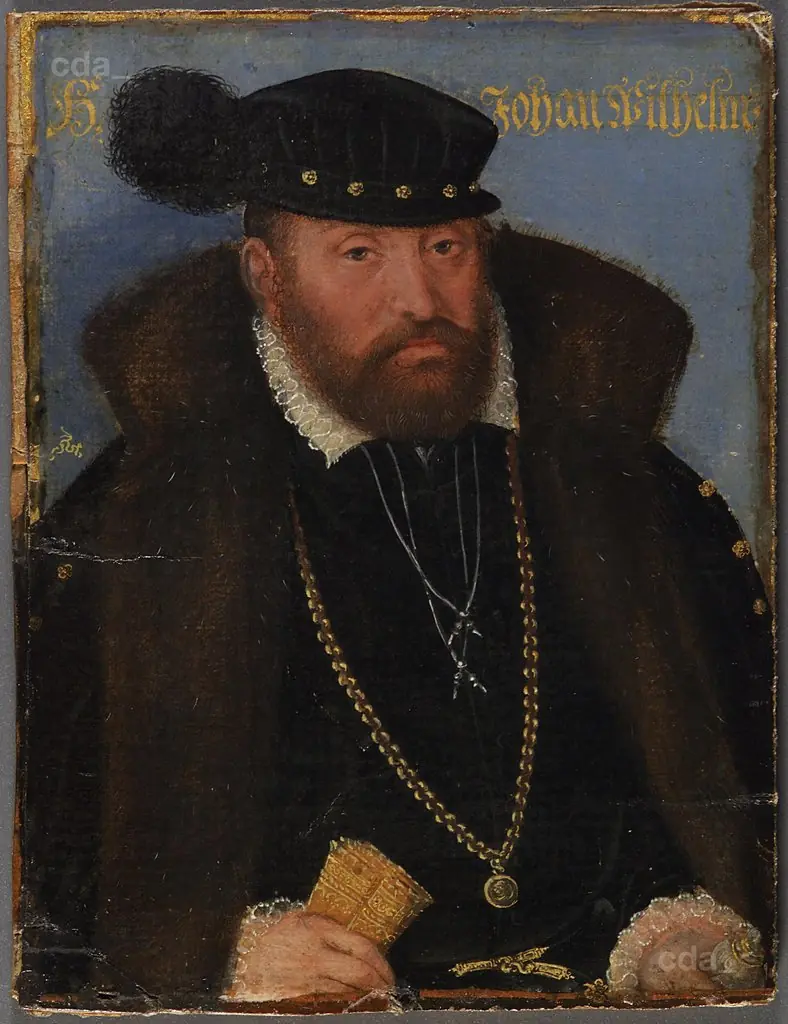 Johann Wilhelm, Duke of Saxe-Weimar, son of Johann Friedrich I., died 1573
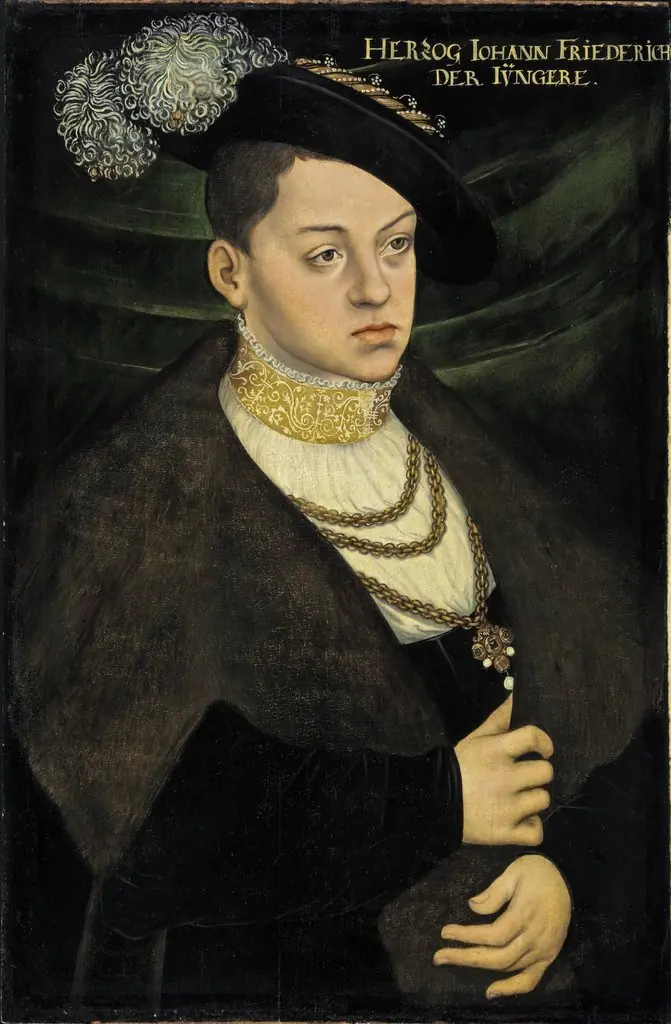 Johann Ernst, Duke of Saxe-Coburg
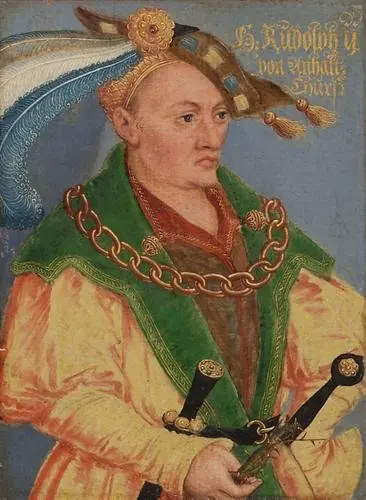 Rudolf II., Duke, son of Rudolf I., died 1370