Artwork
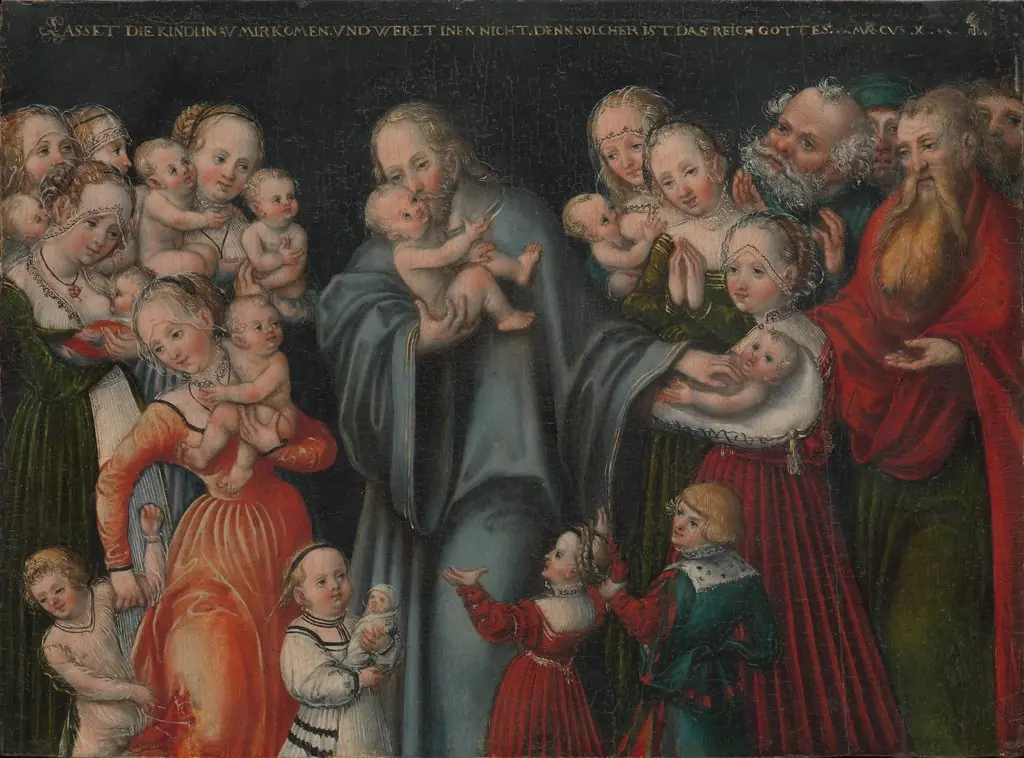
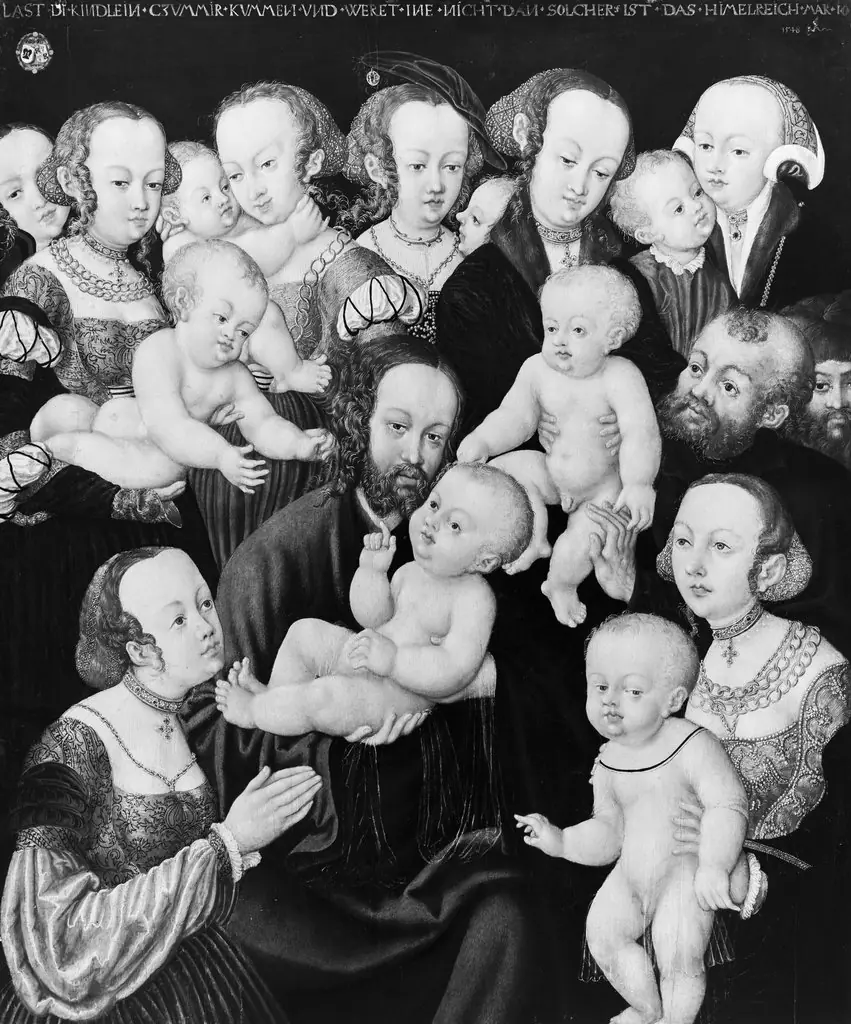
Christ blessing the children
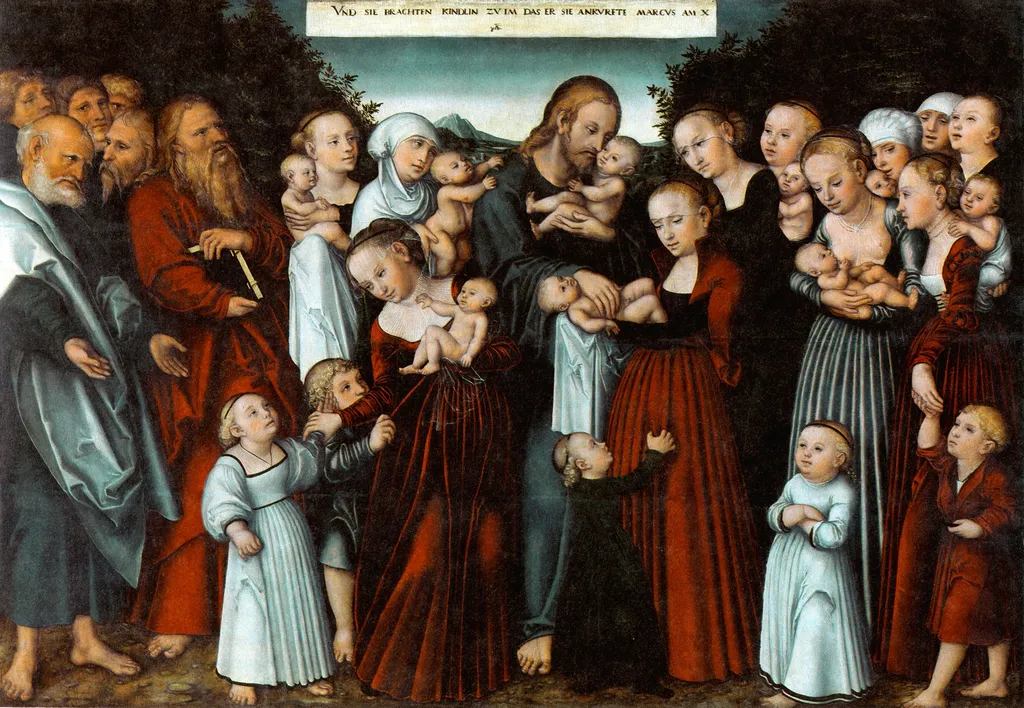
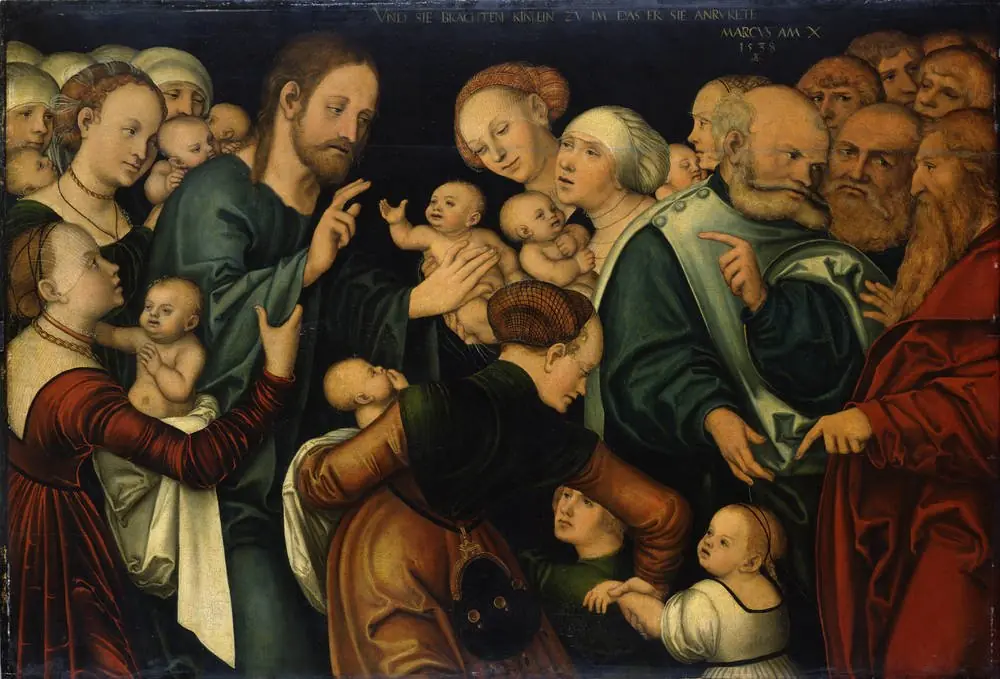
Christ blessing the children is a paint painting by the Northern Renaissance artist Lucas Cranach the Younger. It dates from 1540 and is held in the collection of the Staatliche Kunstsammlungen Dresden.
About this work
Overview
Painted in 1540 by Lucas Cranach the Younger, this work depicts Christ blessing children, a subject drawn from the Gospels.
Painted in 1540 by Lucas Cranach the Younger, this work depicts Christ blessing children, a subject drawn from the Gospels. Executed in oil paint, it reflects the religious focus of Northern Renaissance art. The painting resides in the Gemäldegalerie Alte Meister in Dresden, part of a broader body of work produced by the Cranach family workshop, which played a central role in German Protestant visual culture during the Reformation era.
Subject & Meaning
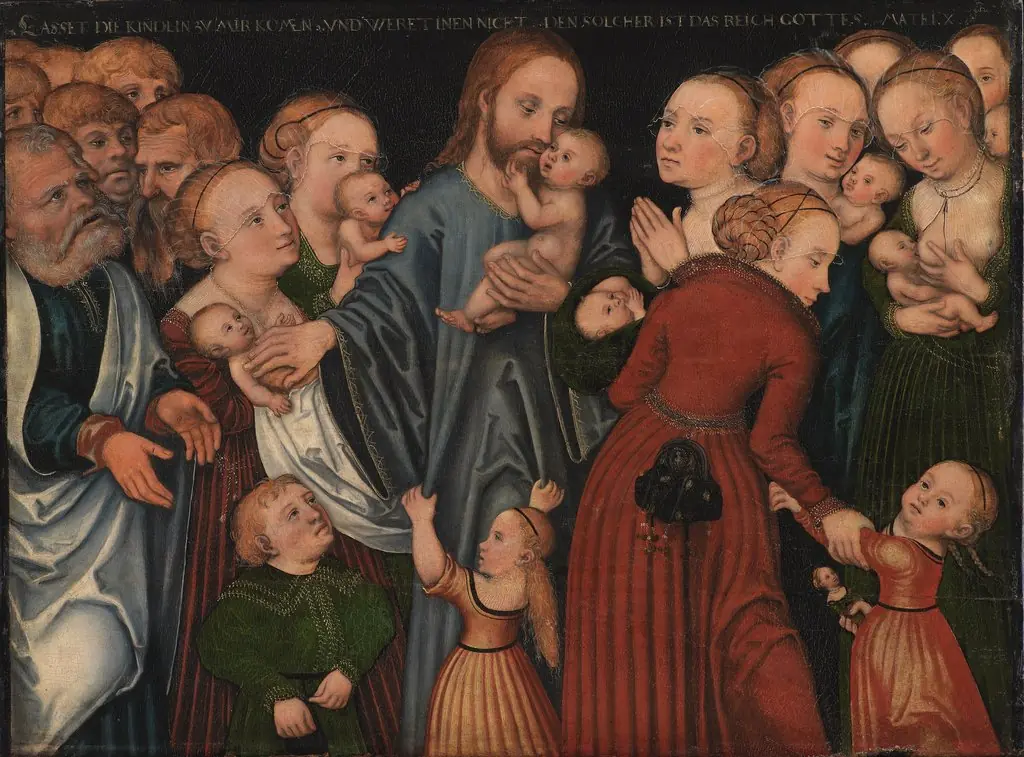
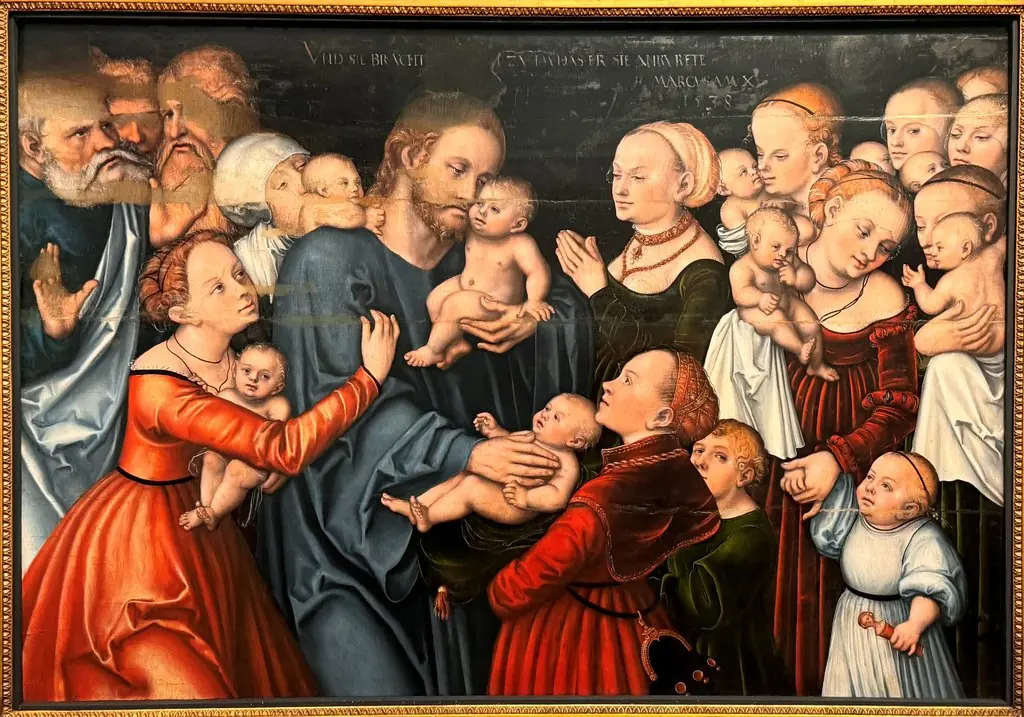
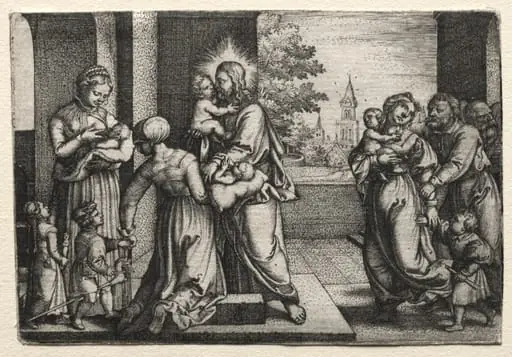
The scene illustrates Christ’s welcome of children, a moment from the New Testament emphasizing humility and spiritual openness. Christ stands centrally, arms raised in blessing, while figures of adults and children gather around him with varied expressions of reverence. The composition underscores the theological idea that the Kingdom of Heaven belongs to the innocent, a message aligned with Lutheran teachings of the time, which valued personal faith over institutional authority.
Technique & Style
Cranach the Younger employs a restrained palette and clear contours typical of Northern Renaissance portraiture. Figures are rendered with careful attention to facial expression and drapery, while the background introduces a soft, atmospheric landscape with trees and sky to suggest depth. Subtle modeling of light and shadow guides focus toward Christ, though the work avoids dramatic chiaroscuro, favoring instead a calm, even illumination that enhances its devotional tone.
History & Provenance
Created during the height of Cranach the Younger’s collaboration with his father’s workshop, the painting reflects the family’s established production methods and iconographic conventions. It entered the Gemäldegalerie Alte Meister’s collection in the 19th century, having likely remained in Saxon ecclesiastical or noble circles since its completion. Its survival reflects the continued appreciation of Cranach’s religious imagery in Protestant regions despite iconoclastic trends elsewhere.
Context
Painted during the Protestant Reformation, the work aligns with Lutheran priorities that emphasized biblical narratives accessible to lay viewers. Unlike Catholic altarpieces, it avoids elaborate symbolism, focusing instead on direct emotional engagement. Cranach the Younger’s output supported the new church’s need for didactic imagery, making such scenes vital tools for religious instruction in a society transitioning away from traditional Catholic visual culture.
Legacy
The painting exemplifies the Cranach workshop’s enduring influence on German religious art beyond the lifetime of Lucas Cranach the Elder. While not revolutionary in style, its clarity and emotional restraint contributed to a lasting visual language for Protestant devotion. Later generations of artists in northern Europe drew on its compositional discipline, preserving its quiet authority as a model for sacred narrative painting.
Own this work as a print
Artist & collection
Artist
Lucas Cranach the Younger (German: Lucas Cranach der Jüngere, IPA: ; 4 October 1515 – 25 January 1586) was a German Renaissance painter and portraitist, the son of Lucas Cranach the Elder and brother of Hans Cranach.