Artwork
Christ Surrounded by Children
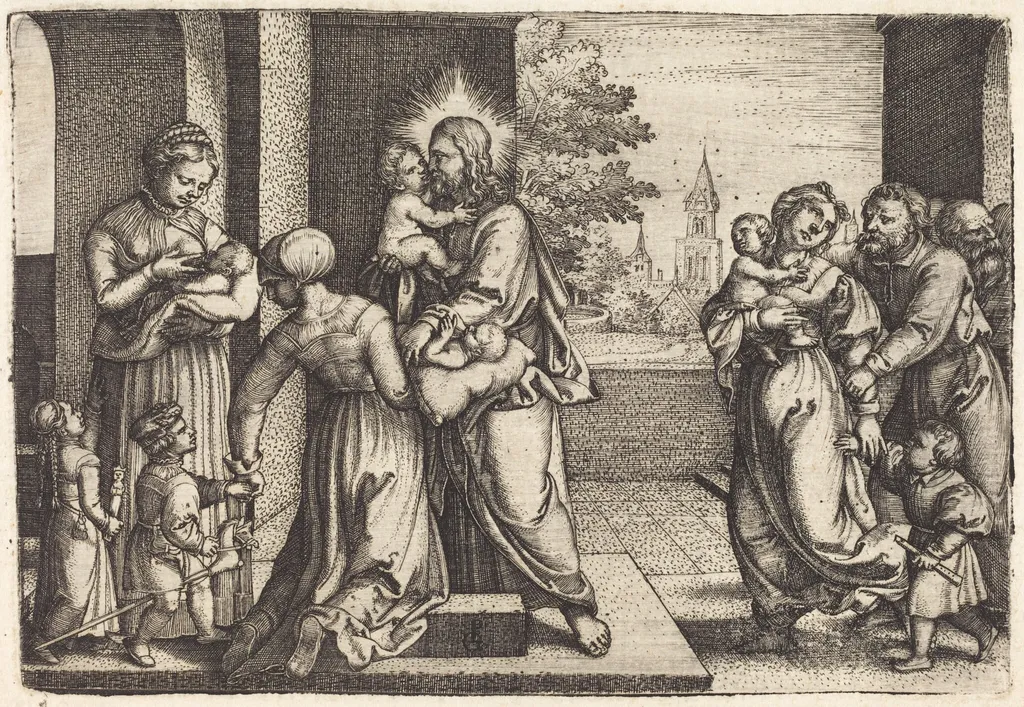
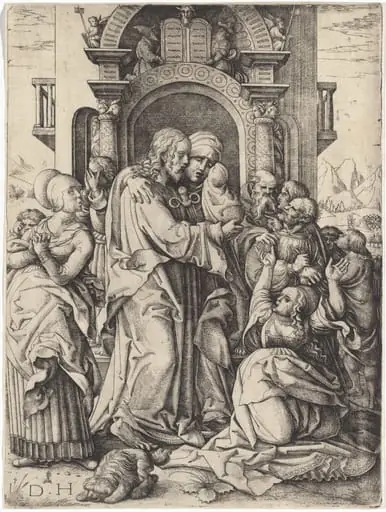
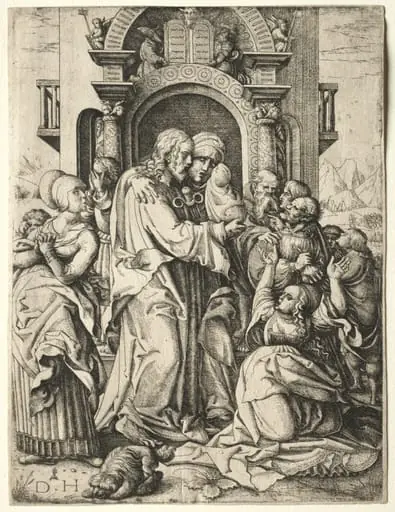
Christ Surrounded by Children is an ink print by the Renaissance artist Georg Pencz. It dates from 1525 and is held in the collection of the National Gallery of Art. Created in 1525, this copperplate engraving presents a central figure with a luminous halo cradling an infant, positioned on a raised dais.
About this work
Overview
Created in 1525, this copperplate engraving presents a central figure with a luminous halo cradling an infant, positioned on a raised dais.
Created in 1525, this copperplate engraving presents a central figure with a luminous halo cradling an infant, positioned on a raised dais. Surrounding him are numerous adults and children, some kneeling, others reaching out, set against a modest village backdrop that includes a church steeple and a solitary tree. The composition emphasizes the interaction between the holy figure and the surrounding crowd.
Subject & Meaning
The work illustrates a Christian motif in which the central, serene figure—identified as Christ—holds the infant Jesus, inviting devotion from the assembled onlookers. The varied gestures of the surrounding figures, ranging from reverent kneeling to eager reaching, convey a collective yearning for spiritual connection and reflect the devotional practices of early sixteenth‑century believers.
Technique & Style
Executed with delicate incised lines, the engraving achieves subtle gradations of tone through cross‑hatching, particularly evident in the drapery’s folds and the nuanced facial expressions. The fine shading imparts a sense of depth, while the crisp outlines delineate the figures against the simplified architectural and natural elements, revealing the influence of Northern Renaissance precision combined with Italianate compositional balance.
History & Provenance
The print was produced by Georg Pencz, a German artist trained in Nuremberg under Albrecht Dürer. After his apprenticeship, Pencz spent time in Italy, absorbing Venetian artistic currents that inform the work’s spatial arrangement. In the same year of its creation, Pencz faced imprisonment alongside fellow artists due to his unorthodox theological positions, a circumstance that may have heightened the work’s devotional urgency.
Context
Emerging during a period when religious imagery dominated visual culture, the engraving reflects the early Reformation’s complex relationship with traditional iconography. Pencz’s exposure to both Germanic precision and Italian compositional harmony situates the piece at a crossroads of Northern and Southern Renaissance aesthetics, illustrating how print media disseminated theological ideas across Europe.
Artist & collection
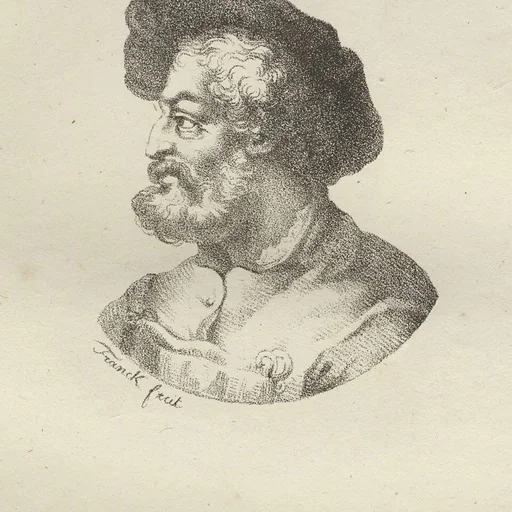
Artist
Georg Pencz (c. 1500 – 11 October 1550) was a German engraver, painter and printmaker. Pencz was probably born in Westheim near Bad Windsheim/Franconia. He travelled to Nuremberg in 1523 and joined Albrecht Dürer’s…

 The Virgin Mary Taking Leave of Christ
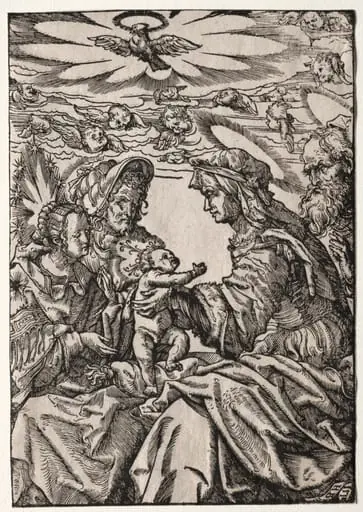 The Holy Family with St. Anne and Joachim
 Christ Taking Leave of His Mother
 The Holy Family with the Young Saint John the Baptist (The Madonna of the Long Thigh)
 The Holy Family with Saint Anne and Saint Joachim
 The Adoration of the Magi
 The Holy Family, with the Infant St. John
 Virgin and Child with the Infant Saint John
 The Raising of Lazarus
 Madonna and Child with Saint Catherine