Artwork
Stoke-by-Neyland
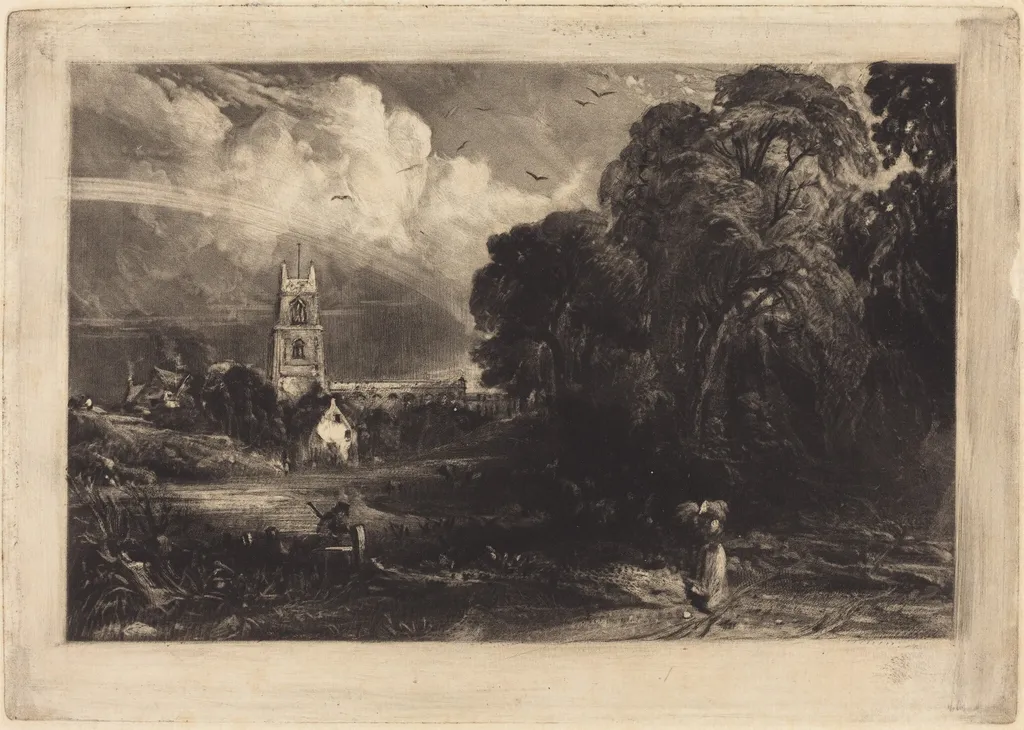
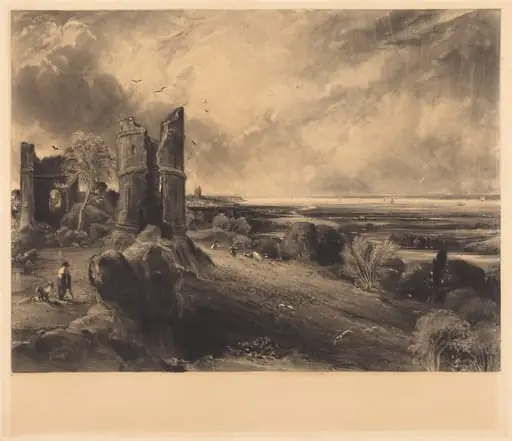
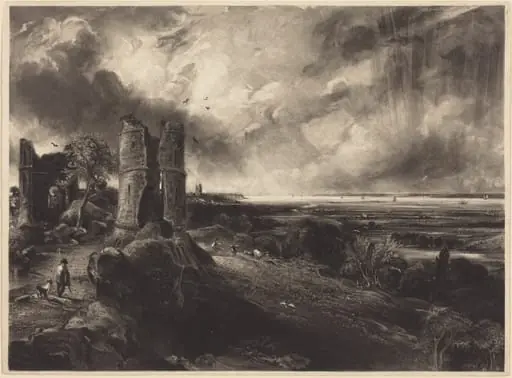
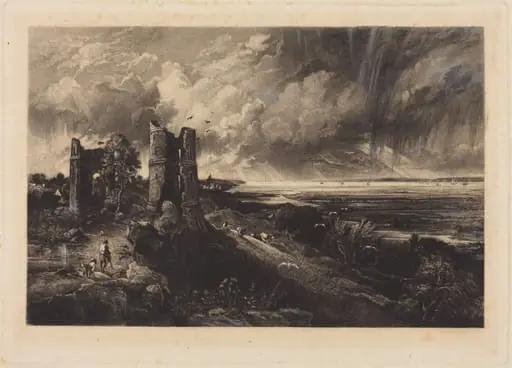
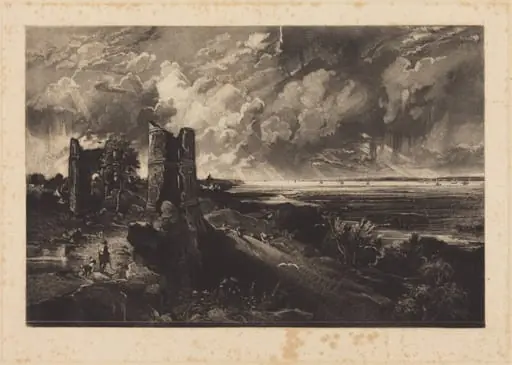
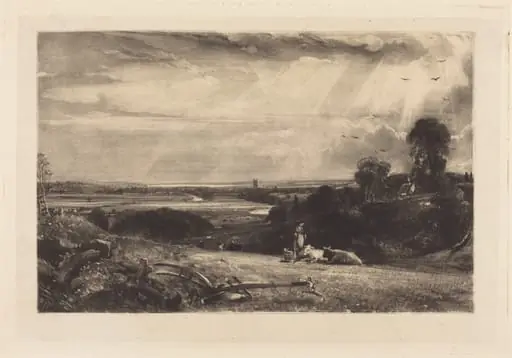
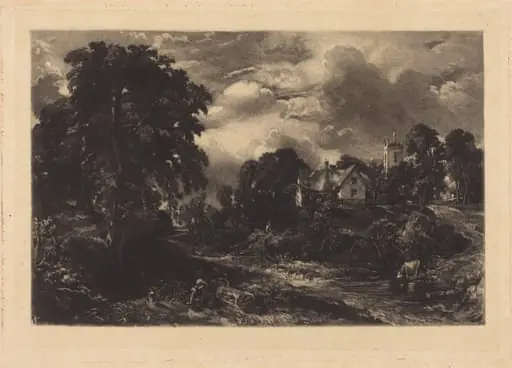
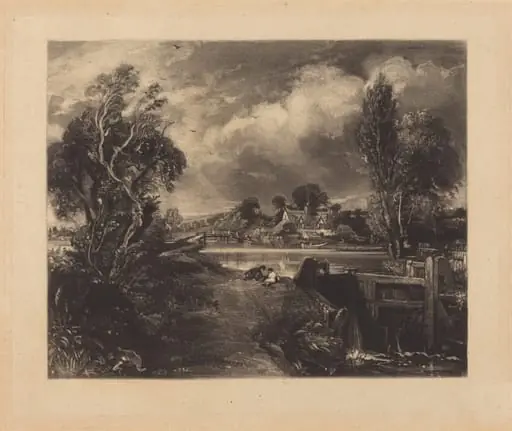
Stoke-by-Neyland is an ink print by the Romanticist artist David Lucas. It dates from 1830 and is held in the collection of the National Gallery of Art.
About this work
Overview
Subtle tonal gradations define the composition, guiding the eye from the dark foreground to the luminous, cloud-filled sky.
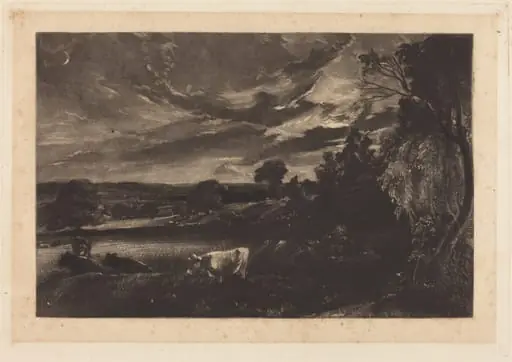
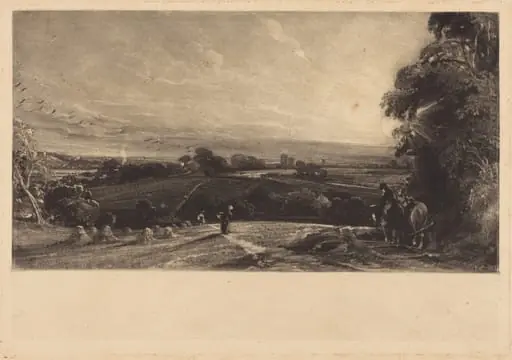
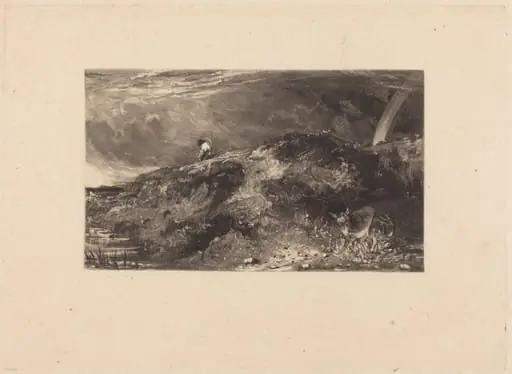
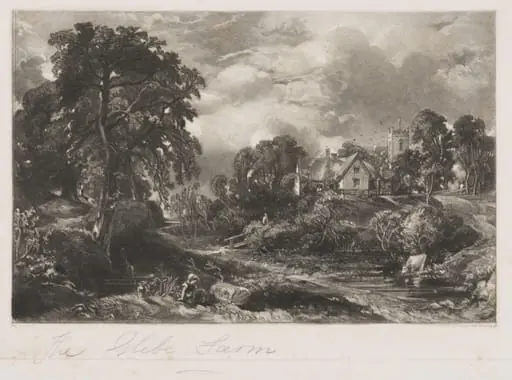
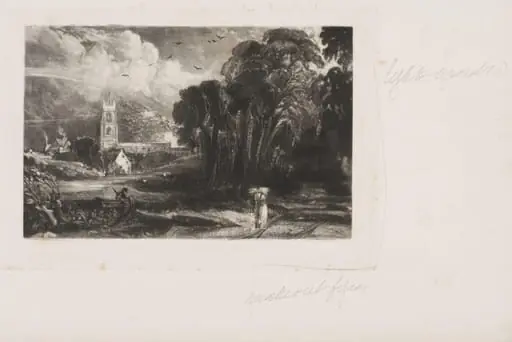
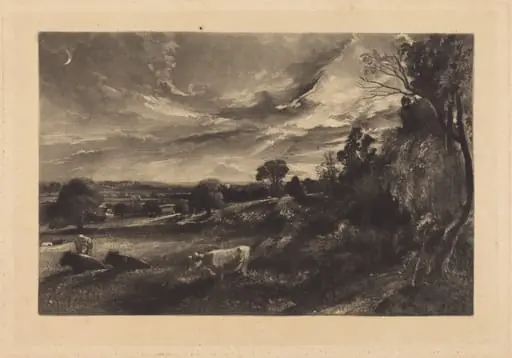
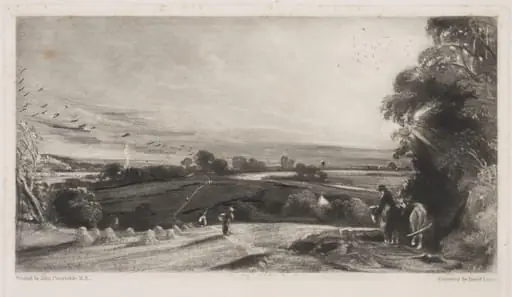
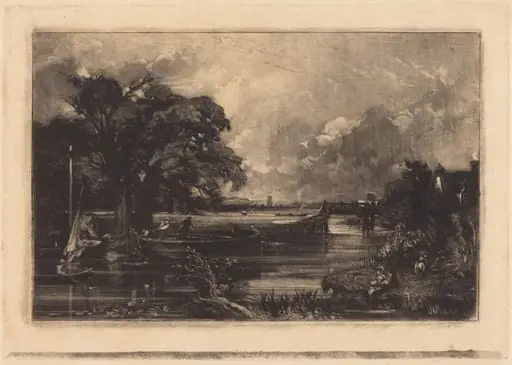
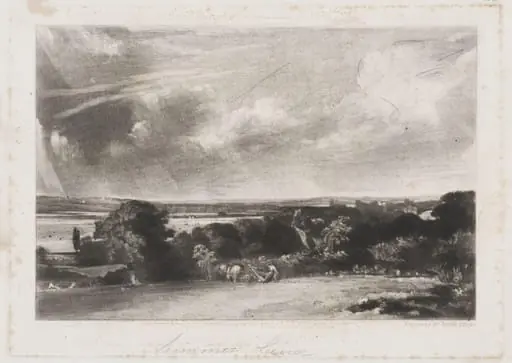
Stoke-by-Neyland is a mezzotint print created by David Lucas in 1830, produced as a proof on laid paper. The work captures a tranquil English village scene with a prominent church spire dominating the skyline. Subtle tonal gradations define the composition, guiding the eye from the dark foreground to the luminous, cloud-filled sky. The print exemplifies the mezzotint technique’s capacity for rich, atmospheric depth without line work.
Subject & Meaning
The scene depicts a quiet rural hamlet, centered on a modest bridge crossing a stream, with a stationary cart and a solitary figure. The church tower suggests spiritual or communal stability, while the empty road and stillness evoke solitude. No overt narrative is present; instead, the image conveys a sense of quiet endurance, reflecting the rhythms of country life in early 19th-century England through understated observation.
Technique & Style
Lucas employed mezzotint, a process involving roughening a copper plate to hold ink, then smoothing areas to create gradations of tone. The result is a seamless transition from deep blacks to soft grays, particularly evident in the swirling clouds and dense foliage. Shadows are rendered with precision, enhancing volume and spatial recession. The absence of line work emphasizes mood over detail, aligning with Romantic-era sensibilities.
History & Provenance
Created as a proof, this impression likely served as a test before final printing. Lucas was primarily known for translating J.M.W. Turner’s landscapes into print, and this work may have been part of such a collaboration. Though not widely exhibited, it remains a rare example of Lucas’s independent output, preserved in institutional collections for its technical mastery and quiet aesthetic.
Context
In the 1830s, mezzotint was a favored medium for reproducing landscape paintings, especially those evoking the sublime or pastoral. Lucas worked within a tradition that valued tonal harmony over linear clarity. Stoke-by-Neyland reflects contemporary interest in rural England’s changing character, as industrialization began to reshape the countryside, making such serene views both familiar and increasingly nostalgic.
Legacy
Though not widely reproduced or celebrated in its time, Stoke-by-Neyland stands as a refined example of mezzotint’s expressive potential. It influenced later printmakers interested in atmospheric effects and tonal subtlety. Today, it is studied for its technical discipline and its quiet, unembellished portrayal of place—offering a counterpoint to more dramatic landscape traditions.
Artist & collection