Artwork
Glebe Farm (b)
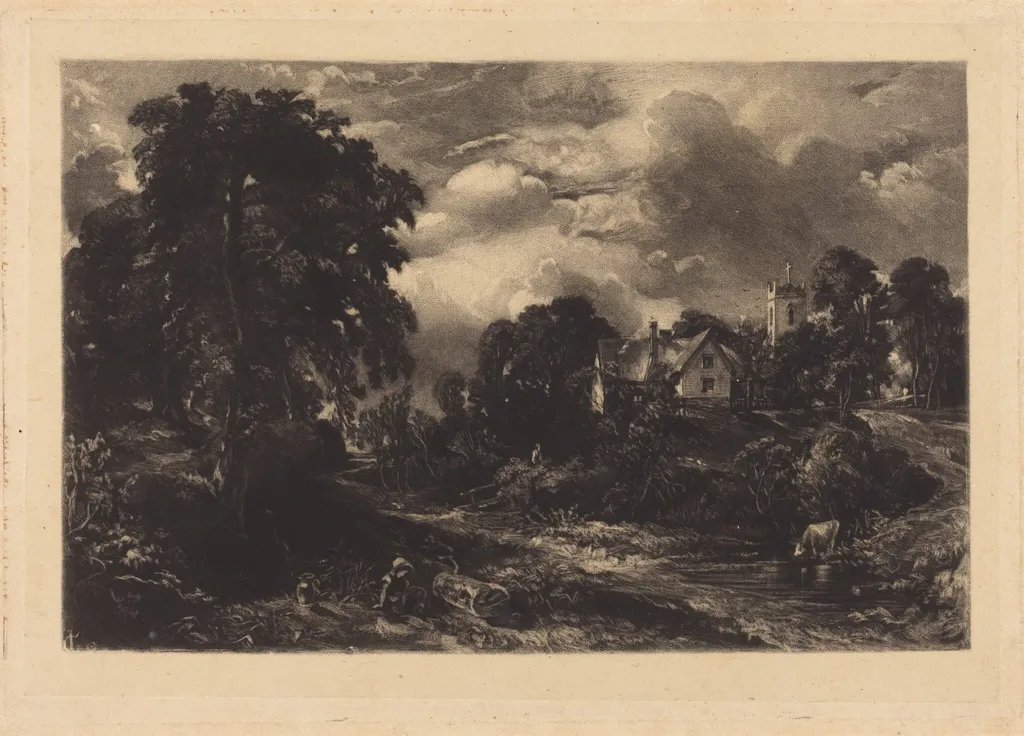
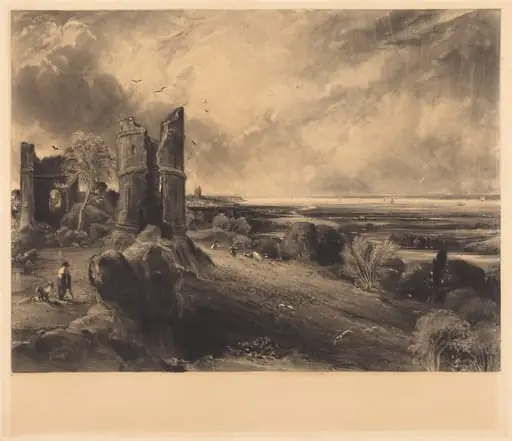
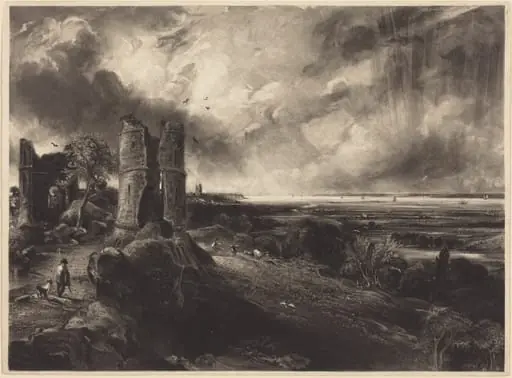
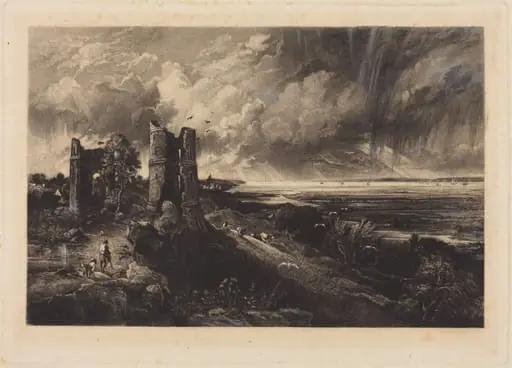
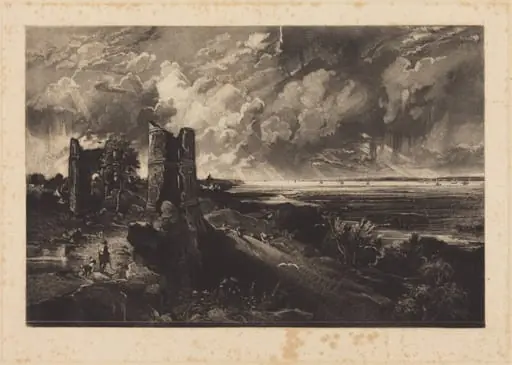
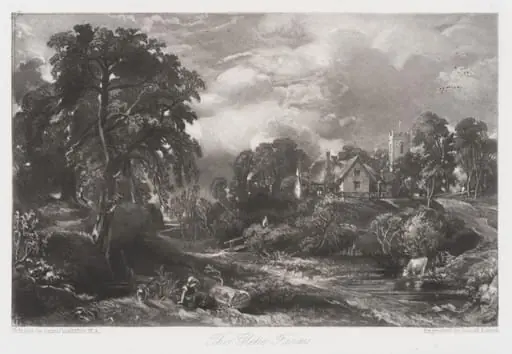
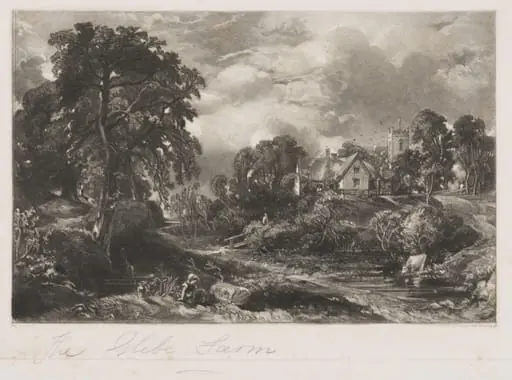
Glebe Farm (b) is an ink print by the Romanticist artist David Lucas. It dates from 1831 and is held in the collection of the National Gallery of Art.
About this work
Overview
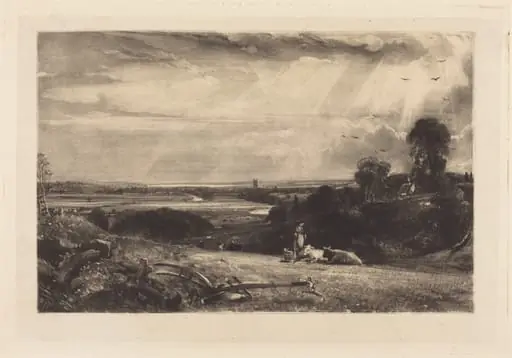
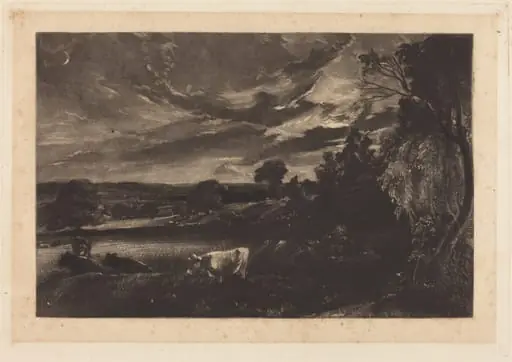
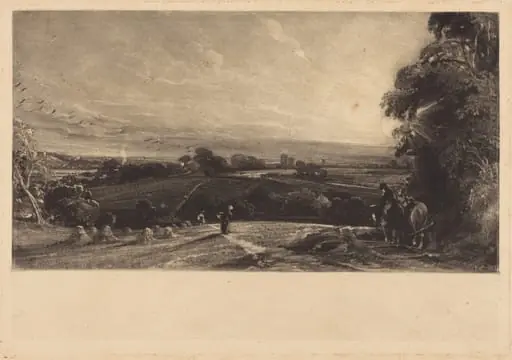
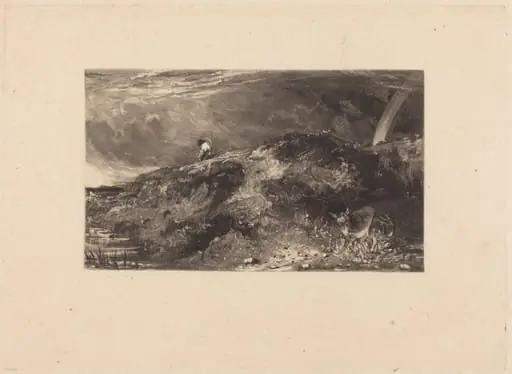
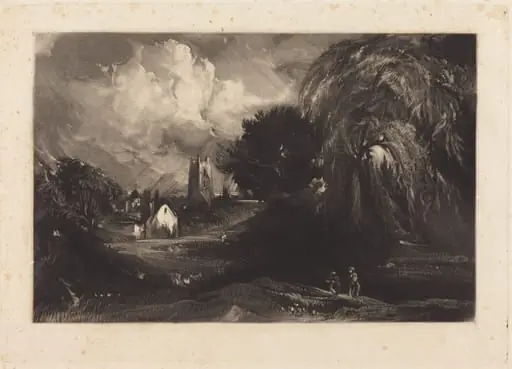
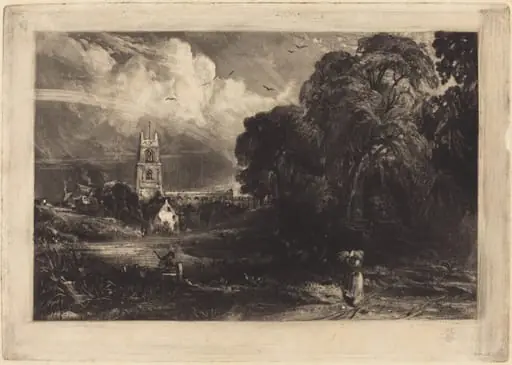
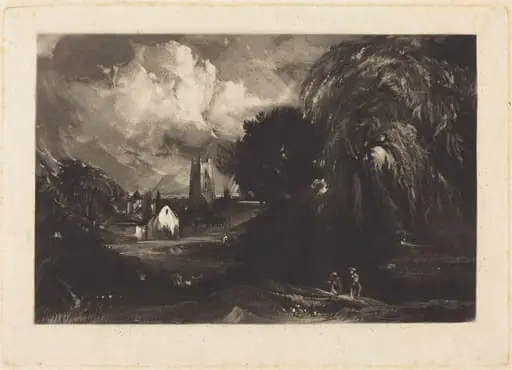
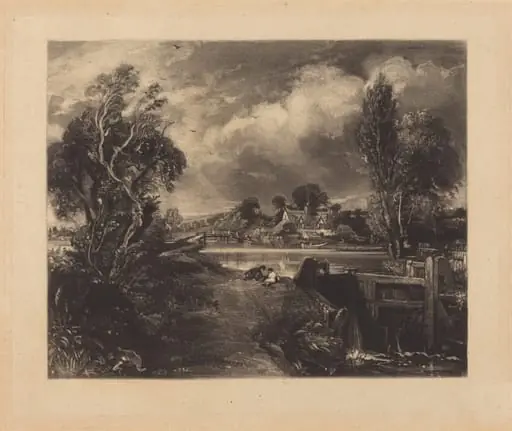
David Lucas’s mezzotint titled Glebe Farm (b) dates from 1831. The print depicts a tranquil countryside scene, featuring a prominent tree on the left, a distant house, and gently rolling hills beneath a cloud‑filled sky. Figures labor in the foreground, adding a narrative of everyday rural activity to the composition.
Subject & Meaning
The image presents an idealized vision of agrarian life, emphasizing harmony between people and landscape. By placing workers within a spacious field and framing the distant dwelling, the work suggests a balanced relationship between human effort and the natural environment, evoking a sense of calm productivity.
Technique & Style
Executed as a mezzotint, the piece relies on delicate gradations of tone achieved through careful scraping and burnishing of the copper plate. Lucas’s manipulation of light and shadow creates depth, while the soft transitions typical of the medium lend the scene a lyrical, almost painterly quality associated with early‑19th‑century British printmaking.
History & Provenance
Created in 1831, Glebe Farm (b) is a progress proof, an intermediate stage in the mezzotint process used to refine tonal values before final printing. The work is attributed to Lucas, a noted English engraver who collaborated with prominent artists of his time, though specific ownership records for this particular proof remain limited.
Context
The print emerges from the Romantic period’s fascination with rural idylls, aligning with contemporaneous landscape painters such as J.M.W. Turner and John Constable. While Lucas worked primarily in print, his subject matter reflects the broader cultural interest in depicting the serene, unspoiled English countryside.
Artist & collection