Artwork
The Passion: The Resurrection
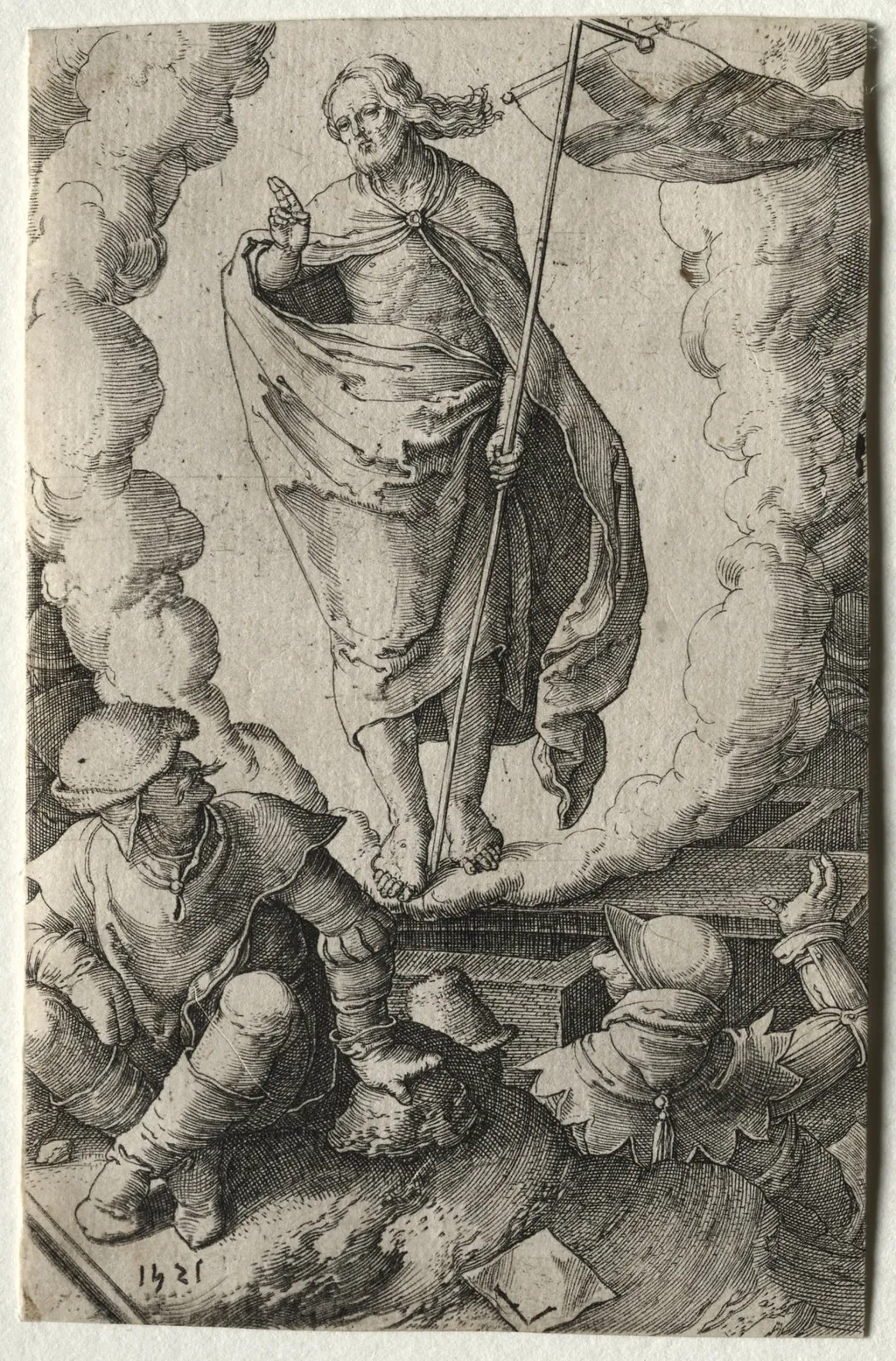
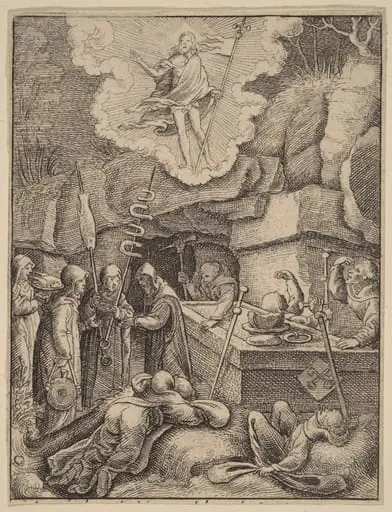
The Passion: The Resurrection is a print by the Renaissance artist Lucas van Leyden. It dates from 1521 and is held in the collection of the Cleveland Museum of Art.
About this work
Overview
It is held in the collection of the Cleveland Museum of Art and exemplifies the era’s devotion to biblical storytelling through intricate graphic technique.
Created in 1521 by Lucas van Leyden, this engraving is one of a series illustrating scenes from the Passion of Christ. Van Leyden, a Dutch artist renowned for his precision in printmaking, produced this work during the height of the Northern Renaissance. It is held in the collection of the Cleveland Museum of Art and exemplifies the era’s devotion to biblical storytelling through intricate graphic technique.
Subject & Meaning
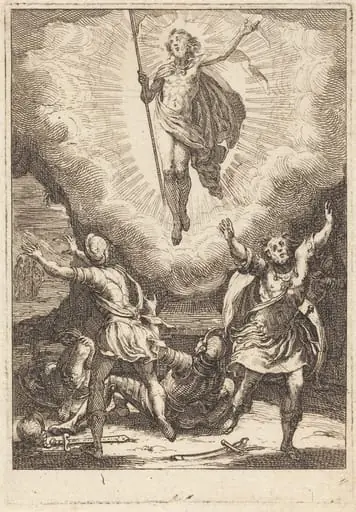
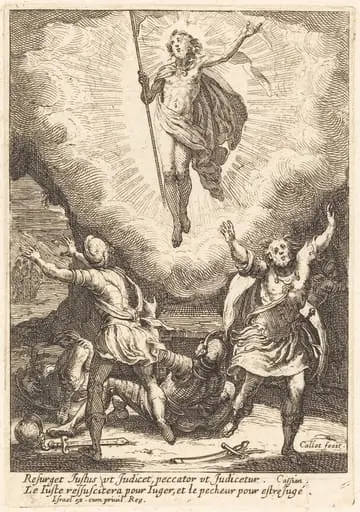
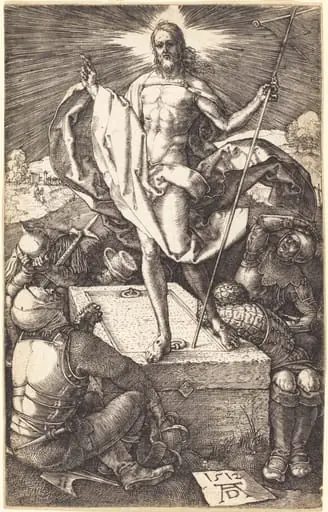
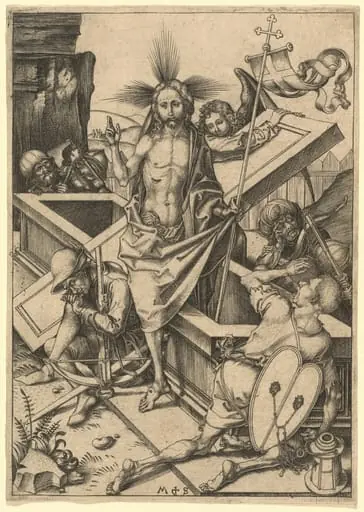
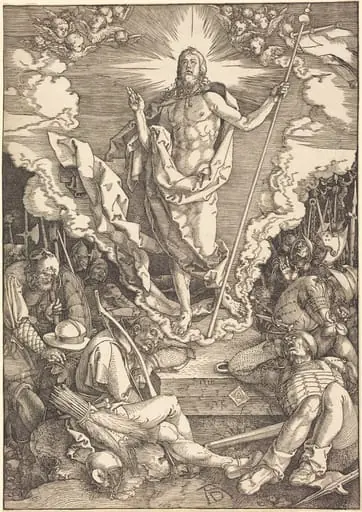
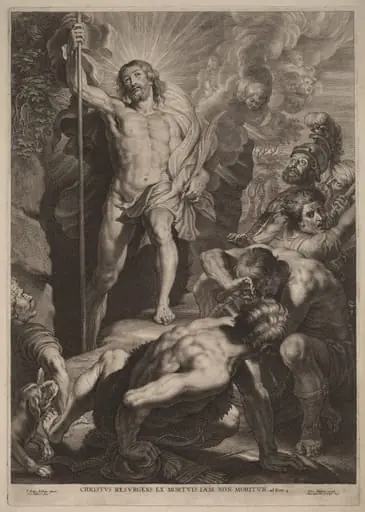
The scene captures Christ rising from the tomb, depicted as a serene, luminous figure standing on a cloud, banner in hand. Below, two Roman soldiers in armor react with surprise, their armor rendered with meticulous detail. The composition emphasizes divine triumph over death, aligning with contemporary theological interpretations of resurrection as both physical and spiritual victory, rendered without overt drama but with quiet authority.
Technique & Style
Van Leyden employed fine-line engraving to achieve remarkable texture and depth, using cross-hatching to model forms and suggest volume. The contrast between the ethereal glow of Christ and the heavy, shadowed armor of the soldiers enhances the spiritual contrast. The background’s minimalism directs focus to the central figures, reflecting Northern Renaissance priorities: clarity, realism, and narrative precision over decorative flourish.
History & Provenance
The print was produced during van Leyden’s mature period, when he was among the most influential Northern European printmakers. It entered the Cleveland Museum of Art’s collection in the 20th century, likely through a broader acquisition of early Dutch prints. Its survival in good condition reflects its historical value and the care taken in its preservation among collectors and institutions.
Context
In early 16th-century Netherlands, religious imagery remained central despite growing Reformation tensions. Van Leyden’s prints circulated widely, serving both devotional and educational purposes. His ability to render complex narratives in small formats made his work accessible beyond elite circles, contributing to the spread of biblical stories in a time of shifting religious authority.
Legacy
Van Leyden’s technical mastery influenced generations of printmakers across Europe. His integration of human emotion with divine subject matter helped bridge medieval iconography and Renaissance naturalism. Though less celebrated today than contemporaries like Dürer, his prints remain key examples of how Northern artists translated theological themes into visually compelling, intimate compositions.
Artist & collection

Artist
Lucas van Leyden (1494 – 8 August 1533), was a Dutch painter and printmaker in engraving and woodcut. Lucas van Leyden was among the first Dutch exponents of genre painting and was a very accomplished engraver.

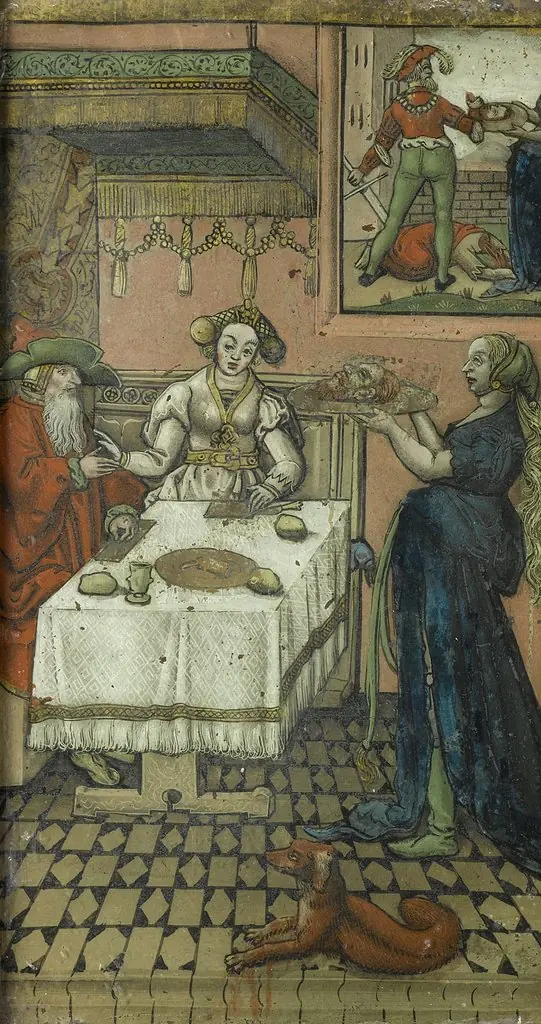 Salome with the head of St John the Baptist
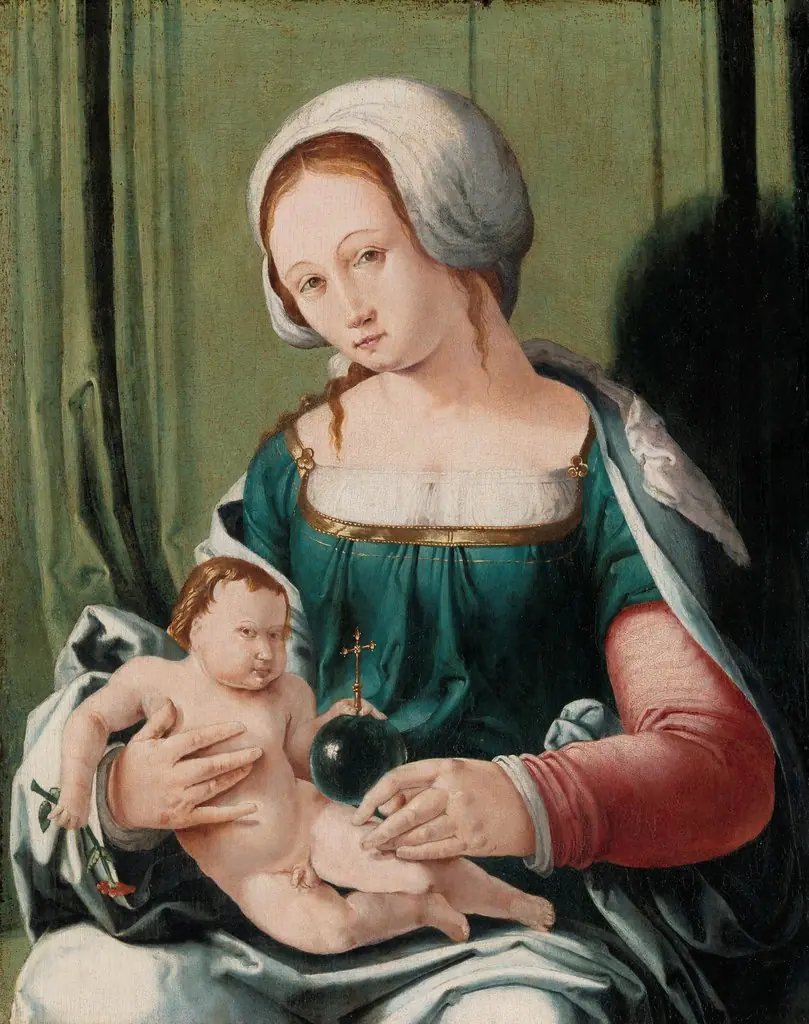 The Virgin and Child
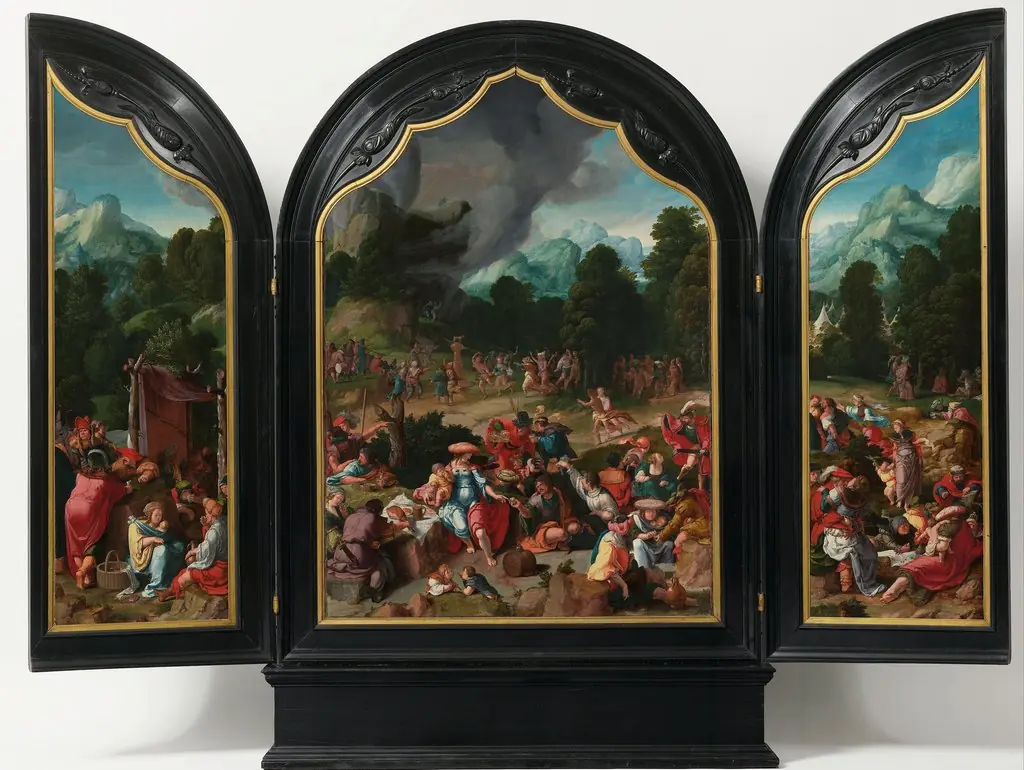 Worship of the Golden Calf
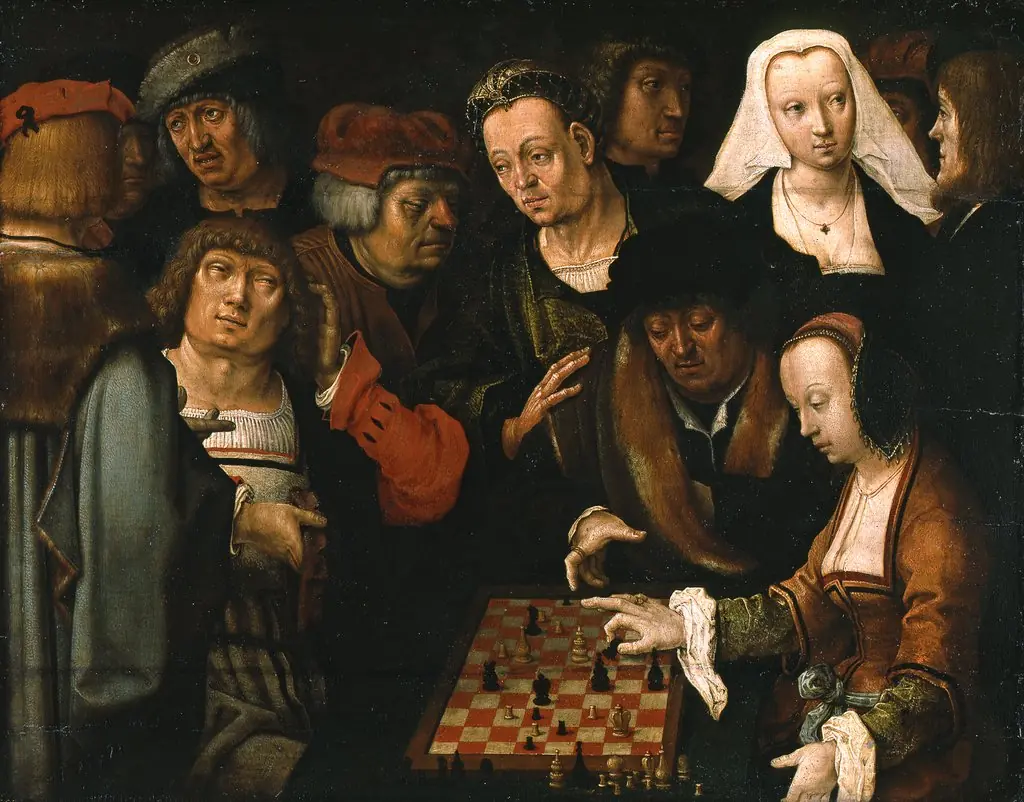 A Game of Chess
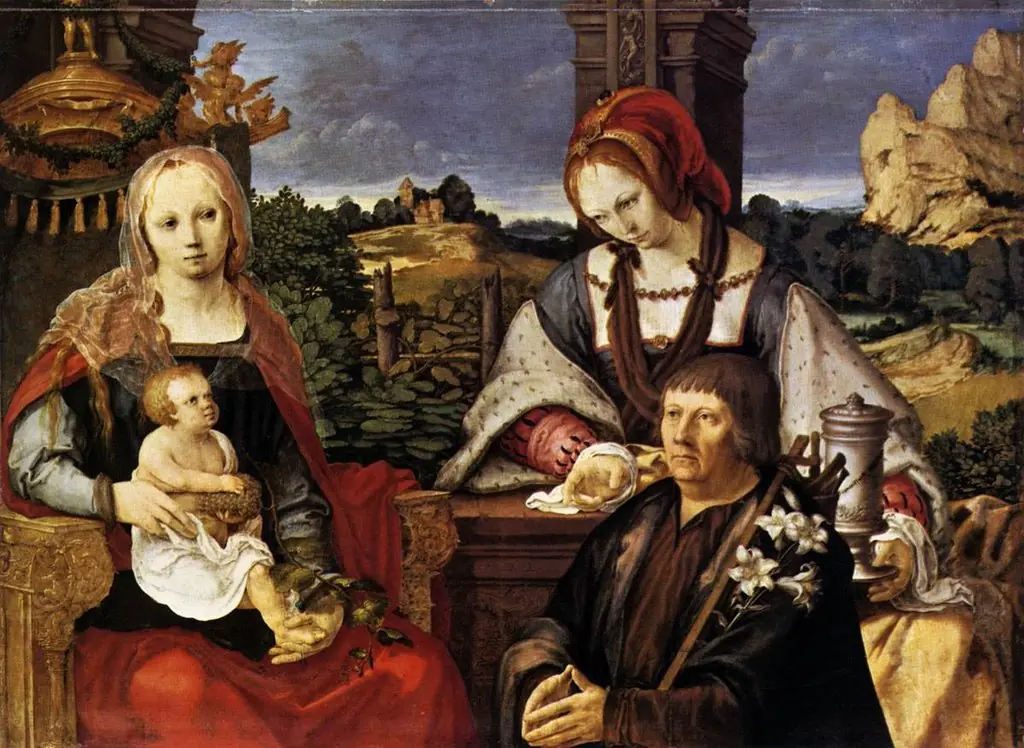 Mary with Child, St. Maria Magdalena and founder (separate outside, Inv. No. 7713)
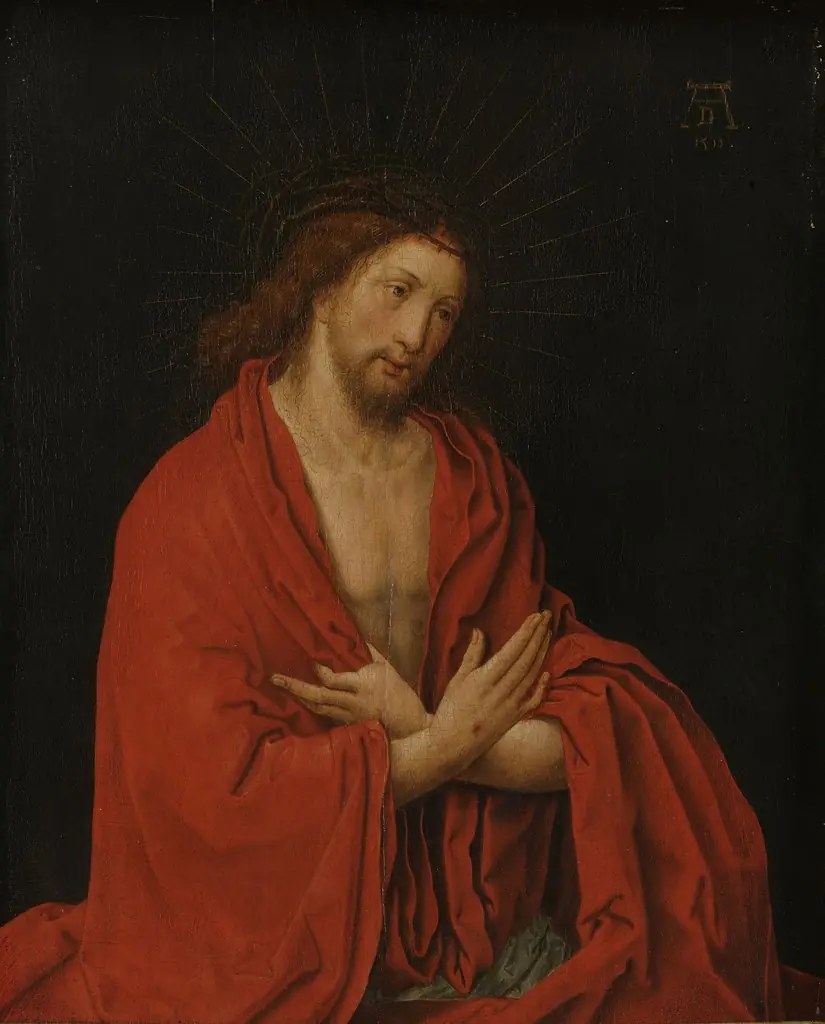 Inner left wing of a diptych with Christ as the Man of Sorrows
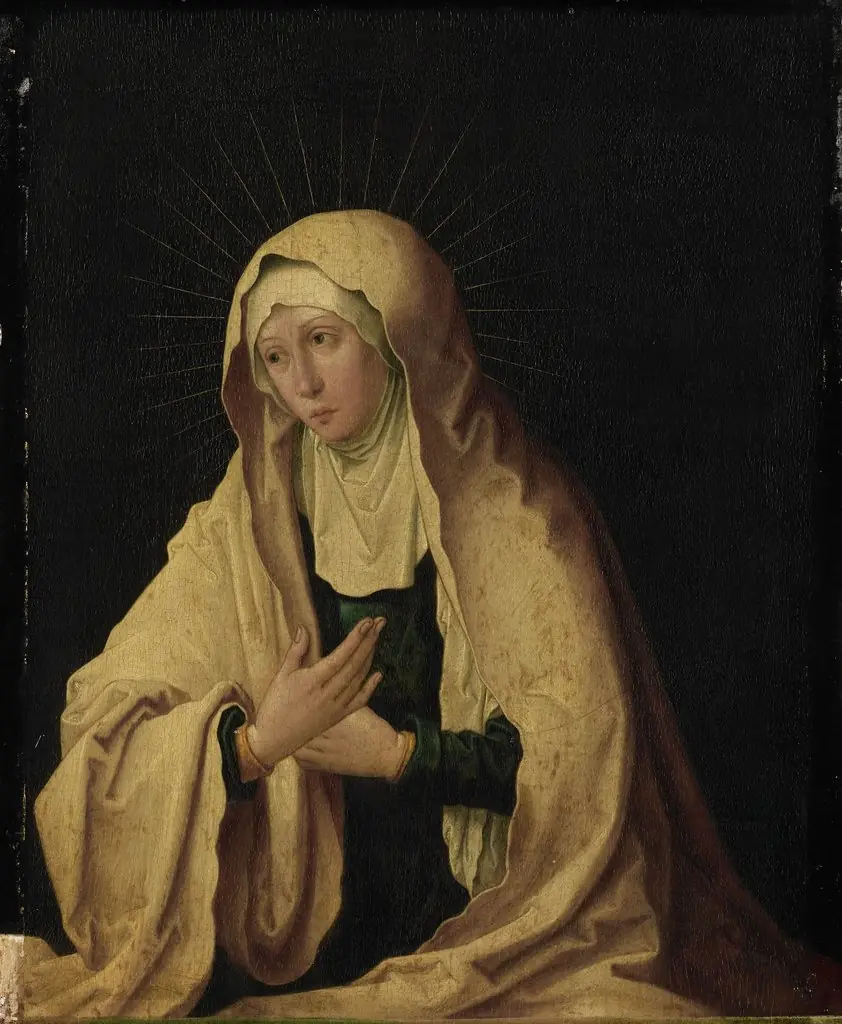 Inner right wing of a diptych with the Virgin as Mater Dolorosa
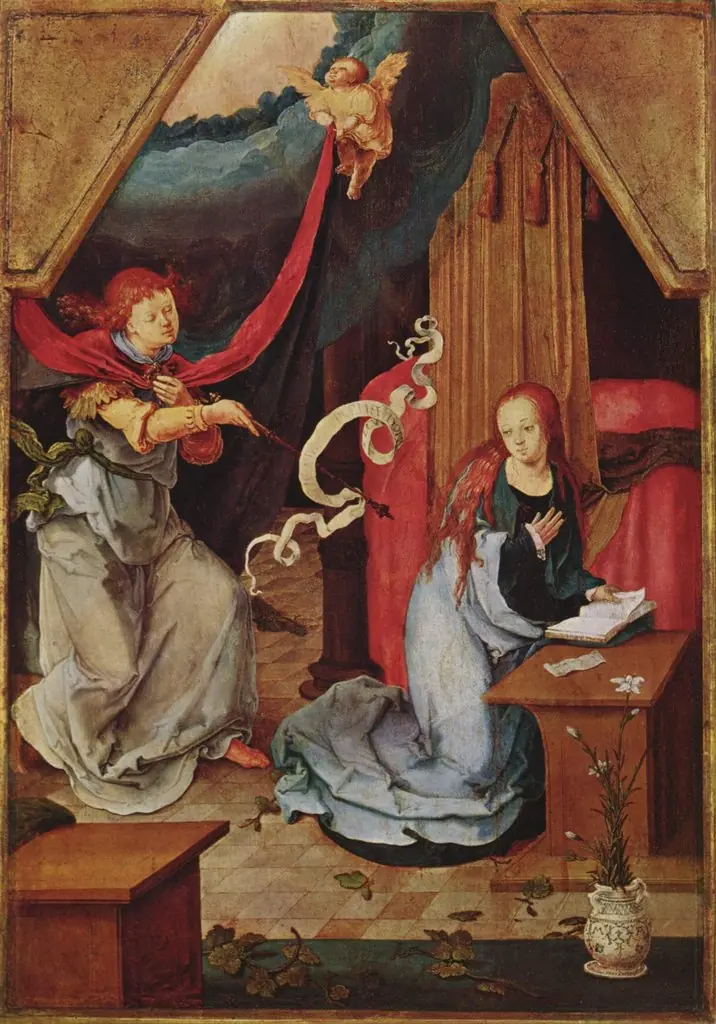 Annunciation