Artwork
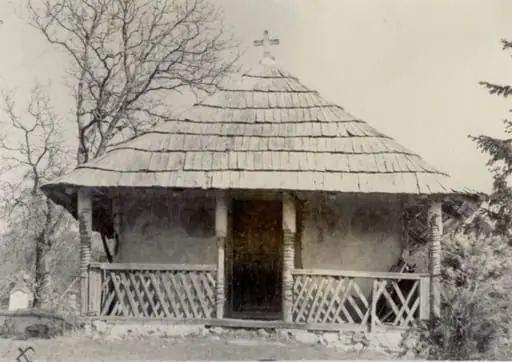
Biserica greco-catolică din Săcel, jud. Cluj (1939)
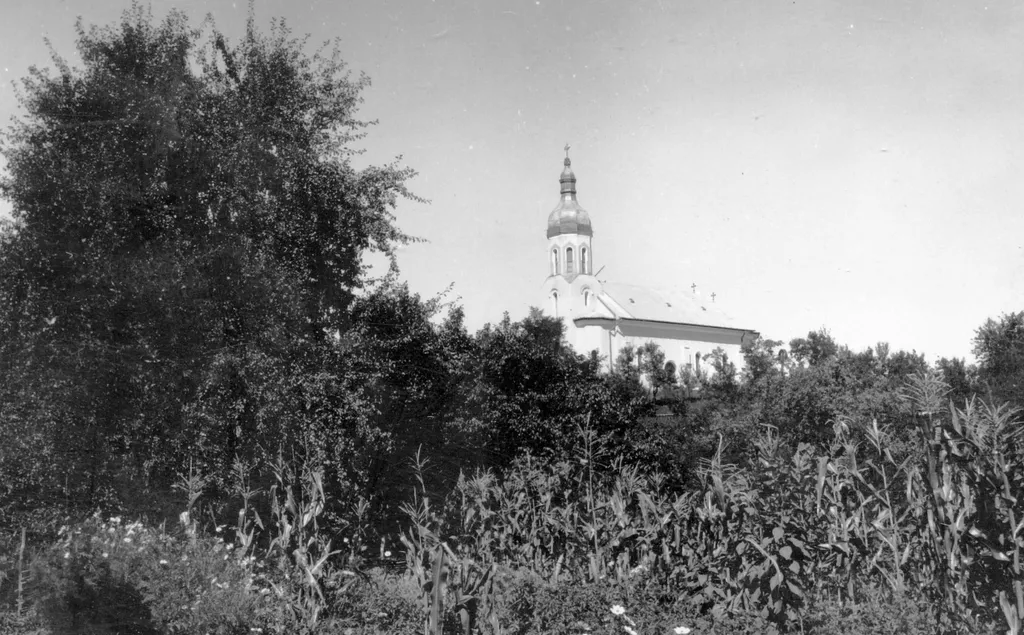
Biserica greco-catolică din Săcel, jud. Cluj (1939) is an unspecified painting by Lucia Apolzan. It dates from 1939 and is held in the collection of the "Dimitrie Gusti" National Village Museum.
About this work
This painting shows a small wooden church with steep roofs and tall narrow windows. It sits in a snowy village with bare trees around it.
Lucia Apolzan painted it in 1939, just two years after the church was built. The brushwork is thick in places, making the snow and wood look real.
Look up another quiet scene by Lucia Apolzan.
Overview
Lucia Apolzan painted this scene in 1939, capturing the newly completed Greek-Catholic church in Săcel, Cluj, just two years after its consecration.
Lucia Apolzan painted this scene in 1939, capturing the newly completed Greek-Catholic church in Săcel, Cluj, just two years after its consecration. The work depicts a modest wooden structure nestled in a winter landscape, surrounded by bare trees and snow-covered ground. The painting reflects the quiet integration of sacred architecture into rural Transylvanian life, rendered with textured brushwork that emphasizes the materiality of wood and snow.
Subject & Meaning
The church, dedicated to the Transfiguration, was built through communal effort and material donation, notably from merchant Heidric Lazar, who provided land and timber in exchange for its construction. Its form—shaped like a ship with a cross-shaped altar—symbolizes spiritual journey and faith. Apolzan’s depiction emphasizes its solitude and permanence within the snowy village, suggesting a quiet, enduring presence amid seasonal cycles and rural labor.
Technique & Style
Apolzan employed thick, deliberate brushstrokes to convey the texture of snow-laden roofs and weathered wood, lending a tactile realism to the scene. The palette is restrained, dominated by whites, grays, and muted browns, reinforcing the winter atmosphere. The composition is calm and balanced, with the church centered against a quiet, open landscape, avoiding dramatic lighting in favor of natural, diffused winter light.
History & Provenance
The church was constructed between 1935 and 1937 using locally sourced timber and stone, with labor provided by villagers and master craftsman Cum Janos from Vlaha. The interior murals, painted in tempera by Doljiu Gavrila in 1937, were restored in 1945 at community expense. Apolzan’s painting, completed in 1939, serves as a contemporary visual record of the building shortly after its completion, likely commissioned or created as a personal documentation of local heritage.
Context
This church emerged during a period of renewed Greek-Catholic identity in Transylvania, supported by local communities rather than state institutions. Its construction reflected both religious devotion and economic pragmatism, as land and labor were exchanged for spiritual infrastructure. Apolzan’s painting aligns with regional artistic trends of the time that valued quiet, observational depictions of rural religious life, distinct from urban or monumental styles.
Legacy
The church remains an active place of worship and a symbol of communal resilience, with its original furnishings and restored murals still intact. Apolzan’s painting endures as a faithful visual archive of its early years, offering insight into the material and spiritual conditions of interwar Transylvanian villages. It stands as a quiet testament to the role of local agency in sustaining religious and cultural heritage.
Artist & collection
Artist
Lucia Florica Apolzan was a Romanian anthropologist, educator, ethnologist, geographer, folklorist, memorialist, educator, poet, and sociologist, an interdisciplinary researcher of the Romanian hill and mountain…
Museum
"Dimitrie Gusti" National Village Museum
Continue through works from the same source collection.
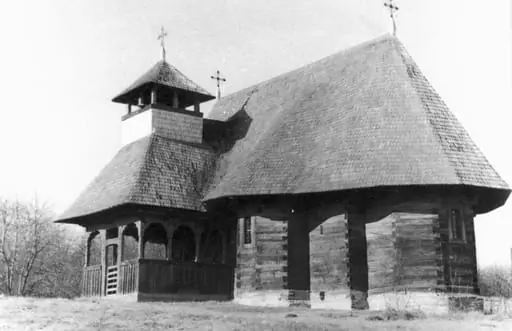 Biserica Răpciuni în Muzeul Satului, București, 1960
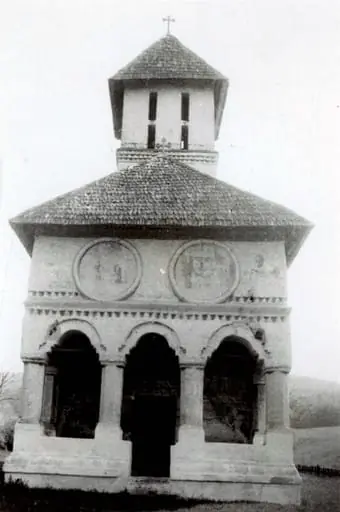 Biserica (monument istoric) din satul Scoica, comuna Andreești, județul Gorj (1990)
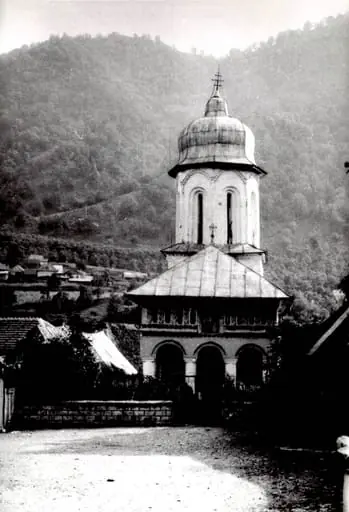 Biserica "Sf. Voievozi", Robești (Cîineni), județul Vâlcea (1981)
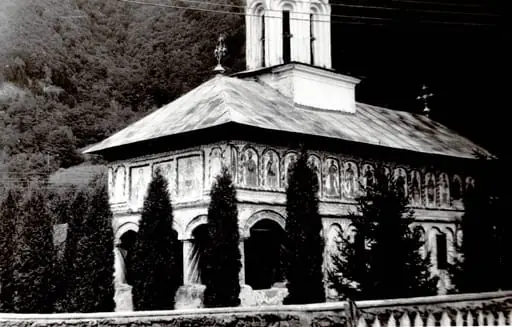 Biserica "Sf. Voievozi", Cîinenii Mici, comuna Cîineni, județul Vâlcea (1981)
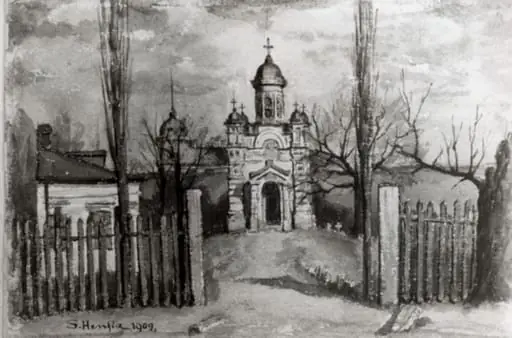 Biserică
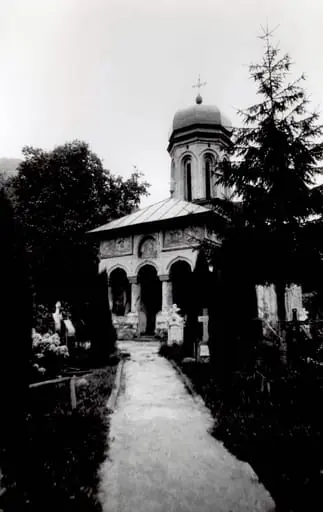 Biserica "Sf. Nicolae", Cîineni Mici, comuna Cîineni, județul Vâlcea (1981)
 Biserica de lemn din Brebina (vedere din față), județul Mehedinți (1986)