Artwork
Biserica "Sf. Voievozi", Cîinenii Mici, comuna Cîineni, județul Vâlcea (1981)
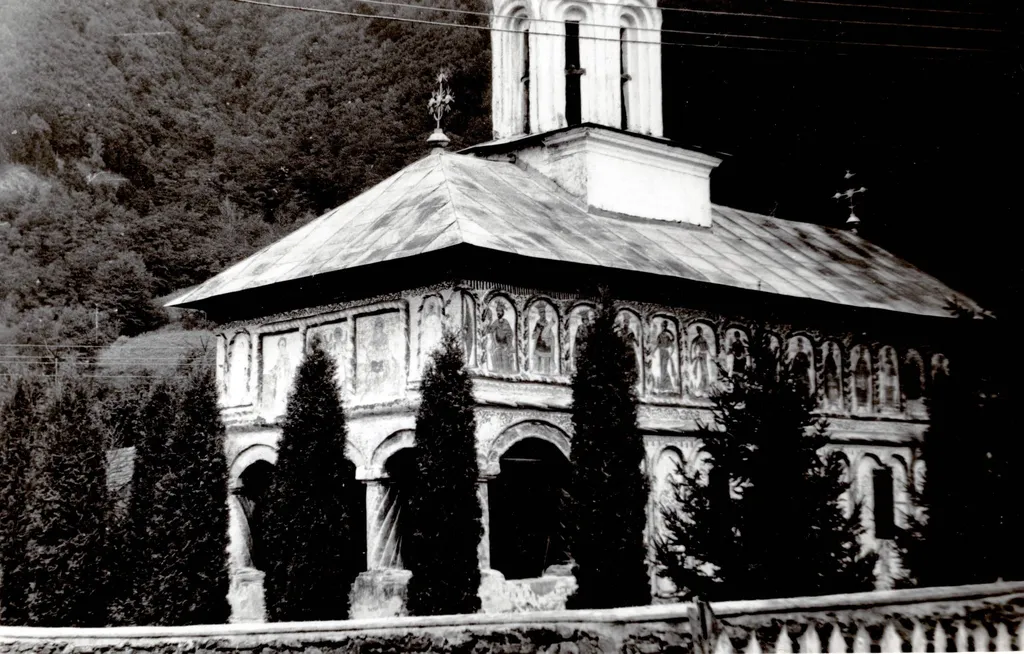
Biserica "Sf. Voievozi", Cîinenii Mici, comuna Cîineni, județul Vâlcea (1981) is a drawing by Unknown. It dates from 1981 and is held in the collection of the "Dimitrie Gusti" National Village Museum. The image documents a rural Orthodox church in Cîinenii Mici, Vâlcea County, recorded in 1981 as part of a study on religious architecture.
About this work
This drawing shows a church building with a simple porch and a tall tower.
The church was built in 1807 and painted in 1808 by painters Manole and Micu.
They added a slab carved in the porch with a message in Cyrillic letters.
The drawing is part of a research report on cult monuments.
To learn more about the style of this drawing, look up the technique: cross-hatching.
Overview
The image documents a rural Orthodox church in Cîinenii Mici, Vâlcea County, recorded in 1981 as part of a study on religious architecture.
The image documents a rural Orthodox church in Cîinenii Mici, Vâlcea County, recorded in 1981 as part of a study on religious architecture. Constructed in 1807 and painted the following year, the structure retains original inscriptions and donor portraits. The photograph captures its modest form: a rectangular nave, polygonal apse, and open wooden porch supported by columns, with a tower rising above the western end. The drawing technique employs cross-hatching to render texture and volume.
Subject & Meaning
Dedicated to the Holy Voivodes and the martyrs Demetrius and Paraskeva, the church reflects local devotional traditions tied to regional leadership and saintly intercession. Donor inscriptions name local nobles and clergy, including Jupan Frangu Daneș and Bishop Joseph, indicating communal investment in sacred space. The inscriptions serve both as religious invocation and historical record, anchoring the building’s purpose in the social and spiritual life of the village.
Technique & Style
The architectural drawing uses cross-hatching to define structural elements and surface textures, emphasizing volume without color. The porch, tower, and masonry are rendered with careful line weight, distinguishing stone foundations from brick walls and metal roofing. Inscriptions on the pisania and interior walls are transcribed precisely, preserving Cyrillic script and spatial placement. The style is documentary, prioritizing accuracy over aesthetic embellishment.
History & Provenance
Built in 1807 and painted in 1808 by artisans Manole and Micu, the church was later modified with repainted porch elements. Inscriptions on the pisania and interior walls identify donors and artists, including Radu ereu and Nicolae Daneș. The 188 date under the cornice may reference a renovation. The drawing originates from Research Report No. 663, compiled during a 1981 survey of cult monuments in Loviste Land, preserving details now at risk of decay.
Context
The church exemplifies early 19th-century rural ecclesiastical architecture in Oltenia, combining local materials—river stone, brick, and wood—with Byzantine-derived plans. Its open porch and tower reflect regional adaptations to climate and liturgical needs. The presence of donor portraits and detailed inscriptions aligns with a broader tradition in Wallachia of embedding communal identity within sacred architecture, particularly during periods of relative stability under Ottoman suzerainty.
Legacy
As a recorded artifact within a state-sponsored architectural survey, the drawing preserves details of a structure that may no longer exist in its original form. The transcription of Cyrillic inscriptions and painter attributions offers rare evidence of local artistic practice. The image contributes to the documentation of vernacular religious heritage, serving as a reference for conservation efforts and regional cultural history.
Artist & collection
Museum
"Dimitrie Gusti" National Village Museum
Continue through works from the same source collection.
 Domestic Scene
 Giacomo and Cardinal Marco, investing Andrea, Abbot of San Zeno, with his Benefice
 The Nymph of Fontainebleau
 Portrait of a Woman
 Madonna and Child with Saints in the Enclosed Garden
 Venus and Minerva
 Family Group of Four on Sofa
 Wall painting from Room H of the Villa of P. Fannius Synistor at Boscoreale
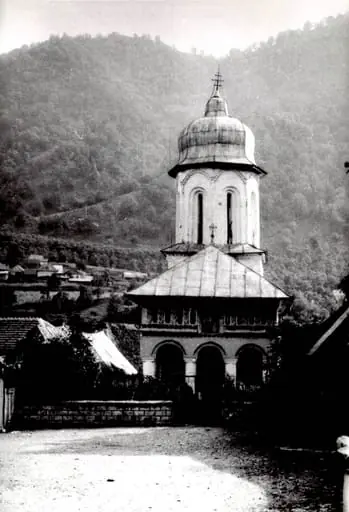 Biserica "Sf. Voievozi", Robești (Cîineni), județul Vâlcea (1981)
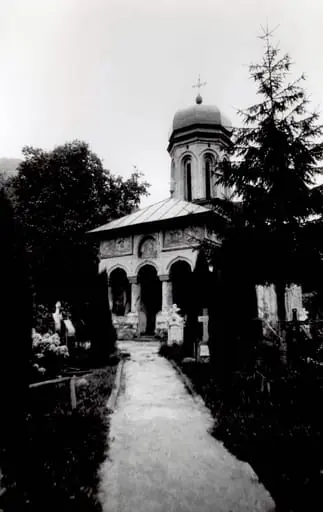 Biserica "Sf. Nicolae", Cîineni Mici, comuna Cîineni, județul Vâlcea (1981)
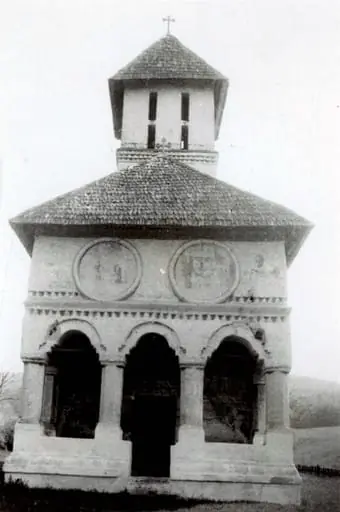 Biserica (monument istoric) din satul Scoica, comuna Andreești, județul Gorj (1990)
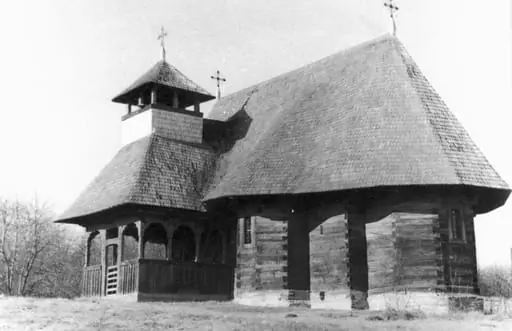 Biserica Răpciuni în Muzeul Satului, București, 1960
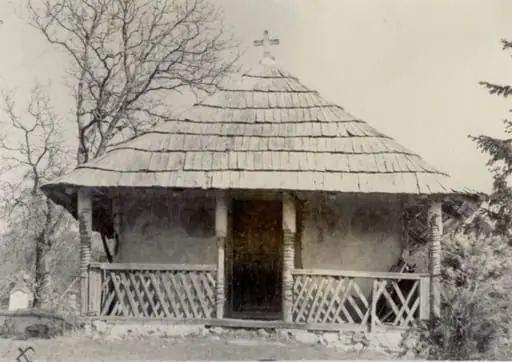 Biserica de lemn din Brebina (vedere din față), județul Mehedinți (1986)
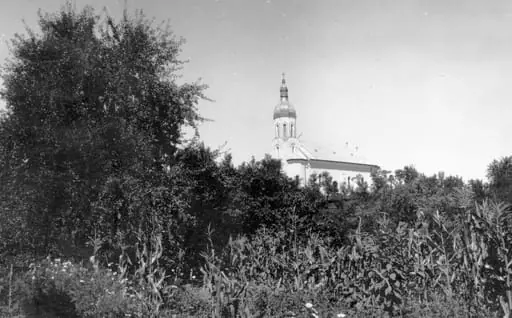 Biserica greco-catolică din Săcel, jud. Cluj (1939)
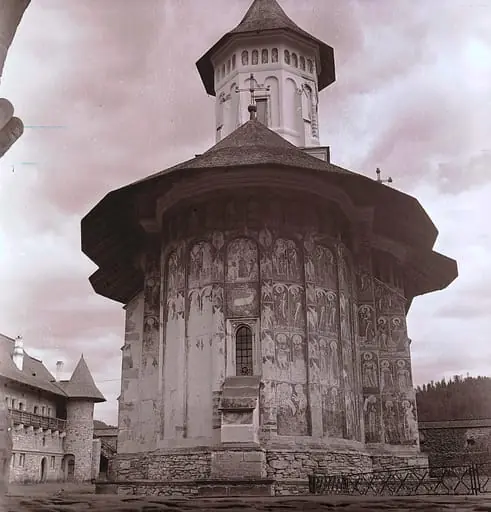 Research Bucovina, Vatra Moldovița. The Monastery And The Church - View With The Absida And The Turla Of The Church (1980)
 Fața de prapor din Biserica de lemn „Sf. Arhangheli” din Ociu, comuna Vața de Jos, județul Hunedoara (1982)
 Detaliu de pe fresca din pridvorul monumentului istoric din satul Scoica, comuna Andreești, județul Gorj (1990)