Artwork
Girl with Fuzzy Hair
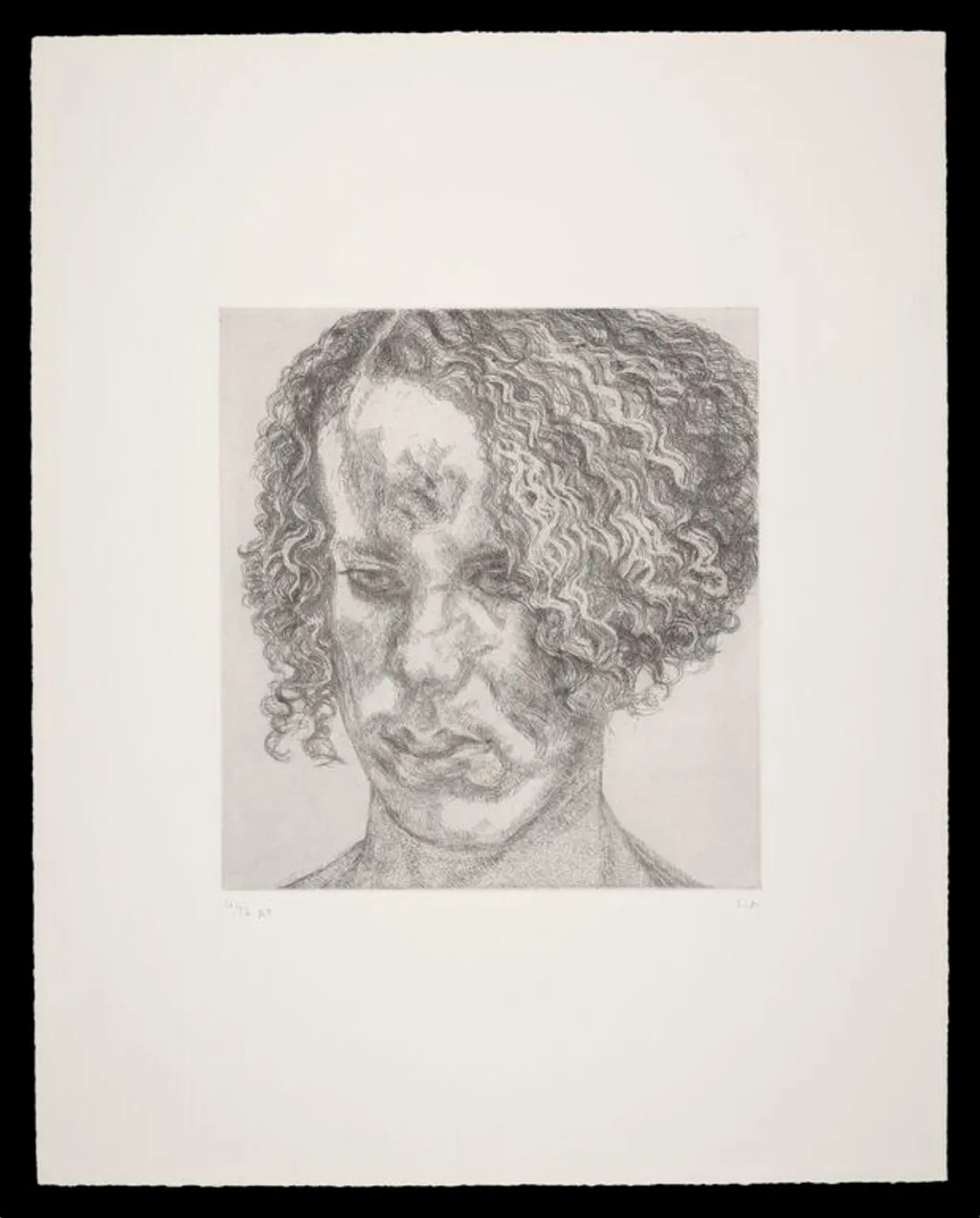
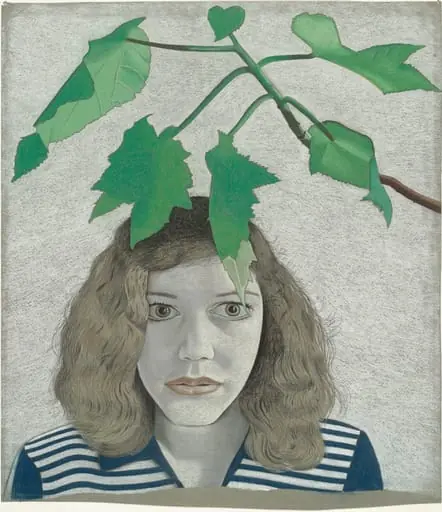
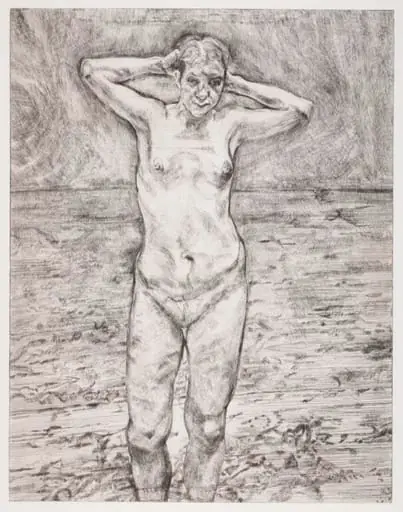
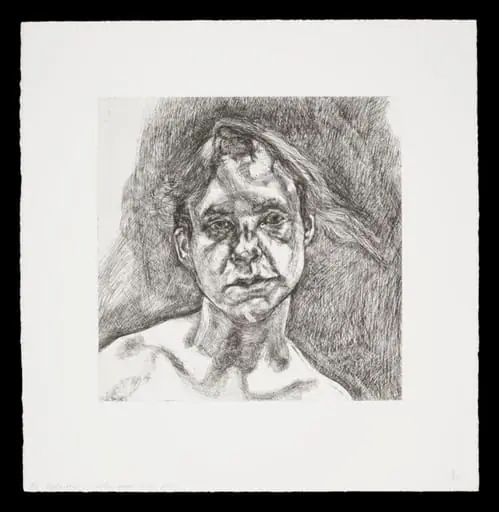
Girl with Fuzzy Hair is a print by Lucian Freud. It dates from 2004 and is held in the collection of the Victoria and Albert Museum.
About this work
Paul Dewis worked the plate in London Print Studio and Marc Balakjian fixed the printing.
This print shows Nicola Chambers, a student from Camberwell College of Art. Lucian Freud made it in 2004 using etching and aquatint. The plate got pulled from acid too soon. That left shallow lines that normally wouldn’t hold ink.
Paul Dewis worked the plate in London Print Studio and Marc Balakjian fixed the printing. They ended up with a soft silver tone instead of deeper blacks.
Try looking up Lucian Freud next.
Overview
This 2004 etching and aquatint by Lucian Freud depicts Nicola Chambers, then a third-year student at Camberwell College of Art. The print was produced at London Print Studio with technical assistance from Paul Dewis and Marc Balakjian. An unexpected outcome during the acid biting process resulted in unusually shallow etched lines, altering the tonal quality of the final impression and yielding a delicate silvery effect rather than the deeper contrasts typical of Freud’s prints.
Subject & Meaning
The subject, Nicola Chambers, is rendered with intimate attention to the texture of her hair and the quiet presence of her posture. Freud’s focus on the physicality of his sitter—without narrative or symbolic embellishment—reflects his broader interest in the human form as a record of lived experience. The soft, diffused lines emphasize the natural, unidealized quality of her appearance, aligning with his lifelong commitment to direct, unmediated observation.
Technique & Style
The print’s distinctive silvery tonality emerged from an accidental reduction in acid exposure—only 15 minutes instead of the usual 45. This produced shallow grooves that could not retain standard ink. Marc Balakjian developed a custom ink formulation to hold in these fine lines, while Paul Dewis used stopping-out varnish to preserve the wavy white highlights in the hair. The resulting image balances precision with atmospheric subtlety, diverging from Freud’s typically dense, dark etchings.
History & Provenance
The copper plate used for this print is held in the V&A’s collection (E.70-2025), alongside a series of trial proofs on various papers (E.386–391–2020) made during the printing process. These proofs document the iterative adjustments made by Balakjian to achieve the final tonal balance. The print’s unusual appearance was not premeditated but arose from a technical mishap, later embraced as part of the work’s character.
Context
Created in the final decade of Freud’s career, this print reflects his continued engagement with printmaking despite his primary reputation as a painter. The collaboration with London Print Studio underscores his reliance on skilled technicians to realize his vision. The work also situates him within a tradition of artist-printmakers who value the unpredictability of process, allowing accident to inform aesthetic outcome.
Legacy
This print stands as a testament to the collaborative nature of printmaking and the role of serendipity in artistic production. Its atypical tonality has become a point of study for conservators and printmakers interested in material adaptation. The preserved plate and trial proofs offer insight into Freud’s working methods, reinforcing the value of process in understanding his broader oeuvre.
Artist & collection
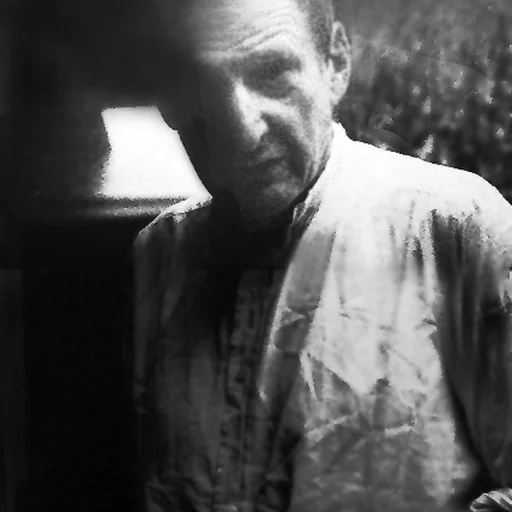
Artist
Lucian Michael Freud (; 8 December 1922 – 20 July 2011) was a British painter and draughtsman, specialising in figurative art, who is known as one of the foremost 20th-century English portraitists.