Artwork
Stormy Seas on a Mountainous Coast
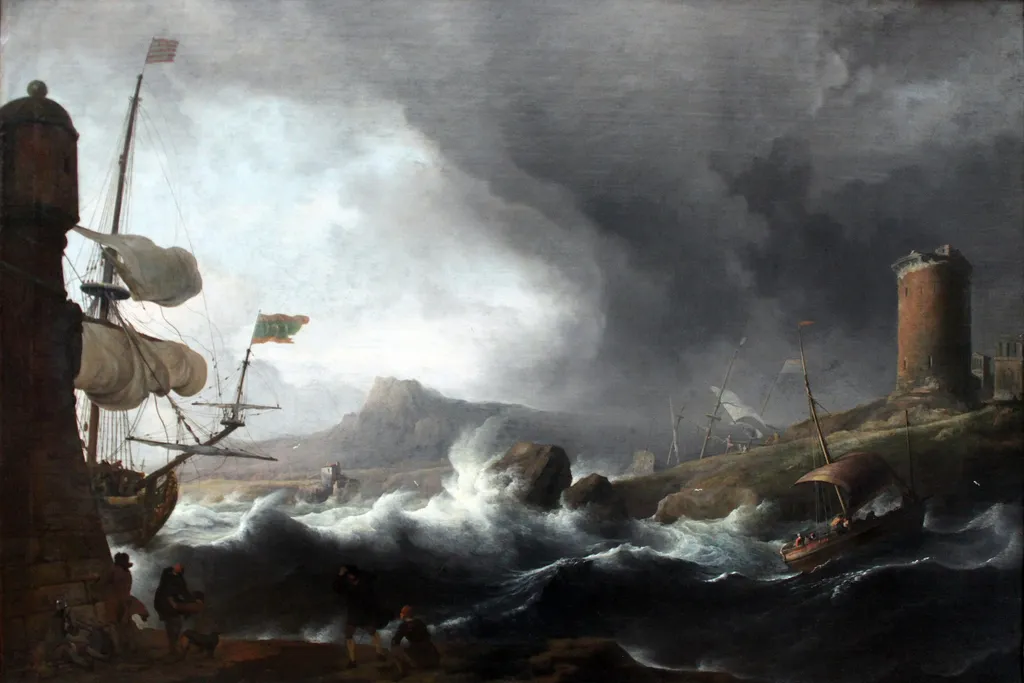
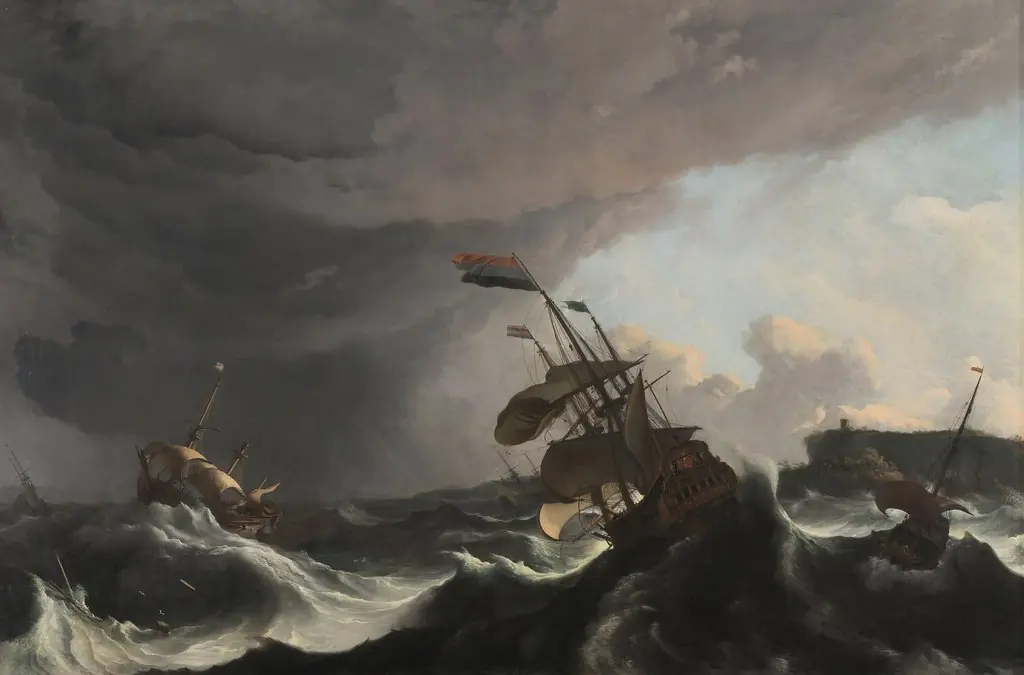
Stormy Seas on a Mountainous Coast is a paint painting by the Dutch Golden Age artist Ludolf Bakhuizen. It dates from 1696 and is held in the collection of the Gemäldegalerie Berlin.
About this work
Overview
Painted in 1696 by Ludolf Bakhuizen, this seascape captures a violent coastal storm off the Dutch shoreline.
Painted in 1696 by Ludolf Bakhuizen, this seascape captures a violent coastal storm off the Dutch shoreline. As a German-born artist who settled in the Netherlands, Bakhuizen became the foremost maritime painter in the region after the van de Velde family left for England. The work exemplifies his lifelong focus on the sea’s power, rendered with precise observation and a restrained palette of grays and blues that emphasize the storm’s ferocity.
Subject & Meaning
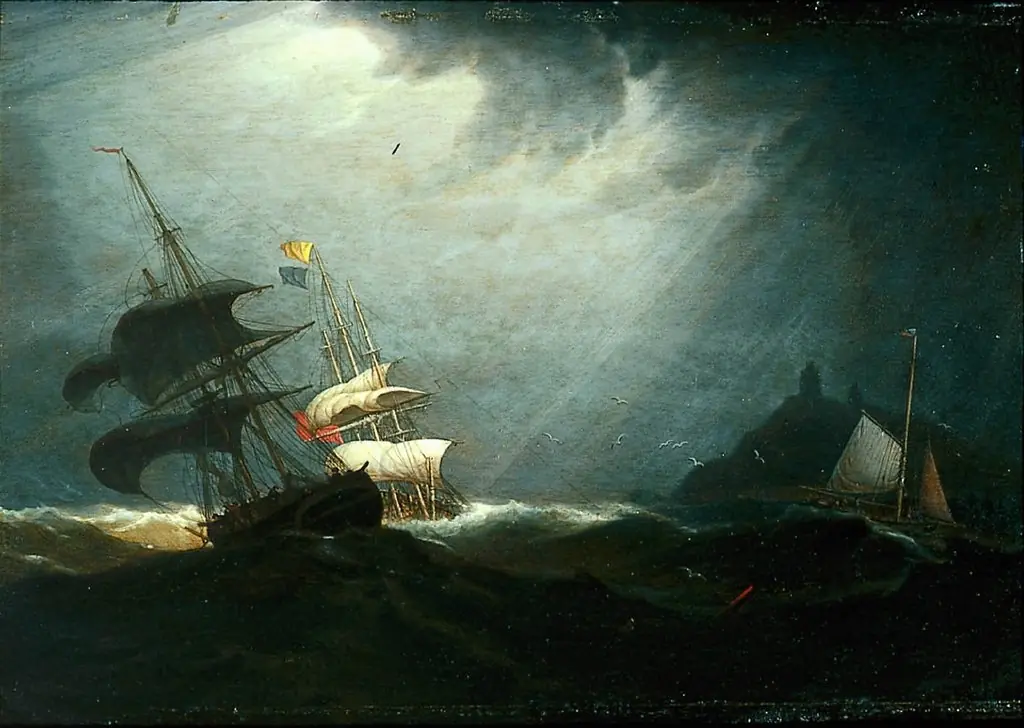
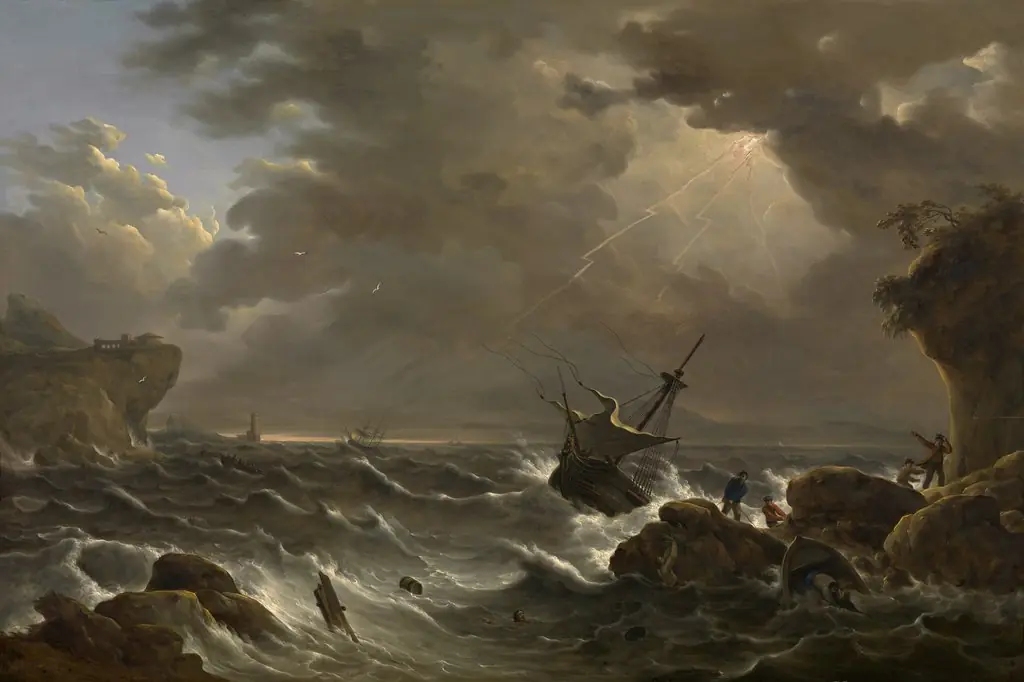
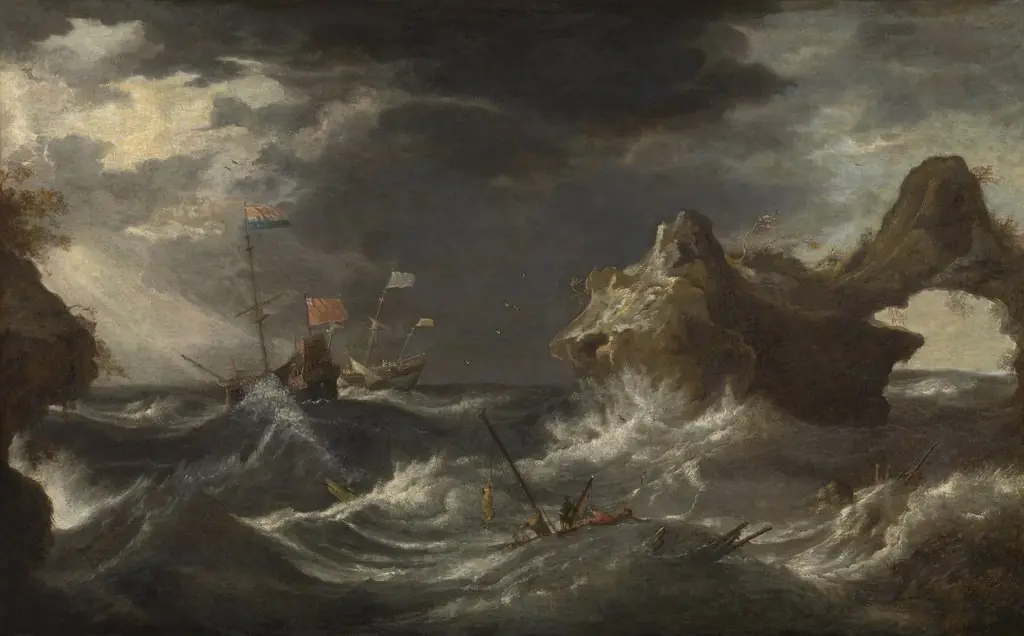
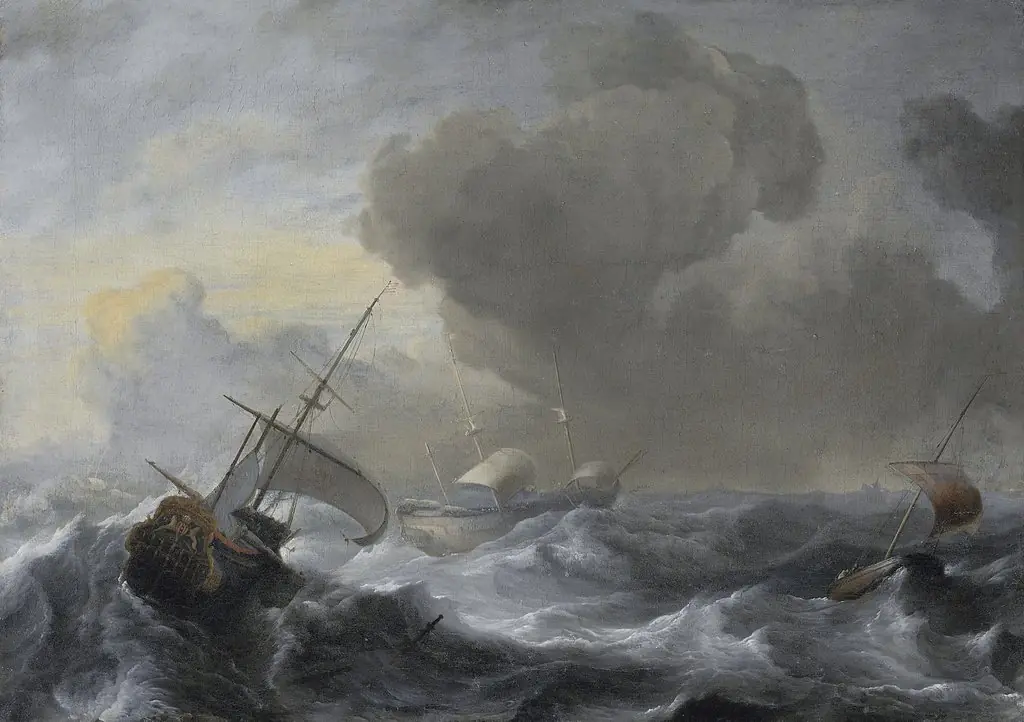
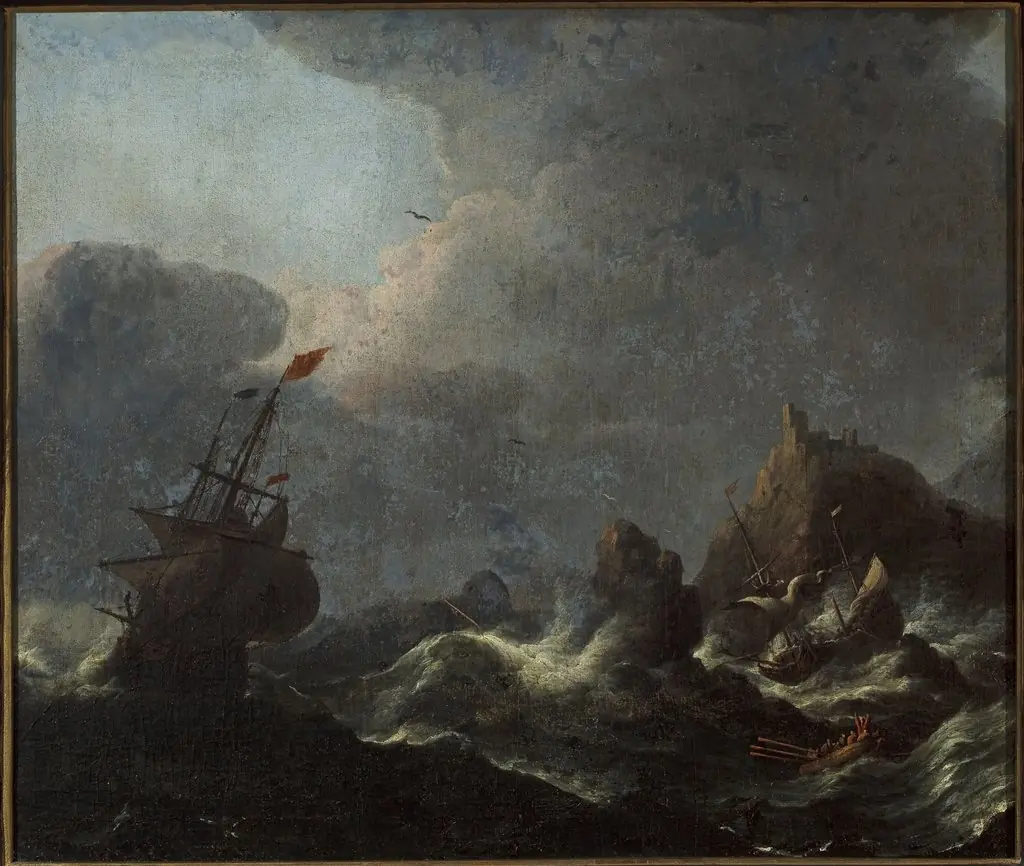
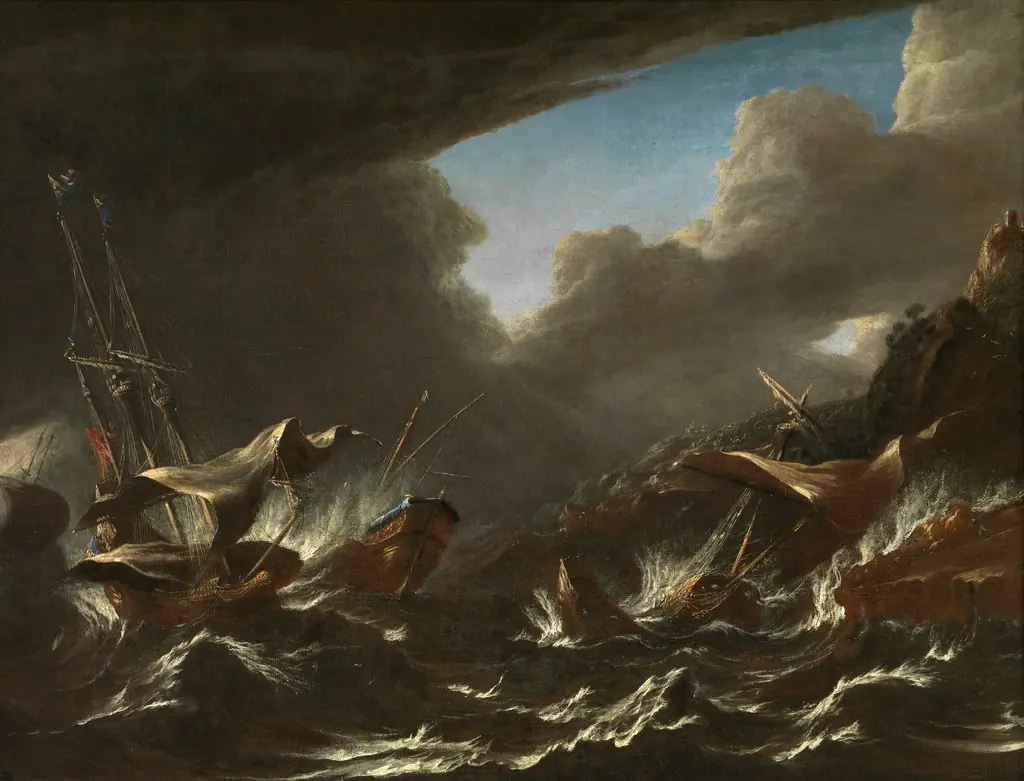
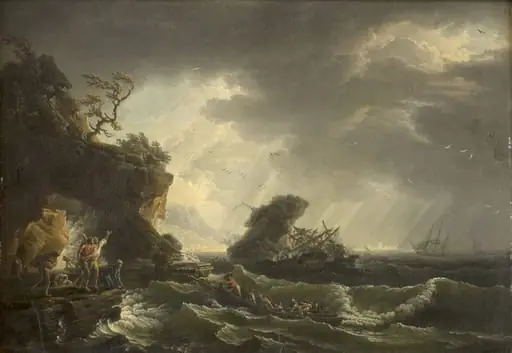
The scene centers on a vessel caught in the grip of towering waves near a rugged, rocky coast. The ship’s torn sails and damaged hull suggest a desperate struggle against nature’s force. No human figures are visible, heightening the sense of isolation and vulnerability. The painting conveys neither heroism nor rescue, but rather the indifferent might of the sea—a quiet meditation on human fragility amid natural chaos.
Technique & Style
Bakhuizen employed chiaroscuro to model the crashing waves and cloud-heavy sky, using subtle gradations of light and shadow to create depth and motion. Brushwork is controlled yet dynamic, with thick impasto on wave crests and thin glazes in the distant horizon. The muted tonality—dominated by slate blue, leaden gray, and muted white—enhances the atmosphere of impending danger, avoiding dramatic contrasts in favor of atmospheric realism.
History & Provenance
Commissioned during the height of the Dutch Golden Age, the painting entered the collection of the Gemäldegalerie in Berlin in the 19th century. It was likely acquired through the broader European circulation of Dutch maritime works, which were prized for their technical precision and emotional restraint. Its survival in good condition reflects its consistent recognition among collectors of Northern European art.
Context
In late 17th-century Amsterdam, maritime trade fueled national wealth, and seascapes became symbols of both economic vitality and existential risk. Bakhuizen’s works responded to this duality: they celebrated seafaring while acknowledging its perils. Unlike earlier Dutch marine painters who emphasized calm harbors, Bakhuizen focused on storms, aligning with a growing cultural interest in nature’s unpredictability and the limits of human control.
Legacy
Bakhuizen’s influence extended to later marine painters in the Netherlands and beyond, particularly in his treatment of wave dynamics and atmospheric tension. His approach to storm scenes—avoiding melodrama in favor of observed realism—helped shape the evolution of 18th-century maritime art. Today, the painting remains a key example of how Dutch artists translated commercial and maritime experience into enduring visual narratives.
Artist & collection
Artist
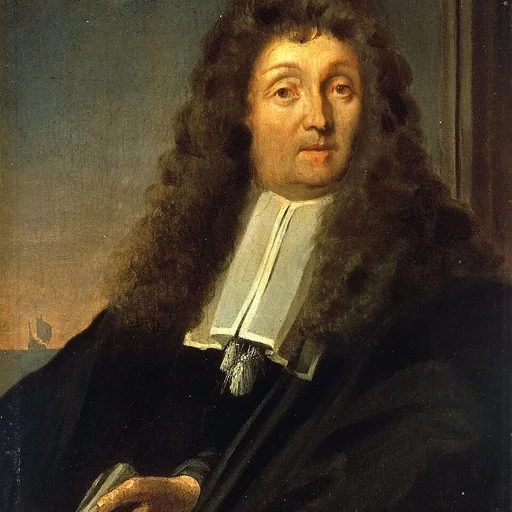
Ludolf Bakhuizen (28 December 1630 or 1632 – 7 November 1708) was a German-born Dutch painter, draughtsman, calligrapher and printmaker.

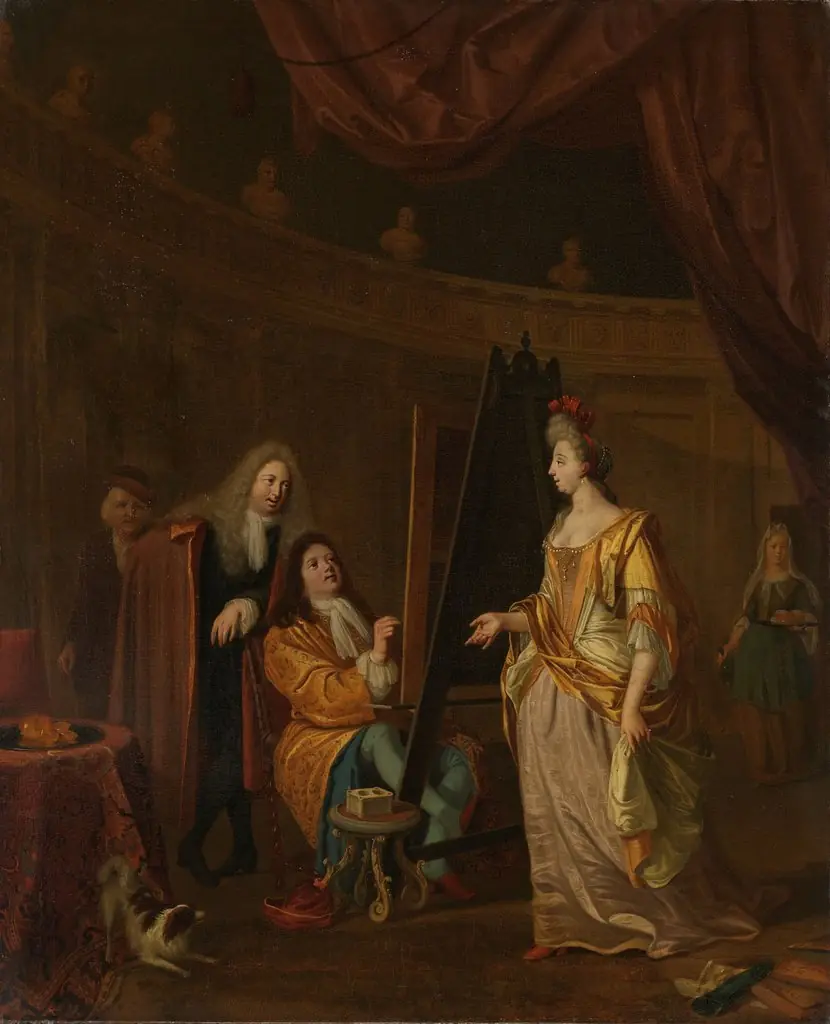 An artist in his studio, painting the portrait of a lady
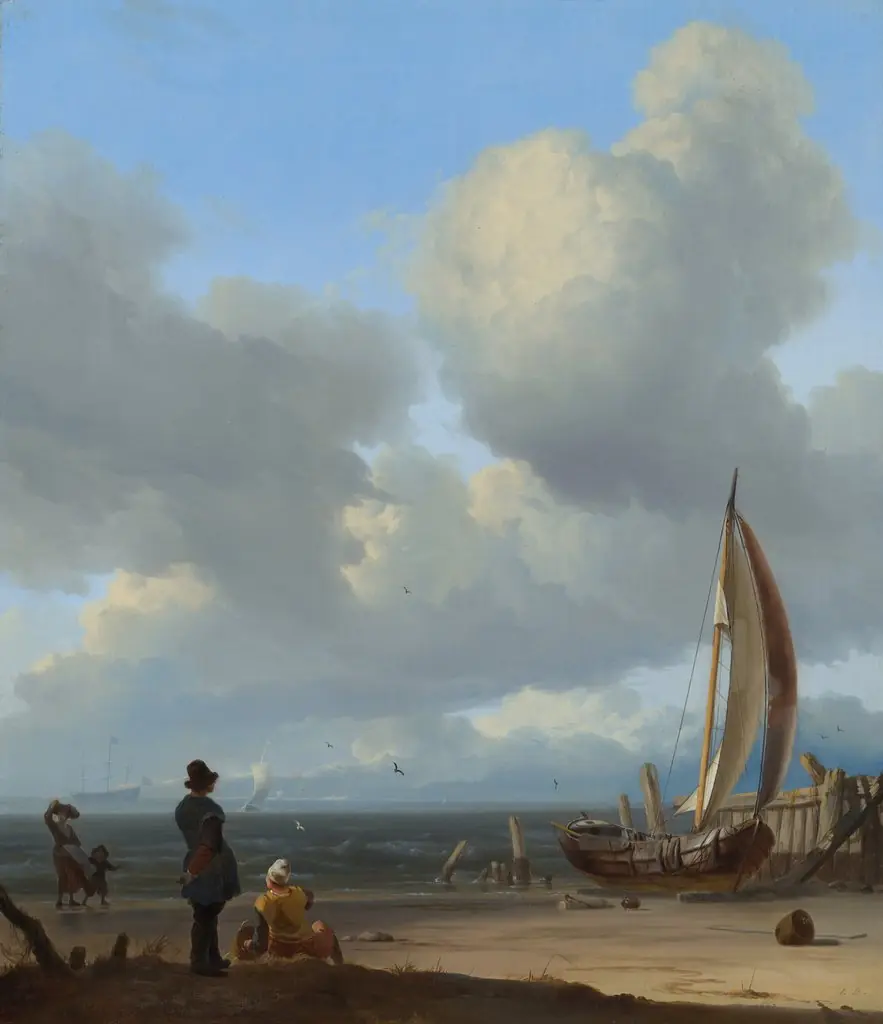 An extensive seascape with figures by a boat on a shore near Huisduinen
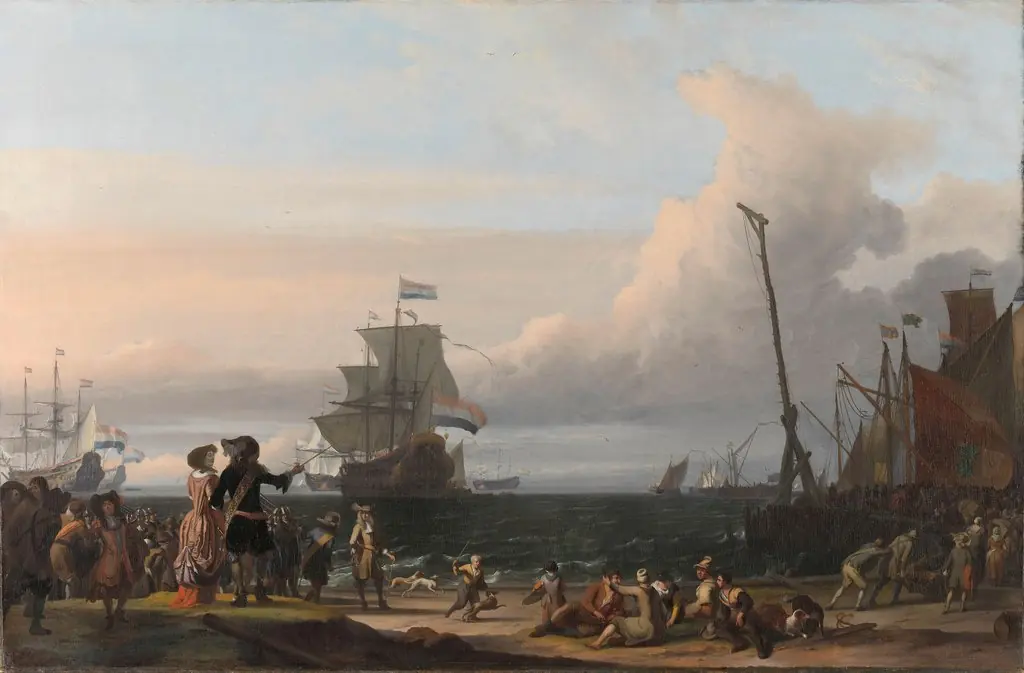 Dutch ships in the roads of Texel; in the middle the 'Gouden Leeuw,' the flagship of Cornelis Tromp
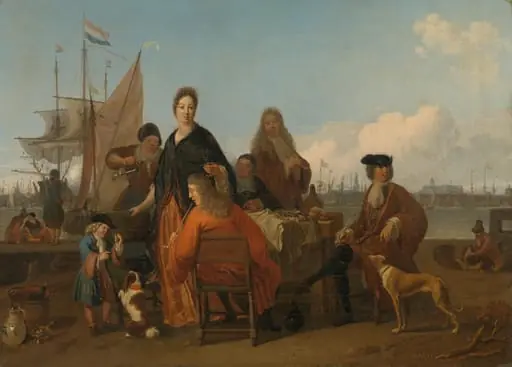 The Bakhuysen and de Hooghe Families dining at the Mosselsteiger (Mussel Pier) on the Y, Amsterdam
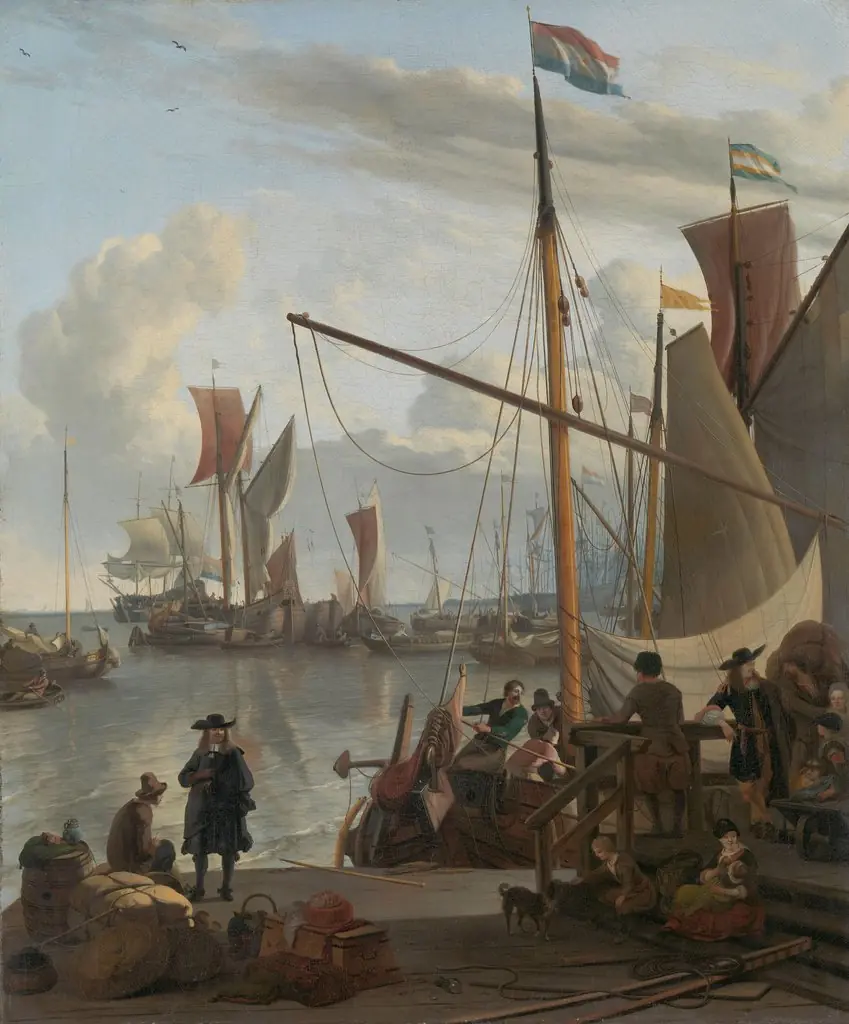 The Y at Amsterdam, seen from the Mosselsteiger (mussel pier)
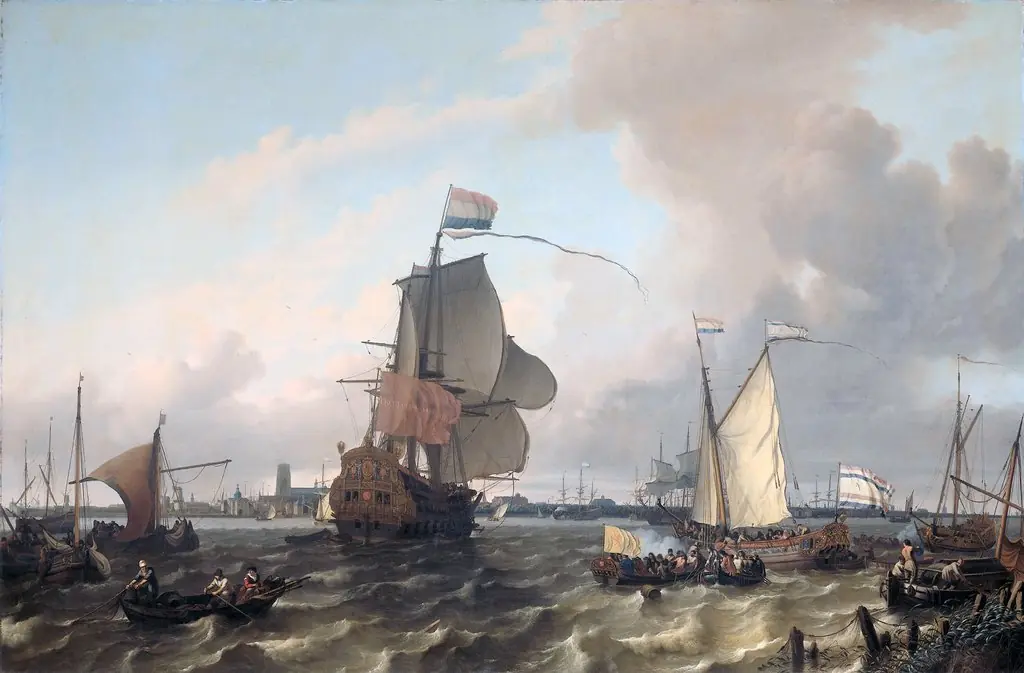 The Man-of-War Brielle on the River Maas off Rotterdam
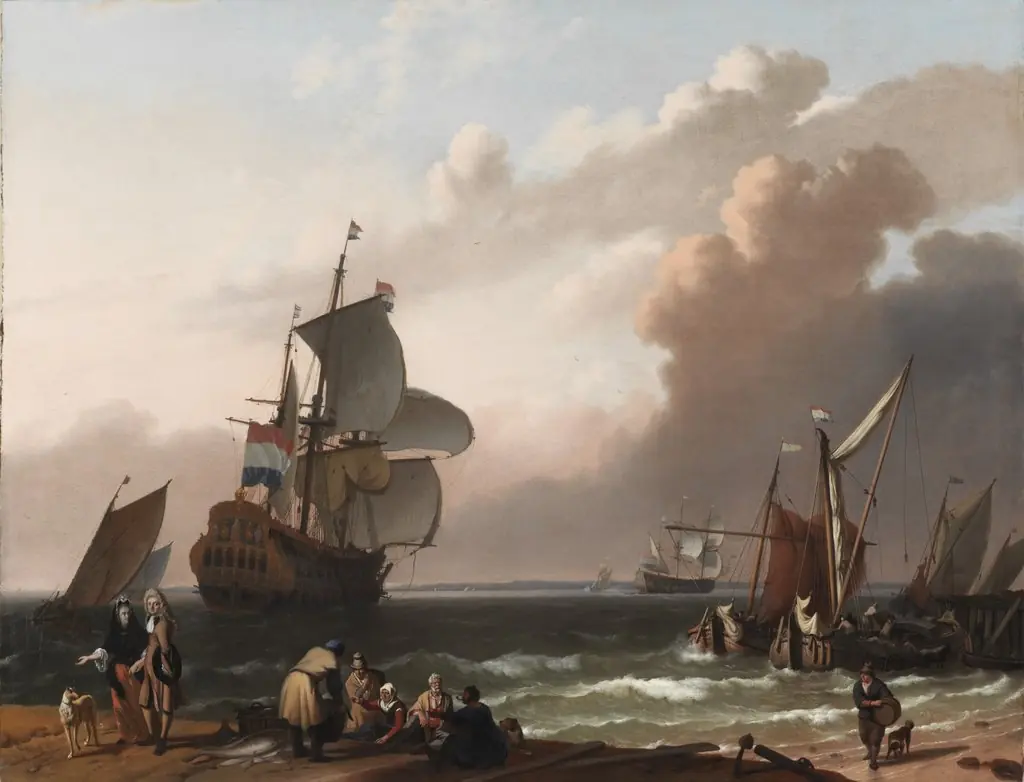 Warship and Dutch Sailboats near the Shore
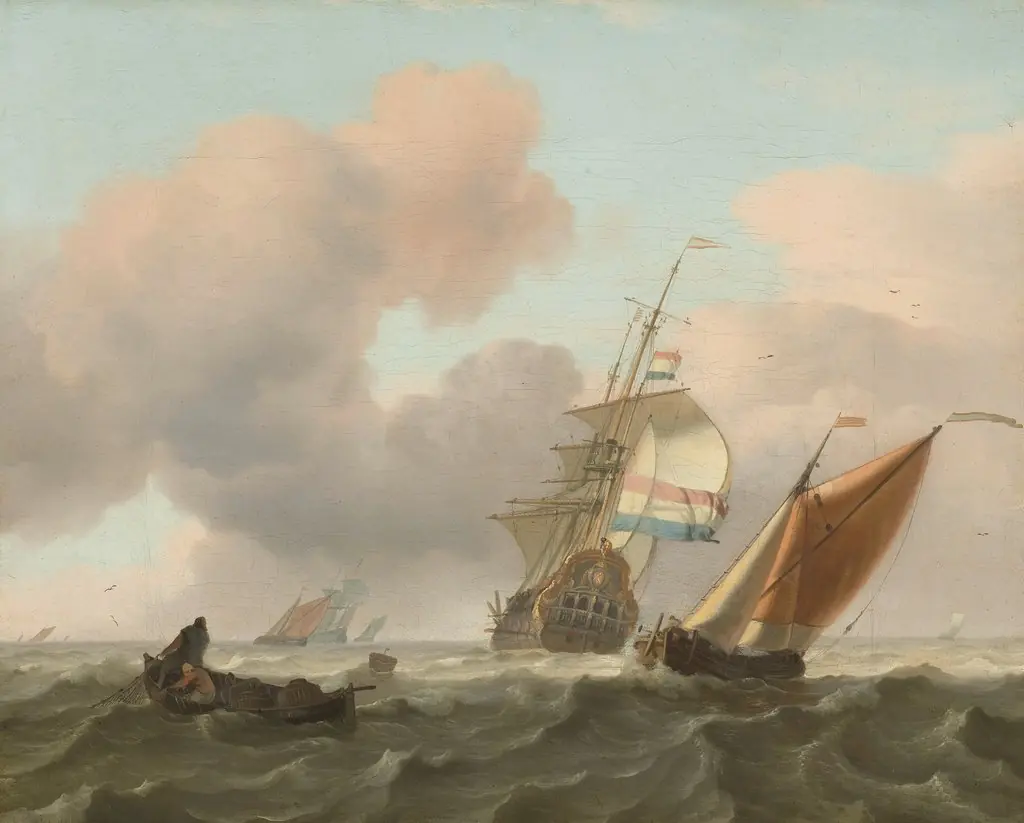 Rough sea with Ships