Artwork
The Penitent Magdalen
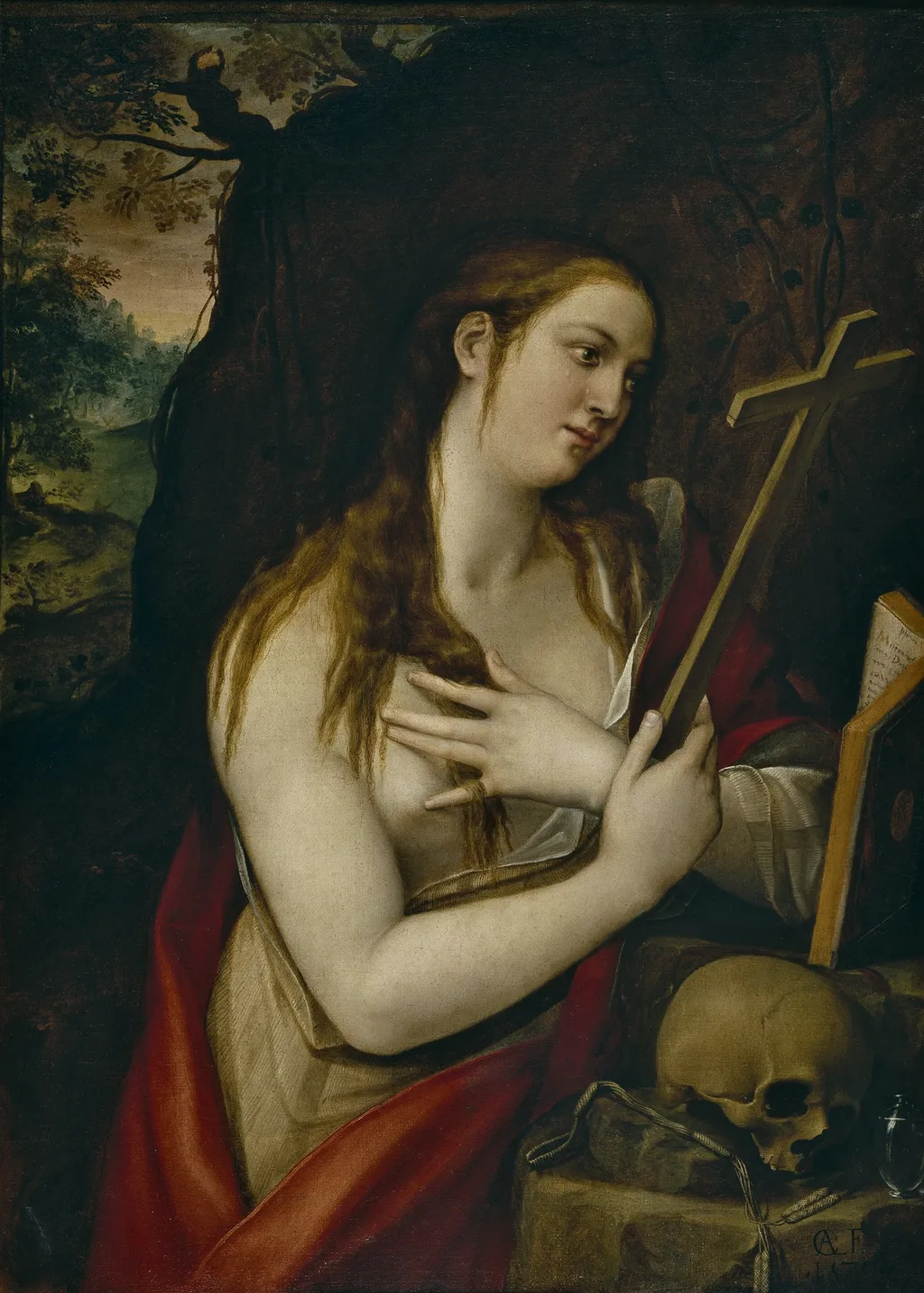
The Penitent Magdalen is an oil painting by the Mannerist artist Luis de Carvajal. It dates from 1590 and is held in the collection of the Museo del Prado.
About this work
Overview
Luis de Carvajal’s oil painting The Penitent Magdalen, executed around 1590, presents a contemplative Mary Magdalene in a half‑clothed pose. The work is part of the Museo del Prado’s collection in Madrid and exemplifies late‑sixteenth‑century Spanish devotional art.
Subject & Meaning
The figure holds a crucifix and a small book, while a mirror rests in her left hand and a skull lies at her feet. These objects function as traditional symbols: the crucifix for redemption, the book for scripture, the mirror for self‑examination, and the skull for mortality, together underscoring the theme of repentance.
Technique & Style
Carvajal employs a strong chiaroscuro, contrasting the illuminated flesh and red drapery against a dim, cloud‑filled landscape. The soft modeling of the face and the delicate rendering of the hair reveal a careful handling of oil paint, while the atmospheric background recedes into muted tones, enhancing the figure’s spiritual focus.
History & Provenance
Created in the closing decade of the 1500s, the painting entered the Spanish royal collections before being transferred to the Prado Museum, where it remains on display. Its documented provenance traces a typical path for religious works of the period, moving from ecclesiastical patronage to national institutions.
Context
During the Counter‑Reformation, depictions of Mary Magdalene as a penitent served didactic purposes, encouraging personal reflection on sin and redemption. Carvajal’s rendition aligns with contemporary Spanish iconography, emphasizing inner conversion through visual allegory rather than overt narrative.
Own this work as a print
Artist & collection