Artwork
The Penitent Magdalen
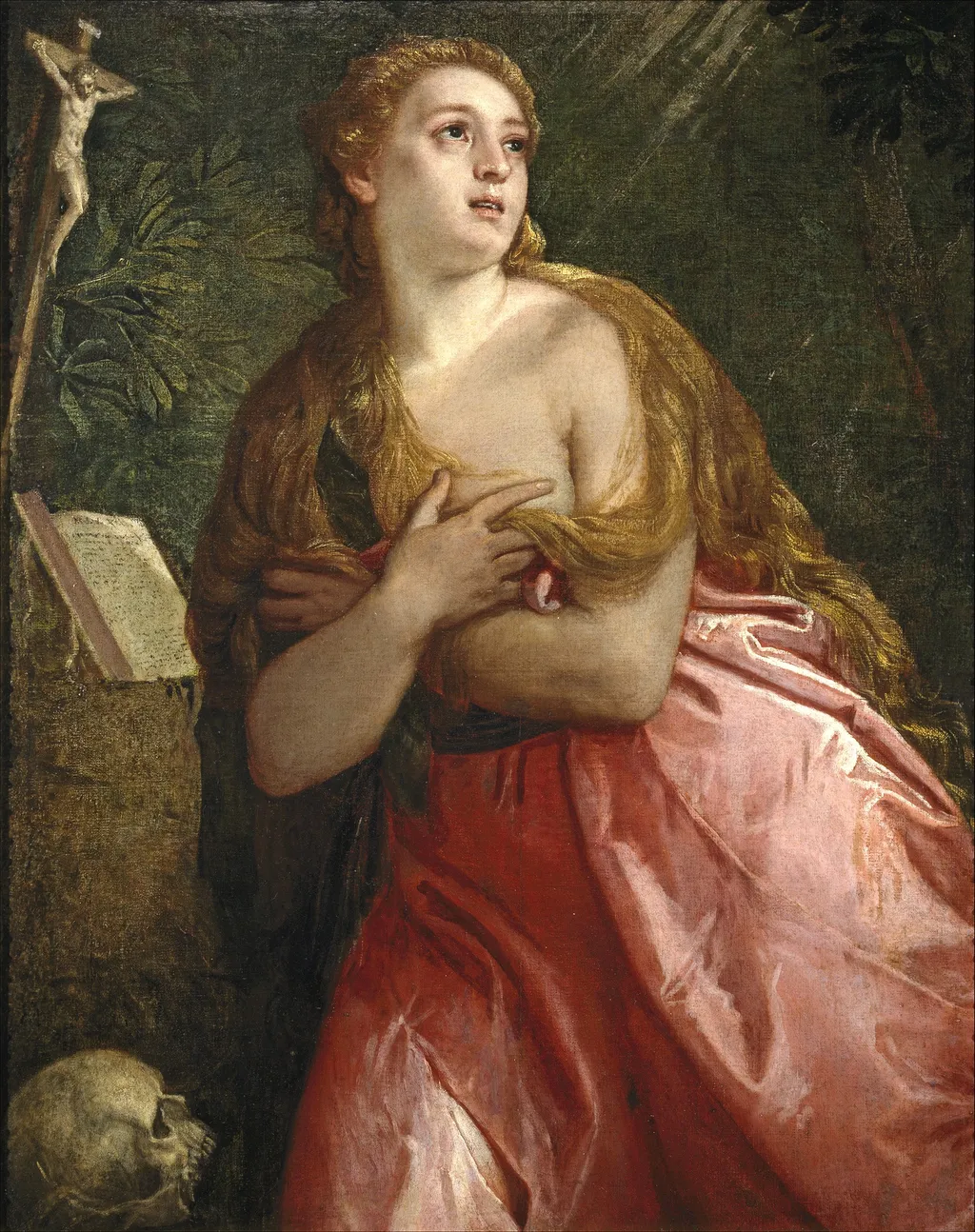
The Penitent Magdalen is an oil painting by the Mannerist artist Paolo Veronese. It is held in the collection of the Museo del Prado.
About this work
Overview
Paolo Veronese’s *The Penitent Magdalen*, painted in 1592, belongs to the final phase of the Venetian master’s long career. Executed in oil on canvas, the work presents a solitary female figure against a dark, forested backdrop, her red garment and fur shawl sharply contrasting with the surrounding gloom. The painting is part of the Museo del Prado’s permanent collection.
Subject & Meaning
The central figure is identified as Mary Magdalene, a biblical archetype of repentance. She holds a small book in one hand, touches her chest with the other, and is surrounded by symbols of mortality—a skull at her feet and a crucifix suspended from a tree. These elements together underscore themes of contemplation, penitence, and the transience of earthly life.
Technique & Style
Veronese employs a Mannerist visual language, marked by heightened drama and elegant elongation of forms. The composition relies on strong chiaroscuro, with the luminous red dress and golden hair illuminated against a tenebrous forest, creating a stark contrast that draws attention to the saint’s expressive face. The brushwork remains refined, reflecting the artist’s mature handling of oil paint.
History & Provenance
Created toward the end of Veronese’s life, the painting entered the Spanish royal collection before being transferred to the Museo del Prado, where it remains on display. Its provenance traces a typical 17th‑century trajectory of Italian masterpieces moving to northern European courts, illustrating the high regard in which Veronese’s later works were held.
Own this work as a print
Artist & collection
Artist
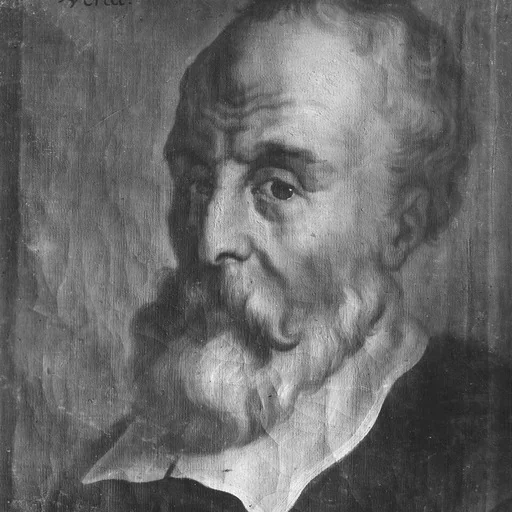
Paolo Caliari (1528 – 19 April 1588), known as Paolo Veronese ( VERR-ə-NAY-zay, -zee, US also -see; Italian: ), was an Italian Renaissance painter based in Venice, known for extremely large history paintings of…