Artwork
Still Life with Apples, Grapes and a Pot of Jam
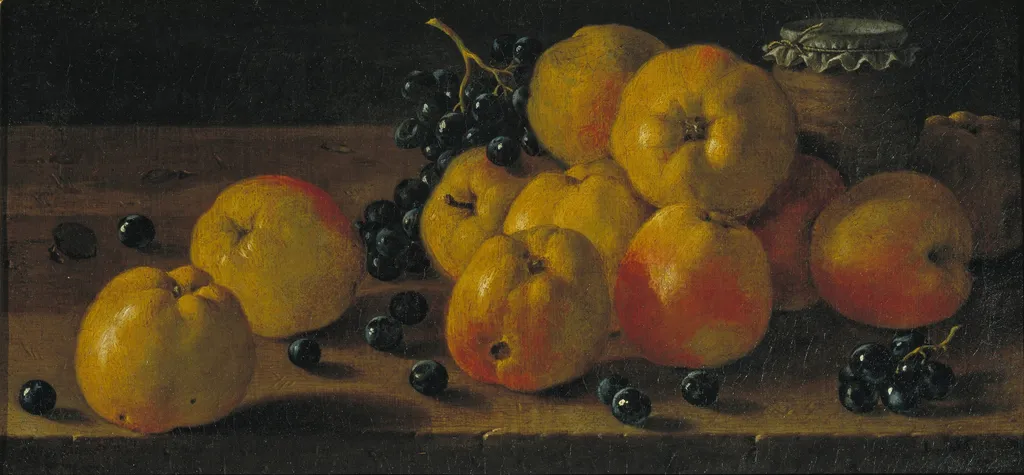
Still Life with Apples, Grapes and a Pot of Jam is an oil painting by the Rococo painting artist Luis Egidio Meléndez. It dates from 1750 and is held in the collection of the Museu Nacional d'Art de Catalunya.
About this work
Overview
Rendered with quiet precision, the objects are arranged on a plain surface, their forms defined by subtle shifts in light and shadow.
Painted around 1750 by Spanish artist Luis Egidio Meléndez, this oil-on-canvas still life presents a modest yet carefully composed array of common food items: apples, grapes, and a jar of jam. Rendered with quiet precision, the objects are arranged on a plain surface, their forms defined by subtle shifts in light and shadow. The composition avoids theatricality, focusing instead on the quiet dignity of everyday matter.
Subject & Meaning
The painting gathers humble domestic fare—ripe apples, clusters of grapes, and a sealed pot of jam—without symbolic embellishment. These are not allegories of transience or wealth, but direct observations of the kitchen’s bounty. Their presentation suggests an appreciation for the sensory qualities of food: ripeness, texture, and the quiet labor behind their preservation, reflecting a Spanish tradition of valuing the ordinary.
Technique & Style
Meléndez employs a restrained palette and controlled chiaroscuro to model each object with tactile realism. The glossy sheen of grapes, the matte skin of apples, and the thick consistency of jam are rendered through layered glazes and fine brushwork. Light falls from a single direction, enhancing volume without drama. The background remains muted, ensuring focus remains on the physical presence of the objects.
History & Provenance
Created during Meléndez’s time in Madrid, the painting was likely made for private patrons rather than public display. Though he received commissions from the Spanish royal family, his still lifes were not widely celebrated in his lifetime. The work remained in Spanish collections until the 19th century, later entering the collection of the Metropolitan Museum of Art, where it is now held.
Context
While European art of the mid-18th century favored ornate Rococo styles, Meléndez pursued a quieter, more observational path. His work aligned with Spanish still-life traditions that valued accuracy over flourish, echoing the influence of 17th-century Dutch painters and the austerity of Spanish religious culture. His focus on food as subject was both practical and culturally resonant in a society attuned to scarcity and sustenance.
Legacy
Meléndez’s still lifes were largely overlooked until the 19th and 20th centuries, when modern viewers recognized their technical rigor and emotional restraint. Today, his works are studied for their quiet mastery of light and material. This painting exemplifies a Spanish approach to still life that prioritizes observation over ornament, influencing later realist traditions in European art.
Artist & collection
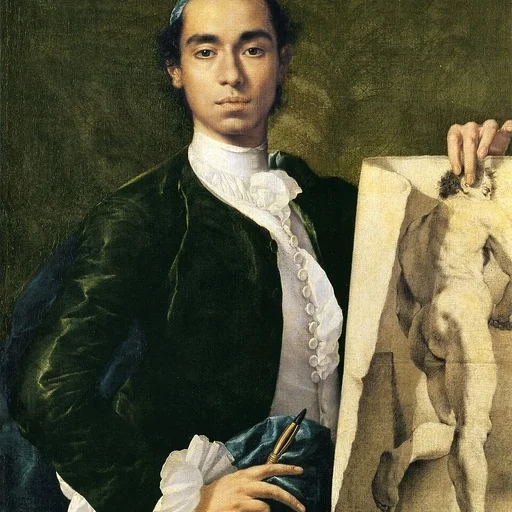
Artist
Luis Egidio Meléndez (1716–1780) was a Spanish painter. Though he received little acclaim during his lifetime and died in poverty, Meléndez is recognized as one of the greatest Spanish still-life painters of the 18th…

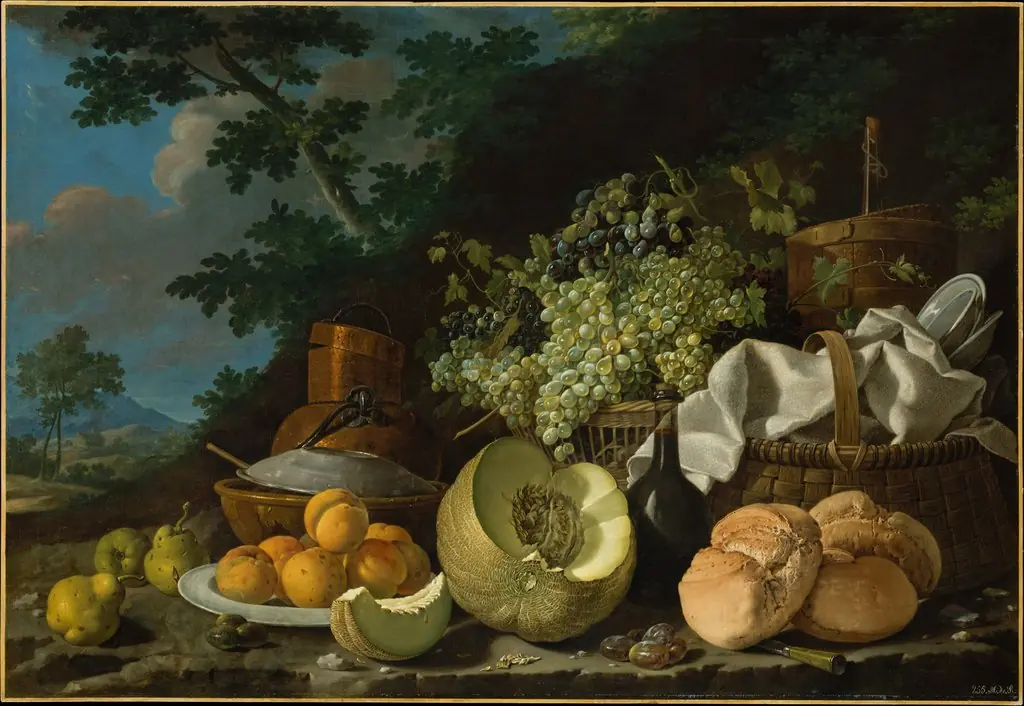 The Afternoon Meal (La Merienda)
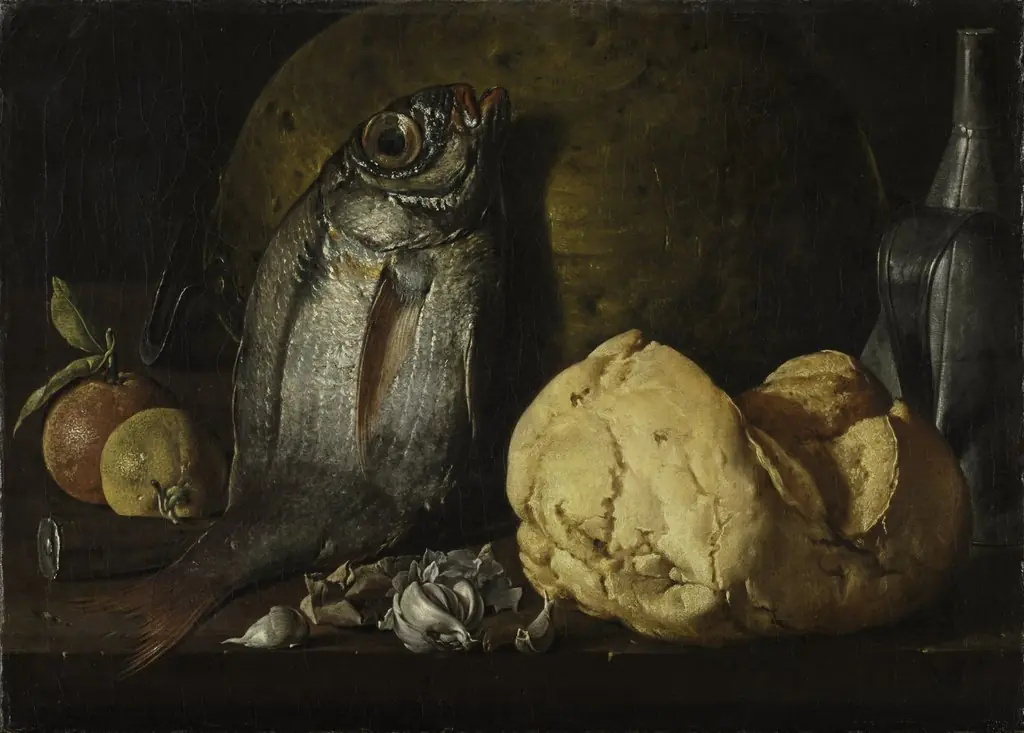 Still Life with Fish, Bread, and Kettle
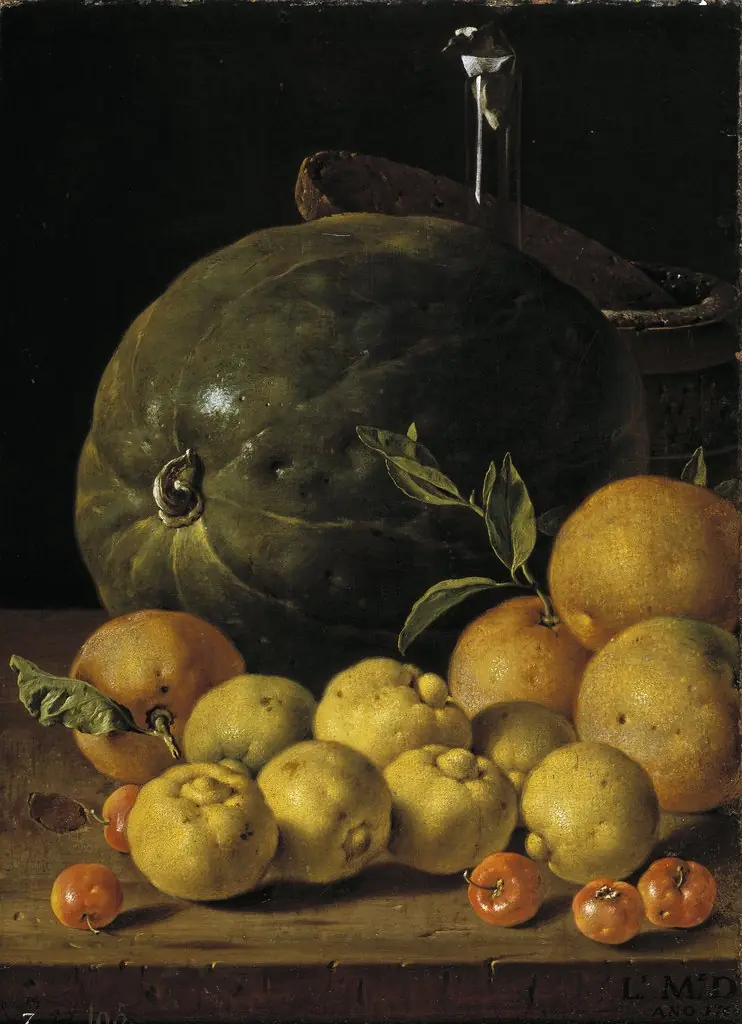 Still Life with Limes Oranges Haw Berries and Watermelon
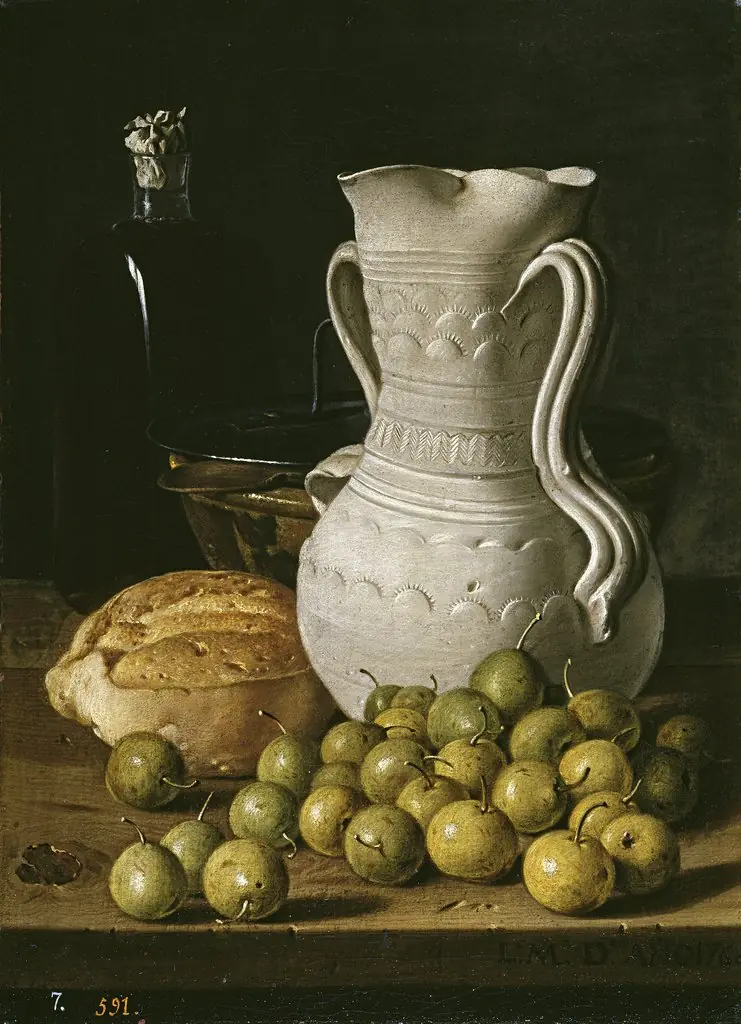 Still Life with Small Pears Bread Flask Bowl and Dry Leaves
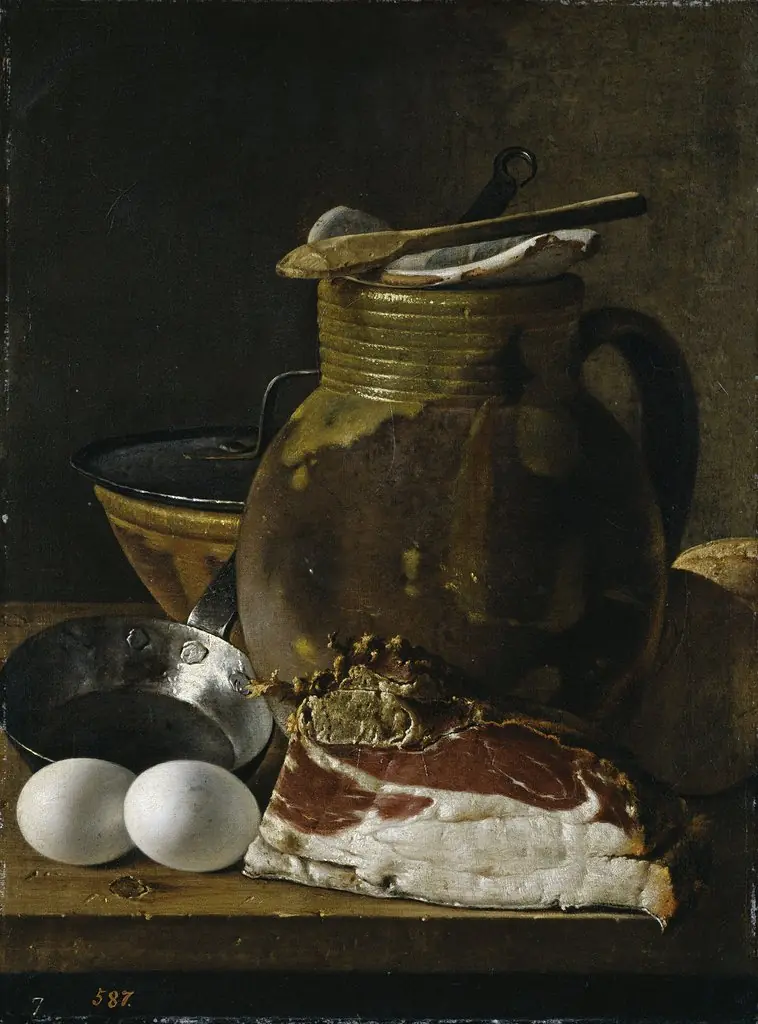 Still Life with Ham Eggs and Vessels
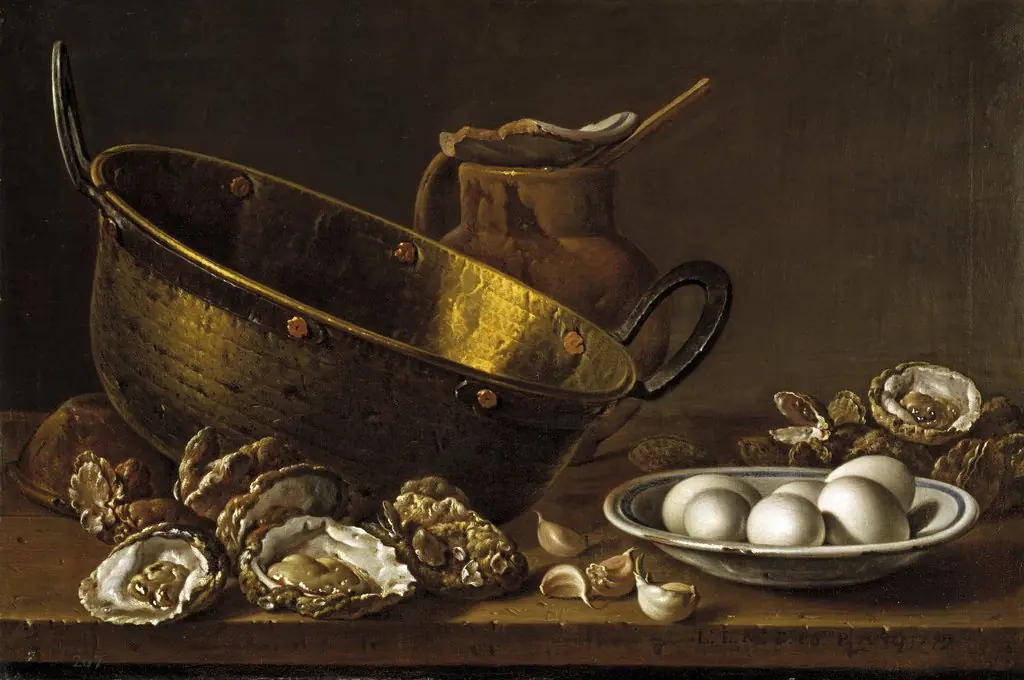 Still Life with Oysters Garlic Eggs Pot and Pan
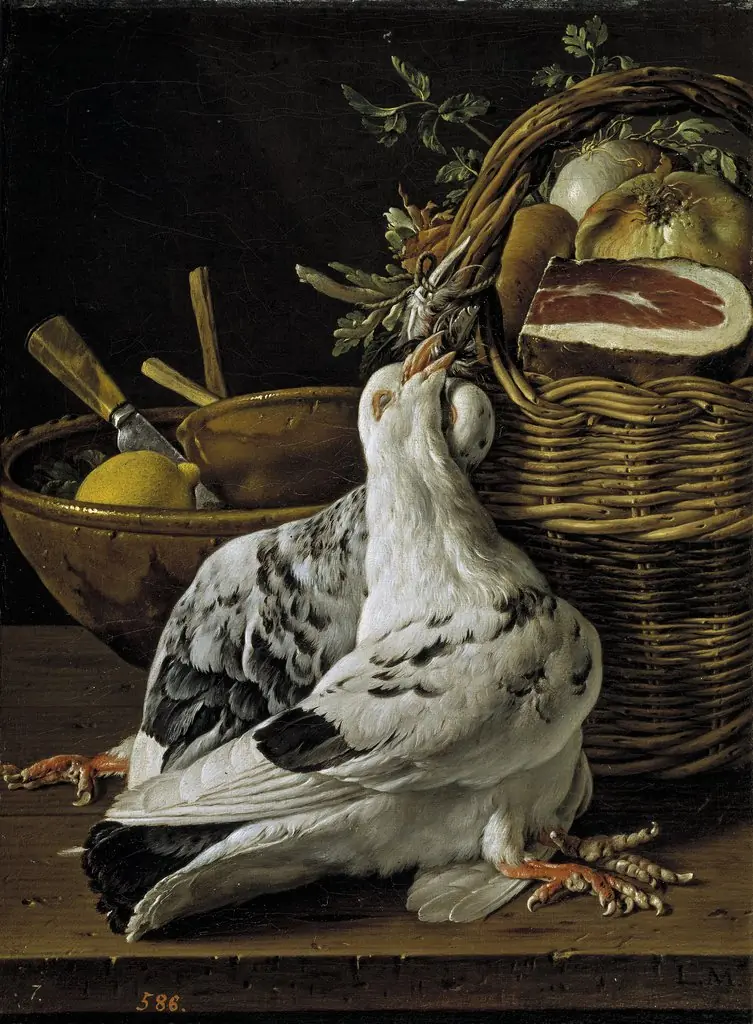 Bodegón con pichones cesta de comida y cuencos
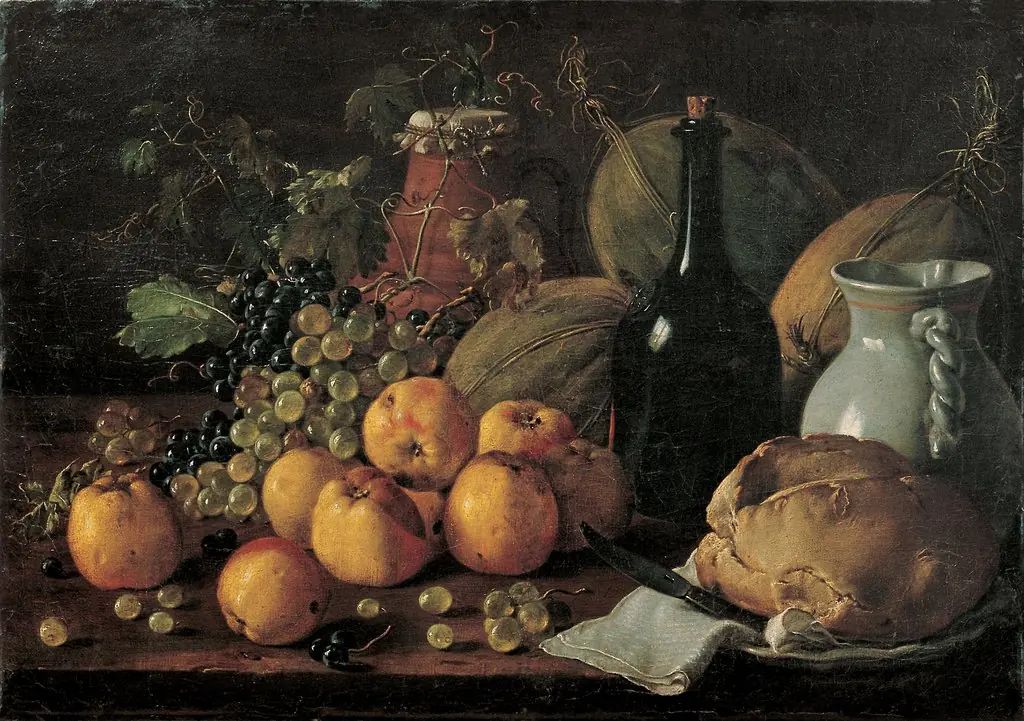 Still Life with Apples, Grapes, Melons, Bread, Jug and Bottle
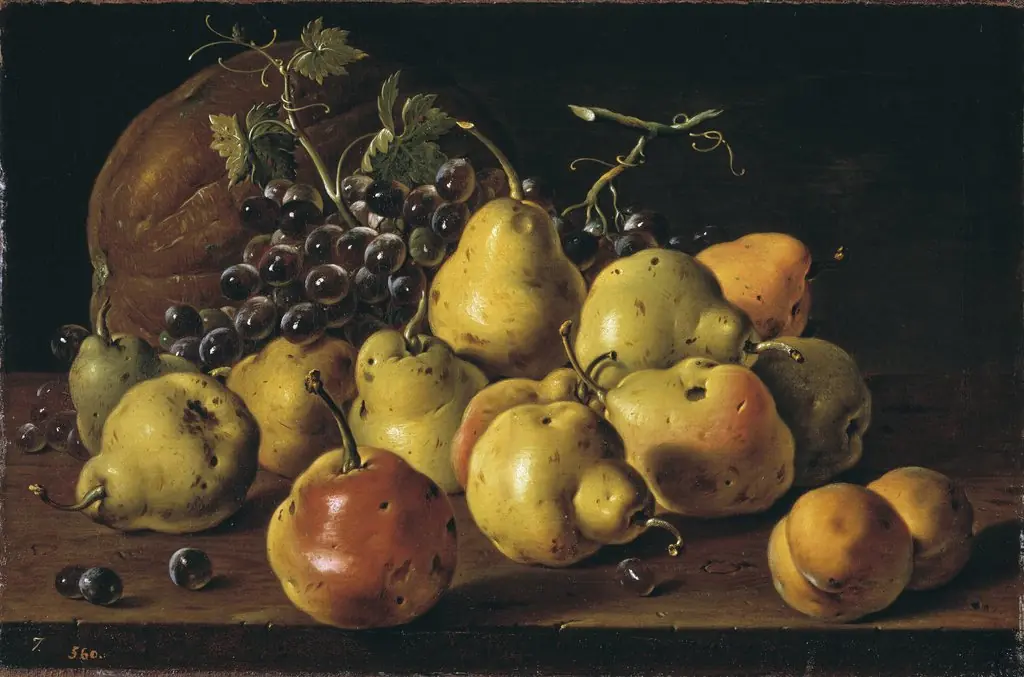 Bodegón con peros y melocotones uvas y melón
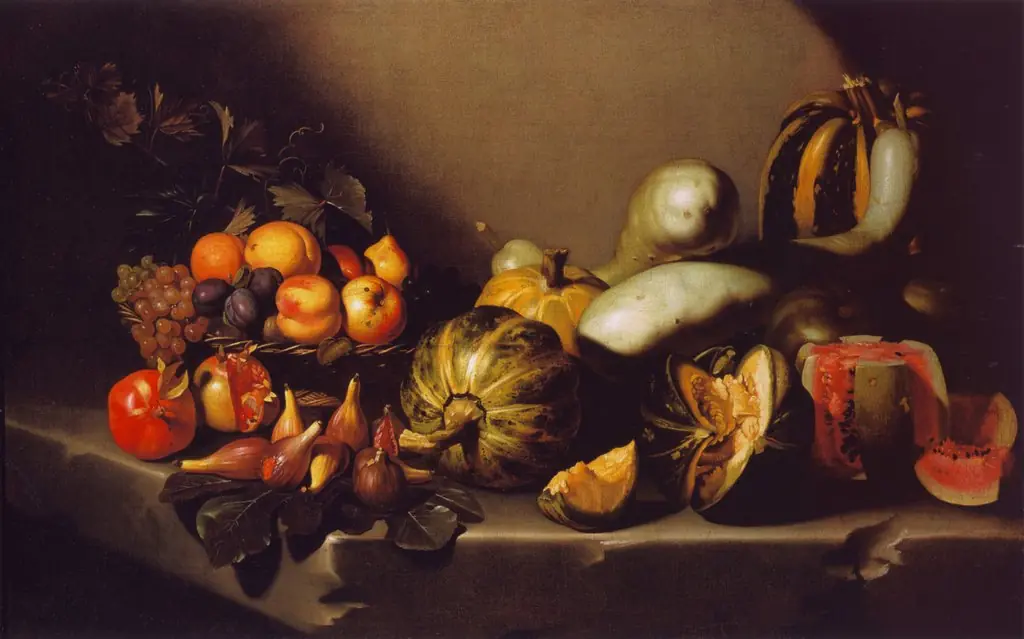 Still Life with Fruit
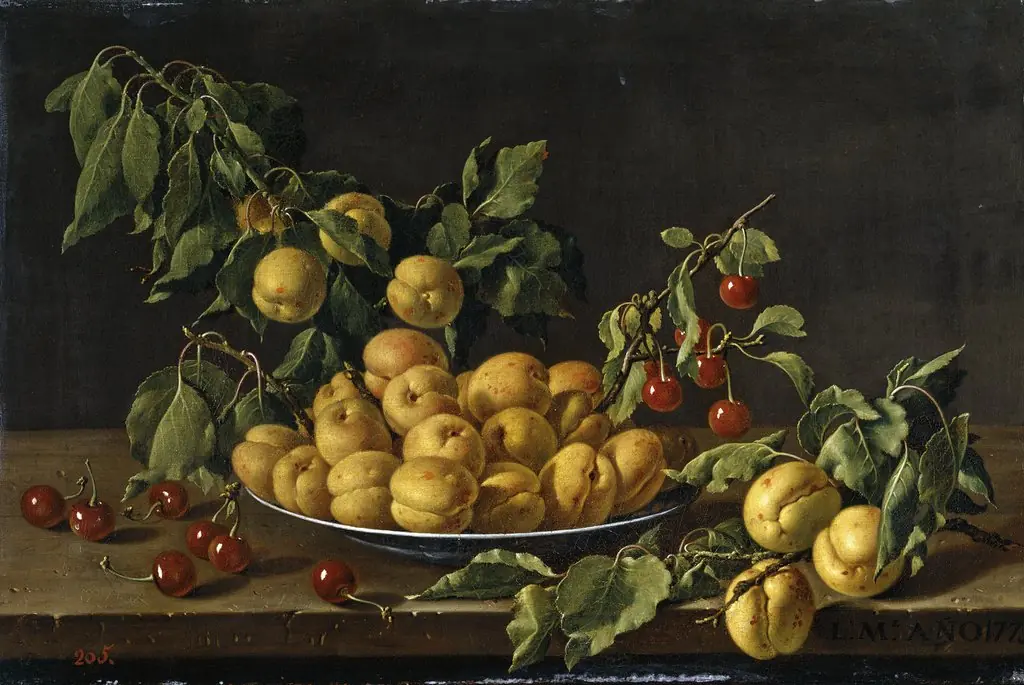 Still Life with Plate of Apricots and Morello Cherries
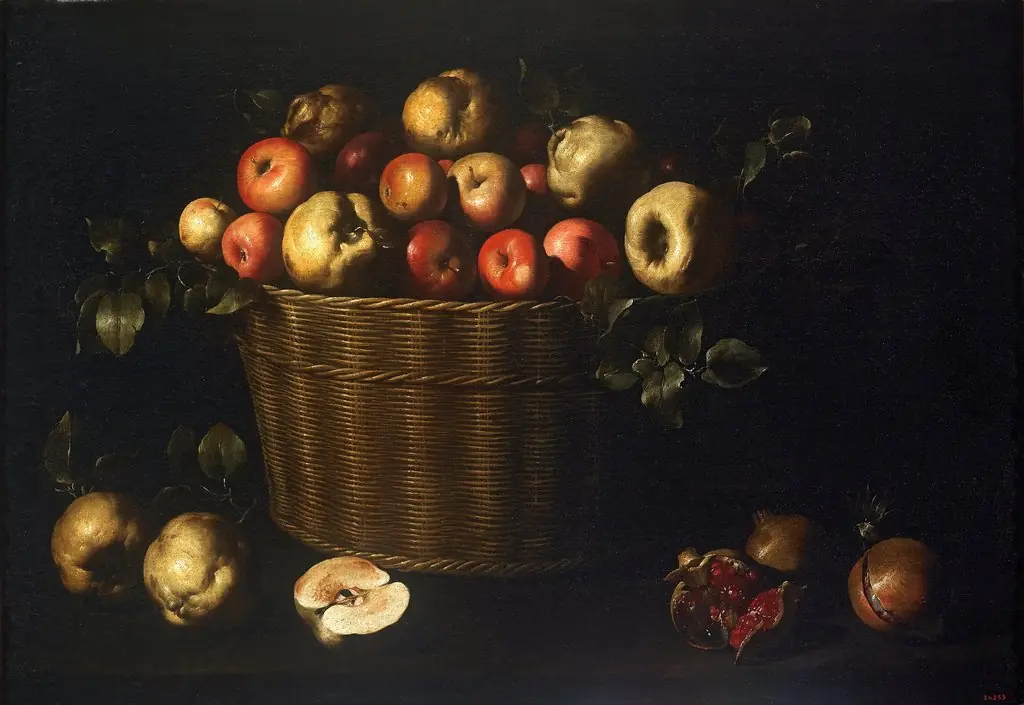 Basket with Apples, Quinces and Pomegranates
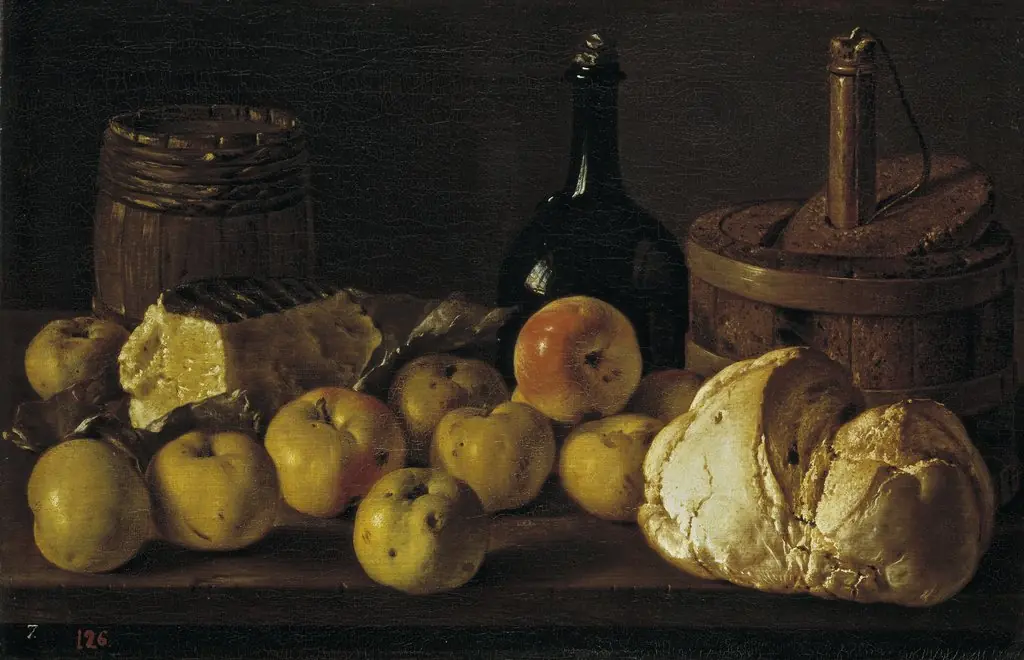 Bodegón con manzanas pan queso y recipientes
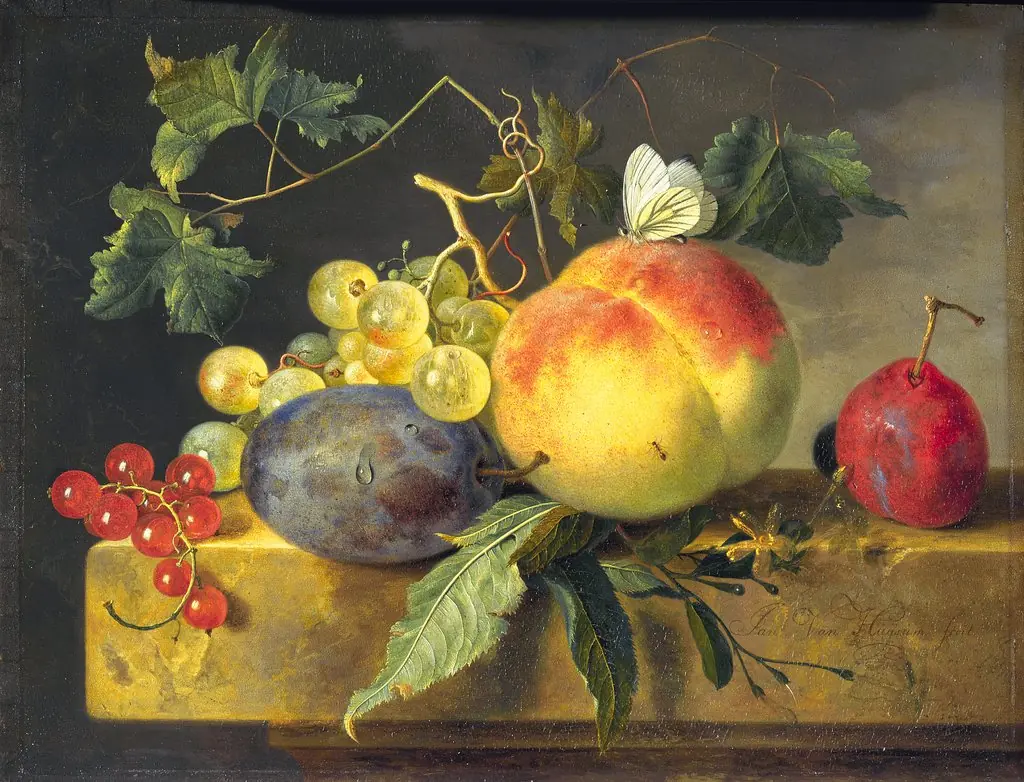 Fruit Still Life
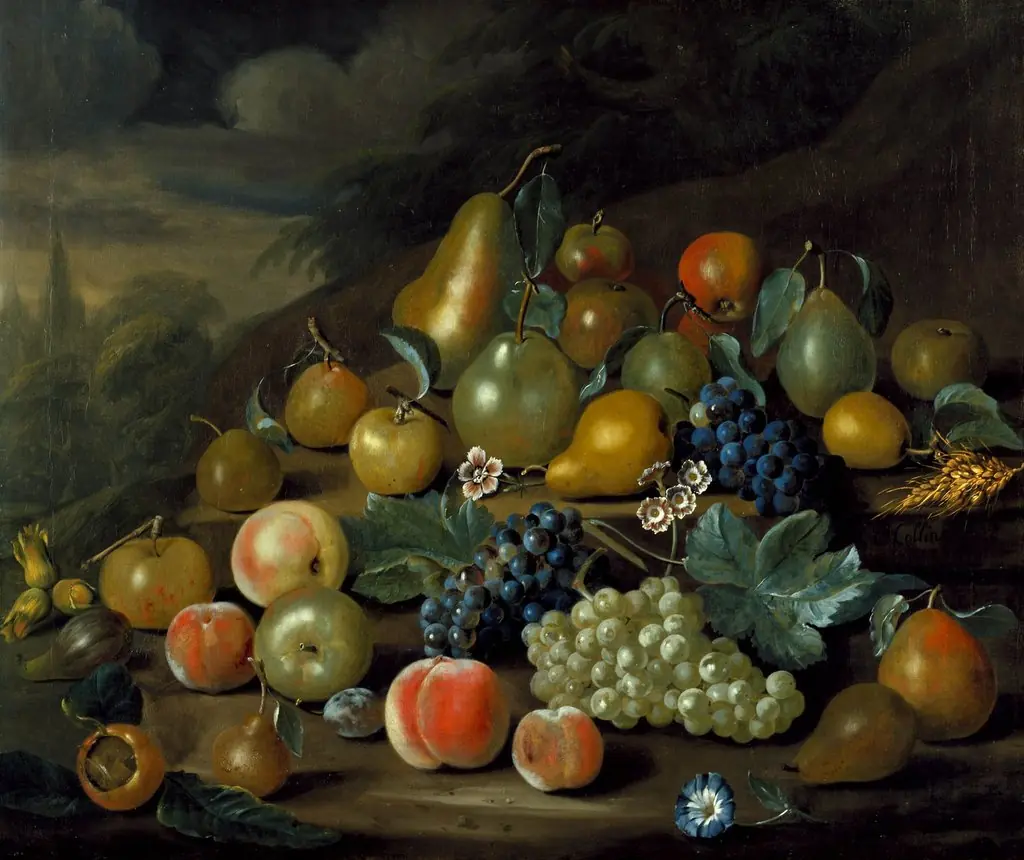 A Still Life of Pears, Peaches and Grapes
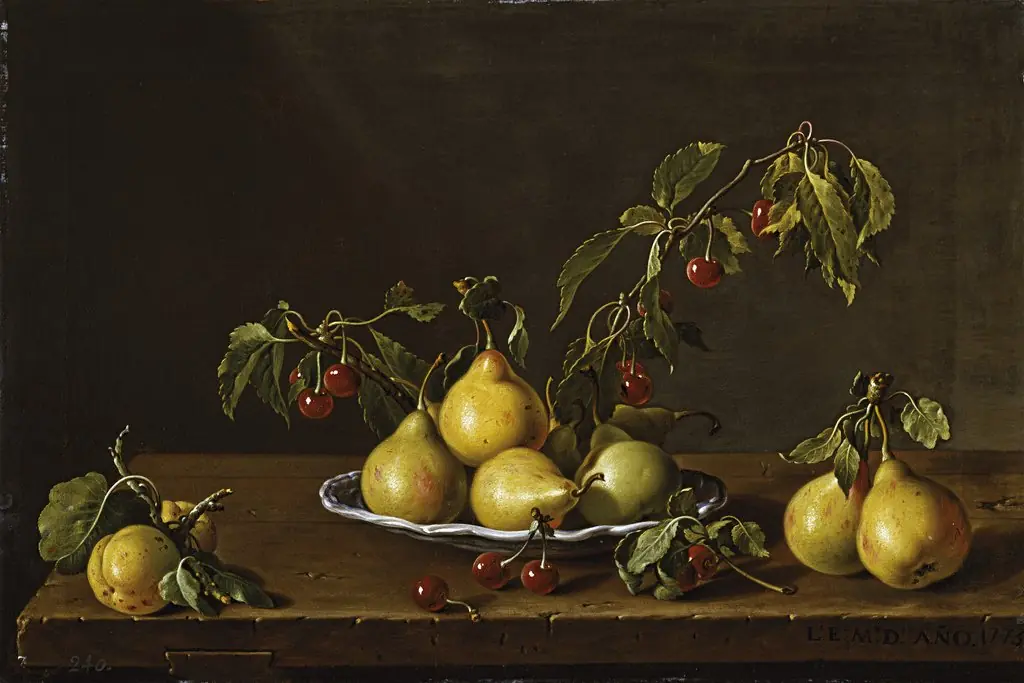 Still Life with Plate of Pears and Morello Cherries
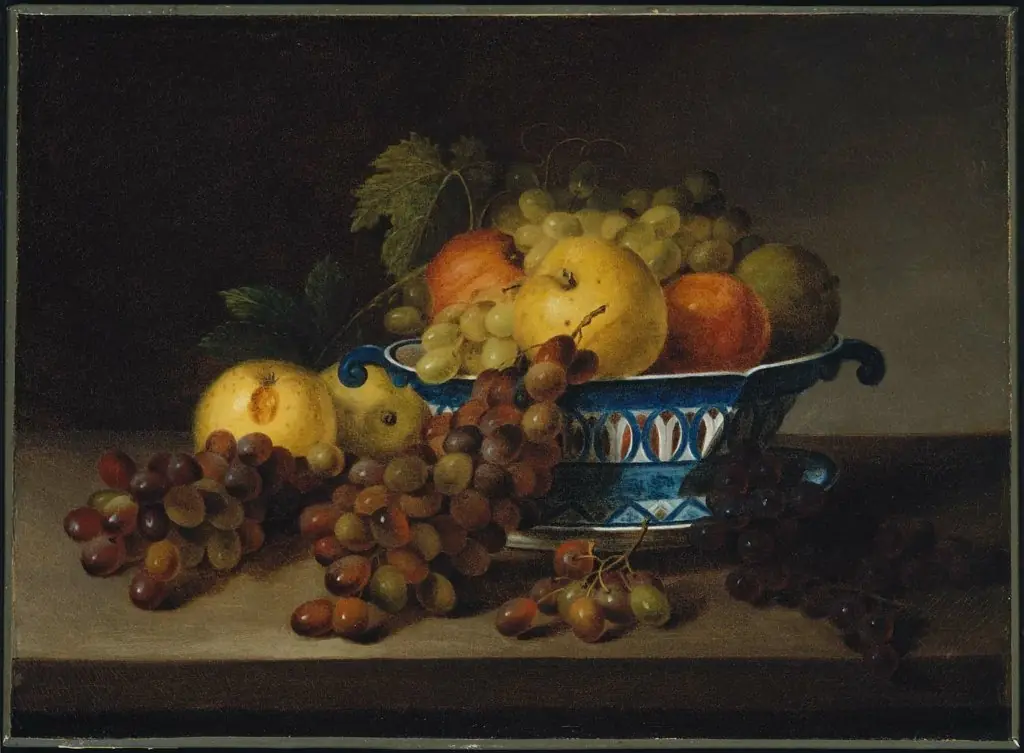 A Porcelain Bowl with Fruit