Artwork
Still Life with Bread, Apples, Grapes and a Bottle
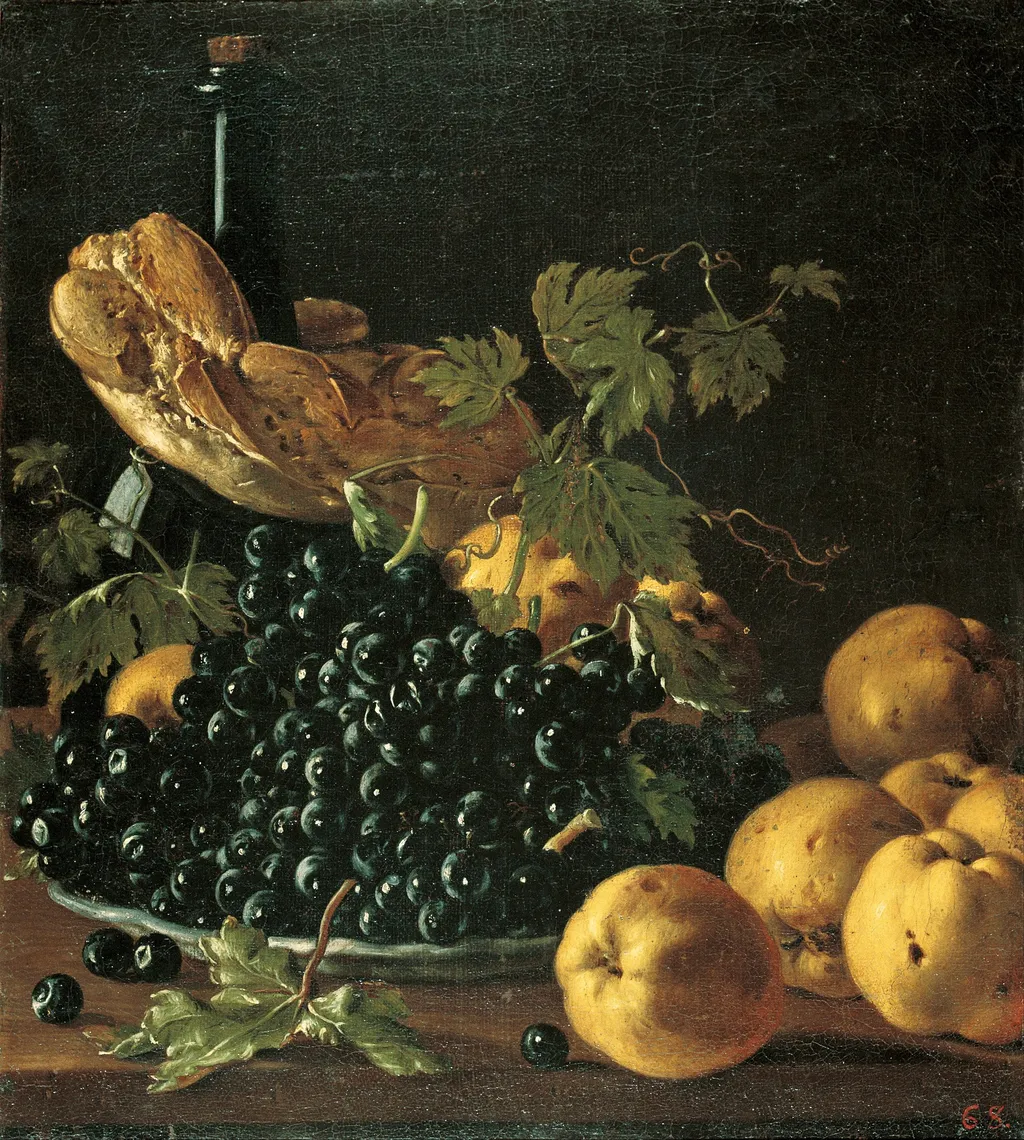
Still Life with Bread, Apples, Grapes and a Bottle is an oil painting by Luis Egidio Meléndez. It dates from 1771 and is held in the collection of the Museu Nacional d'Art de Catalunya.
About this work
Overview
Rendered with quiet precision, the composition avoids theatricality, focusing instead on the physical presence of ordinary items.
Painted in 1771 by Spanish artist Luis Egidio Meléndez, this oil-on-canvas still life presents a modest array of household provisions: a sliced loaf of bread, apples, grapes in a shallow bowl, and a standing bottle. Rendered with quiet precision, the composition avoids theatricality, focusing instead on the physical presence of ordinary items. The dark background isolates the objects, drawing attention to their form and surface. The work resides today in the Museu Nacional d'Art de Catalunya.
Subject & Meaning
The arrangement of bread, fruit, and wine suggests a table after a meal, capturing the quiet residue of daily sustenance. No symbolic allegory is overt; the meaning lies in the careful observation of edible things—ripe grapes, firm apples, coarse bread—as markers of nourishment and domestic routine. Scattered grape leaves hint at recent harvest, grounding the scene in seasonal reality rather than idealized abundance.
Technique & Style
Meléndez employed oil paint to model each object with subtle gradations of light and shadow, emphasizing tactile qualities: the crust of bread, the waxy sheen of apples, the translucent skin of grapes. Brushwork is restrained, avoiding flourish; texture emerges through careful tonal shifts. The composition is tightly controlled, with objects placed to create visual rhythm without symmetry, reflecting a methodical, observational approach to still life.
History & Provenance
Meléndez painted this work during a period of limited recognition, working under financial hardship despite royal patronage. The painting remained in private collections until the 20th century, when it entered the Museu Nacional d'Art de Catalunya’s holdings. Its current placement reflects a broader reassessment of 18th-century Spanish still life, once overlooked in favor of religious and courtly themes.
Context
In 18th-century Spain, still life painting was considered a lesser genre, overshadowed by religious and historical subjects. Meléndez’s focus on humble foodstuffs aligned with a growing interest in naturalism and empirical observation, influenced by Enlightenment ideals. His work stands apart from the ornate still lifes of northern Europe, favoring restraint and material truth over decorative excess.
Legacy
Though largely forgotten in his lifetime, Meléndez’s disciplined approach to still life has since earned him recognition as a pivotal figure in Spanish art. His ability to elevate mundane objects through precise observation influenced later generations of realist painters. This painting exemplifies his contribution: a quiet testament to the dignity of everyday things, rendered with unadorned clarity.
Own this work as a print
Artist & collection
Artist
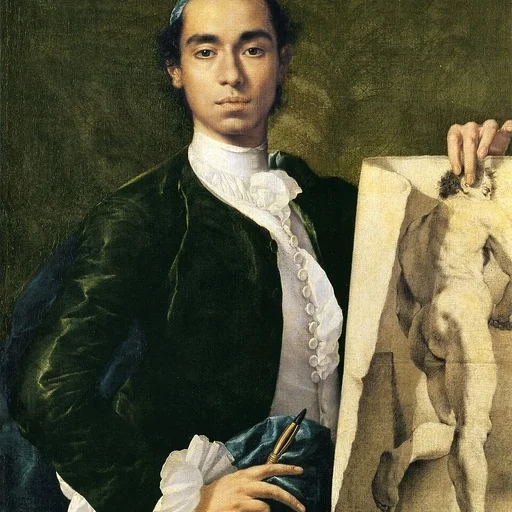
Luis Egidio Meléndez (1716–1780) was a Spanish painter. Though he received little acclaim during his lifetime and died in poverty, Meléndez is recognized as one of the greatest Spanish still-life painters of the 18th…

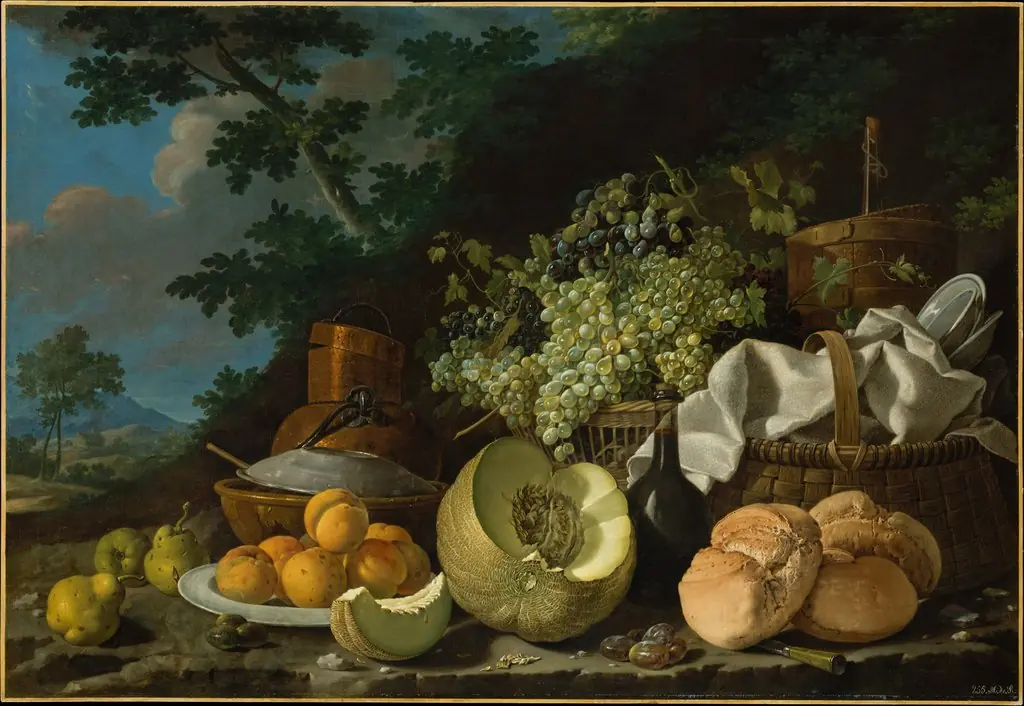 The Afternoon Meal (La Merienda)
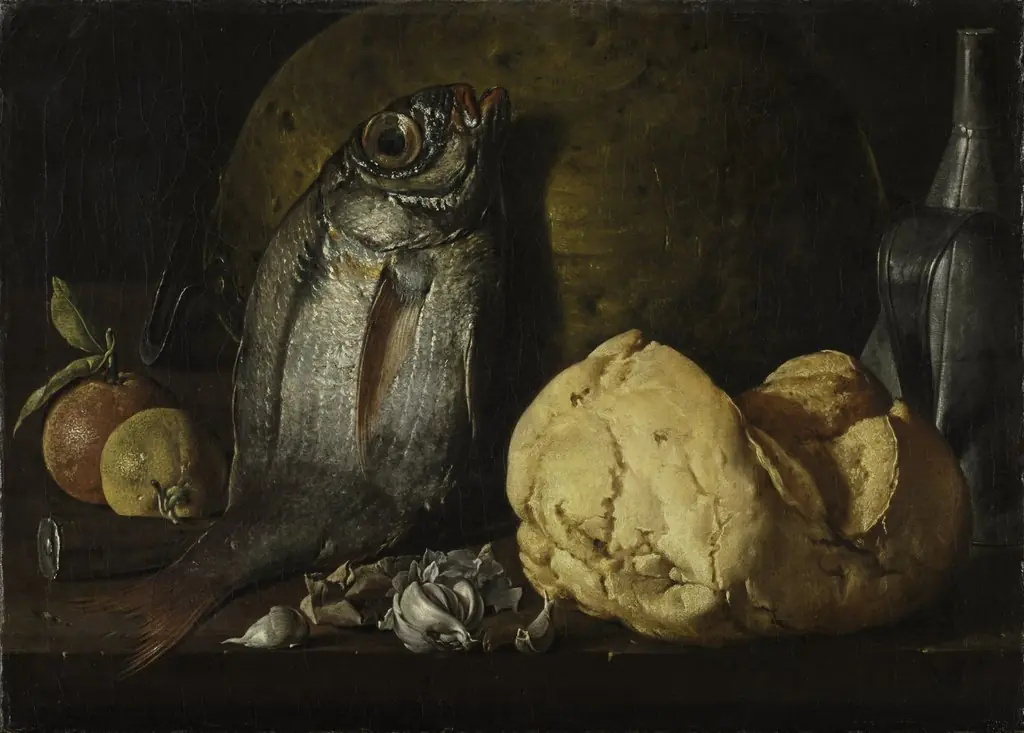 Still Life with Fish, Bread, and Kettle
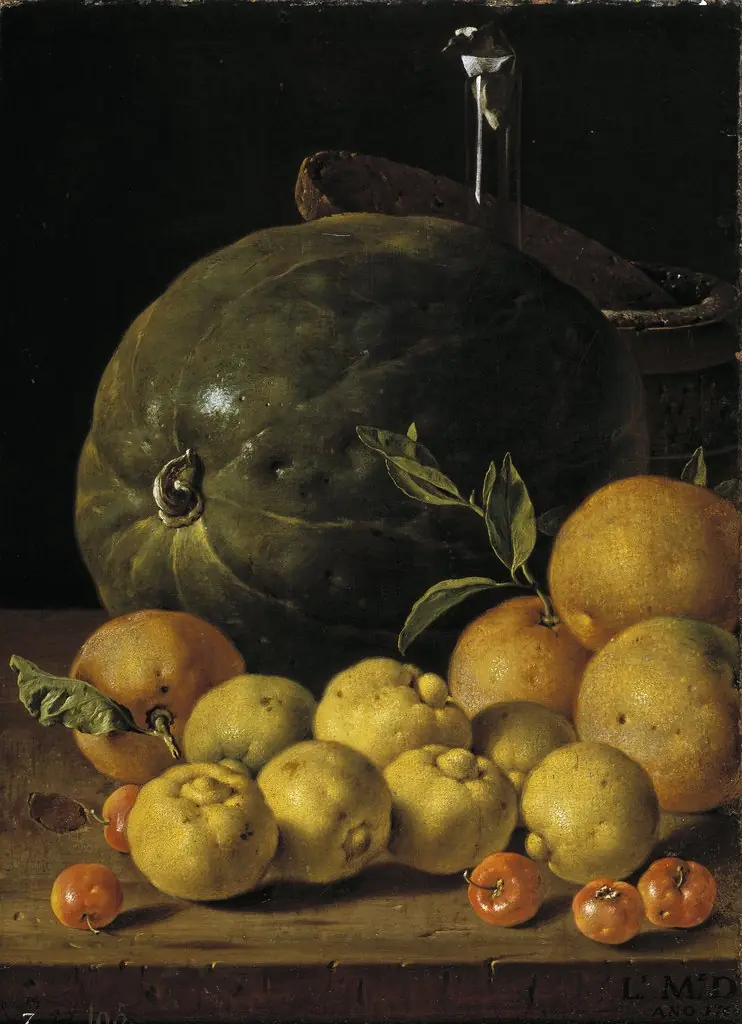 Still Life with Limes Oranges Haw Berries and Watermelon
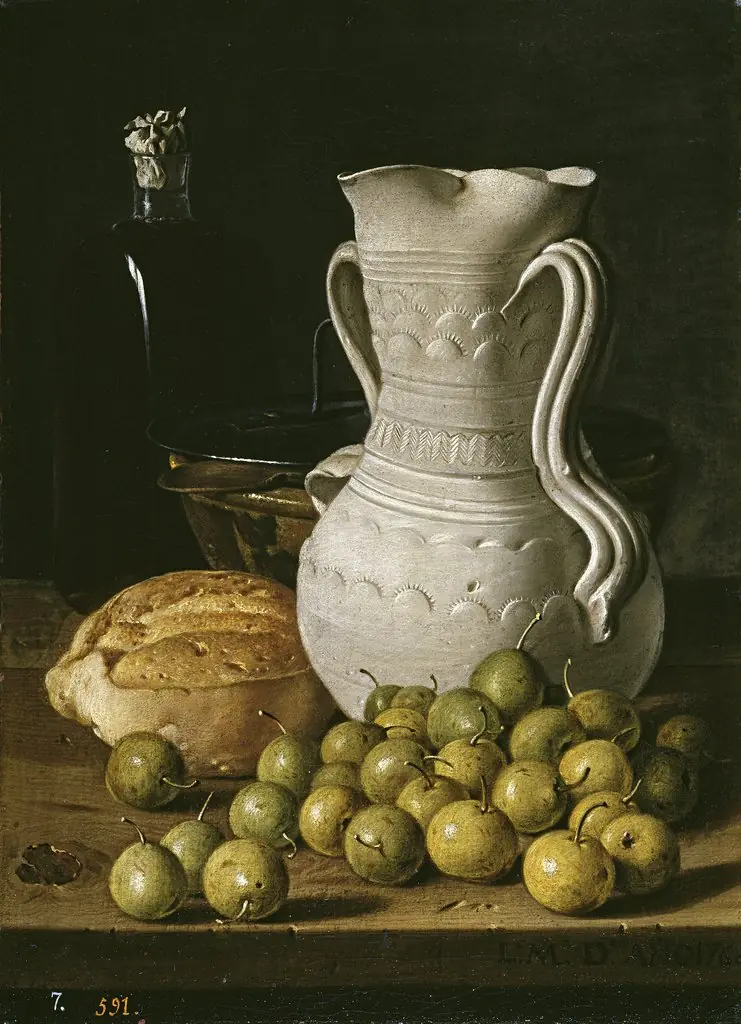 Still Life with Small Pears Bread Flask Bowl and Dry Leaves
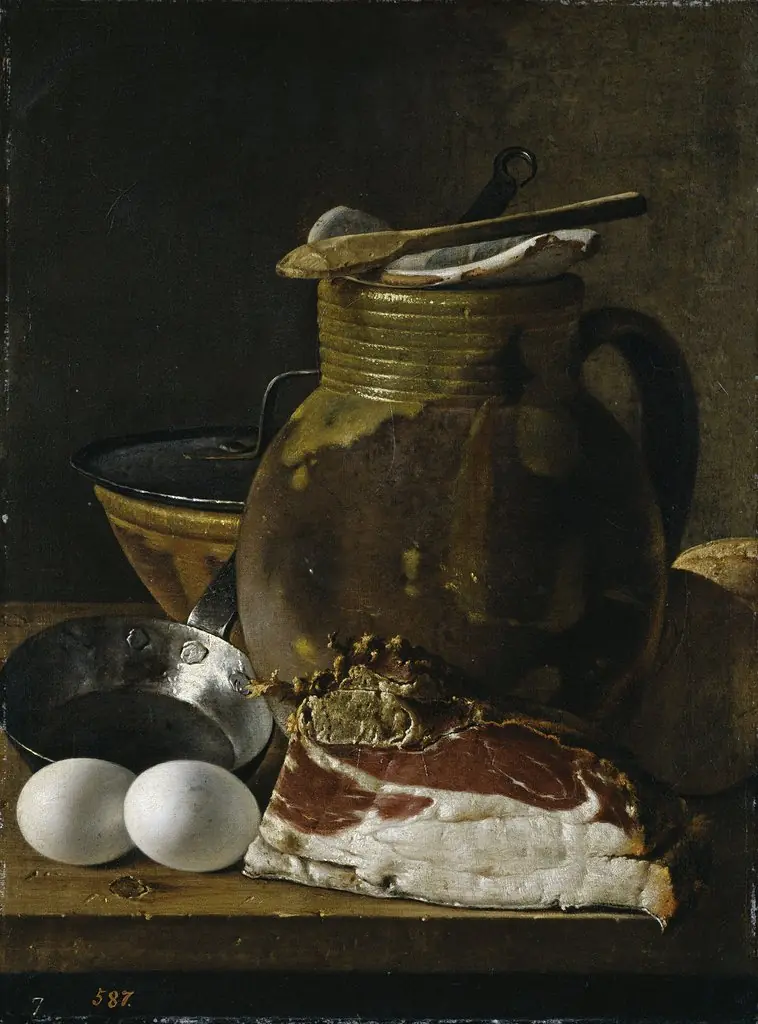 Still Life with Ham Eggs and Vessels
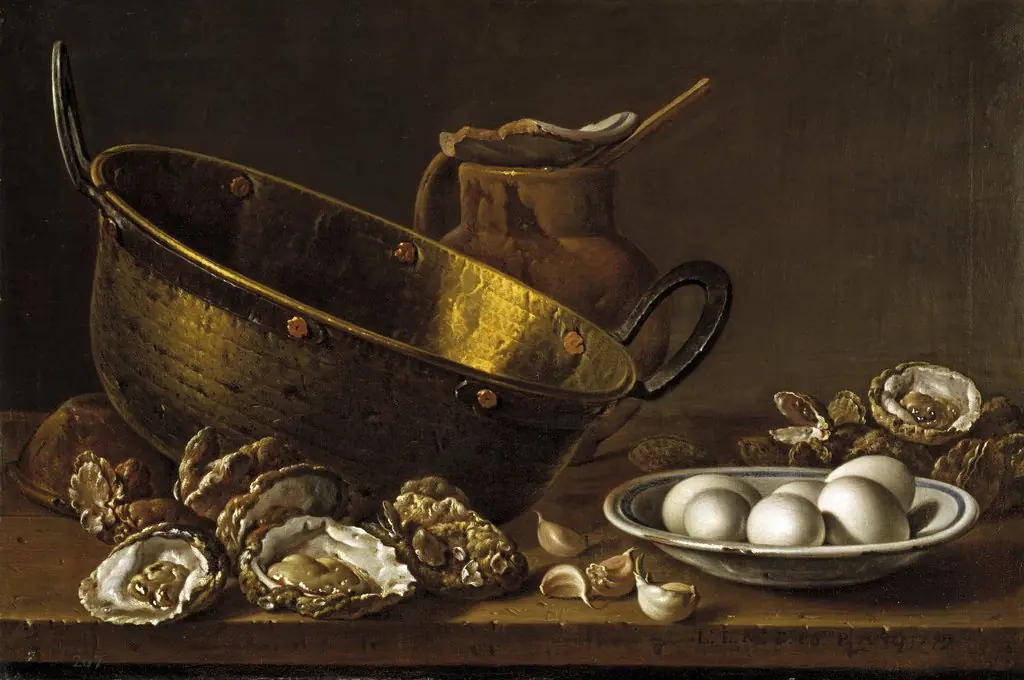 Still Life with Oysters Garlic Eggs Pot and Pan
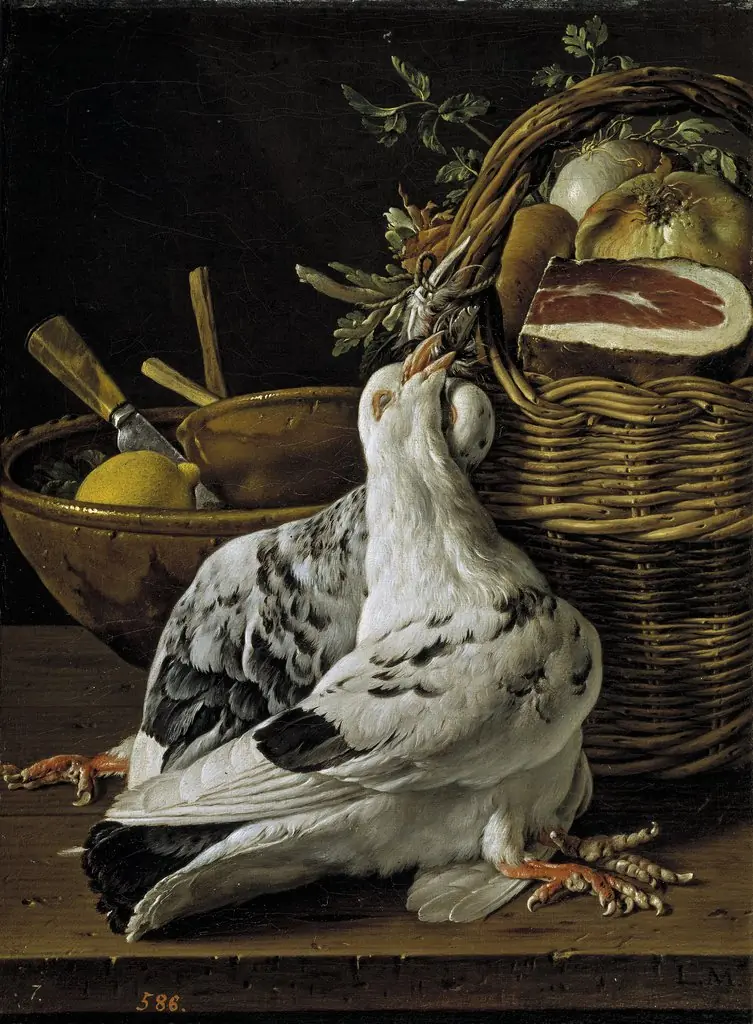 Bodegón con pichones cesta de comida y cuencos
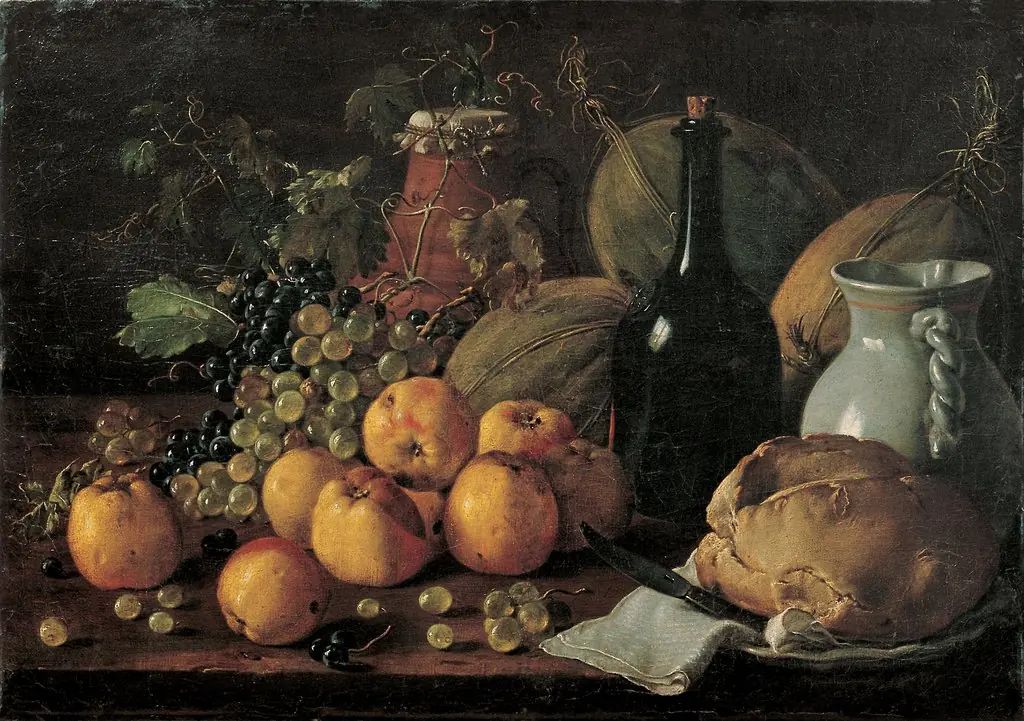 Still Life with Apples, Grapes, Melons, Bread, Jug and Bottle