Artwork
Untitled
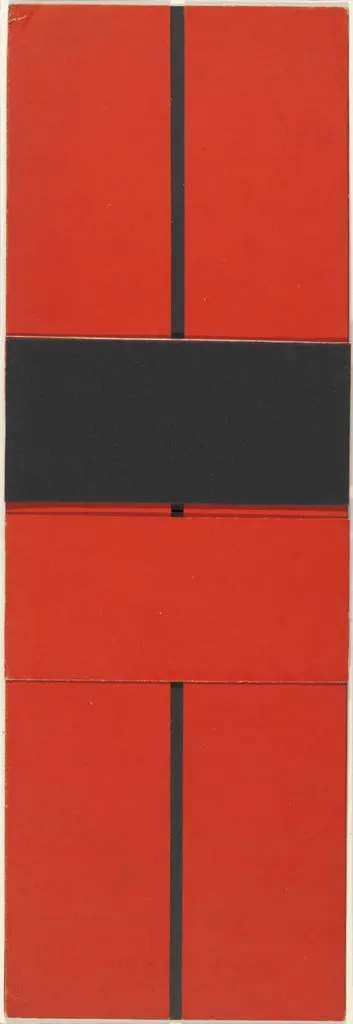
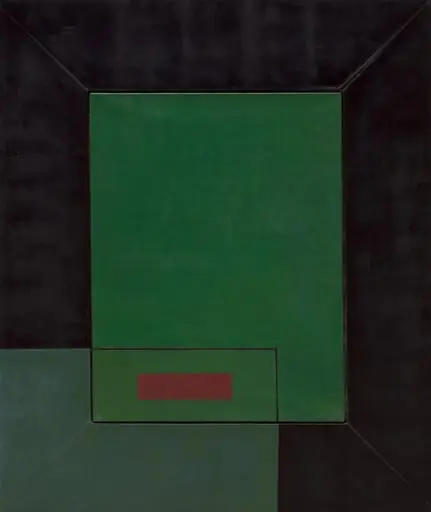
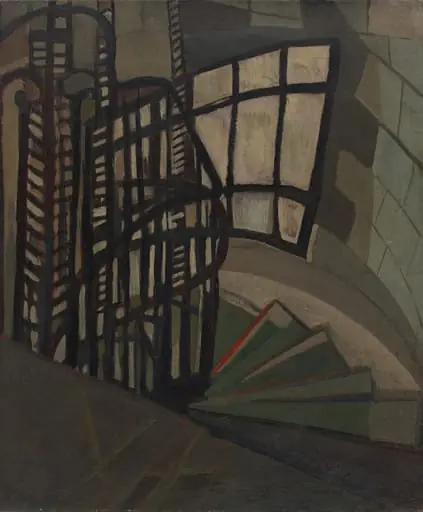
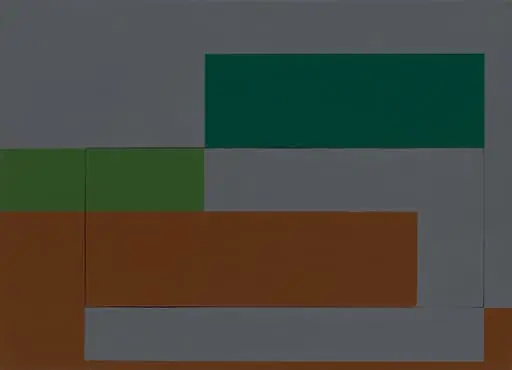
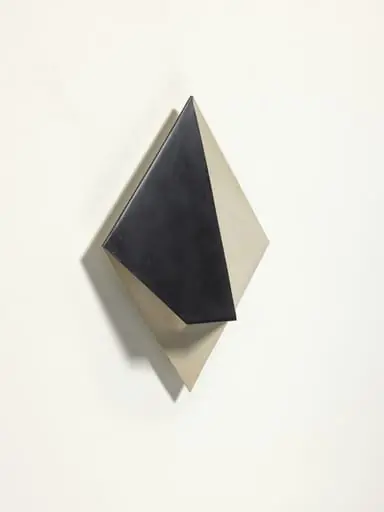
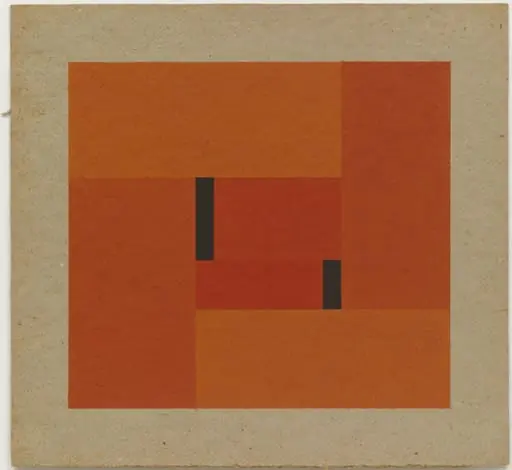
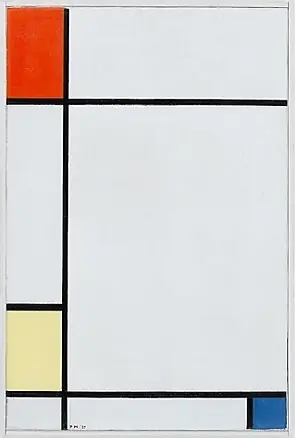
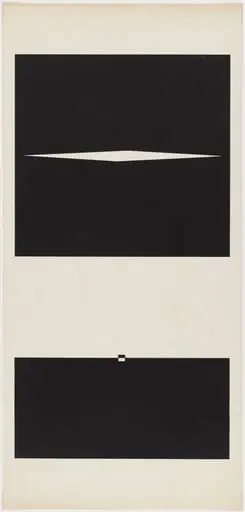
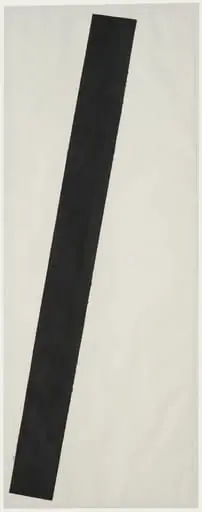
Untitled is a paint drawing by Lygia Clark. It dates from 1957 and is held in the collection of the Museum of Modern Art.
About this work
Overview
Created in 1957, this work by Brazilian artist Lygia Clark is a geometric composition made from cut and pasted colored paper. It belongs to a series of abstract works from her early career, where she explored non-traditional materials and precise arrangements. The absence of brushwork emphasizes the physicality of the medium and the artist’s hand in assembling each element.
Subject & Meaning
The piece avoids representational imagery, focusing instead on the relational dynamics of color and form. Two red rectangles, a black block, and a narrow green stripe interact through contrast and scale, suggesting spatial tension without narrative. Clark’s intent was to activate the viewer’s perception, inviting direct sensory engagement rather than symbolic interpretation.
Technique & Style
Clark constructed the composition by cutting colored paper and adhering it to a support, rejecting paint entirely. The edges are crisp, the surfaces flat, and the colors unmodulated. This method aligns with Constructivist principles, prioritizing material honesty and structural clarity. The work’s simplicity belies a deliberate economy of means, where each shape and hue carries formal weight.
History & Provenance
This work emerged during Clark’s involvement with Brazil’s Neo-Concrete movement, which she helped found in 1959. Though created just before the movement’s official manifesto, it anticipates its emphasis on viewer participation and organic form within abstraction. The piece reflects her transition from earlier geometric painting toward more experimental, tactile approaches in the late 1950s.
Context
This work responds to the broader interest in non-representational art but diverges through its material simplicity and rejection of illusion.
In mid-century Brazil, artists like Clark sought to break from European modernism by integrating local sensibilities with avant-garde forms. This work responds to the broader interest in non-representational art but diverges through its material simplicity and rejection of illusion. It exists alongside other Neo-Concrete experiments that treated art as a lived, physical experience rather than a static object.
Legacy
Clark’s paper works from this period laid groundwork for later participatory and relational art practices. By removing the brush and emphasizing material presence, she challenged traditional hierarchies in art-making. This piece remains a quiet but significant step in her evolution toward works that dissolve boundaries between object, viewer, and space.
Artist & collection

Artist
Lygia Pimentel Lins (23 October 1920 – 25 April 1988), better known as Lygia Clark, was a Brazilian artist best known for her painting and installation work.