Artwork
Untitled
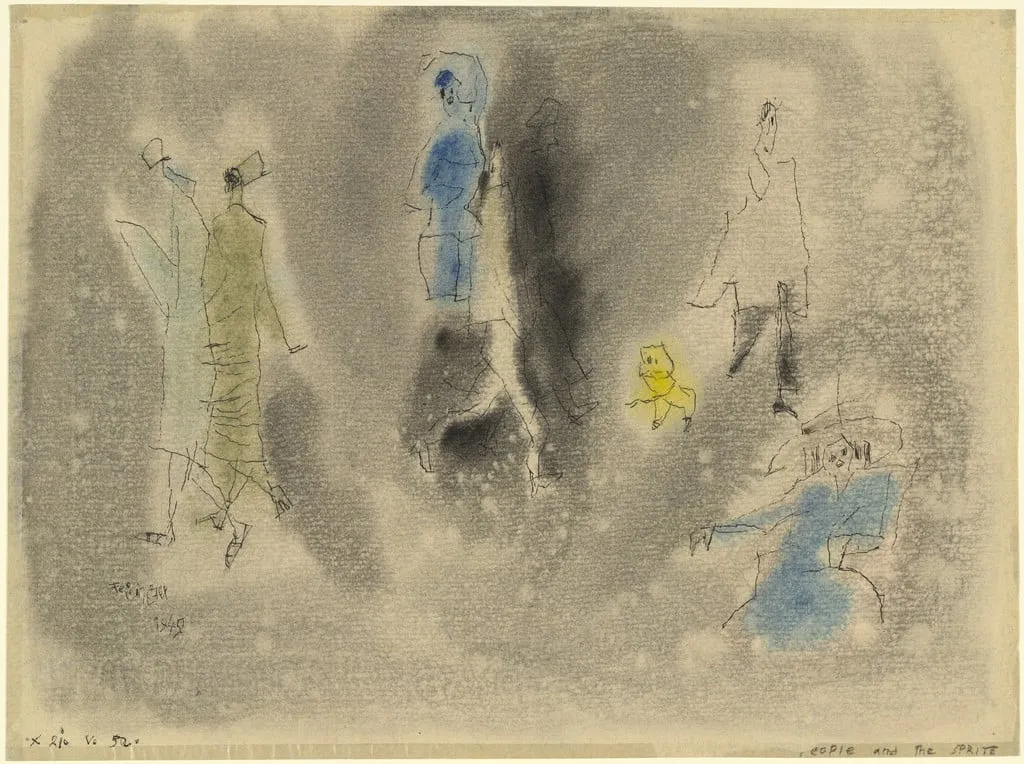
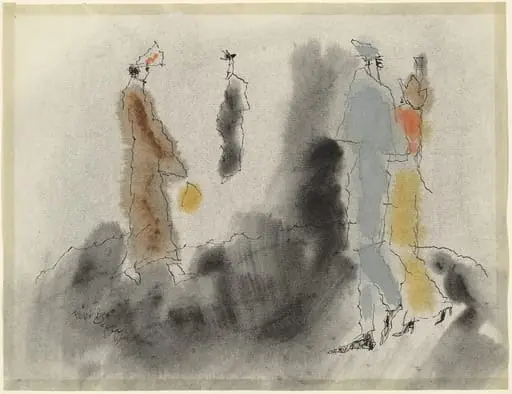
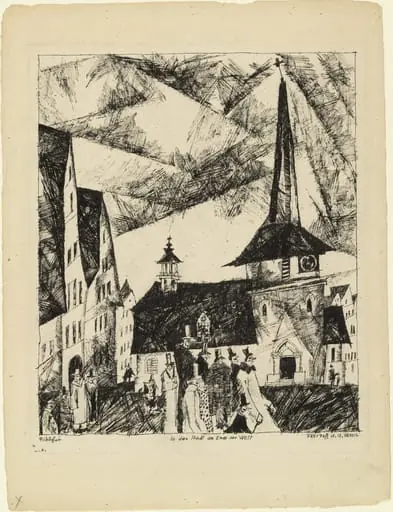
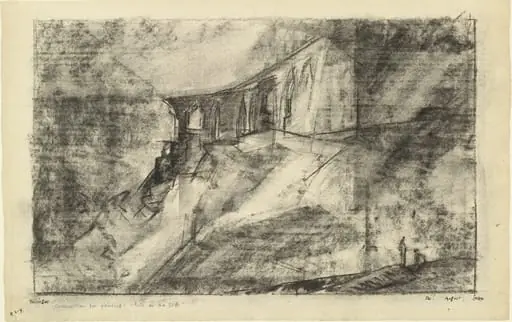
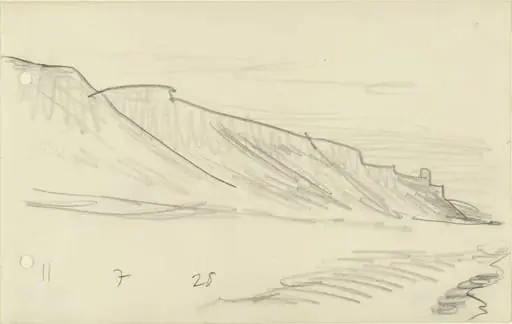
Untitled is a watercolor drawing by Lyonel Feininger. It dates from 1945 and is held in the collection of the Museum of Modern Art.
About this work
Overview
The work belongs to a series of figural studies Feininger produced in his later years, reflecting his continued engagement with human form and movement.
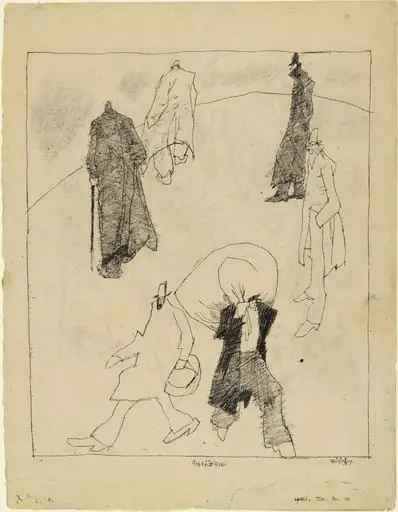
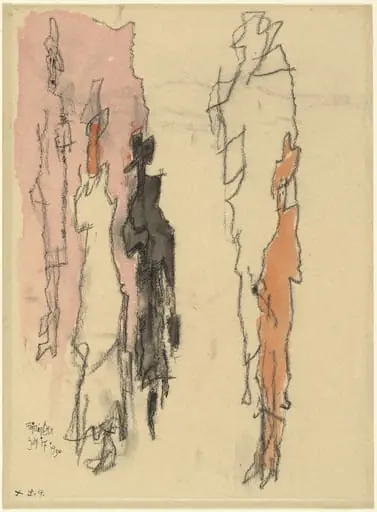
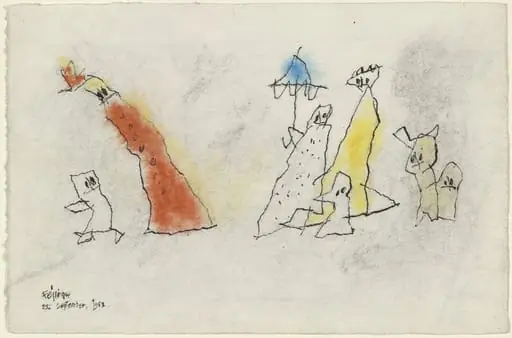
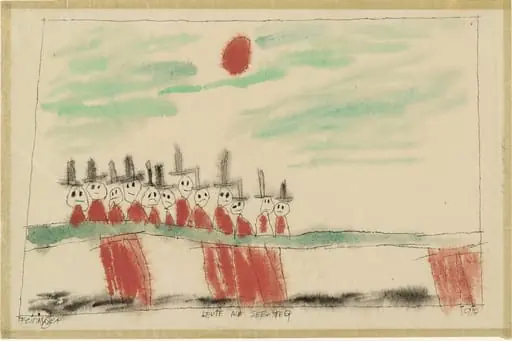
Created in 1945, this drawing by Lyonel Feininger combines watercolor, charcoal, and pen and ink on paper. It is part of the collection at The Museum of Modern Art. The work belongs to a series of figural studies Feininger produced in his later years, reflecting his continued engagement with human form and movement. Its mixed-media approach reveals a deliberate interplay between spontaneity and structure.
Subject & Meaning
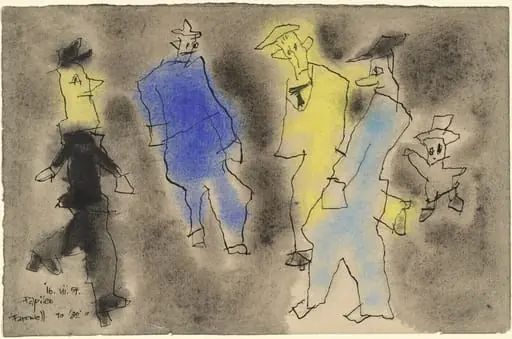
A cluster of indistinct figures occupies the composition, their postures suggesting transient motion or social interaction. One figure is distinguished by a wash of blue, drawing attention without narrative clarity. The absence of defined features or context invites interpretation as an abstracted moment of collective presence rather than a specific scene. The work evokes rhythm and anonymity rather than individual identity.
Technique & Style
Feininger layered watercolor with energetic charcoal strokes and precise ink lines to create texture and contrast. The gray and black background, punctuated by sparse white areas, suggests atmospheric depth without literal space. The fluidity of the ink contrasts with the grit of charcoal, producing a dynamic tension between control and improvisation. This technique reflects his lifelong interest in capturing motion through layered mark-making.
History & Provenance
The work was made during Feininger’s final years in the United States, following his return from Germany in the 1930s. It entered The Museum of Modern Art’s collection shortly after its creation, likely through direct acquisition or donation. Unlike his earlier architectural works, these late drawings were not widely exhibited during his lifetime, making this piece a quiet but significant record of his evolving practice.
Context
In the mid-1940s, Feininger shifted from the geometric precision of his Bauhaus-era work toward more expressive, figural studies. This change coincided with personal reflection and the broader cultural mood following World War II. His drawings from this period often omitted clear narratives, focusing instead on the physicality and rhythm of the human form as a response to a fractured world.
Legacy
This drawing exemplifies Feininger’s late style—less concerned with formal structure and more with emotional resonance through gesture and texture. Though not widely publicized in his time, such works have since informed understandings of his artistic range beyond his famous cubist-inspired paintings. They stand as intimate, unembellished records of an artist’s enduring curiosity about movement and presence.
Artist & collection

Artist
Lyonel Charles Adrian Feininger was a German-American painter, and a leading exponent of Expressionism.