Artwork
Untitled
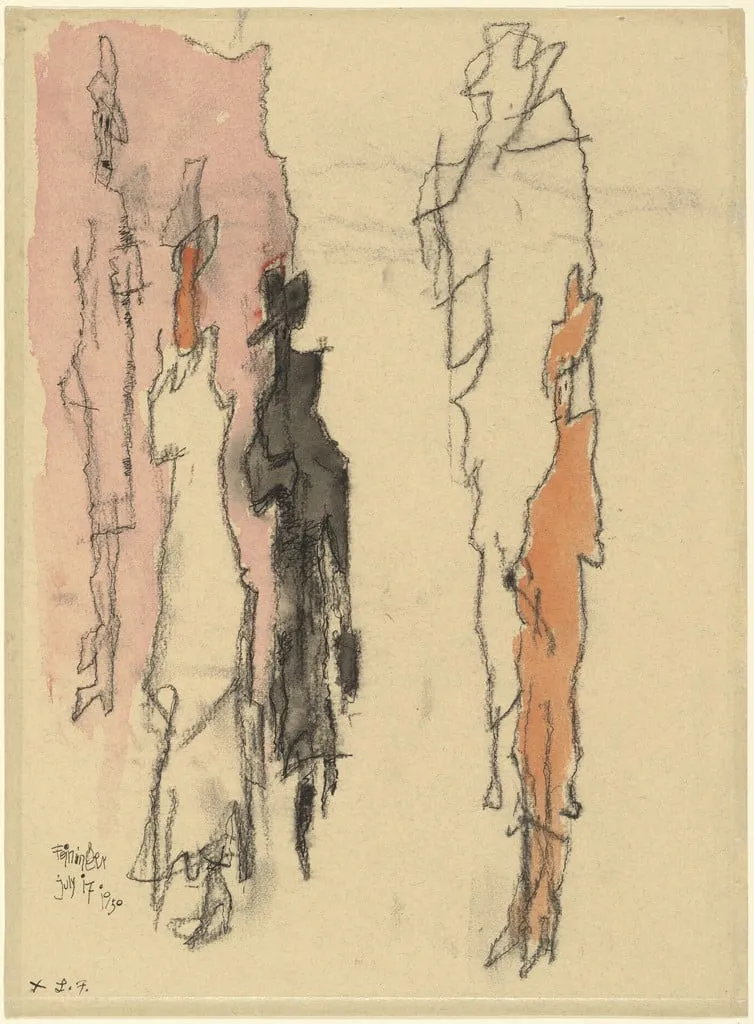
Untitled is a watercolor drawing by Lyonel Feininger. It dates from 1950 and is held in the collection of the Museum of Modern Art.
About this work
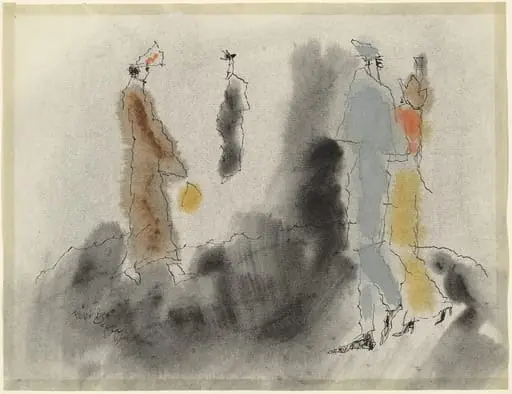
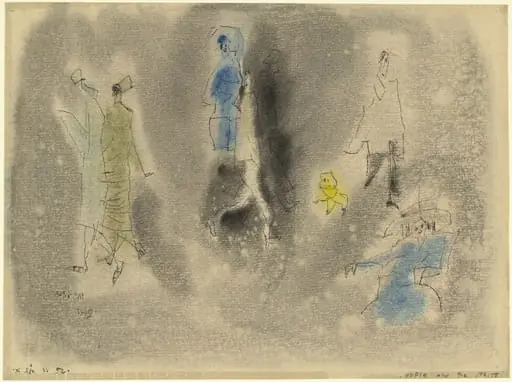
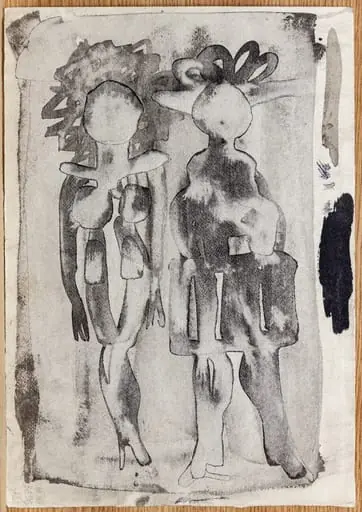
This sketch looks like two tall, skinny figures standing side by side.
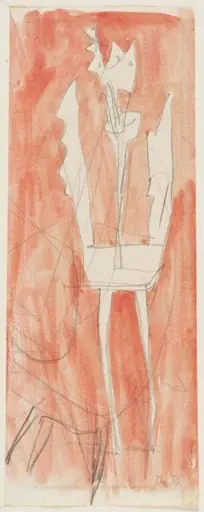
This sketch looks like two tall, skinny figures standing side by side. One is dark with a red stripe down the middle. The other is orange with black lines. The background is mostly blank, with a few pink and black marks. The lines are rough and uneven, like quick scribbles.
The artist signed it in the corner with the date "July 17, 1950." The paper looks thin, and the colors are light and faded.
Next, check out Lyonel Feininger to see more of his work.
Overview
Created on July 17, 1950, this drawing by Lyonel Feininger combines watercolor, charcoal, and pen and ink on thin paper. Its fragile support and muted tones suggest a spontaneous, intimate gesture rather than a polished composition. The artist’s signature and date appear in one corner, anchoring the work to a specific moment. The piece is held in the collection of The Museum of Modern Art, where it reflects Feininger’s late-period exploration of form and gesture.
Subject & Meaning
Two elongated, abstracted figures stand side by side, their forms reduced to vertical silhouettes with minimal detail. One bears a vertical red band; the other is defined by angular black strokes and an orange wash. Neither figure is clearly human or object, inviting interpretation as symbolic presences or rhythmic structures. The sparse background, marked with faint pink and black smudges, suggests atmosphere without setting, emphasizing the figures’ isolation and presence.
Technique & Style
Feininger employed loose, uneven lines and translucent washes to build form with economy. Charcoal and ink create sharp, gestural contours, while watercolor adds subtle tonal shifts that bleed slightly at the edges. The paper’s thinness amplifies the fragility of the marks, and the colors have faded over time, softening contrasts. The overall effect is one of immediacy—each stroke feels recorded in real time, prioritizing movement over finish.
History & Provenance
The work was completed in 1950, near the end of Feininger’s life, during a period when he increasingly turned to small-scale drawings. It entered The Museum of Modern Art’s collection shortly after its creation, likely through direct acquisition or donation. Its preservation in a major institution reflects its significance as part of the artist’s final creative phase, though its modest materials and informal nature distinguish it from his earlier, more structured works.
Context
In the final years of his career, Feininger shifted from the geometric precision of his Bauhaus-era work toward more intuitive, expressive mark-making. This drawing aligns with his late interest in rhythm, repetition, and the physical act of drawing. Though rooted in abstraction, it retains traces of his lifelong fascination with architecture and figures, now distilled into elemental forms that evoke presence without narrative.
Legacy
This drawing exemplifies Feininger’s late transition from structured composition to lyrical spontaneity. It contributes to understanding how his formal language evolved under the influence of age, memory, and a renewed focus on process. While less known than his cubist-inspired paintings, such works reveal the quiet, persistent experimentation that defined his later years and influenced subsequent generations of abstract draftsmen.
Artist & collection

Artist
Lyonel Charles Adrian Feininger was a German-American painter, and a leading exponent of Expressionism.