Artwork
Untitled
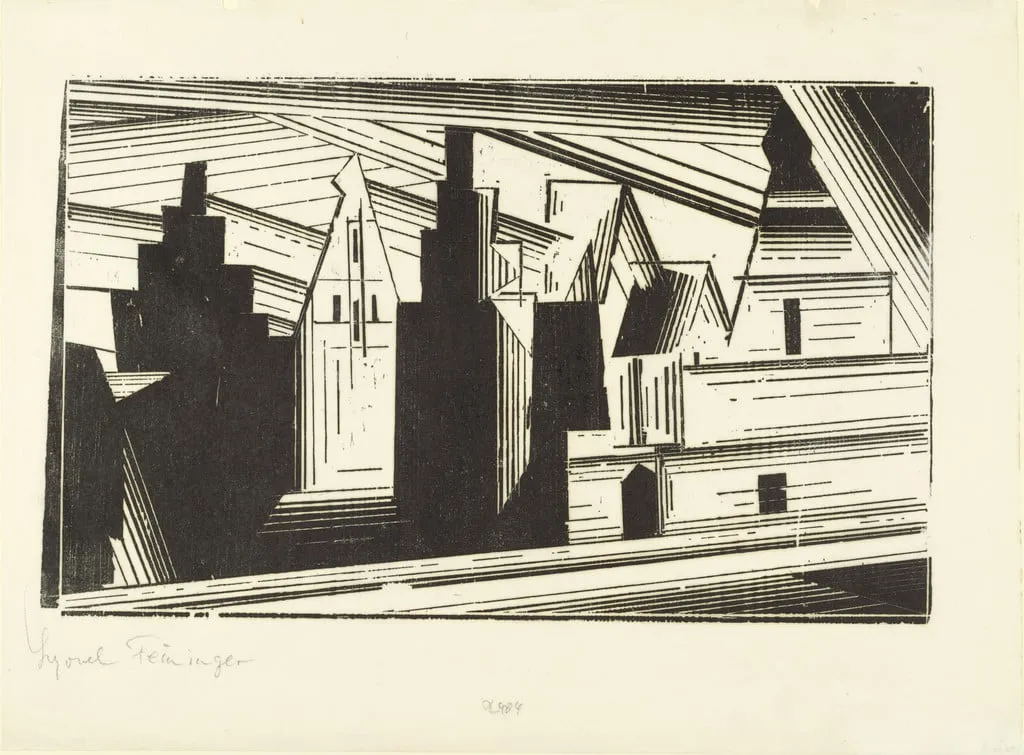
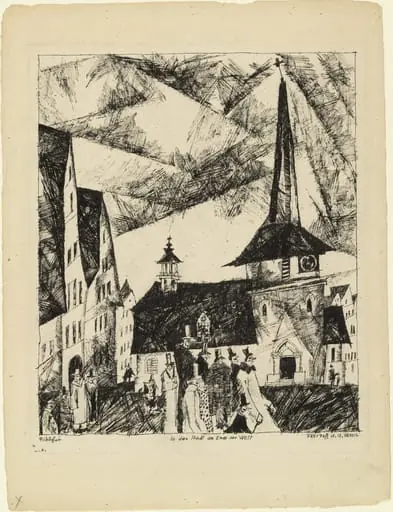
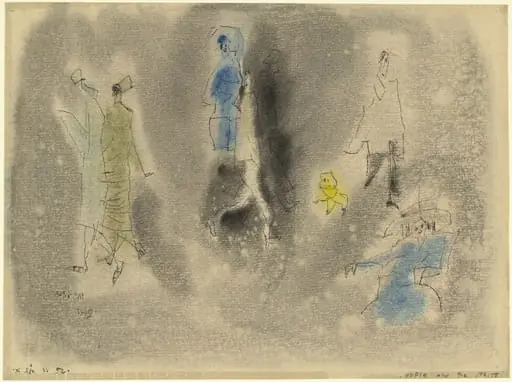
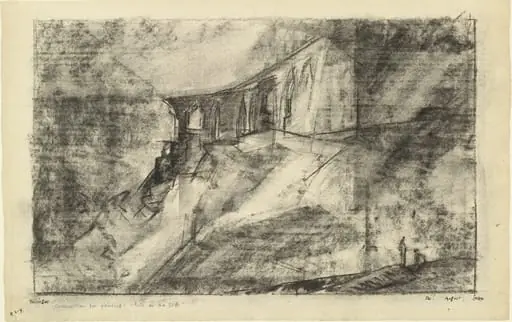
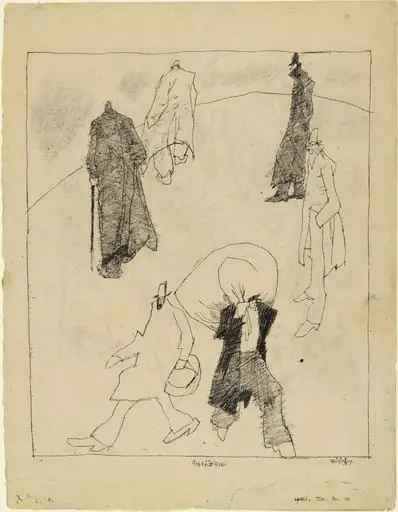
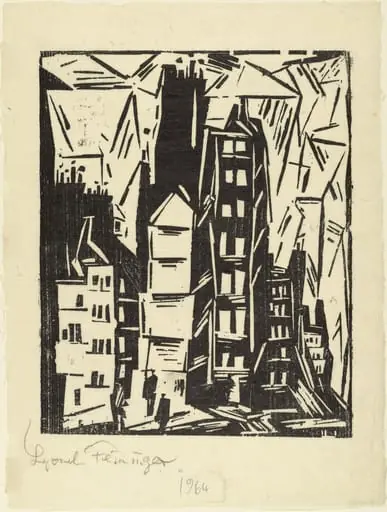
Untitled is an ink print by Lyonel Feininger. It dates from 1924 and is held in the collection of the Museum of Modern Art.
About this work
Overview
It presents an abstracted urban landscape through the traditional method of woodcut printing, in which inked carved surfaces are pressed onto paper.
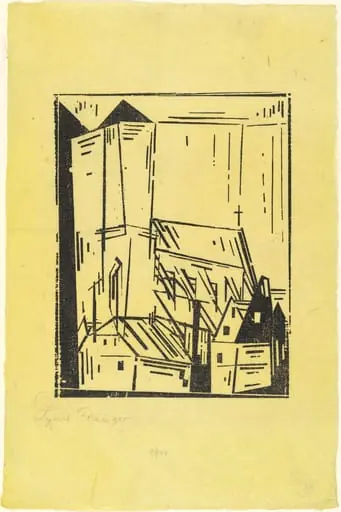
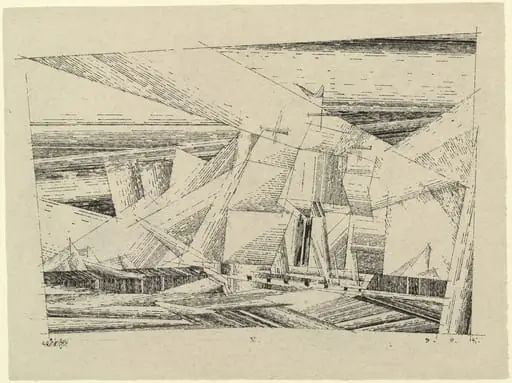
Created in 1924, this woodcut by Lyonel Feininger is a black-and-white print held in the collection of The Museum of Modern Art. It presents an abstracted urban landscape through the traditional method of woodcut printing, in which inked carved surfaces are pressed onto paper. The composition relies entirely on stark contrasts and interlocking forms, with no tonal gradation or color to soften its structure.
Subject & Meaning
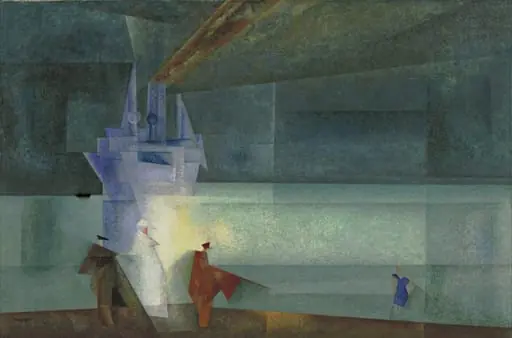
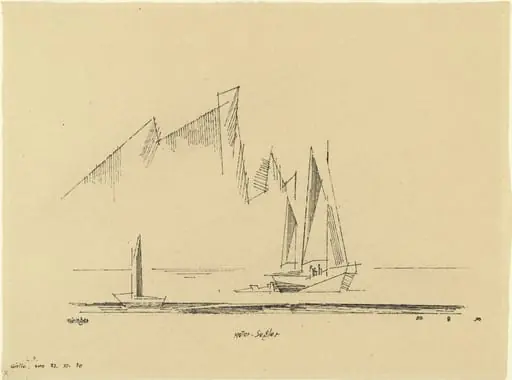
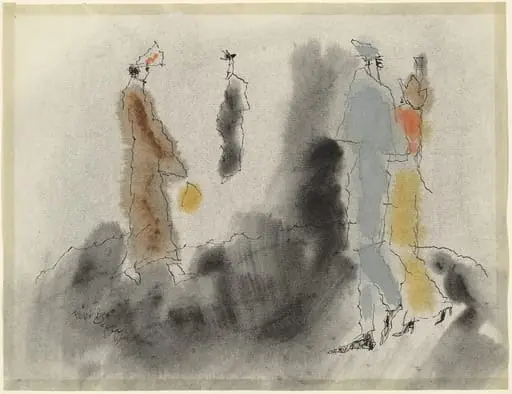
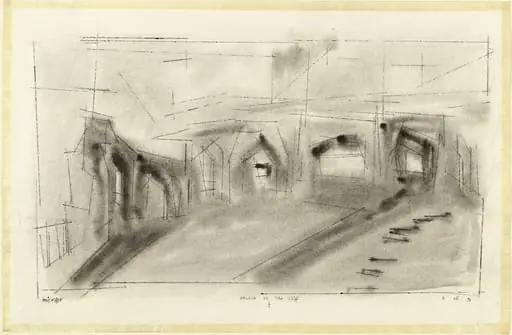
The image depicts a fragmented cityscape, composed of angular, overlapping buildings that appear stacked without regard for perspective or architectural logic. There are no figures, windows, or recognizable details—only the skeletal outlines of structures. The absence of sky beyond thin, slanted lines suggests an environment defined purely by man-made geometry, evoking modernity’s impersonal rhythm rather than a specific location.
Technique & Style
Feininger employed woodcut printing, carving lines directly into a wooden block to create bold, negative spaces. The sharp, intersecting black forms result from the pressure of inked wood against paper, emphasizing the medium’s inherent contrast. Overlapping edges and irregular alignments generate visual tension, turning the print into a dynamic arrangement of planes rather than a realistic depiction.
History & Provenance
The work was produced during Feininger’s time in Germany, when he was associated with the Bauhaus and exploring abstraction through printmaking. It entered The Museum of Modern Art’s collection in the 1930s, among early acquisitions focused on European modernist prints. Its preservation reflects the institution’s early commitment to documenting experimental graphic arts of the interwar period.
Context
Made in the wake of World War I, the piece reflects broader artistic efforts to reimagine form and space in response to industrialization and urban change. Feininger’s geometric style aligned with contemporaneous movements like Constructivism and Expressionism, though his approach remained distinct—prioritizing structural clarity over emotional intensity or political messaging.
Legacy
This woodcut exemplifies Feininger’s contribution to modern printmaking, demonstrating how traditional techniques could be adapted to express abstract, mechanized realities. Its influence is visible in later 20th-century artists who used print media to explore urban fragmentation and formal economy, cementing its role as a quiet but significant artifact of early modernist experimentation.
Artist & collection

Artist
Lyonel Charles Adrian Feininger was a German-American painter, and a leading exponent of Expressionism.