Artwork
Painterly Architectonic
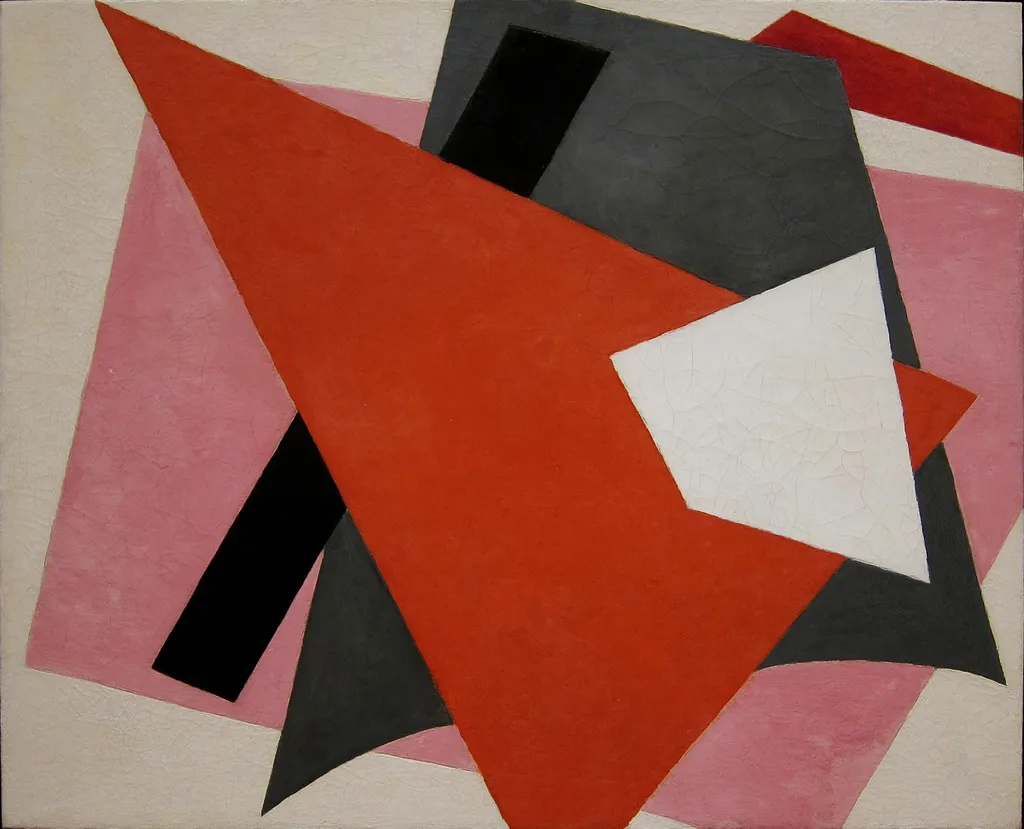
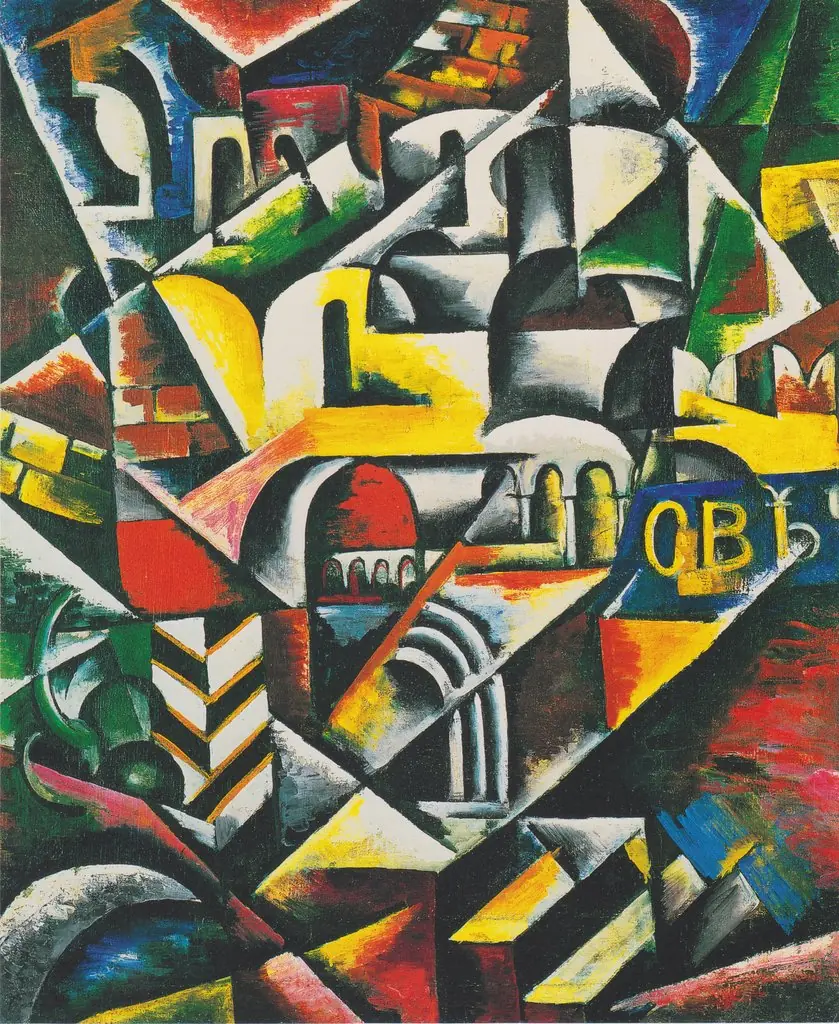
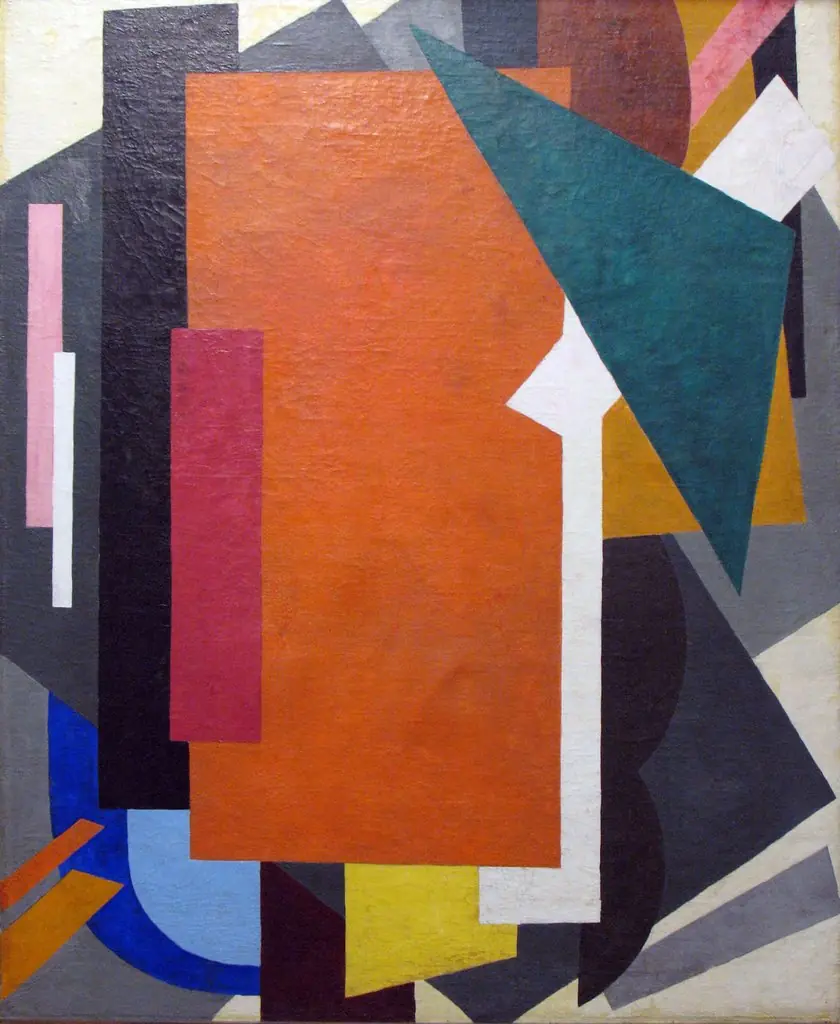
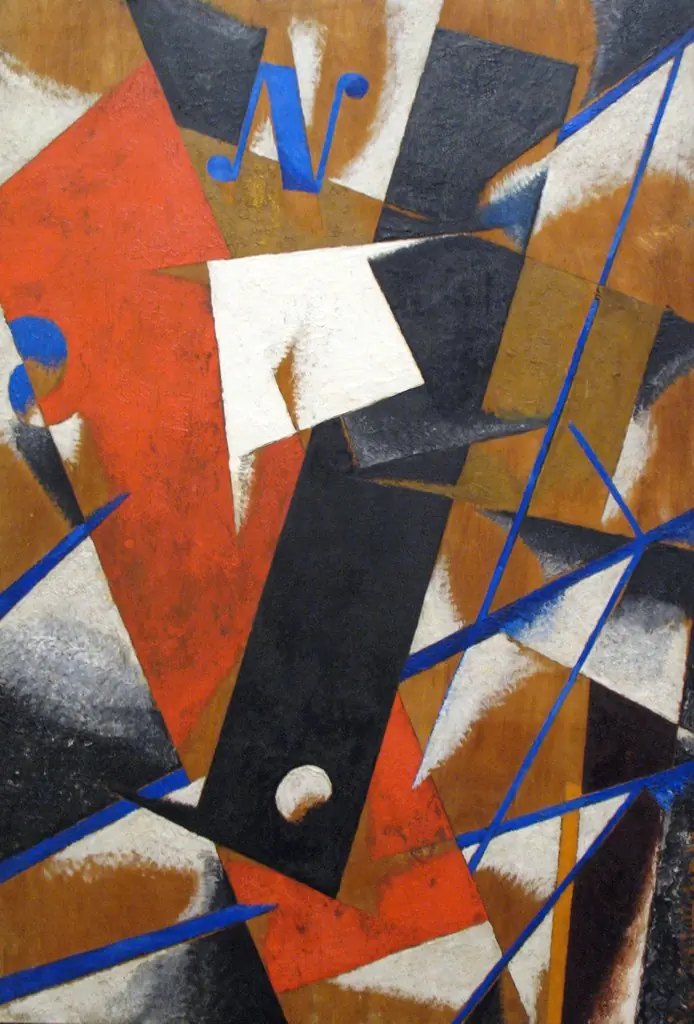
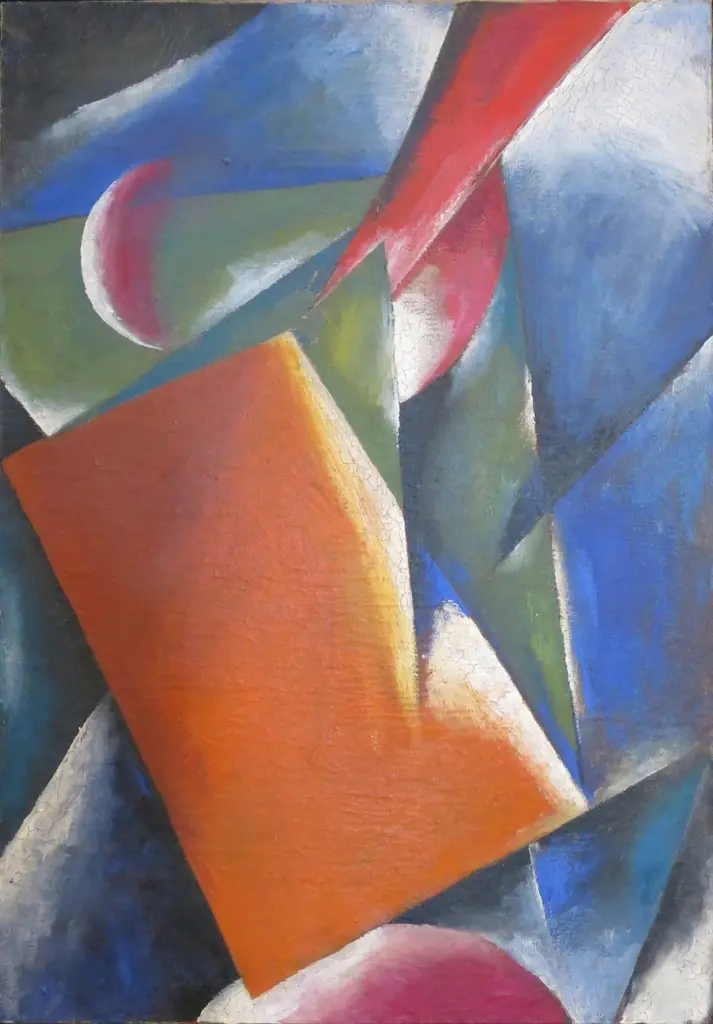
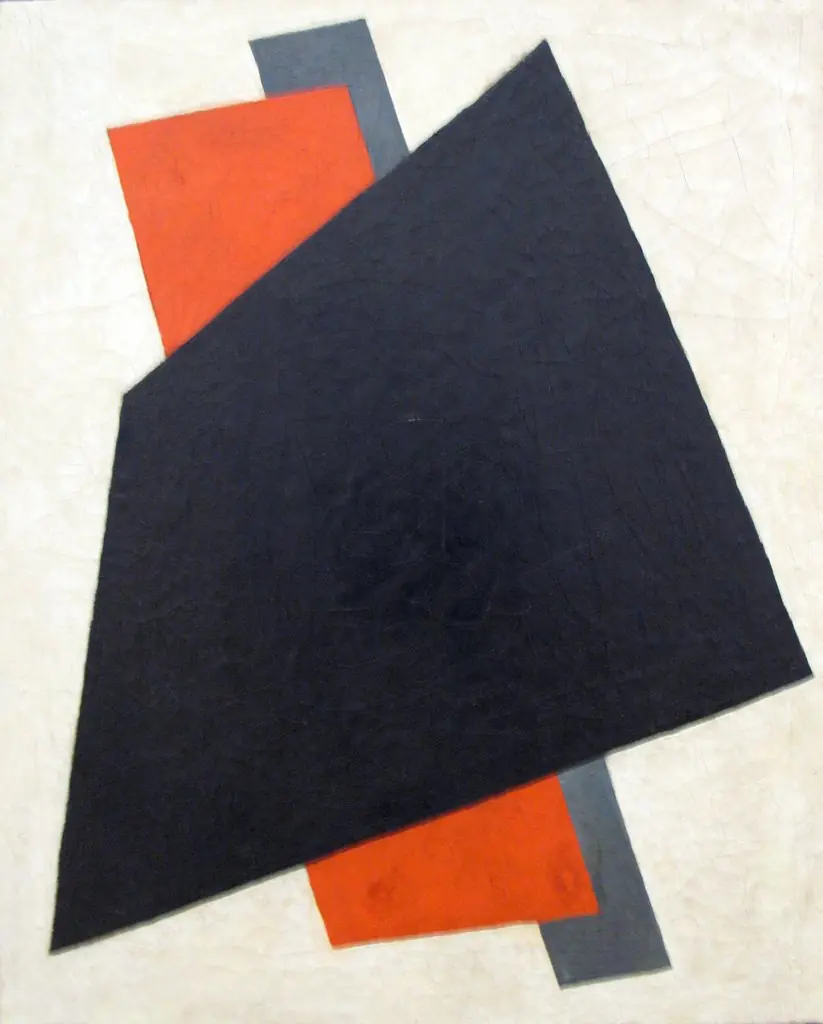
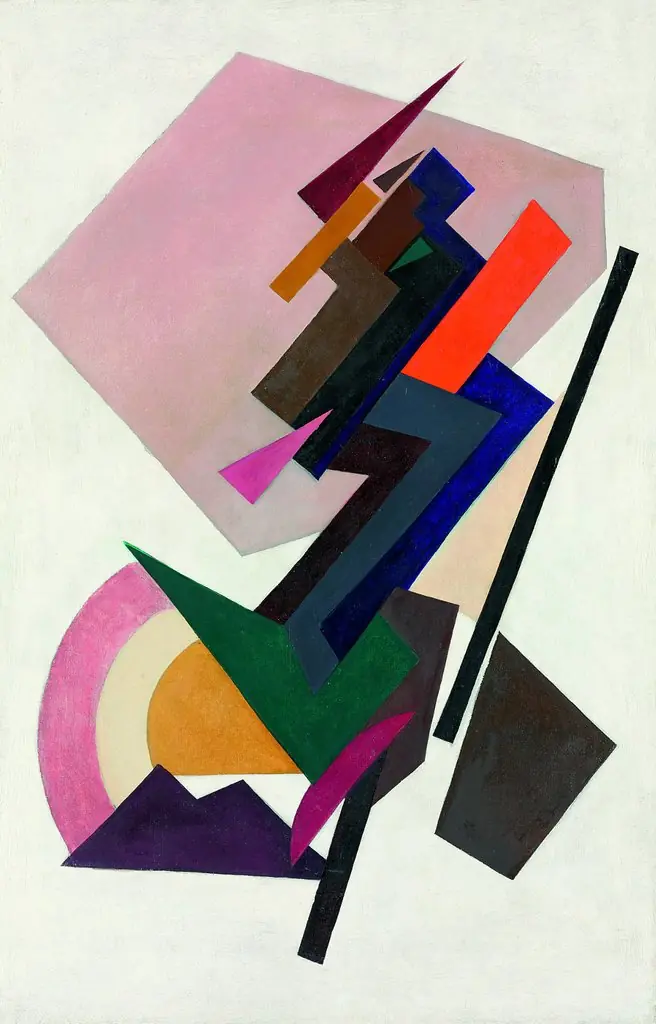
Painterly Architectonic is an oil painting by the Constructivist artist Lyubov Popova. It dates from 1917 and is held in the collection of the Museum of Modern Art.
About this work
Overview
Its composition emphasizes spatial relationships over narrative, marking a shift from traditional painting toward a more engineered visual language.
Created in 1917 by Lyubov Popova, *Painterly Architectonic* is an abstract oil painting that reflects the evolving aesthetics of Russian avant-garde art during the revolutionary period. The work rejects representational forms in favor of structured geometric elements, aligning with the emerging Constructivist ethos. Its composition emphasizes spatial relationships over narrative, marking a shift from traditional painting toward a more engineered visual language.
Subject & Meaning
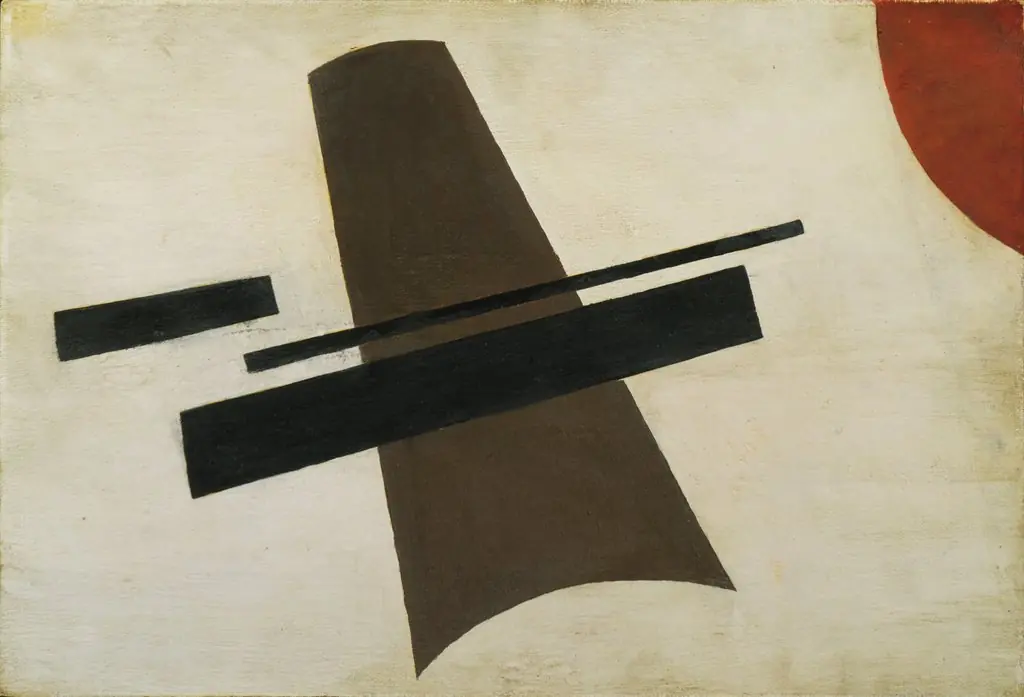
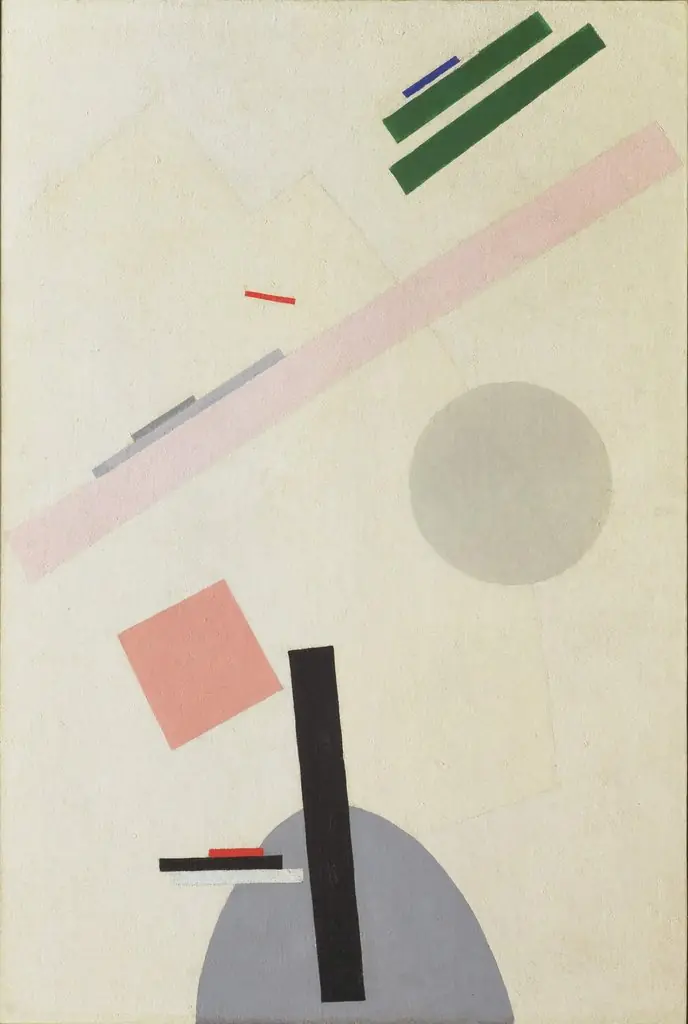
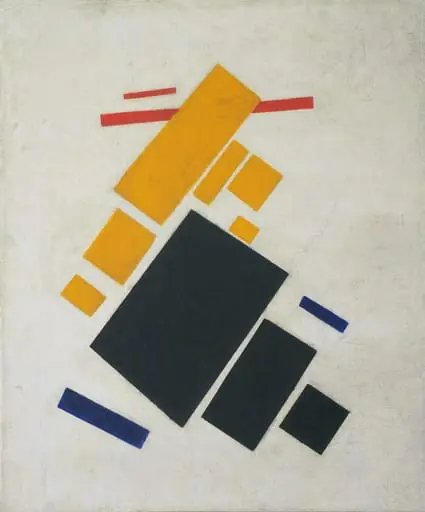
The painting does not depict a recognizable scene but instead explores the interplay of form and color as autonomous elements. Geometric shapes—some angular, others softly curved—suggest architectural fragments or structural components, evoking a sense of spatial tension. Popova’s intent was not to illustrate but to construct visual rhythm, proposing that art could embody the dynamism of modern life without relying on figurative reference.
Technique & Style
Popova applied oil paint with deliberate precision, using flat planes of red, pink, black, and white to define overlapping shapes. Edges vary between sharp and softened, creating visual contrast without symmetry. The arrangement avoids repetition or hierarchy, distributing elements with calculated imbalance. This technique reflects Constructivism’s focus on materiality and composition over emotional expression, prioritizing structural clarity within abstraction.
History & Provenance
Painted during a time of intense artistic redefinition in Russia, *Painterly Architectonic* emerged as Popova transitioned from Cubo-Futurism toward Constructivism. It entered the Museum of Modern Art’s collection in the mid-20th century, where it became part of a broader effort to document non-Western modernist movements. Its preservation reflects its significance in the international recognition of Russian avant-garde practices.
Context
In 1917, Russian artists were reimagining art’s role amid political upheaval. Popova, alongside peers like Malevich and Tatlin, sought to dissolve the boundary between art and industrial design. *Painterly Architectonic* exemplifies this ambition: its abstract geometry mirrors the era’s fascination with engineering, efficiency, and the potential of art to contribute to societal transformation through formal innovation.
Legacy
The painting remains a key reference in the study of early 20th-century abstraction, illustrating how Constructivist principles were applied beyond sculpture and architecture into painting. Popova’s approach influenced later generations of abstract artists interested in non-representational structure. Its presence in MoMA underscores its role in expanding the global canon of modern art beyond Western traditions.
Own this work as a print
Artist & collection

Artist
Lyubov Sergeyevna Popova (Russian: Любо́вь Серге́евна Попо́ва; 24 April 1889 – 25 May 1924) was a Russian-Soviet avant-garde artist, painter and designer.