Artwork
Untitled
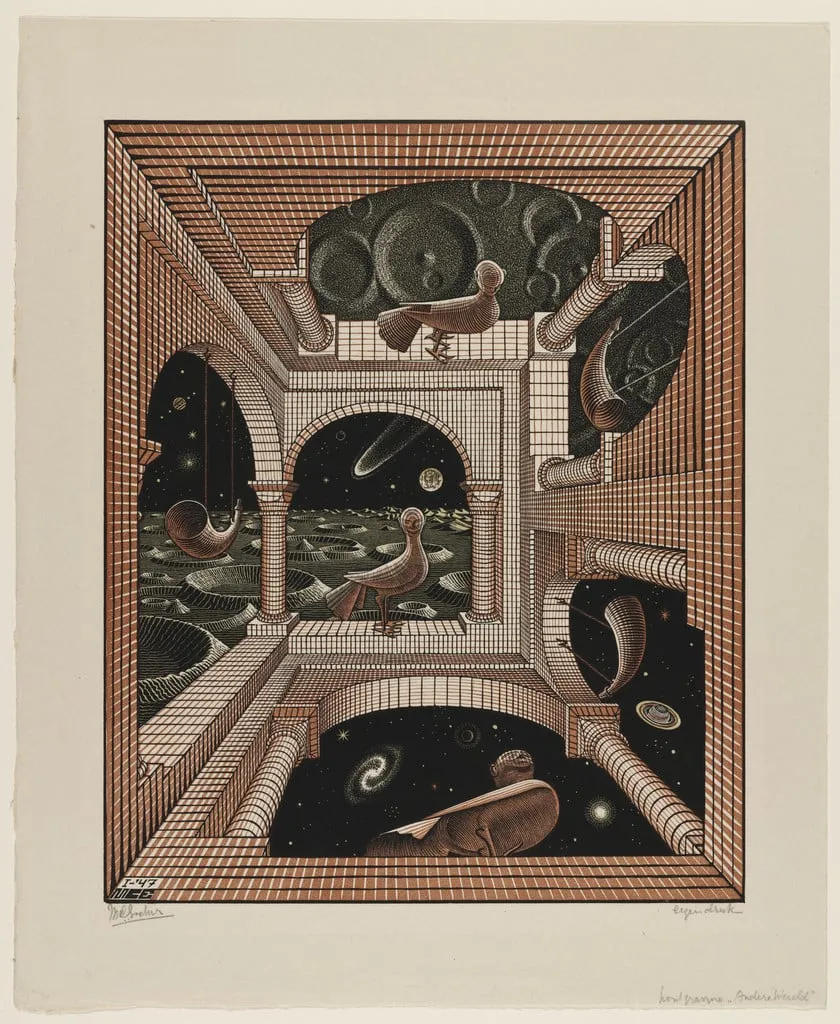
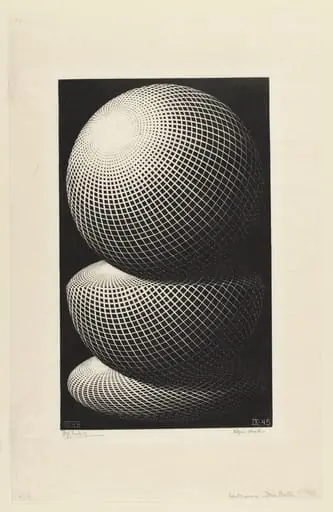
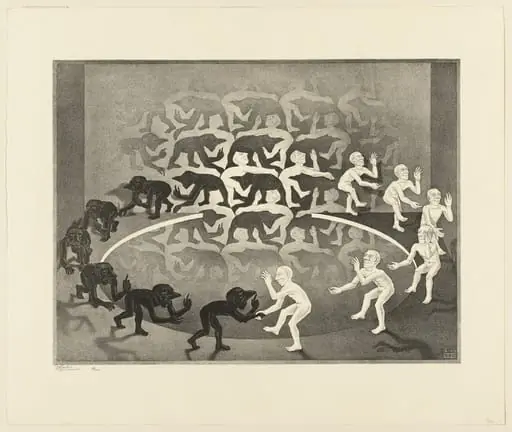
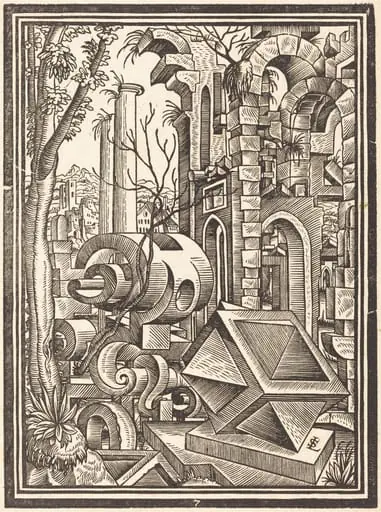
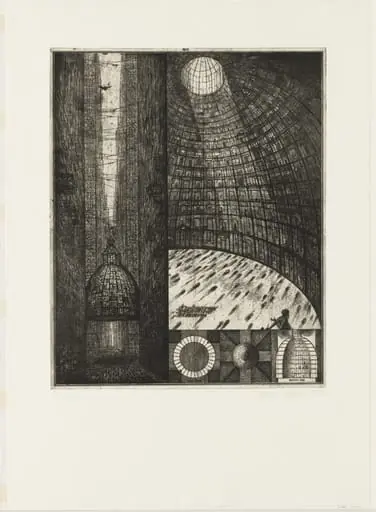
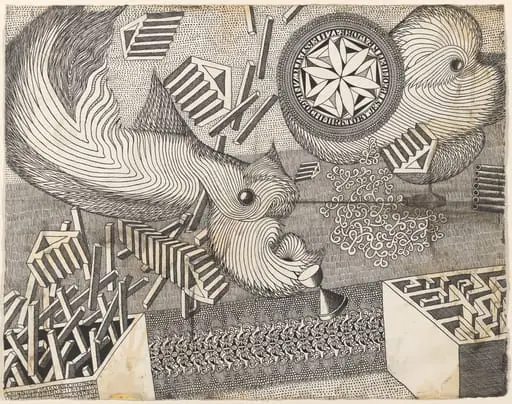
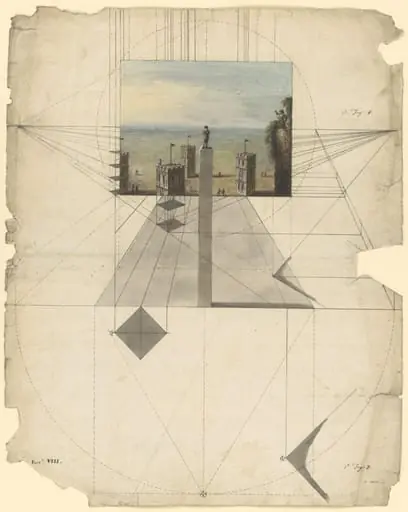
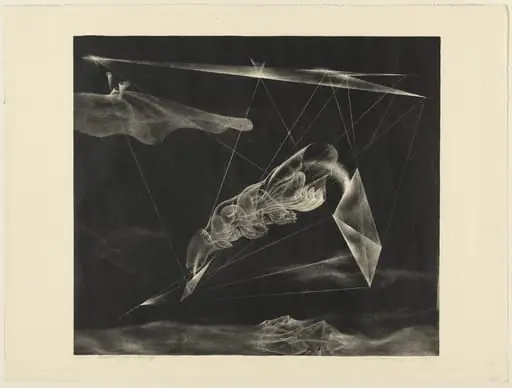
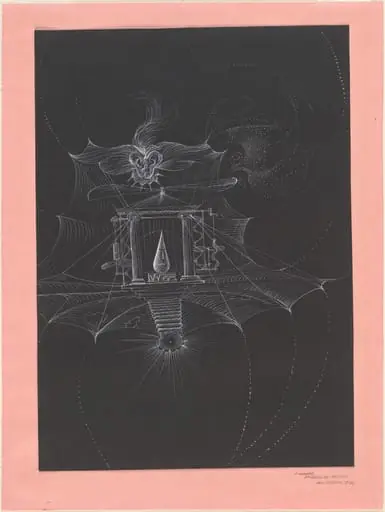
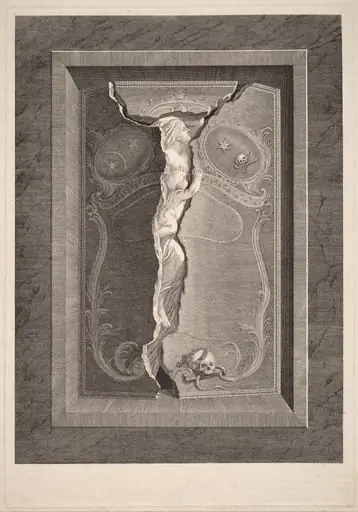
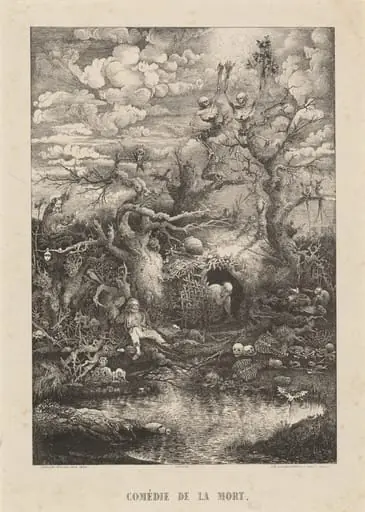
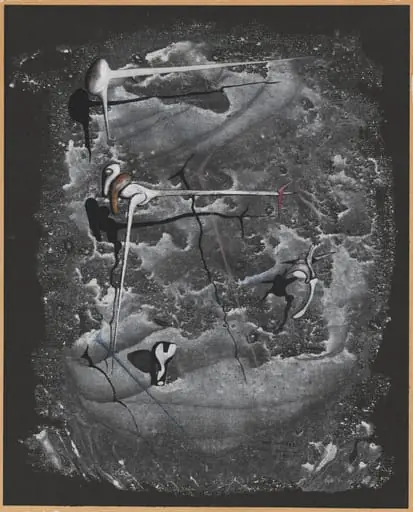
Untitled is an ink print by M. C. Escher. It dates from 1947 and is held in the collection of the Museum of Modern Art. Created in 1947, this wood engraving by Dutch artist M.
About this work
Overview
Unlike his more famous lithographs, this work uses fine incised lines to build complex spatial illusions.
Created in 1947, this wood engraving by Dutch artist M. C. Escher is part of The Museum of Modern Art’s collection. Unlike his more famous lithographs, this work uses fine incised lines to build complex spatial illusions. It belongs to a series of prints from the late 1940s where Escher experimented with architectural forms and layered perspectives, pushing the boundaries of traditional printmaking techniques.
Subject & Meaning
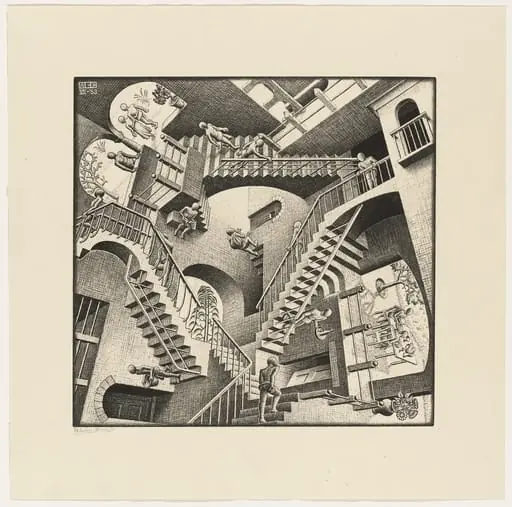
The composition centers on a stone archway that opens into a night sky filled with stars, planets, and a trailing comet. Surrounding staircases loop and intersect in ways that defy gravity and conventional geometry. The juxtaposition of earthly architecture with cosmic elements suggests a bridge between the physical and the infinite, reflecting Escher’s interest in perception and the limits of human spatial reasoning.
Technique & Style
Escher employed wood engraving, a method requiring precise carving of end-grain wood, to achieve fine detail and tonal gradation. He used dense cross-hatching to model shadows and texture, creating depth without color. The earth-toned palette—ranging from deep browns to pale tans—enhances the monochromatic intricacy, allowing the viewer to trace the recursive pathways and architectural contradictions through line alone.
History & Provenance
This print was produced during a period when Escher’s work remained largely outside the mainstream art world. It was acquired by The Museum of Modern Art in the decades following its creation, as interest in his explorations of mathematical form grew. The piece entered the museum’s collection as part of a broader reassessment of graphic art’s conceptual potential in the mid-20th century.
Context
In the late 1940s, Escher was increasingly drawn to mathematical ideas, influenced by conversations with scientists and his own studies of tessellation and perspective. While contemporaries focused on abstraction or expressionism, he pursued visual puzzles rooted in geometry. This work reflects a quiet but persistent engagement with non-Euclidean space, anticipating later developments in both art and theoretical physics.
Legacy
Though not widely recognized during his lifetime, Escher’s prints like this one became touchstones for later generations interested in the intersection of art and science. The intricate logic of his compositions influenced fields from graphic design to computer graphics. This engraving exemplifies his enduring contribution: transforming technical precision into a language that challenges how we see structure and space.
Artist & collection
Artist
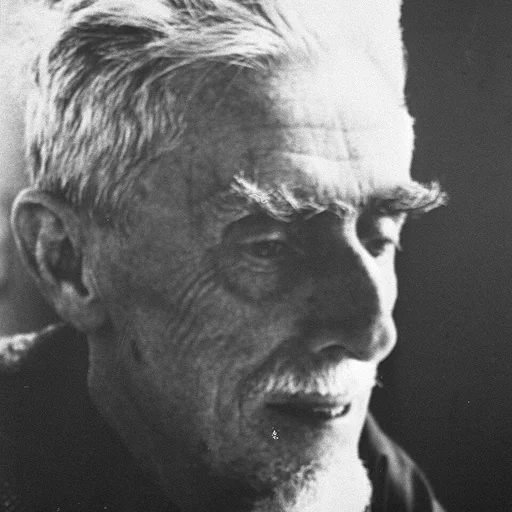
Maurits Cornelis Escher (; Dutch: ; 17 June 1898 – 27 March 1972) was a Dutch graphic artist who made woodcuts, lithographs, and mezzotints, many of which were inspired by mathematics.