Artwork
Untitled
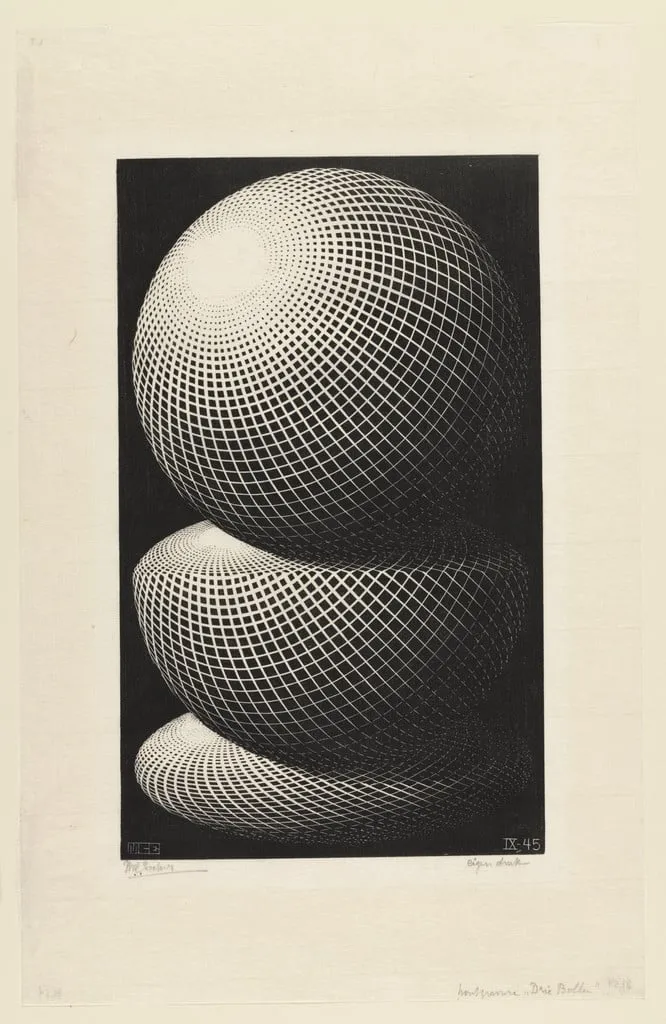
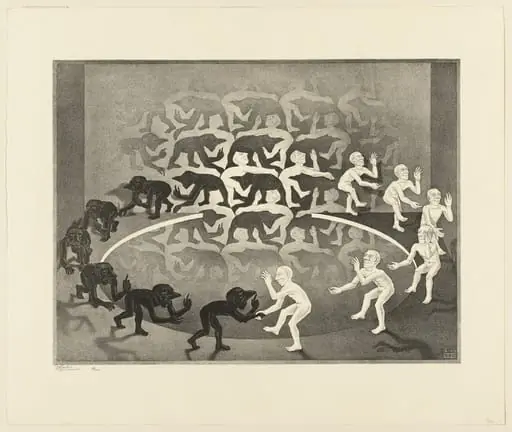
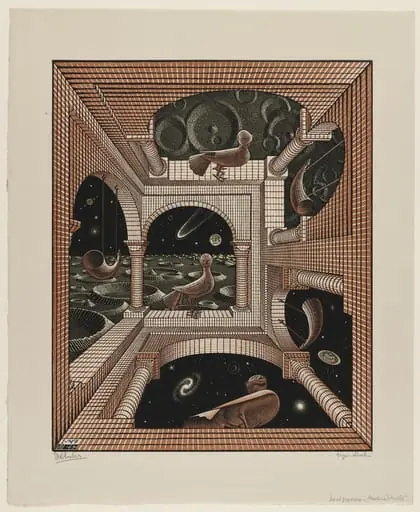
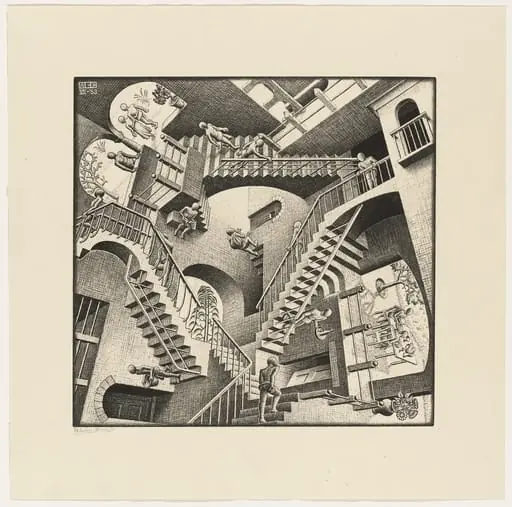
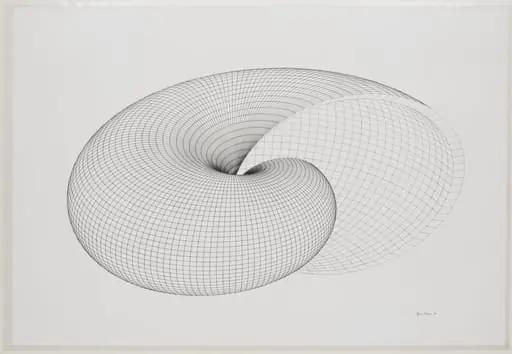
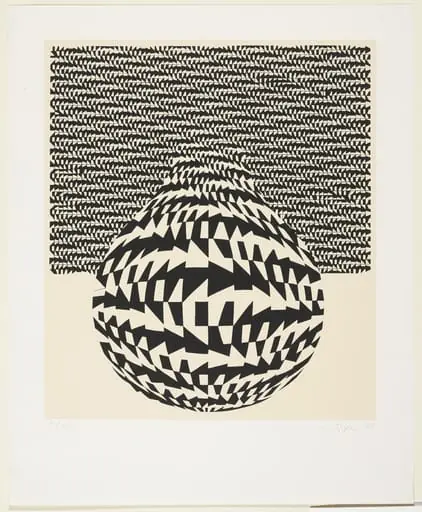
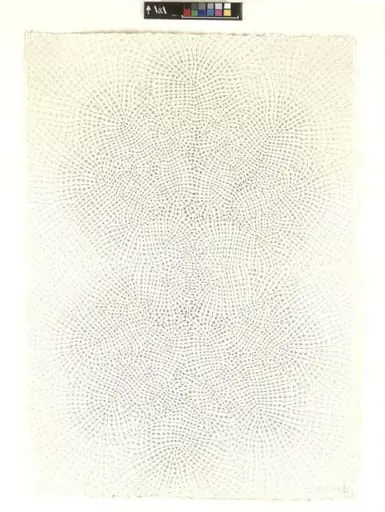
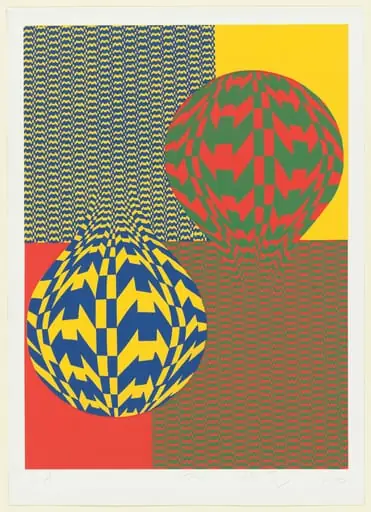
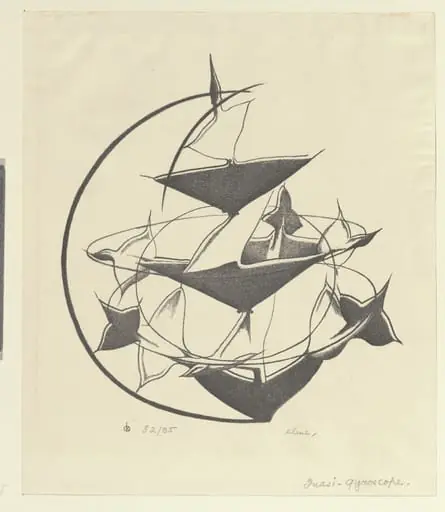
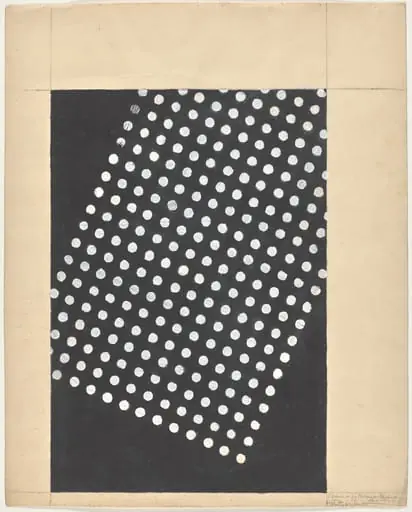
Untitled is an ink print by M. C. Escher. It dates from 1945 and is held in the collection of the Museum of Modern Art. Created in 1945, this wood engraving by Dutch artist M.
About this work
Overview
Escher employed fine, precise incisions to suggest texture and light, demonstrating his mastery of the wood engraving technique.
Created in 1945, this wood engraving by Dutch artist M. C. Escher is part of his broader exploration of form and perception. Unlike his more famous tessellations or impossible structures, this work focuses on the rendering of simple, rounded volumes. Escher employed fine, precise incisions to suggest texture and light, demonstrating his mastery of the wood engraving technique. The piece resides in the collection of The Museum of Modern Art.
Subject & Meaning
Three smooth, spherical forms are arranged in an unstable stack, their surfaces marked by uniform, curved lines that mimic the play of light on reflective materials. The composition evokes tension and fragility, as if the spheres might shift at any moment. There is no narrative or symbolic reference—instead, the work invites contemplation of balance, gravity, and the illusion of solidity through pattern.
Technique & Style
Escher used wood engraving, a labor-intensive method involving fine lines carved into the end grain of wood. The surface of each sphere is defined by densely packed, parallel and intersecting lines that curve to follow its contour, creating a sense of volume and metallic sheen. The stark black background enhances contrast, isolating the forms and emphasizing their sculptural presence through line alone.
History & Provenance
Produced during a period when Escher was refining his technical precision, this piece was not widely exhibited during his lifetime. It entered the collection of The Museum of Modern Art in the decades following his death, as interest in his work grew among mathematicians, scientists, and designers. Its inclusion reflects a broader reassessment of his contributions to 20th-century printmaking.
Context
In the mid-1940s, Escher was deeply engaged with visual paradoxes and the representation of three-dimensional space on a flat plane. While contemporaries explored abstraction or expressionism, he pursued a quiet, methodical investigation of geometry and optical logic. This engraving aligns with his interest in how pattern can imply form without traditional shading or perspective.
Legacy
Though modest in scale and subject, this work exemplifies Escher’s enduring influence on visual culture. Its precise rendering of form through line has inspired designers, illustrators, and mathematicians interested in the intersection of art and perception. It remains a quiet but potent example of how technical discipline can evoke wonder without overt spectacle.
Artist & collection
Artist
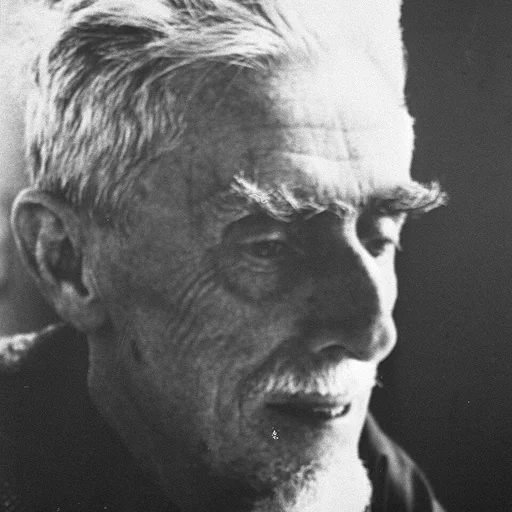
Maurits Cornelis Escher (; Dutch: ; 17 June 1898 – 27 March 1972) was a Dutch graphic artist who made woodcuts, lithographs, and mezzotints, many of which were inspired by mathematics.