Artwork
Poikia ranta-aidalla
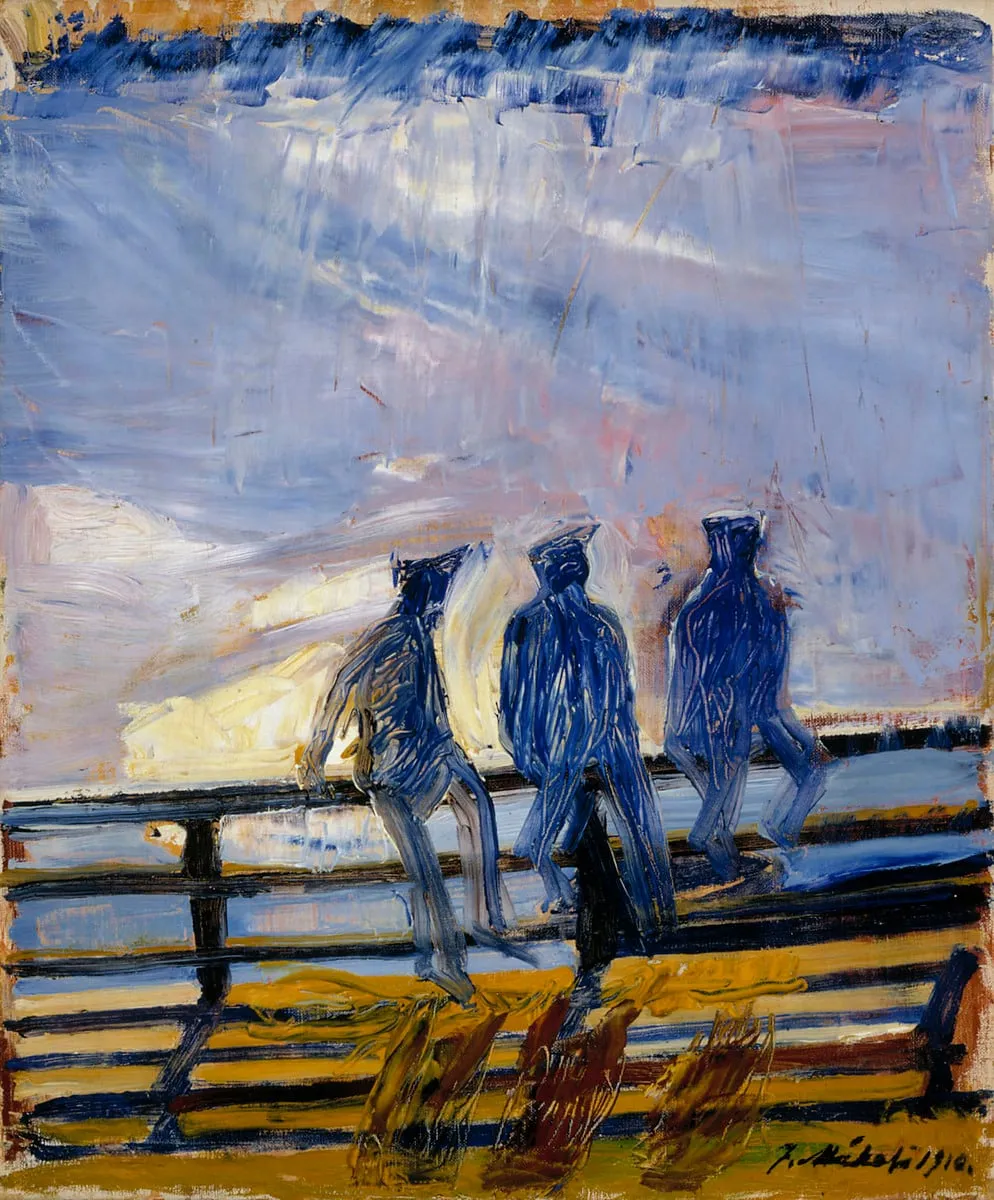
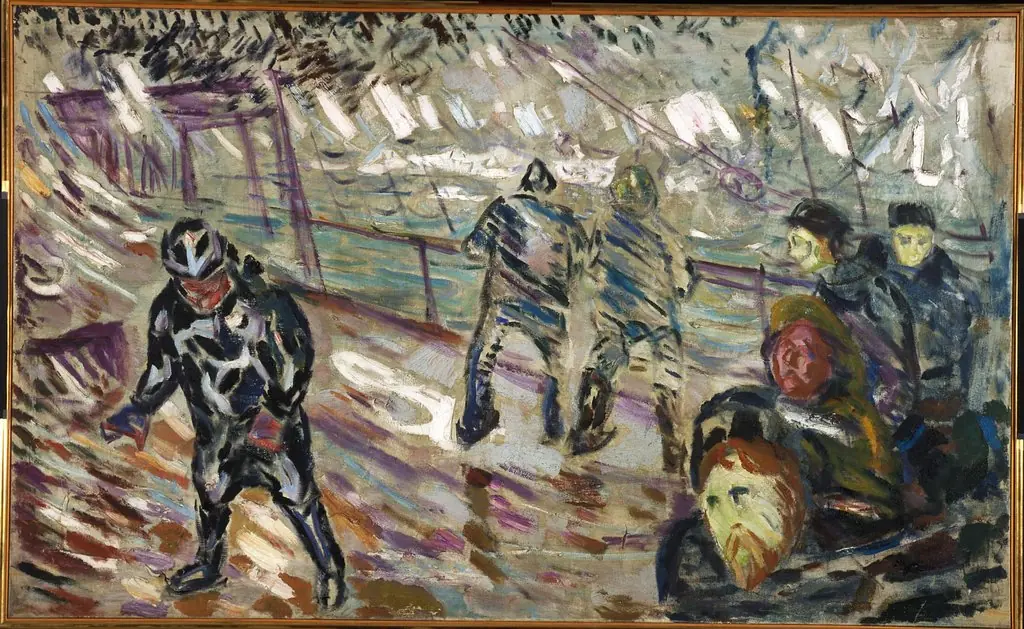
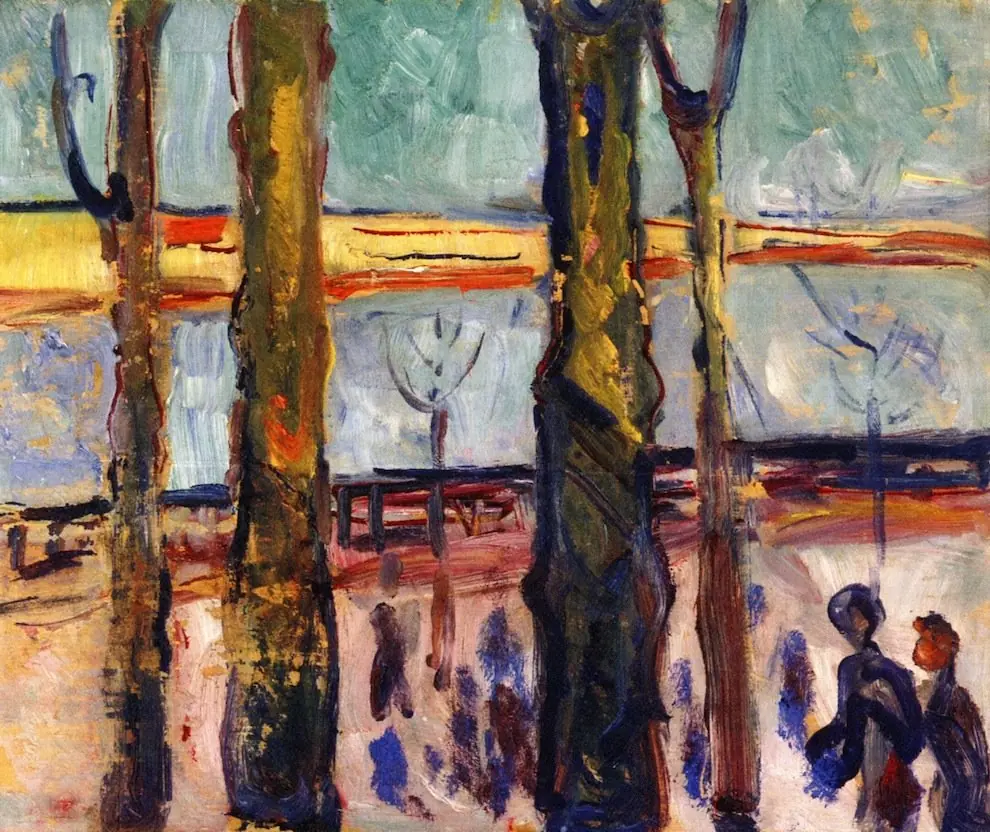
Poikia ranta-aidalla is an unspecified painting by Juho Mäkelä. It is held in the collection of the Finnish National Gallery. This painting portrays three figures in blue uniforms walking along a horizontal wooden fence, viewed from behind.
About this work
Overview
This painting portrays three figures in blue uniforms walking along a horizontal wooden fence, viewed from behind. The absence of facial features emphasizes anonymity and movement. The background blends blue, yellow, and white in loose, visible brushwork, contributing to a dynamic, atmospheric quality. Thick paint applications create a tactile surface, reinforcing a sense of motion and immediacy.
Subject & Meaning
The figures, unidentified and faceless, suggest a collective rather than individual presence. Their uniformity and direction imply a routine or institutional context, perhaps military or labor-related. The fence acts as both boundary and path, grounding the scene in a liminal space. The lack of narrative detail invites interpretation focused on rhythm, repetition, and quiet persistence.
Technique & Style
The artist employs impasto to build texture, applying paint thickly in places to catch light and create physical depth. Brushstrokes are energetic and unrefined, avoiding smooth transitions. Color is applied in broad, overlapping planes rather than blended, enhancing the sense of atmosphere. The rough surface resists idealization, favoring sensory immediacy over polished detail.
History & Provenance
No documented records of the painting’s origin, ownership, or exhibition history are available. The work appears to be an unattributed or lesser-known piece, possibly from a regional or private collection. Its title, Poikia ranta-aidalla, suggests Finnish or Nordic linguistic roots, though the artist’s identity remains unconfirmed.
Context
The painting’s style aligns with early 20th-century Nordic modernism, where artists often favored expressive brushwork and emotional tone over realism.
The painting’s style aligns with early 20th-century Nordic modernism, where artists often favored expressive brushwork and emotional tone over realism. Similar themes of anonymous figures in landscapes appear in works by Finnish and Swedish painters responding to industrialization and social change. The use of color and texture reflects broader trends toward abstraction and material presence in interwar European art.
Legacy
Though not widely exhibited or studied, the painting contributes to a quieter strand of modernist practice focused on mood and materiality. Its emphasis on texture and movement without narrative resolution offers a counterpoint to more figurative traditions. It remains a quiet example of how everyday scenes were reimagined through tactile, non-representational means in early modern art.
Artist & collection
Artist
Juho Mäkelä made metalworks and paintings that capture quiet moments under wide skies.