Artwork
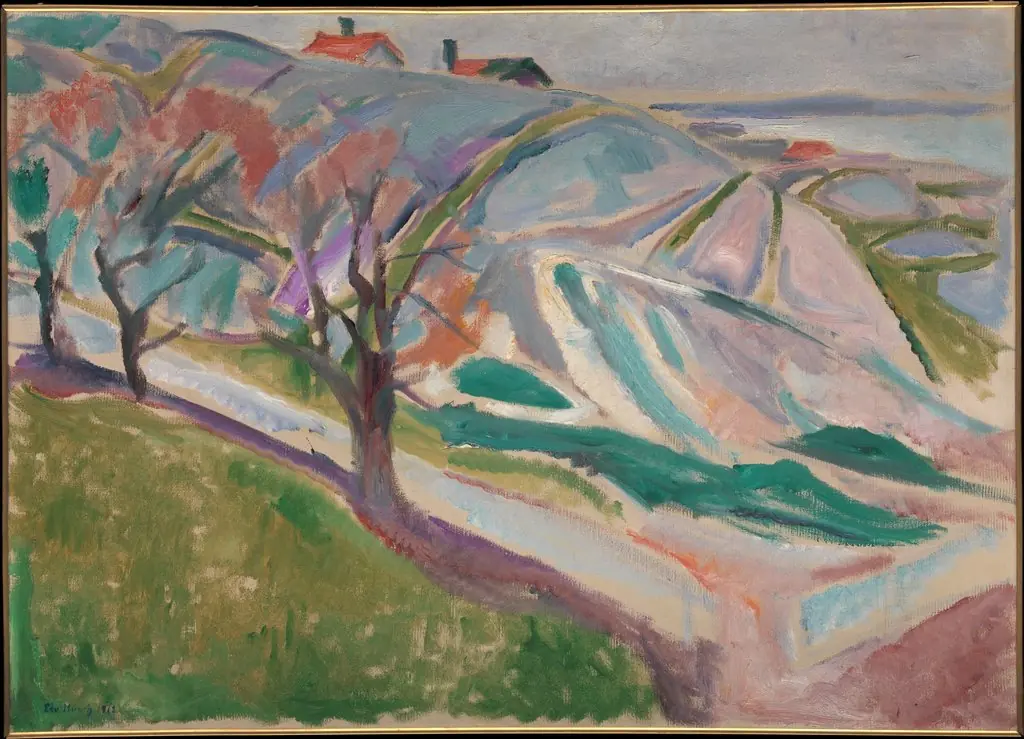
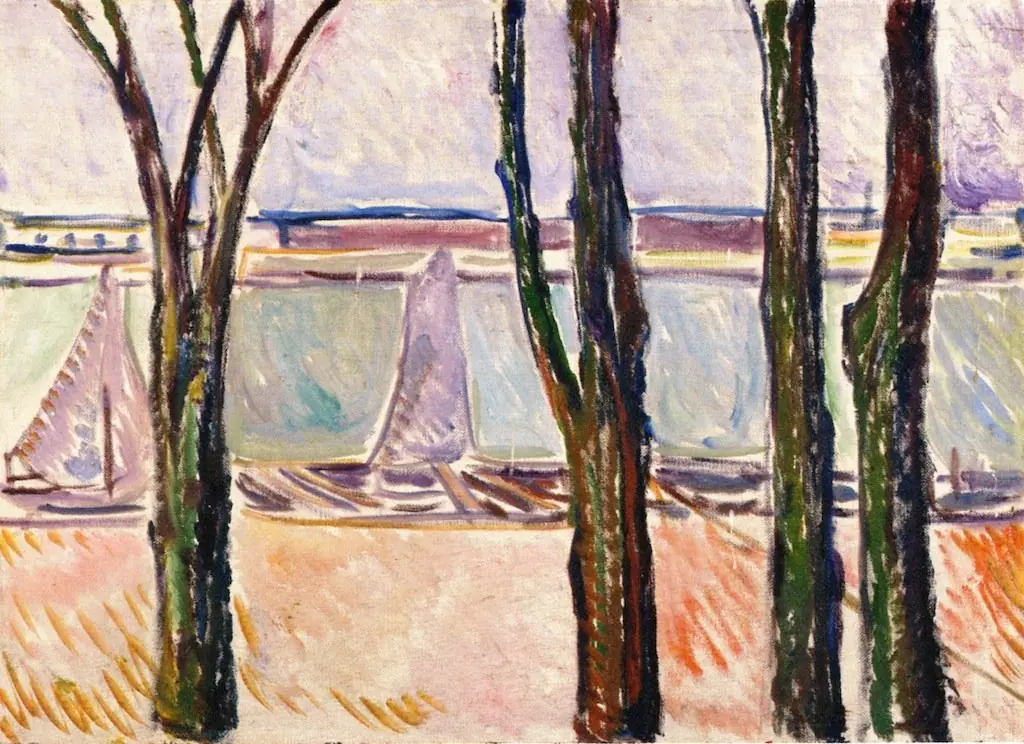
Canal in Warnemünde
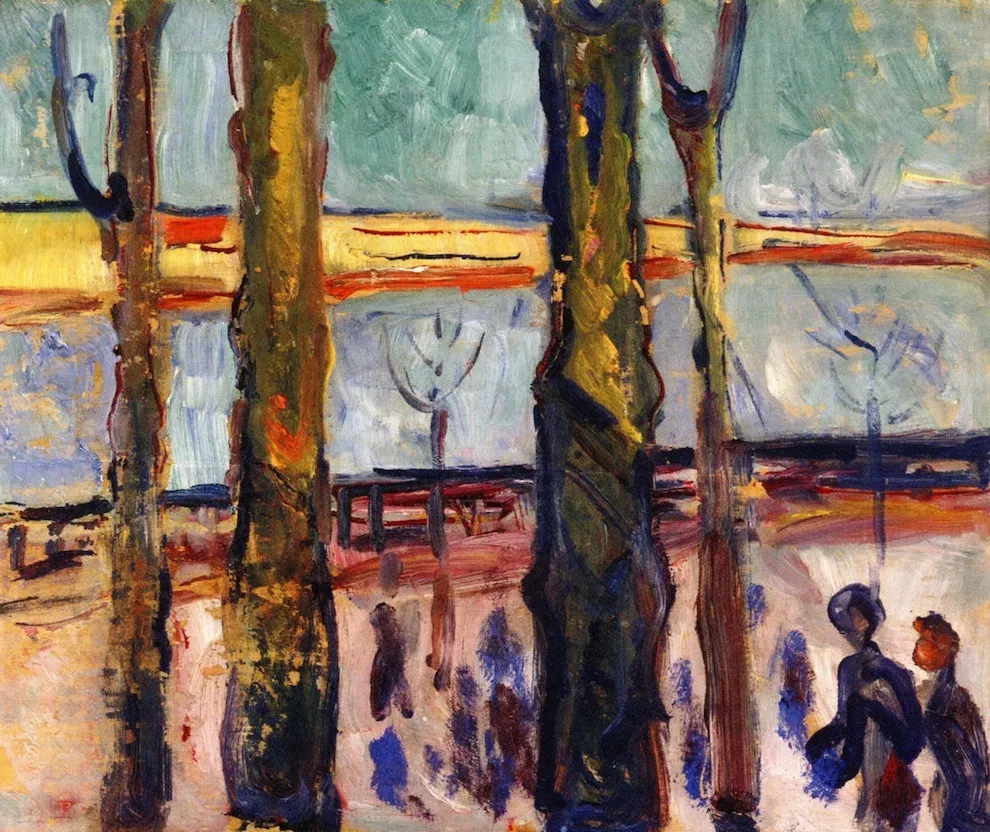
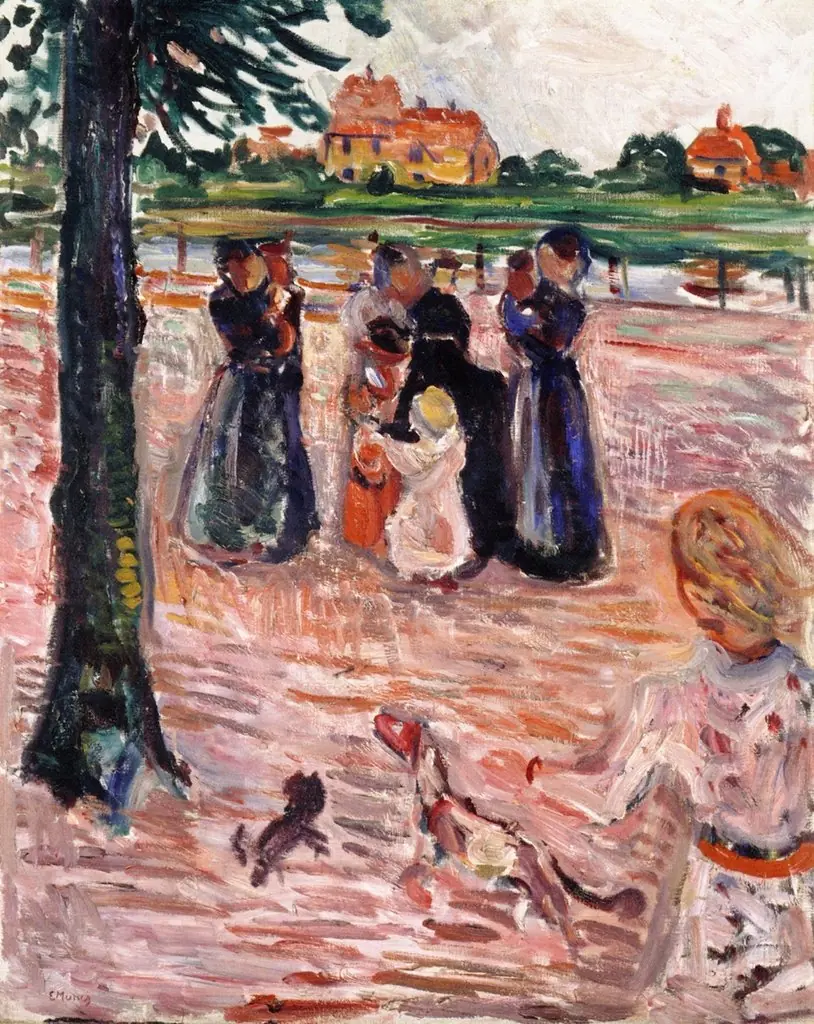
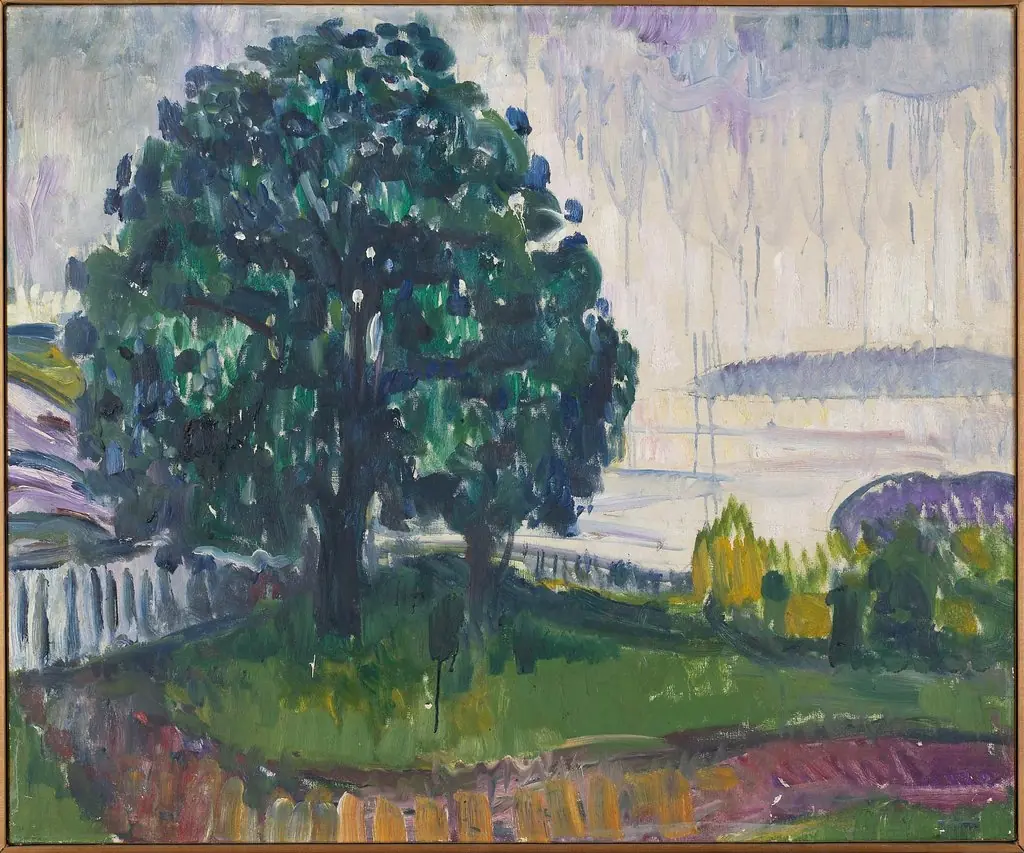
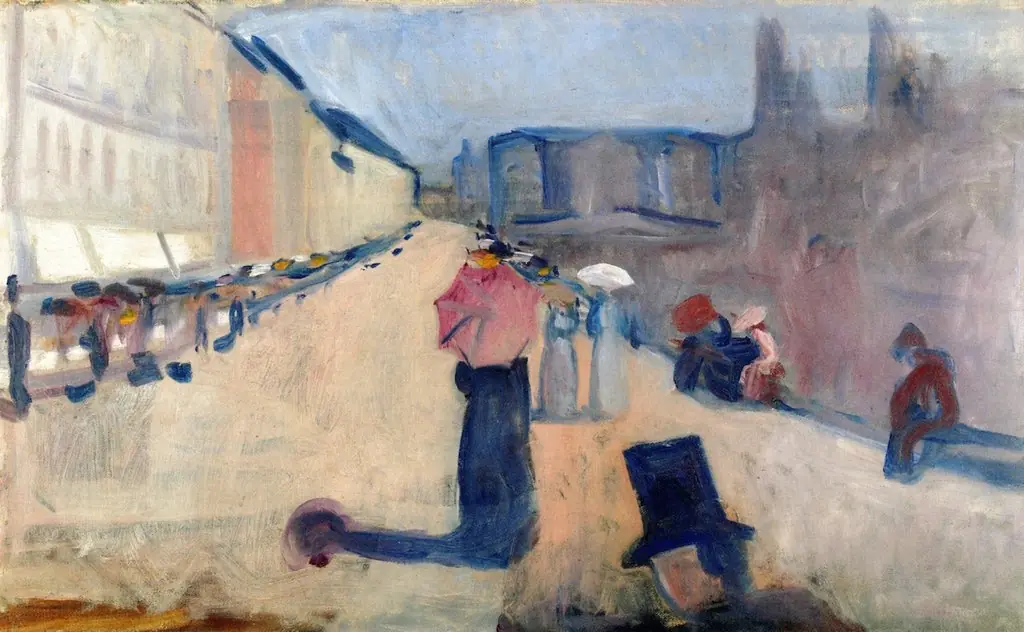
Canal in Warnemünde is an oil painting by the Post-Impressionist artist Edvard Munch. It dates from 1908 and is held in the collection of the Munch Museum.
About this work
Overview
Created in 1908, this oil painting by Norwegian artist Edvard Munch portrays a quiet canal at Warnemünde. The composition centers on a stretch of water bordered by a modest line of trees, rendered with a palette dominated by subdued blues and greens. The scene conveys a tranquil atmosphere, inviting the viewer to linger on the gentle play of light and water.
Subject & Meaning
The work captures a simple, everyday landscape, yet Munch’s handling suggests an underlying emotional resonance. By focusing on the calm water and the modest foliage, the painting evokes a sense of stillness that contrasts with the artist’s broader interest in psychological states, offering a moment of quiet reflection within his oeuvre.
Technique & Style
Munch applies oil in relatively thick layers, producing a tactile surface that adds depth to the canal’s surface. His brushwork is loose and expressive, with visible strokes that convey movement despite the scene’s stillness. The muted chromatic scheme and post‑impressionist sensibility emphasize mood over precise detail, aligning the piece with his characteristic emphasis on feeling.
History & Provenance
The canvas belongs to the collection of the Munch Museum in Oslo, where it has been displayed as part of the institution’s holdings of the artist’s work. Munch, trained at the Royal School of Art and Design in Kristiania, produced this piece during a period when he was exploring landscape subjects alongside his more famous figurative compositions.
Artist & collection
Artist
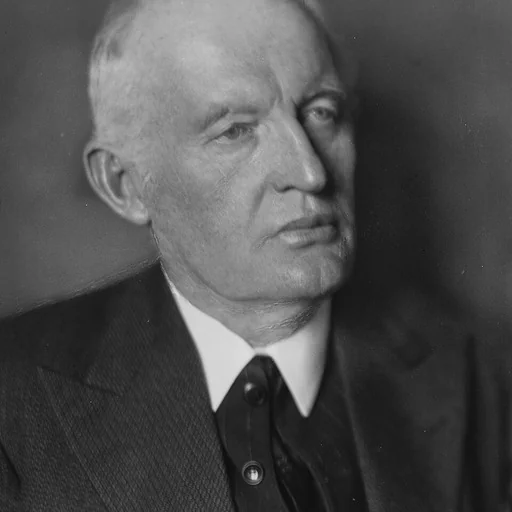
Edvard Munch ( MUUNK; Norwegian: ; 12 December 1863 – 23 January 1944) was a Norwegian painter.