Artwork
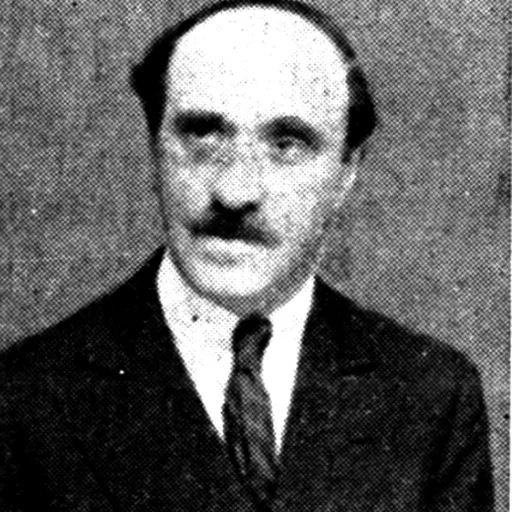
Autoportret
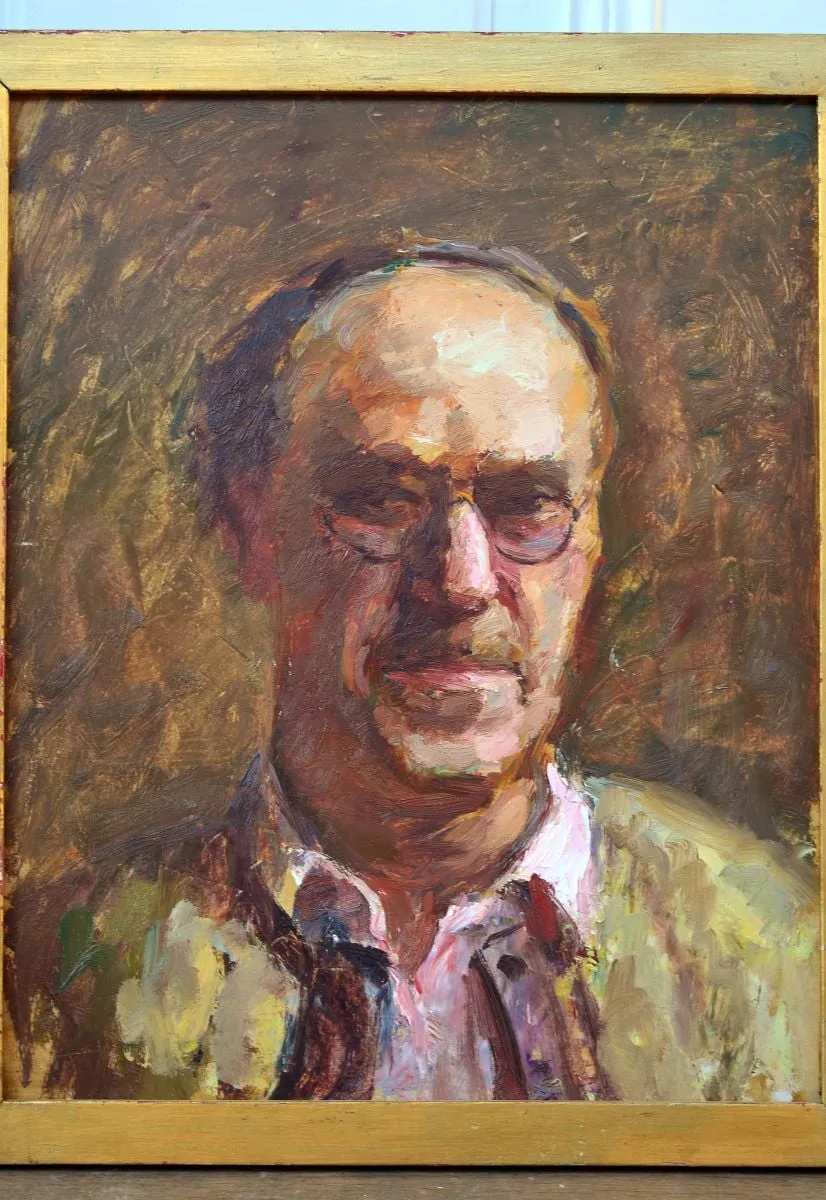
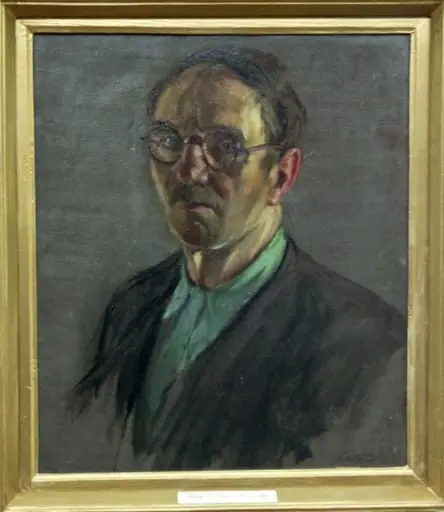
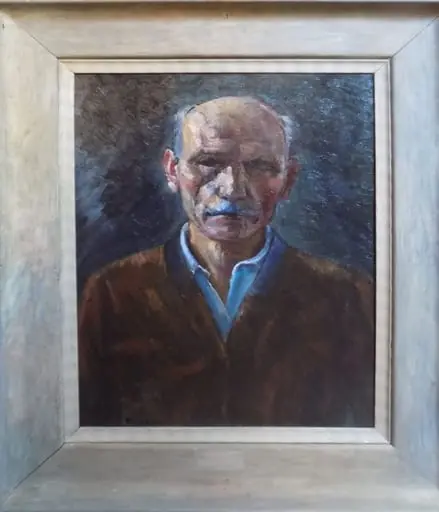
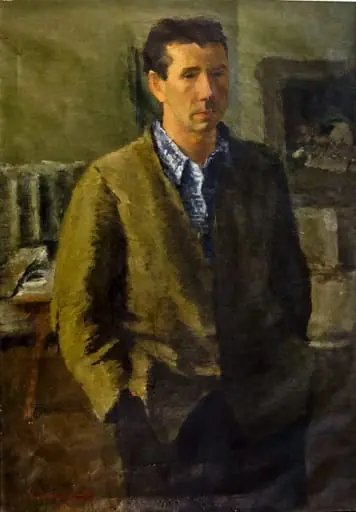
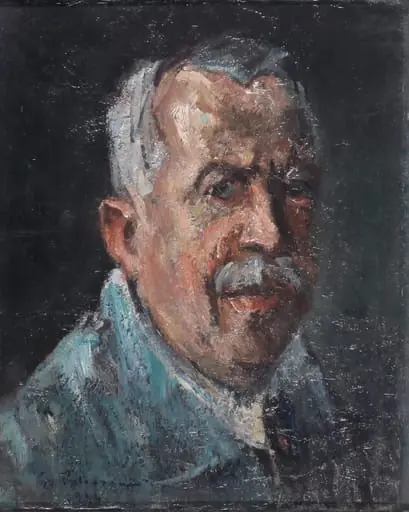
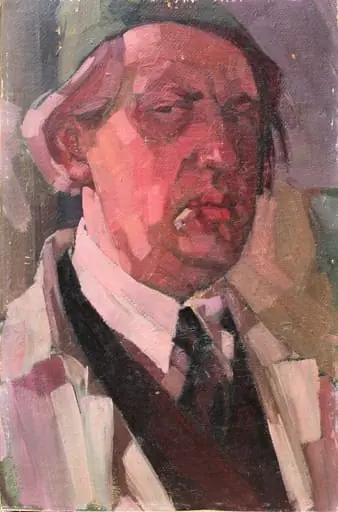
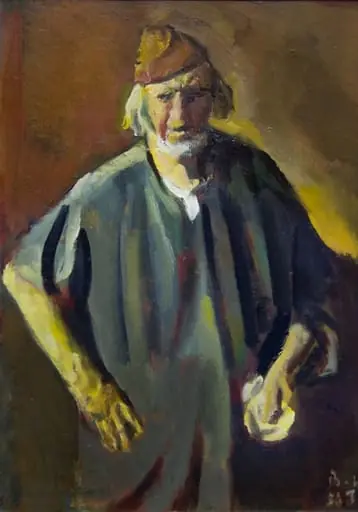
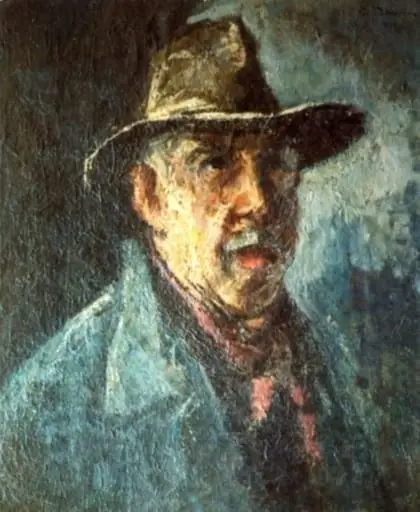
Autoportret is an unspecified painting by Samuel Mützner. It dates from 1931 and is held in the collection of the Brukenthal National Museum.
About this work
Overview
Visible brushstrokes and a limited palette of earth tones ground the image in quiet realism, avoiding dramatic flourish in favor of introspective presence.
Samuel Mützner created this self-portrait around 1931, using oil paint to capture his own likeness with deliberate restraint. The composition centers on the artist’s face, framed by a collared shirt and jacket, against a subdued brown background. Visible brushstrokes and a limited palette of earth tones ground the image in quiet realism, avoiding dramatic flourish in favor of introspective presence.
Subject & Meaning
The subject gazes downward and slightly to the right, suggesting inward reflection rather than direct engagement with the viewer. This averted gaze, combined with the absence of overt expression, conveys a sense of private contemplation. The portrait does not seek to project confidence or persona but instead offers a moment of stillness, as if the artist is pausing between thought and action.
Technique & Style
Mützner employed impasto to build texture on the face and clothing, giving volume through thick, tactile strokes. The warm, muted tones—ochres, umbers, and soft grays—create cohesion without contrast. Brushwork remains visible throughout, emphasizing the physical act of painting and reinforcing the portrait’s unpolished, human quality. The background is intentionally neutral, ensuring focus remains on the subject’s features.
History & Provenance
The painting’s early history is not well documented, but it is known to have remained within the artist’s circle until the mid-20th century. It entered a public collection in the 1970s, where it has since been preserved as part of a modest but significant body of interwar Central European portraiture. No major exhibitions or publications have featured it prominently.
Context
Created during a period of political and cultural transition in Central Europe, the portrait reflects a broader trend toward introspective realism among regional artists. Unlike the expressive distortions of Expressionism or the rigid formalism of state-sanctioned art, Mützner’s approach aligns with quieter, personal modes of representation favored by lesser-known painters of the era.
Legacy
Though not widely exhibited or studied, the self-portrait endures as a quiet example of personal documentation in interwar painting. It offers insight into how individual artists navigated identity and representation outside dominant artistic movements. Its modest scale and restrained technique continue to invite close, unhurried viewing.
Artist & collection