Artwork
Autoportret
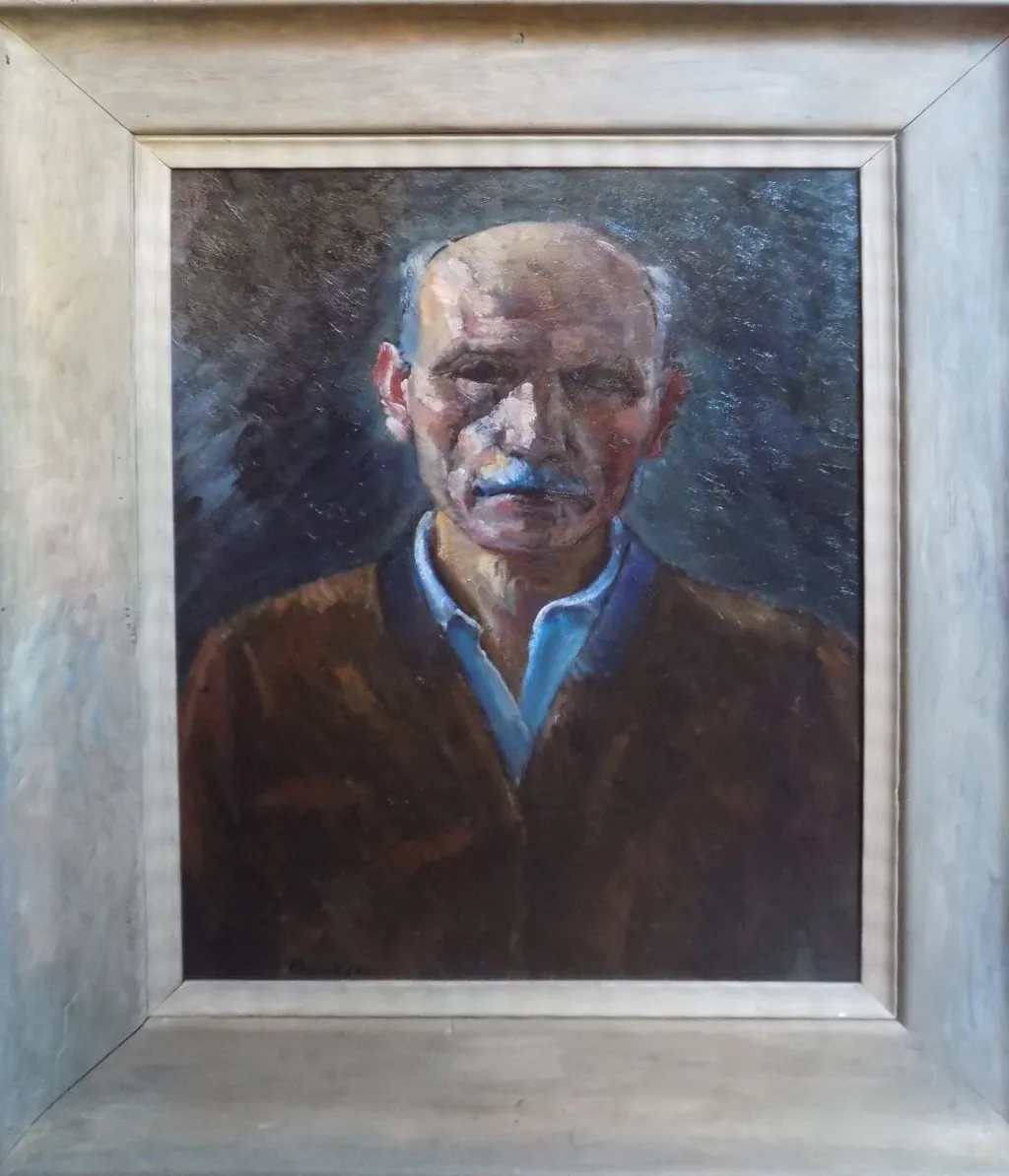
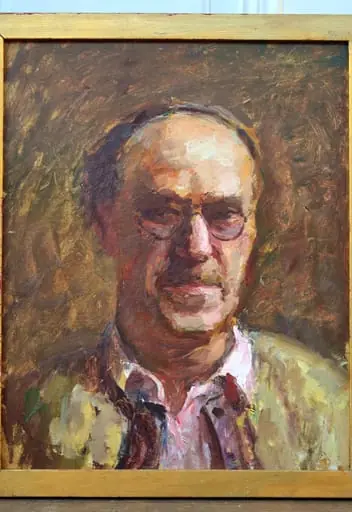
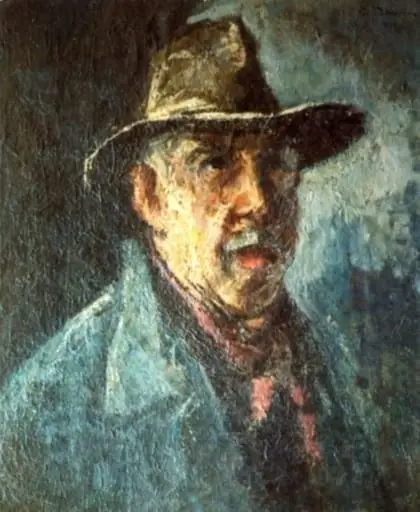
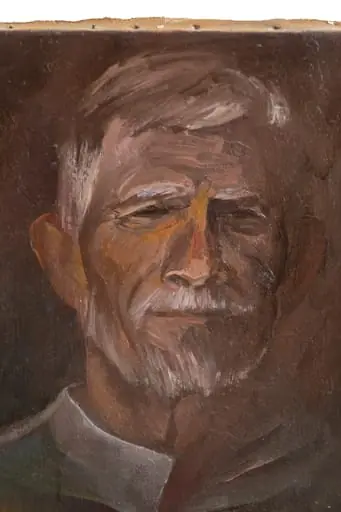
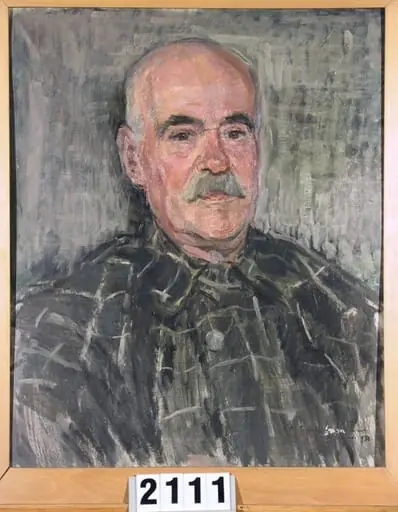
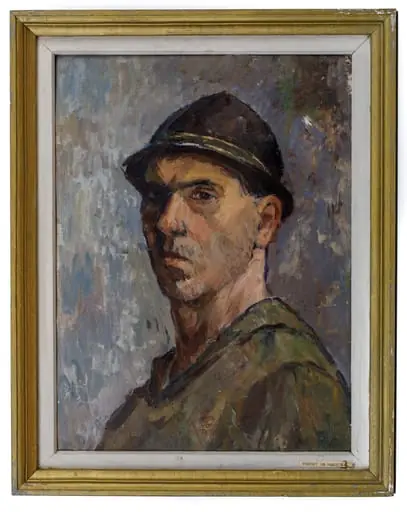
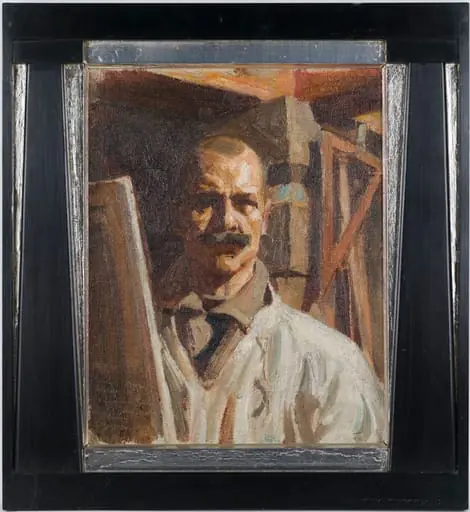
Autoportret is a print by Marius Bunescu. It dates from 1931 and is held in the collection of the Bucharest Municipality Museum.
About this work
Overview
Marius Bunescu painted this self-portrait circa 1931, during a period when he was deeply involved in Romania’s cultural institutions.
Marius Bunescu painted this self-portrait circa 1931, during a period when he was deeply involved in Romania’s cultural institutions. Trained in Constanța and Munich, he later helped shape the country’s museum landscape. The work is held in the Museum of Ethnography, though Bunescu is better known for his administrative roles than his painting. This portrait reflects his personal engagement with artistic practice amid his institutional duties.
Subject & Meaning
The portrait presents Bunescu as an older man, bald and introspective, gazing directly at the viewer with a restrained expression. His attire—a dark jacket over a light blue shirt—suggests modest formality, avoiding theatricality. The absence of context or symbolic elements shifts focus entirely to his presence, implying a quiet self-assessment rather than a public persona. The intensity of his gaze conveys contemplation, possibly reflecting his dual identity as artist and curator.
Technique & Style
Bunescu employed thick, textured brushwork, particularly on the face and hands, using impasto to model form through physical paint buildup. The background is rendered in loose, blurred strokes, receding into darkness to isolate the figure. Lighting is uneven, carving out planes of the face with sharp contrasts between light and shadow. The deliberate roughness in areas like the jacket and hair suggests an emphasis on immediacy over polish, aligning with expressive rather than academic traditions.
History & Provenance
The painting entered the collection of the Museum of Ethnography in Bucharest, though Bunescu’s institutional legacy is more closely tied to the National Museum of Art and the Anastase Simu Museum. Its placement here may reflect broader efforts to document Romanian cultural figures beyond fine art. No documented exhibition history exists prior to its inclusion in the museum’s holdings, suggesting it remained in private or institutional storage for much of its early life.
Context
Painted in the early 1930s, this portrait emerges during Romania’s interwar cultural consolidation, when artists were increasingly expected to contribute to national identity through both creation and curation. Bunescu’s role as a museum director placed him at the center of this movement. The self-portrait, stripped of ornamentation, may reflect a broader trend among Romanian artists to prioritize authenticity over spectacle during a time of national reinvention.
Legacy
Though Bunescu is remembered primarily for his institutional contributions, this portrait offers a rare glimpse into his personal artistic voice. Its unadorned realism and tactile brushwork distinguish it from the more decorative styles favored by contemporaries. The work remains a quiet testament to an artist who shaped Romania’s cultural infrastructure while continuing to engage with the discipline of painting on a personal level.
Artist & collection
Artist
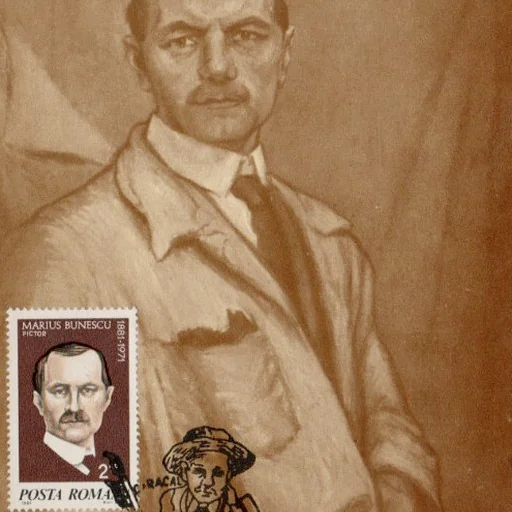
Marius Bunescu (15 May 1881 – 31 March 1971) was a Romanian painter, organizer of the National Museum of Art, and director of the Anastase Simu Museum.