Artwork
James Gibbs, Architect
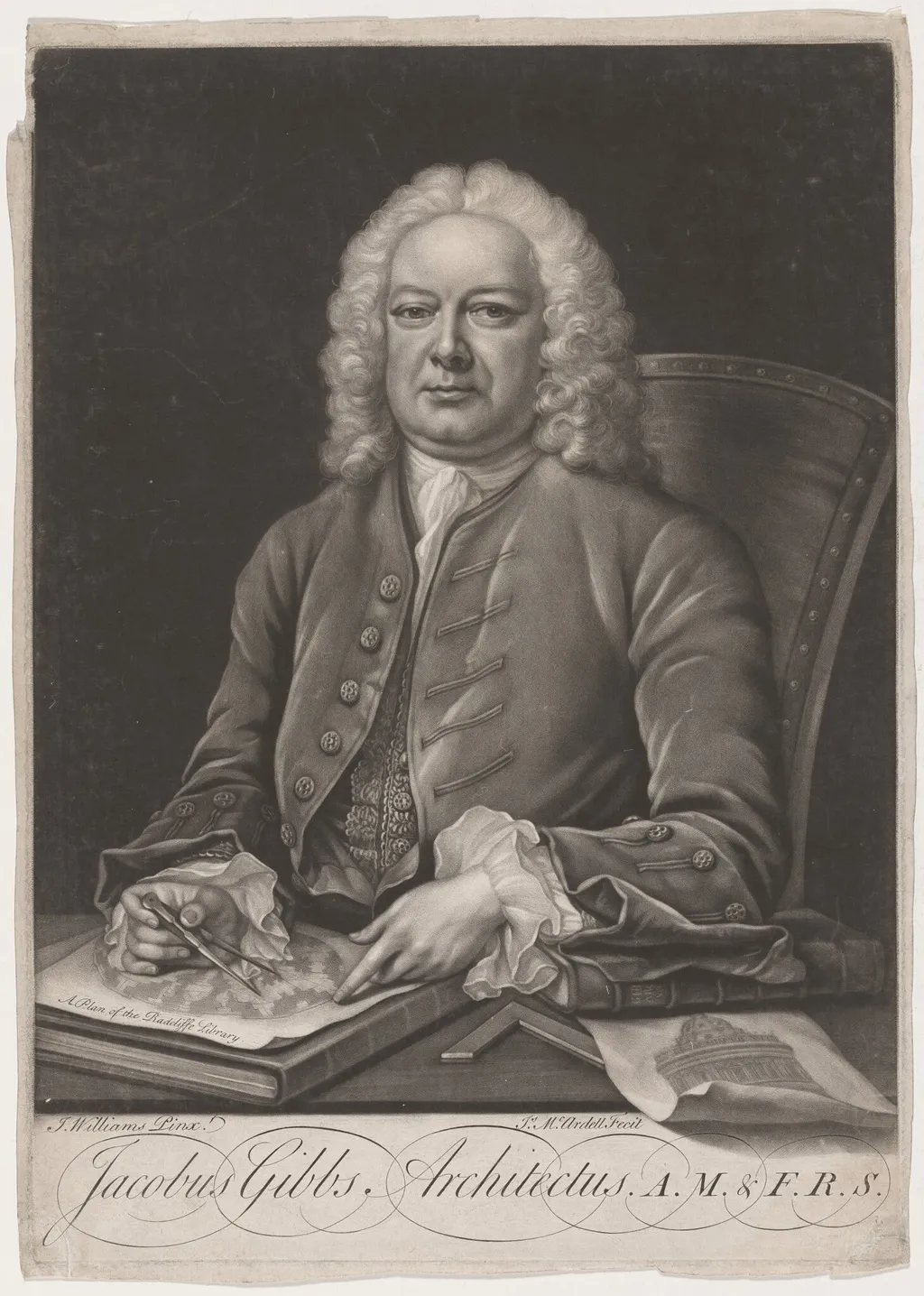
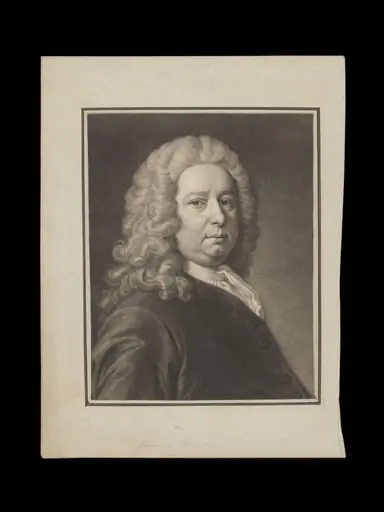
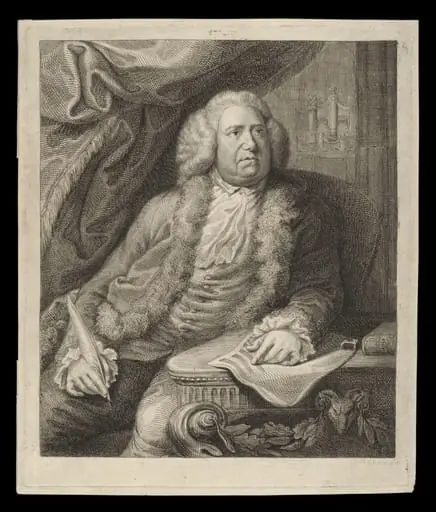
James Gibbs, Architect is an ink print by the Baroque artist James MacArdell. It dates from 1746 and is held in the collection of the National Gallery of Art.
About this work
Overview
Rendered in fine line work typical of 18th-century printmaking, the image presents Gibbs seated, dressed in period attire with a powdered wig and dark coat.
This 1746 engraving by James MacArdell depicts James Gibbs, a prominent British architect, in a formal portrait. Rendered in fine line work typical of 18th-century printmaking, the image presents Gibbs seated, dressed in period attire with a powdered wig and dark coat. The composition emphasizes his professional identity through symbolic objects, reflecting the conventions of scholarly and artistic portraiture of the era.
Subject & Meaning
The portrait positions Gibbs as a man of intellect and practice. His rolled blueprint suggests active design work, while the book with a building sketch on its cover reinforces his architectural expertise. The serious expression and composed posture convey authority and gravitas, aligning with the era’s expectation that professionals be portrayed with dignity and restraint, not mere likeness.
Technique & Style
MacArdell employed fine-line engraving to achieve crisp detail in Gibbs’s clothing, wig, and facial features. The texture of fabric, the sheen of leather, and the delicate rendering of the book’s cover demonstrate mastery of the burin tool. The composition follows the rigid symmetry and controlled lighting common in academic portraiture, prioritizing clarity and status over emotional expression.
History & Provenance
Created in 1746, the engraving was likely produced to circulate Gibbs’s image among patrons and peers, common practice for architects seeking to establish reputation. MacArdell, known for reproducing portraits of notable figures, was commissioned for such works. The print’s survival in institutional collections suggests it was valued as a record of professional identity in Georgian Britain.
Context
In mid-18th-century Britain, architecture was emerging as a distinct profession tied to classical ideals. Portraits like this served to elevate architects to the status of gentlemen scholars. Gibbs, who trained in Rome and designed influential churches and public buildings, embodied this shift. The engraving reflects a cultural moment when professional identity was visually codified through dress, pose, and symbolic props.
Legacy
The engraving remains a key visual document of Gibbs’s public persona, frequently reproduced in architectural histories. It captures the visual language through which professionals asserted credibility before photography. Though not a likeness in the modern sense, it endures as a representation of how expertise was communicated in the pre-industrial age.
Artist & collection