Artwork
John Lord Sommers
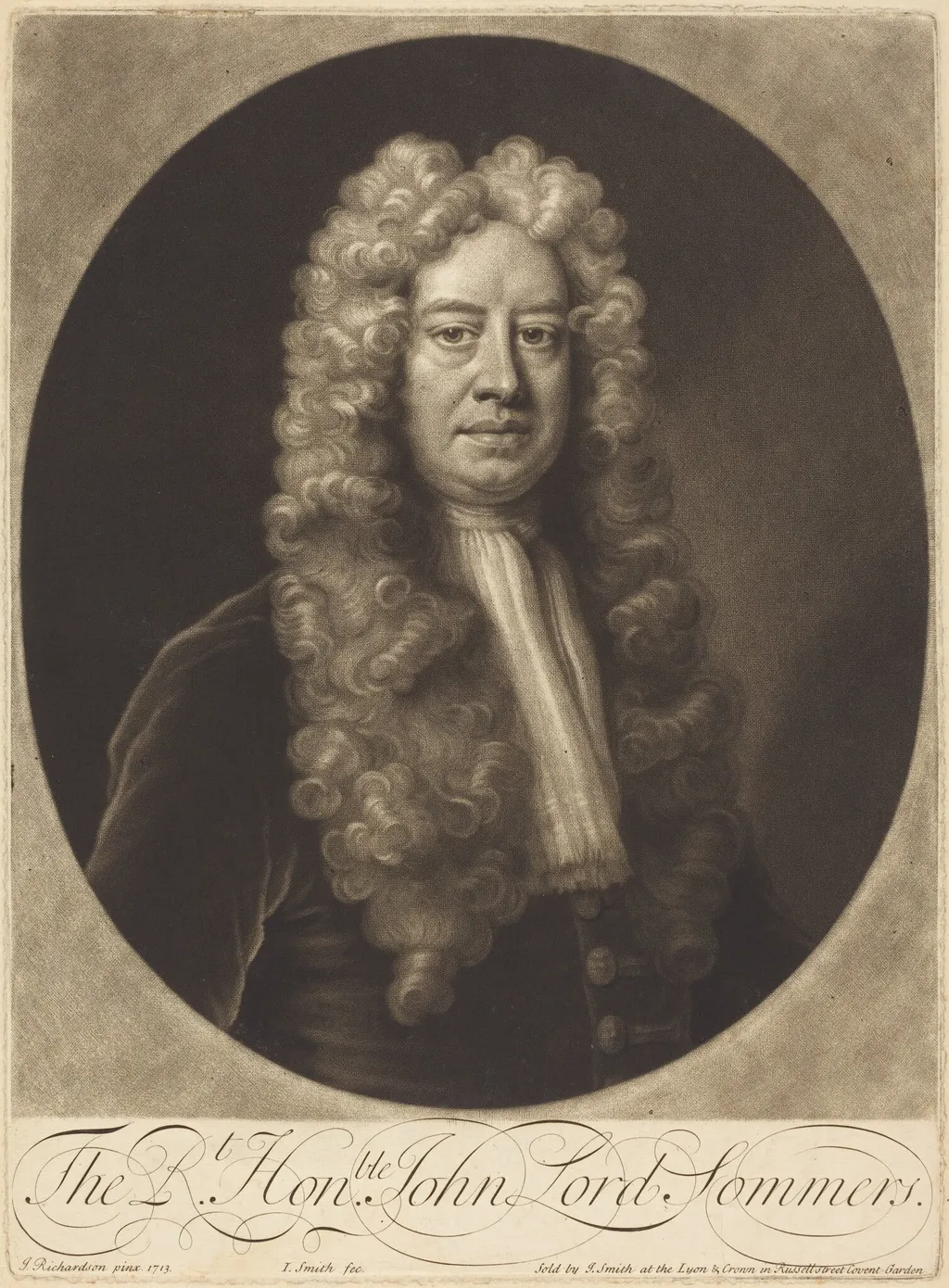
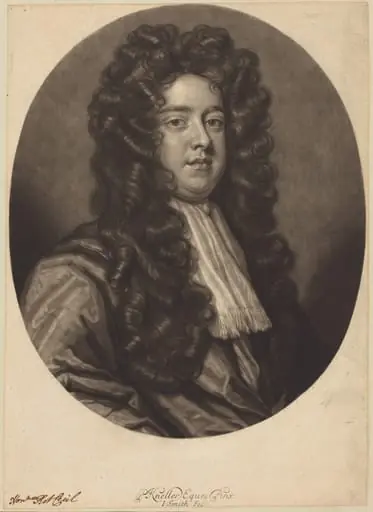
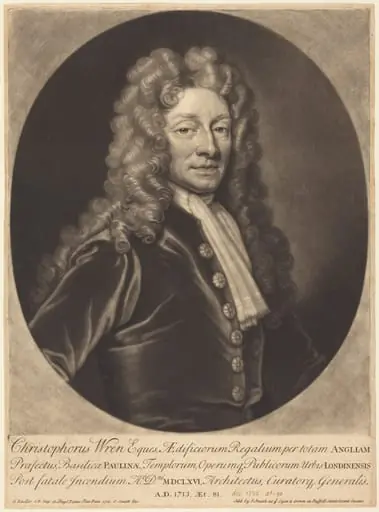
John Lord Sommers is an ink print by the Baroque artist John Smith. It dates from 1713 and is held in the collection of the National Gallery of Art.
About this work
The artist used a technique that creates smooth shading, which gives the wig and coat texture.
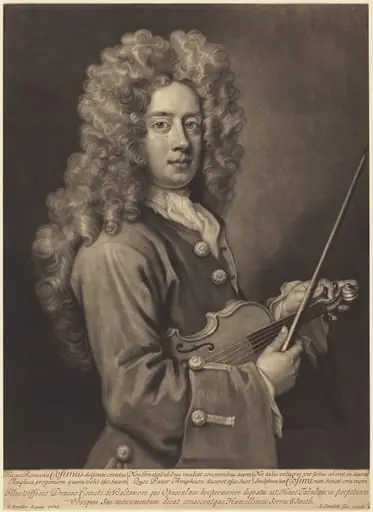
This is a black-and-white portrait of a man in a big, curly wig and a high-collared coat. His face is serious, with a slight frown. The background is plain and dark, making his face stand out.
The name at the bottom reads "The Rt Hon. the John Lord Sommers," and it was made in 1713. The artist used a technique that creates smooth shading, which gives the wig and coat texture.
Look up Baroque to see how this style used drama and detail in portraits.
Overview
John Lord Sommers is a 1713 mezzotint portrait by John Smith, depicting a dignified figure in a characteristic Baroque style.
Subject & Meaning
The subject, identified as The Rt Hon. John Lord Sommers, is portrayed with a serious expression and slight frown, conveying a sense of gravity and solemnity.
Technique & Style
Executed in mezzotint, the print utilizes the technique's capacity for smooth shading to render the intricate texture of the subject's curly wig and high-collared coat against a plain, dark background.
History & Provenance
Created in 1713, the work's provenance is not detailed here, though its creation date situates it within the late Baroque period.
Context
The portrait aligns with Baroque artistic tendencies, emphasizing drama through contrast and meticulous detail, particularly in the treatment of textiles and the subject's demeanor.
Legacy
While specific influence or notable exhibitions of this piece are not provided, it represents a typical example of early 18th-century mezzotint portraiture in the Baroque tradition.
Artist & collection