Artwork
Komposition
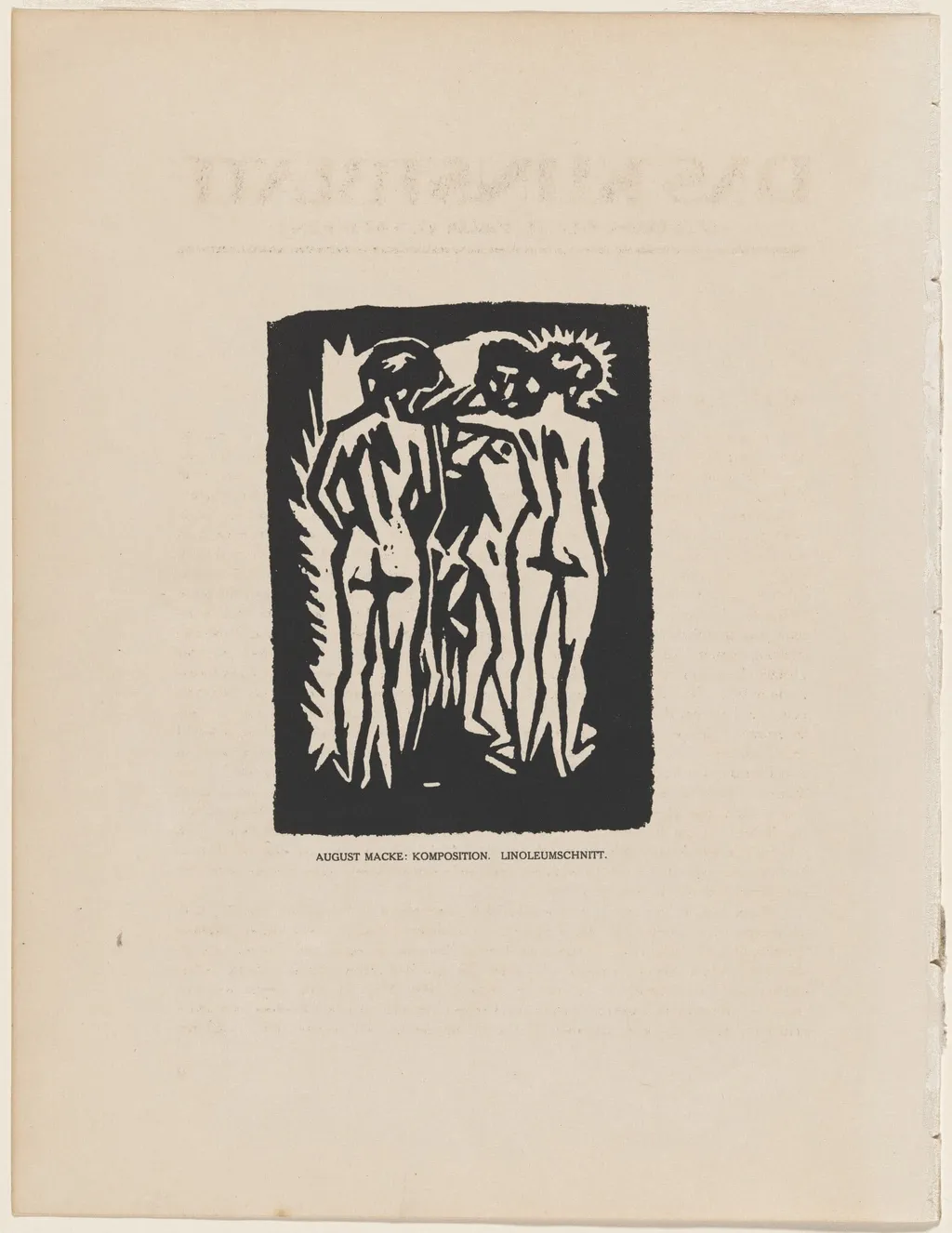
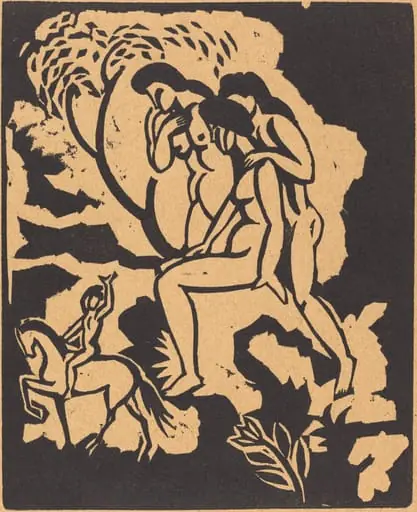
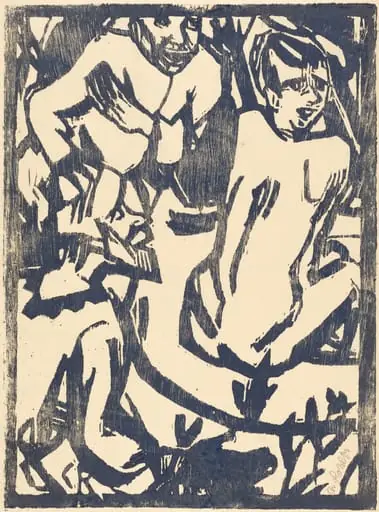
Komposition is a print by August Macke. It is held in the collection of the National Gallery of Art.
About this work
Overview
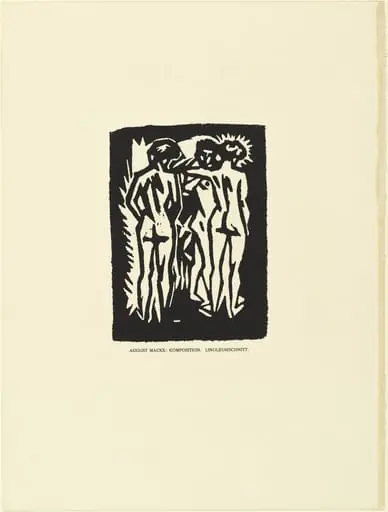
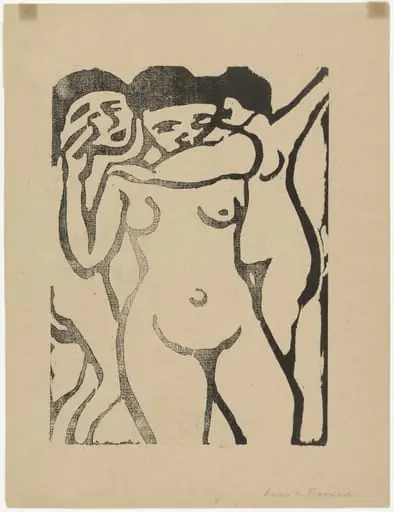
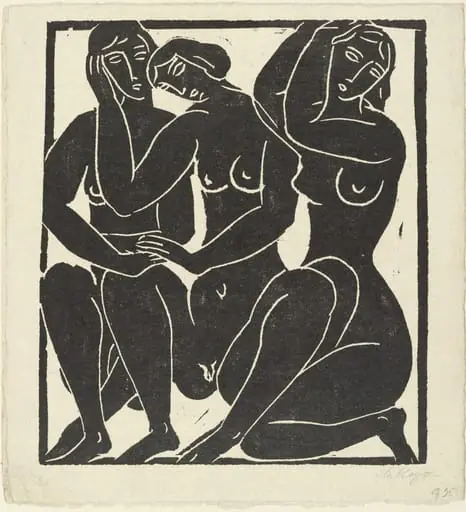
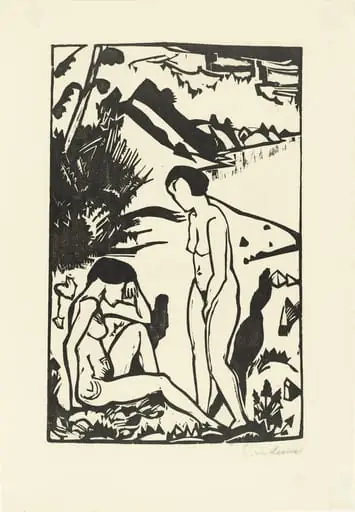
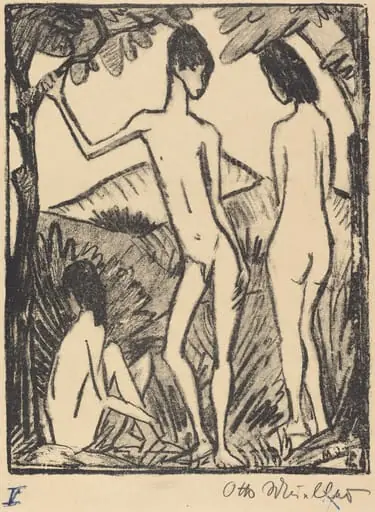
Created in 1918, this linoleum cut by August Macke is a black-and-white print on cream wove paper. It belongs to a small body of graphic works he produced during the final years of his life, reflecting his engagement with modernist simplification. Unlike his more colorful paintings, this piece relies on stark contrasts and reduced forms to convey structure and presence.
Subject & Meaning
Two nude figures stand side by side, facing the viewer in a frontal pose. Their forms are abstracted into essential contours, devoid of individualizing features. The pairing suggests a thematic interest in human presence and harmony, common in Expressionist explorations of the body. The lack of context or environment directs focus to the figures’ formal relationship and shared stillness.
Technique & Style
Macke employed the linoleum cut technique to achieve bold, unbroken lines and flat tonal areas. The black ink contrasts sharply with the unprinted paper, emphasizing clarity and rhythm over texture or shading. Forms are reduced to geometric silhouettes, reflecting influences from contemporary avant-garde movements while retaining a sense of quiet balance.
History & Provenance
This print dates from 1918, the year Macke was killed in action during World War I. It was produced during a period of intense experimentation in his graphic work, following his involvement with Der Blaue Reiter. Few linoleum cuts by Macke survive, making this piece a rare example of his printmaking practice in his final months.
Context
Macke’s work in 1918 intersected with broader European modernist trends, including the simplification of form seen in Cubism and the symbolic use of the nude in Expressionism. While his paintings often embraced color and light, this print reveals his ability to distill visual ideas into minimal, graphic terms, aligning with contemporaries exploring abstraction through print.
Legacy
As one of Macke’s few surviving prints, this work illustrates his capacity to adapt modernist principles across media. It contributes to understanding his artistic trajectory beyond painting, showing how his interest in form and harmony translated into the constraints of relief printing. The piece remains a quiet but significant marker of his brief but influential career.
Artist & collection
Artist
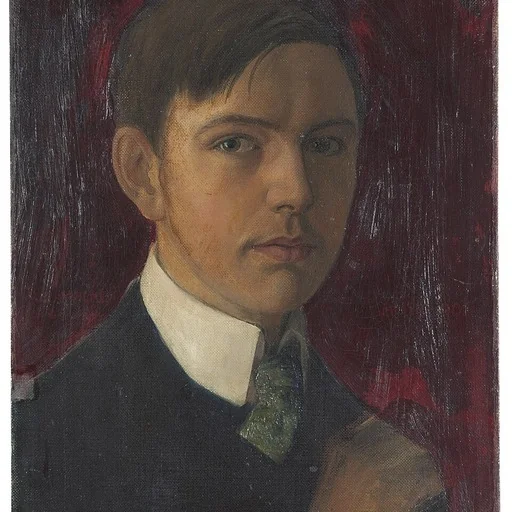
August Robert Ludwig Macke (3 January 1887 – 26 September 1914) was a German Expressionist painter.