Artwork
Fin de rêve
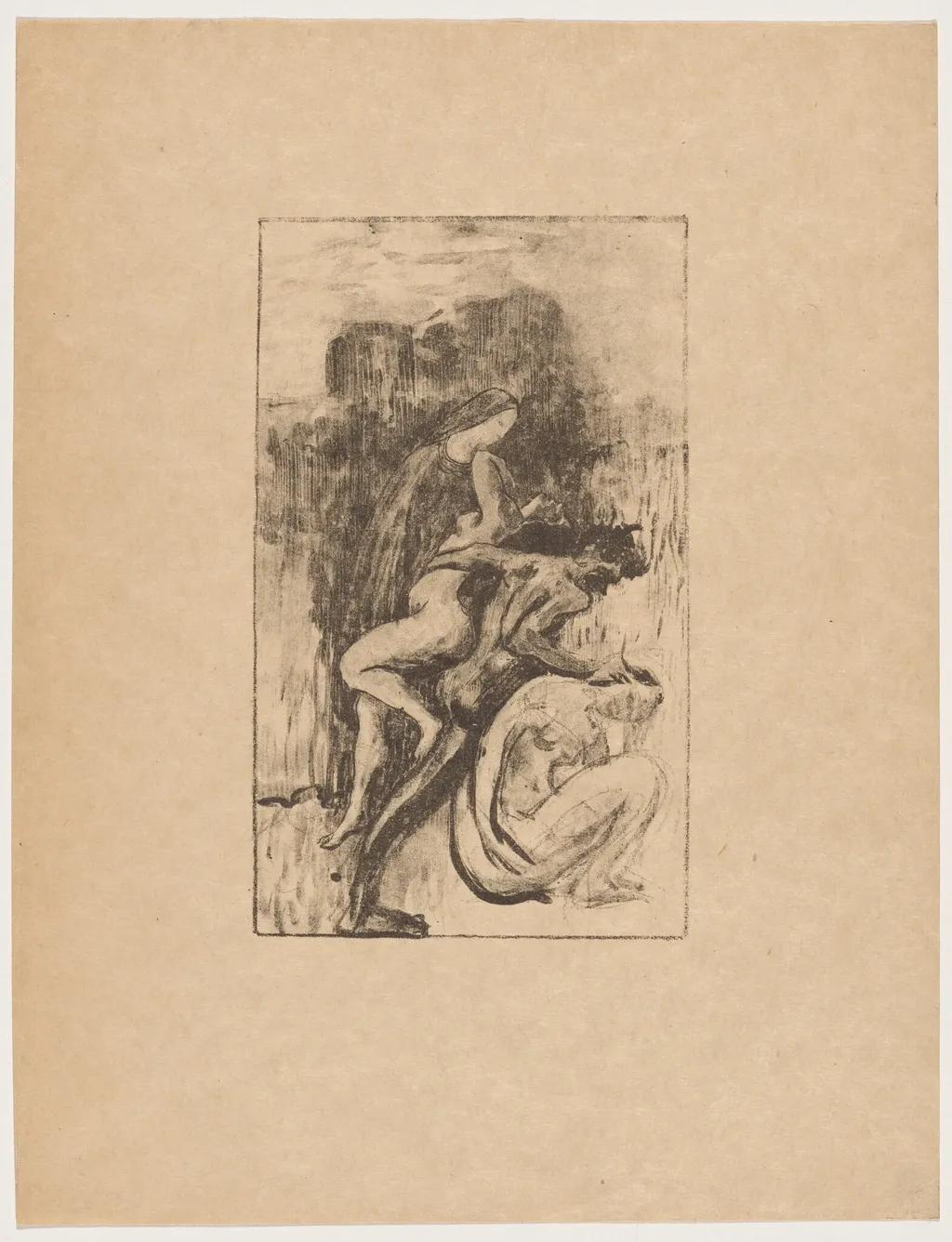
Fin de rêve is an ink print by the Impressionist artist Maurice Dumont. It dates from 1895 and is held in the collection of the National Gallery of Art.
About this work
Overview
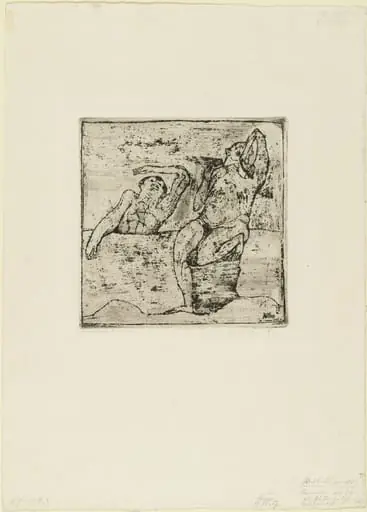
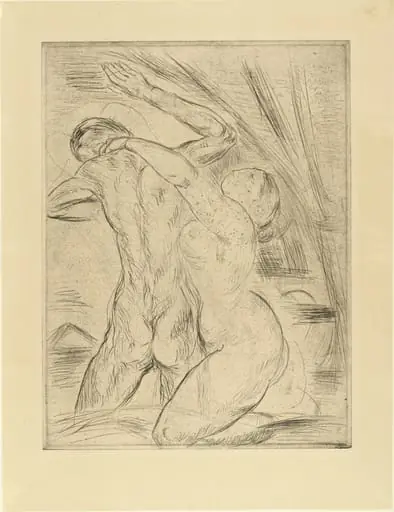
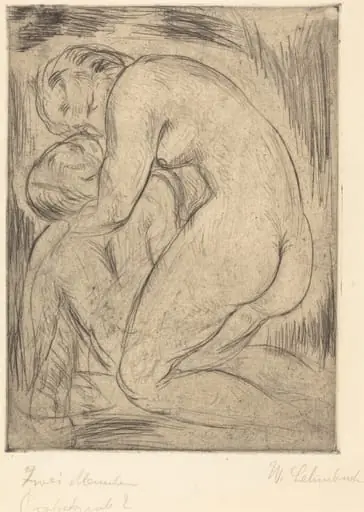
Fin de rêve is a black lithograph on heavy Japanese paper, produced by Maurice Dumont in 1895. The image captures a single, intimate moment between two figures: a clothed woman resting on the bare back of a nude man seated on the ground. The composition is minimal, with no detailed setting, emphasizing the physical and emotional dynamic between the pair through posture and contrast.
Subject & Meaning
The woman, with closed eyes and relaxed posture, appears in a state of calm surrender, while the man, hunched and tense, bears her weight silently. His face is hidden, and his body conveys strain, suggesting a complex interplay of dependence and endurance. The title, meaning 'end of a dream,' implies a transition from fantasy to exhaustion, or the quiet collapse of an idealized moment.
Technique & Style
The style avoids overt detail, favoring atmospheric suggestion over realism, aligning with late 19th-century graphic experimentation.
Dumont employed lithography to achieve soft tonal gradations in black ink, exploiting the absorbent qualities of Japanese paper to deepen shadows and mute highlights. The lack of background detail focuses attention on the figures’ forms, rendered with restrained lines and subtle contrasts. The style avoids overt detail, favoring atmospheric suggestion over realism, aligning with late 19th-century graphic experimentation.
History & Provenance
Created in 1895, Fin de rêve emerged during a period of renewed interest in printmaking among French artists. Though Dumont was not a major public figure, his work circulated in private collections and artist circles. The piece’s survival in limited impressions reflects its niche appeal and the era’s appreciation for intimate, hand-pulled prints over mass-produced imagery.
Context
While often associated with Impressionism due to its period and emotional tone, Fin de rêve diverges from its luminous landscapes and urban scenes. Instead, it aligns more closely with Symbolist tendencies—focusing on inner states, ambiguity, and psychological weight. The work reflects a broader turn in fin-de-siècle art toward introspection and metaphor, away from external observation.
Legacy
Fin de rêve remains a quiet example of late 19th-century graphic art, valued for its emotional restraint and formal economy. It has not entered mainstream art historical narratives but persists in specialized collections as a testament to the expressive potential of lithography outside dominant movements. Its endurance lies in its understated power to evoke vulnerability and silence.
Artist & collection