Artwork
People by the Blue Lake
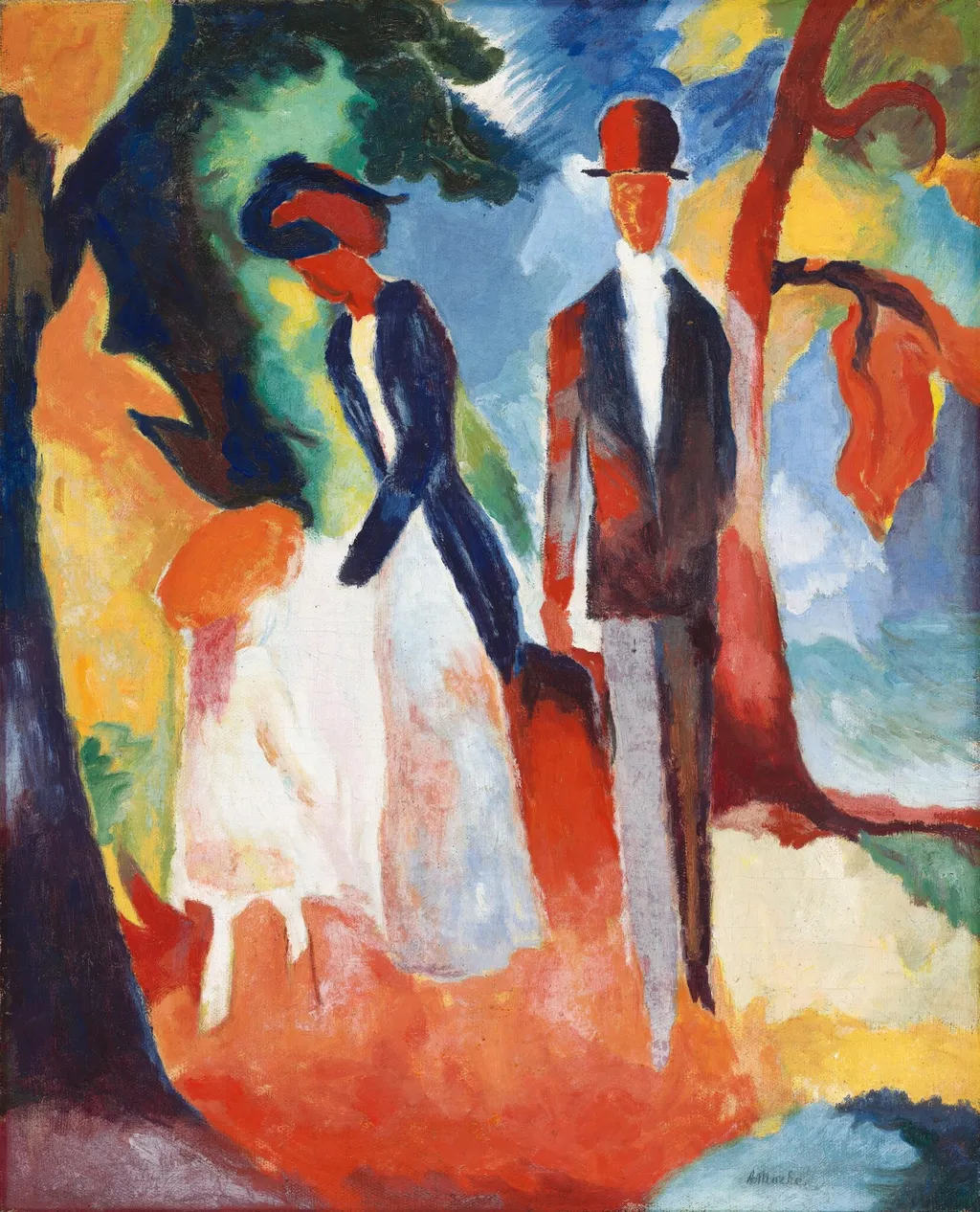
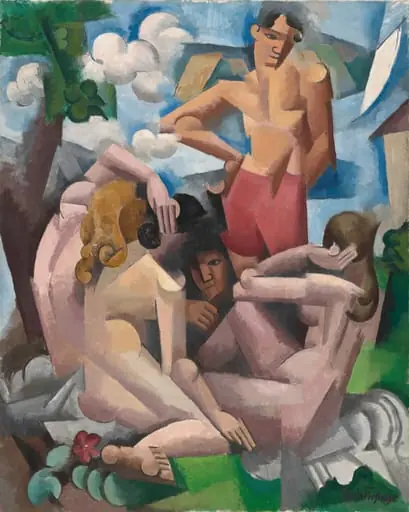
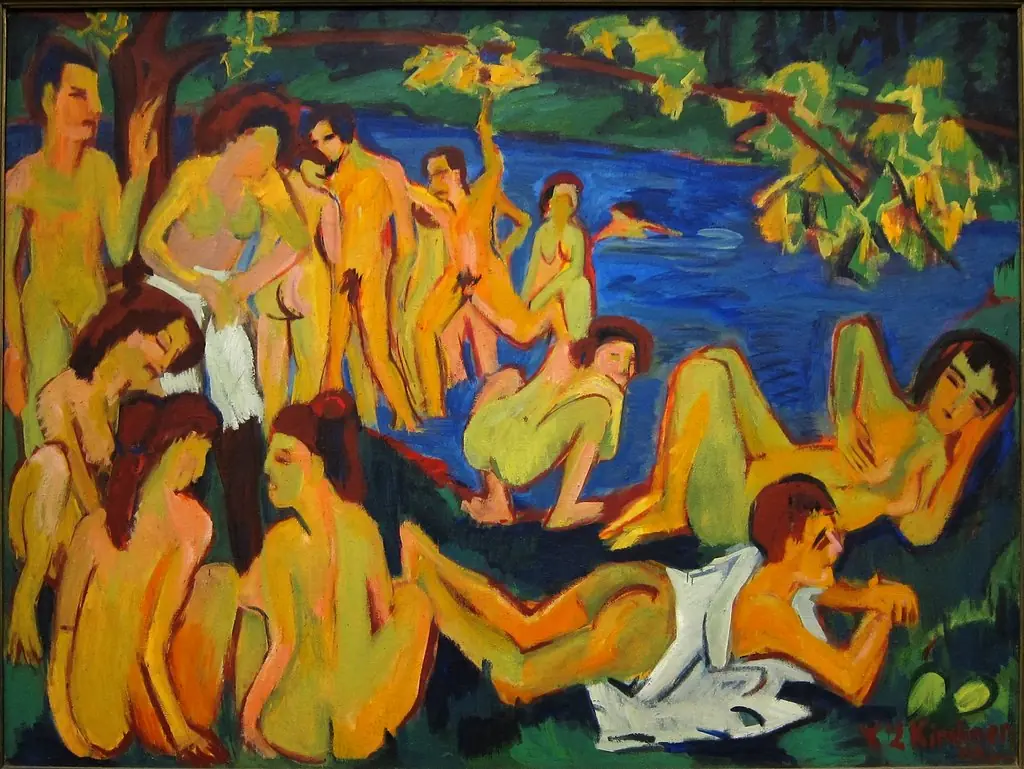
People by the Blue Lake is an oil painting by August Macke. It dates from 1913 and is held in the collection of the National Gallery of Art.
About this work
Overview
People by the Blue Lake is a 1913 oil-on-canvas painting by August Macke, a prominent German Expressionist and member of Der Blaue Reiter. The work captures a serene gathering of figures by a lake, characterized by vibrant hues and simplified forms.
Subject & Meaning
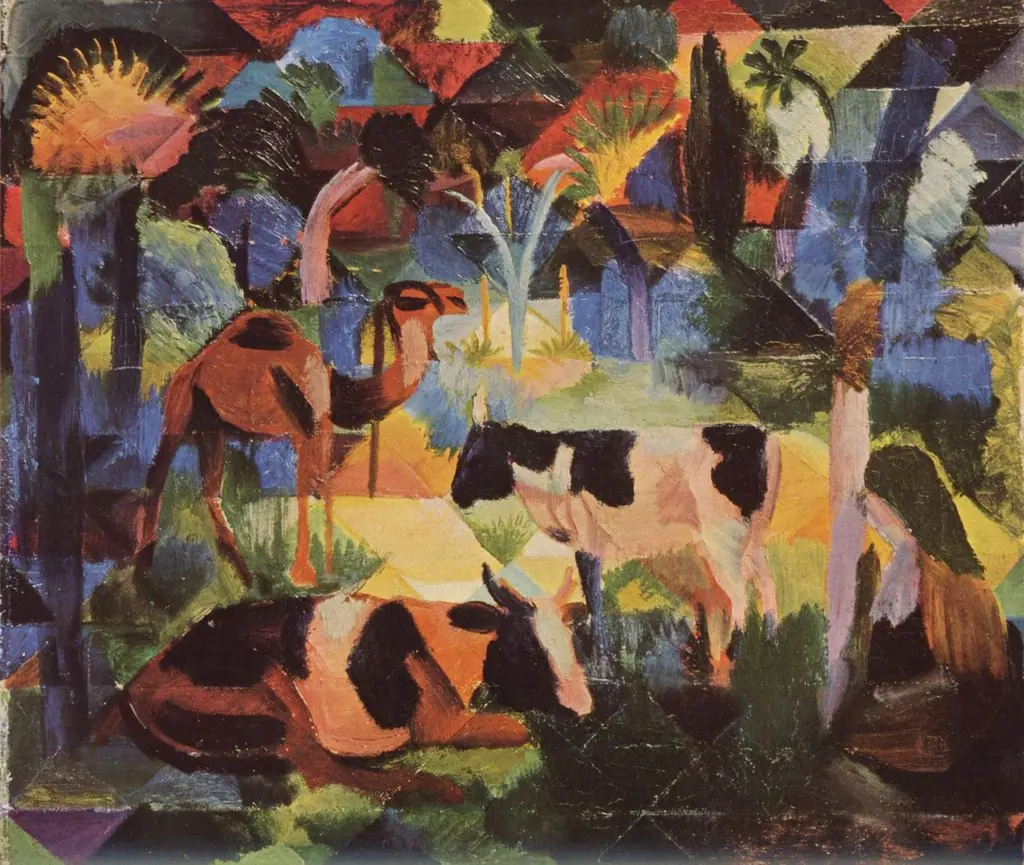
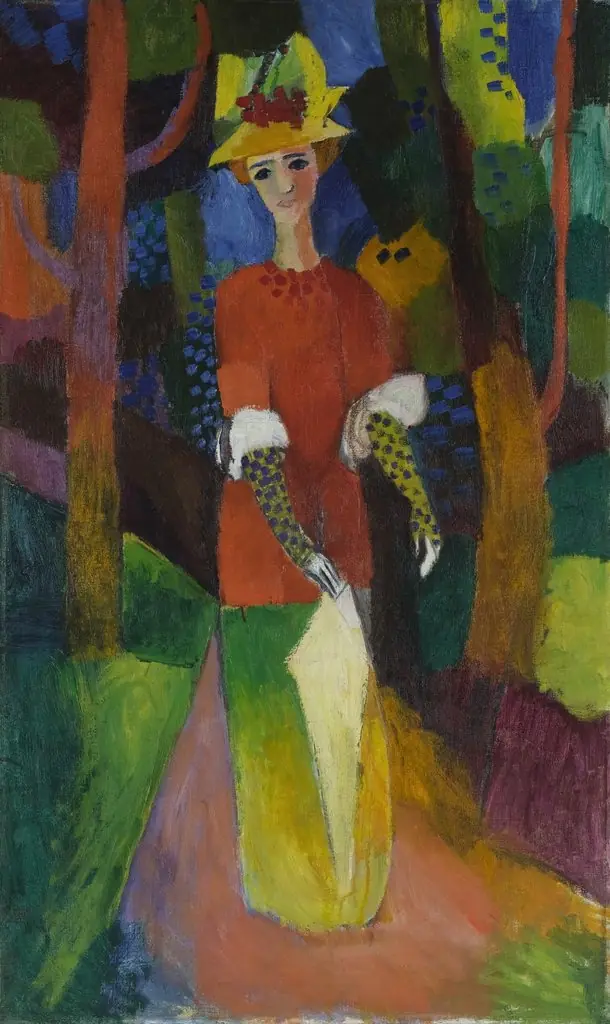
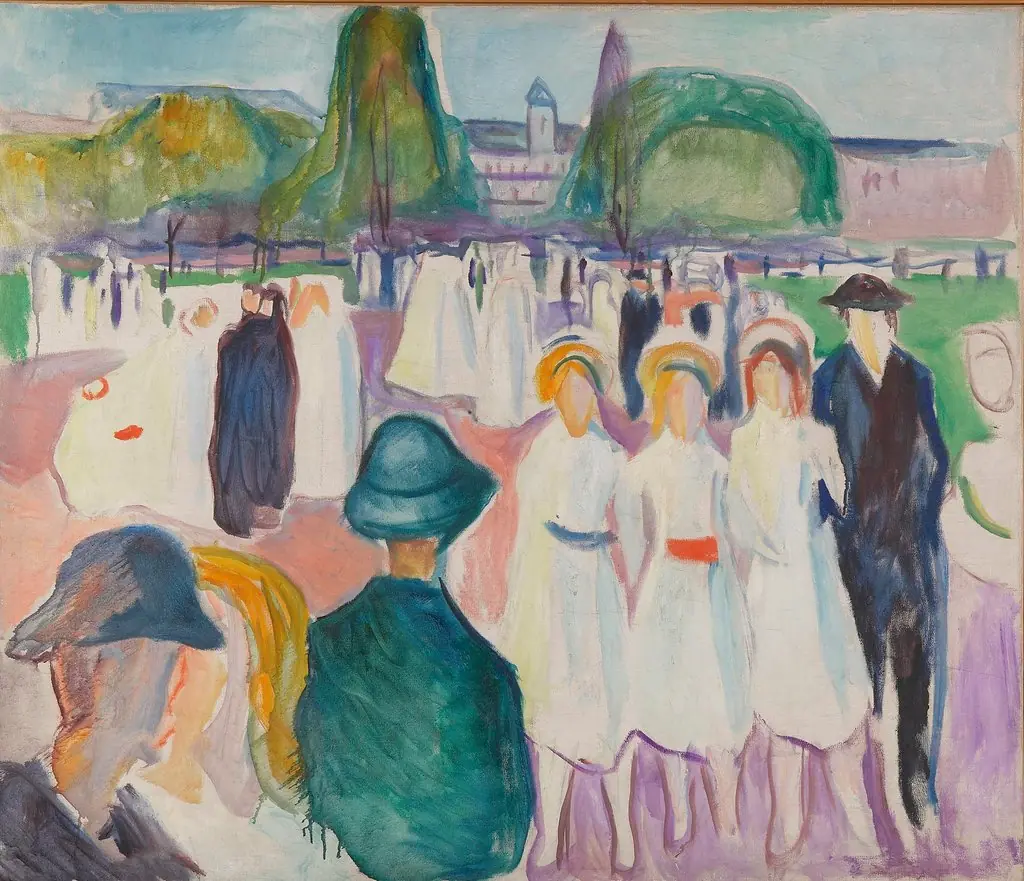
The painting depicts a group of people in a natural setting, with figures sitting and standing near a blue lake, surrounded by trees and hills. Their varied, brightly colored attire (including a red hat, blue shirt, and white dress with parasol) adds to the scene's tranquility and everyday charm.
Technique & Style
Macke employed bold, expressive colors and reduced forms, hallmarks of German Expressionism, to convey a sense of calm and community. The style reflects the cross-pollination of ideas within early 20th-century European avant-garde movements.
History & Provenance
Created in 1913, the painting represents a pivotal moment in Macke's short yet influential career, cut short by his death in 1914. The work embodies his unique blend of Expressionist principles with contemporary stylistic explorations.
Context
People by the Blue Lake was produced during a period of active artistic exchange in Europe, with Macke drawing from and contributing to the broader avant-garde discourse through his involvement with Der Blaue Reiter.
Own this work as a print
Artist & collection
Artist
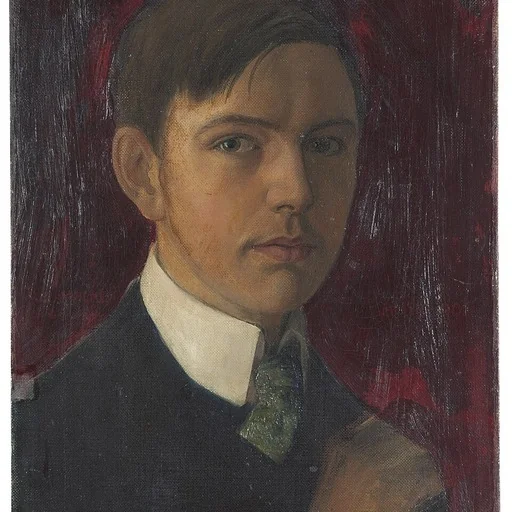
August Robert Ludwig Macke (3 January 1887 – 26 September 1914) was a German Expressionist painter.