Artwork
Adolphe or the Sad Young Man (Adolphe ou le jeune homme triste)
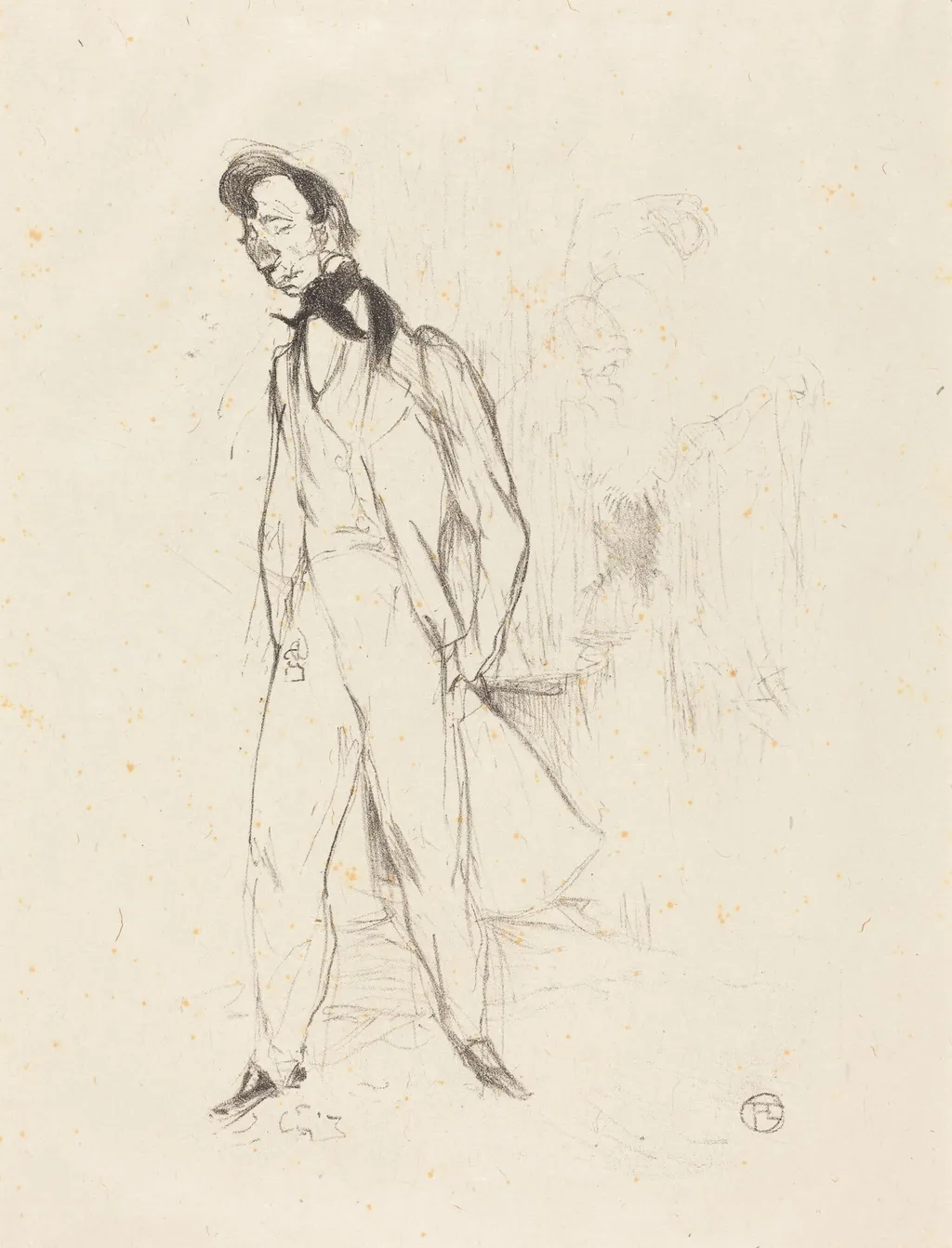
Adolphe or the Sad Young Man (Adolphe ou le jeune homme triste) is an ink print by the Impressionist artist Henri de Toulouse-Lautrec. It dates from 1894 and is held in the collection of the National Gallery of Art.
About this work
Overview
The technique reflects Lautrec’s mastery of lithography, allowing rapid, expressive mark-making suited to fleeting moments of human stillness.
Created in 1894, this lithograph by Henri de Toulouse-Lautrec depicts a solitary male figure in quiet despair. Executed in black ink on laid paper, the work belongs to a series of prints capturing urban solitude. Unlike his more vibrant cabaret scenes, this piece focuses on introspection, using minimal detail to evoke emotional weight. The technique reflects Lautrec’s mastery of lithography, allowing rapid, expressive mark-making suited to fleeting moments of human stillness.
Subject & Meaning
The figure, identified as Adolphe, walks alone with head bowed, wrapped in a long coat and hat, carrying an indistinct object. His posture and isolated presence suggest inner turmoil, a quiet resignation. The faint, ghostly outline behind him implies an unspoken connection or memory, deepening the sense of psychological distance. Rather than depicting spectacle, Lautrec turns inward, portraying melancholy as an intimate, everyday condition within the bustling city.
Technique & Style
Lautrec employed lithography to achieve swift, fluid lines that mimic sketching directly onto stone. The loose, urgent strokes convey immediacy, as if the image was captured in a single sitting. Areas of tone are sparse, leaving much of the paper bare, enhancing the figure’s isolation. The faint secondary outline, barely visible, suggests revision or layered thought, a hallmark of his experimental approach to printmaking and emotional nuance.
History & Provenance
Produced in 1894, this print emerged during a period when Lautrec was deeply engaged with print media, producing posters and illustrations for Parisian entertainments. While many of his works circulated publicly, this lithograph remained in private hands, likely among collectors drawn to its subdued tone. Its survival in limited editions reflects its status as a personal, rather than commercial, endeavor within his broader oeuvre.
Context
In 1890s Paris, the boundaries between public performance and private sorrow blurred in the city’s nightlife. Lautrec, shaped by his aristocratic background and physical disabilities, observed these contrasts closely. While his posters celebrated performers, works like this reveal his interest in the unseen—those who lingered at the edges of revelry, burdened by solitude rather than buoyed by spectacle.
Legacy
This lithograph stands as a quiet counterpoint to Lautrec’s more famous depictions of nightlife. Its emotional restraint and technical economy influenced later artists exploring psychological depth in print. Though not widely exhibited in his lifetime, its understated power has secured its place as a significant example of modern printmaking’s capacity to convey inner life with minimal means.
Artist & collection
Artist
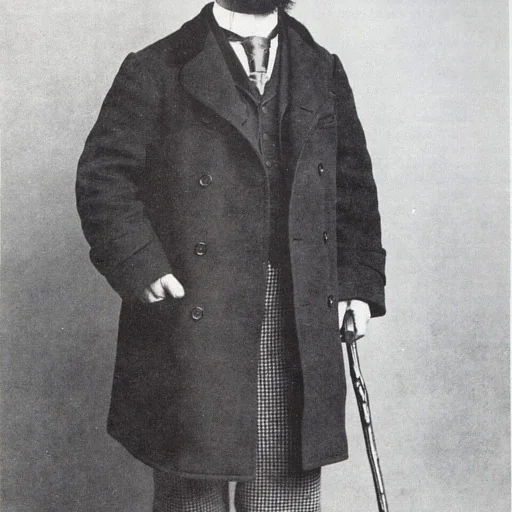
Comte Henri Marie Raymond de Toulouse-Lautrec-Montfa (24 November 1864 – 9 September 1901), known as Toulouse-Lautrec (French: ), was a French painter, printmaker, draughtsman, caricaturist, and illustrator.

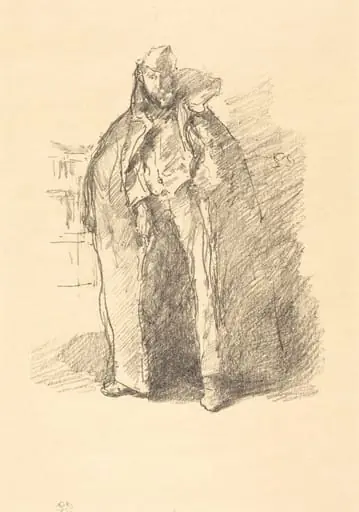 The Russian Schube
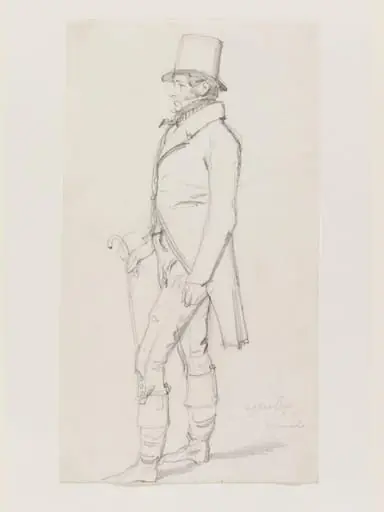 Mr. Apperley ("Nimrod")
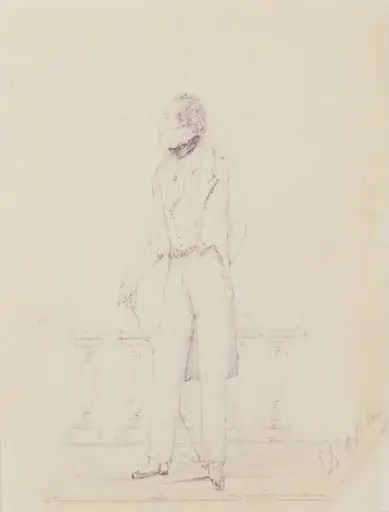 Lord Byron (1788-1824)
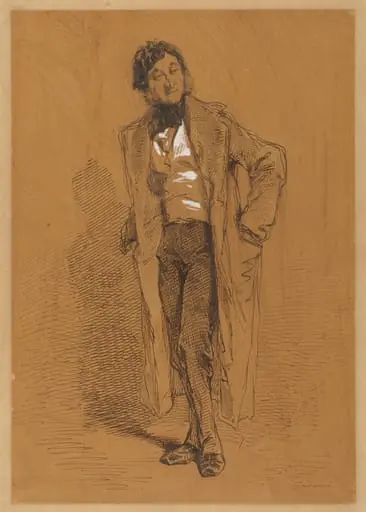 Standing Man
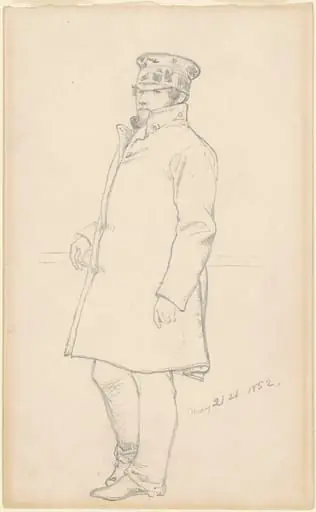 Man in Cap and Coat
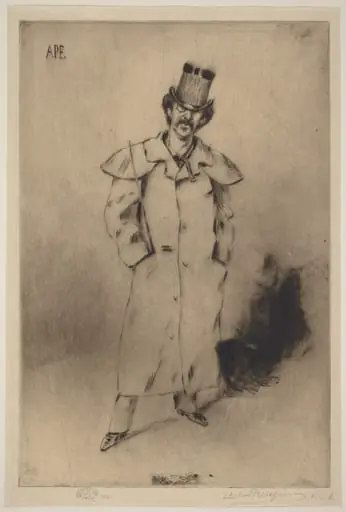 Whistler
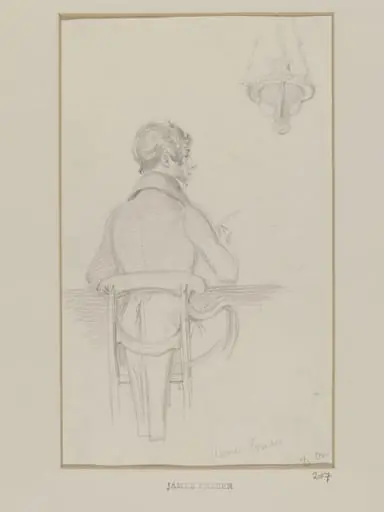 Portrait of James Fraser
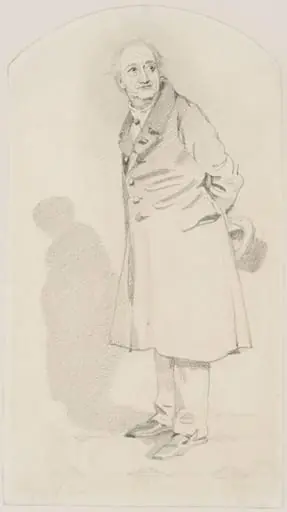 Johann Wolfgang von Goethe
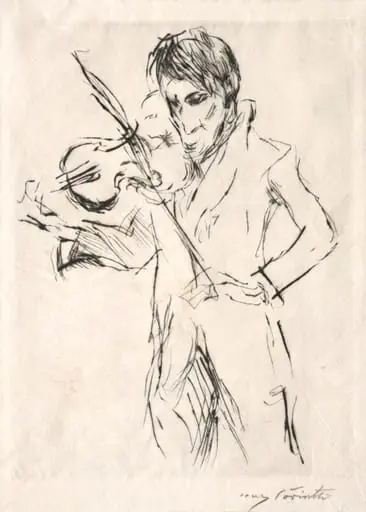 Andreas Weissgaerber
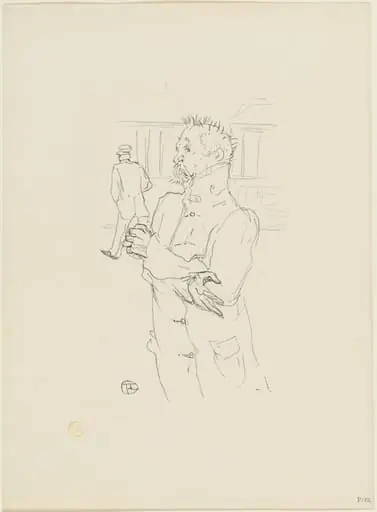 Le Fou
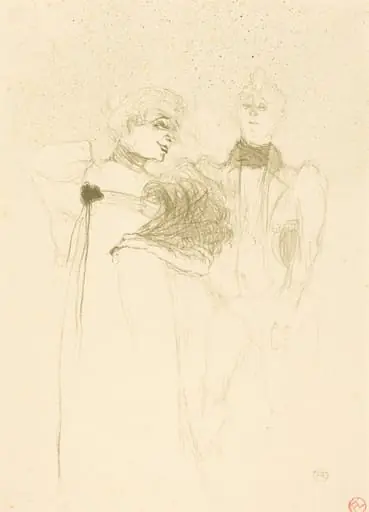 Mlle. Lender in "Madame Satan" (Mlle. Lender dans "Madame Satan")
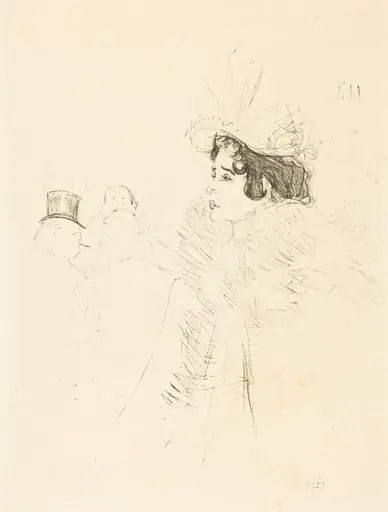 Miss May Belfort in the Irish and American Bar, rue Royale (Miss Belfort Belfort au Irish and American Bar, Rue Royale)