Artwork
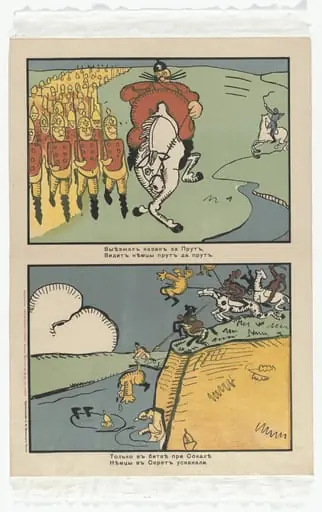
Πατριωτική αφίσα κατά των Γερμανών
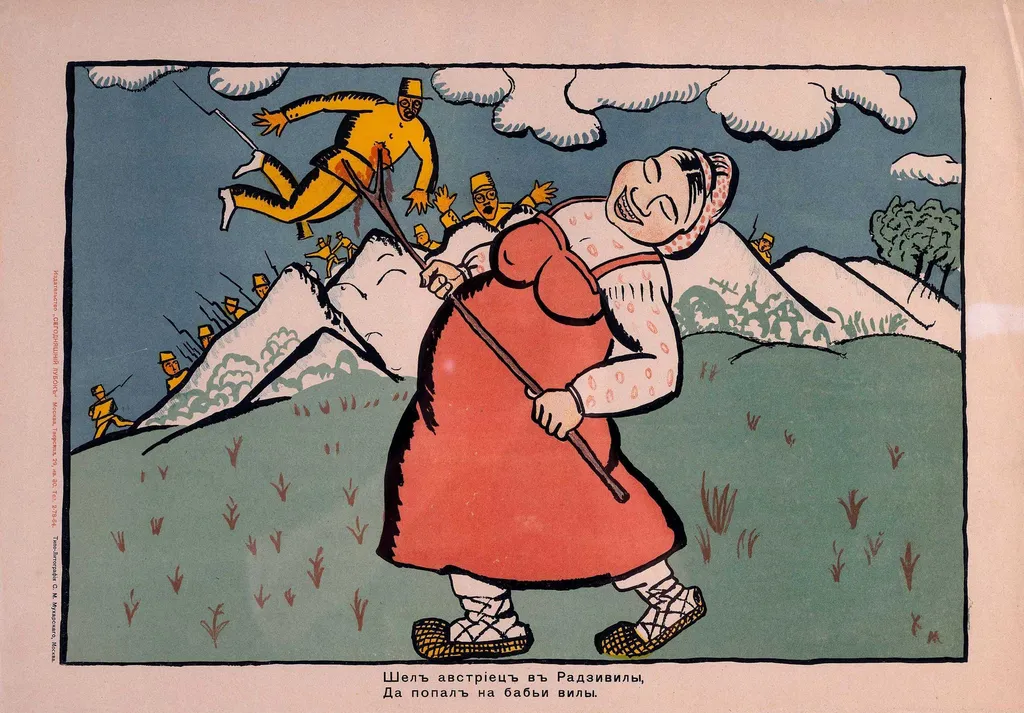
Πατριωτική αφίσα κατά των Γερμανών is a print by Kazimir Malevich. It dates from 1914 and is held in the collection of the Metropolitan Organisation of Museums of Visual Arts of Thessaloniki – MOMus.
About this work
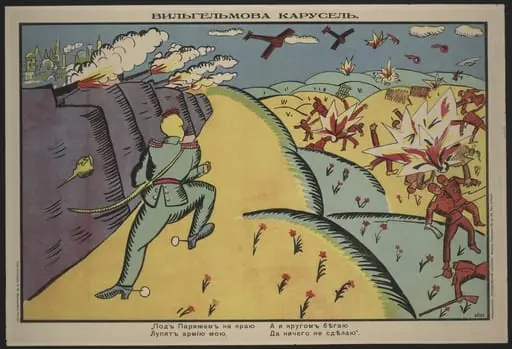
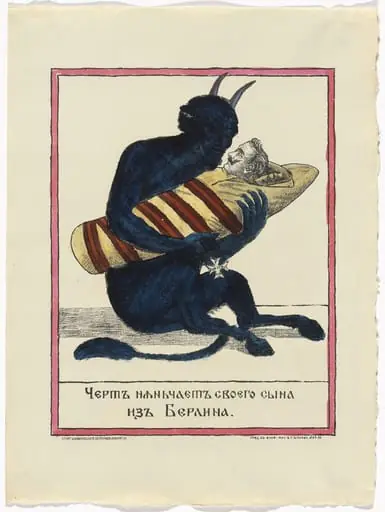
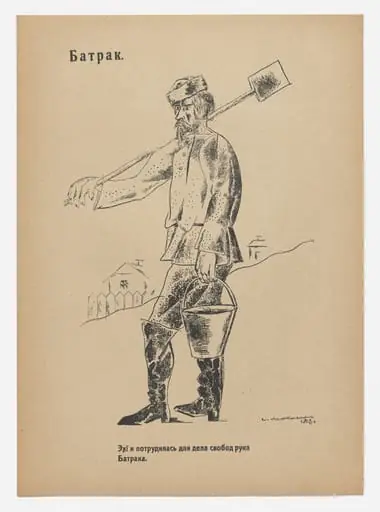
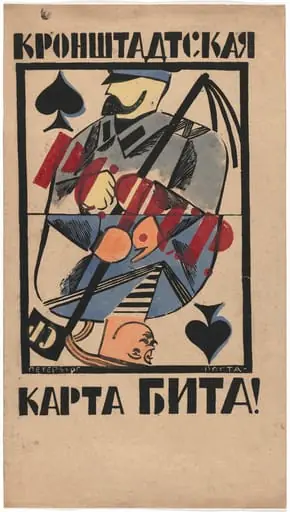
This painting shows a patriotic poster against the Germans.
It's from 1914, a time of war in Europe. The artist used simple, bold images to get their point across.
The use of folk art styles, like "lubki" woodcuts, is interesting here - it was a way for artists to connect with ordinary people.
You can learn more about this style by looking at the work of artist: Malevich, Kazimir (1878-1935).
Overview
The work is attributed to Kazimir Malevich, though it was made in collaboration with poets and printers seeking accessible imagery for mass audiences.
Created in 1914 during the early months of World War I, this poster was produced by the publishing house 'Today's Lubok' as part of a state-aligned propaganda effort. It draws on the visual language of Russian folk woodcuts known as lubki, adapting their bold, simplified forms to mobilize public sentiment. The work is attributed to Kazimir Malevich, though it was made in collaboration with poets and printers seeking accessible imagery for mass audiences.
Subject & Meaning
The poster depicts a Russian peasant woman overpowering a diminutive Austrian soldier with a pitchfork, symbolizing the perceived moral and physical strength of the common people against foreign invasion. The imagery inverts traditional power dynamics, casting the rural woman as a national defender. Accompanying verse by Vladimir Mayakovsky reinforces the narrative of poetic justice, framing the enemy’s defeat as inevitable and deserved.
Technique & Style
The poster employs the flat, high-contrast aesthetics of traditional lubki, using minimal detail and strong outlines to ensure legibility at a distance. Lithographic printing allowed for mass reproduction, aligning with the goal of widespread dissemination. The stylized figures and lack of perspective reflect a deliberate rejection of academic realism, favoring symbolic clarity over naturalism to resonate with a largely illiterate populace.
History & Provenance
Produced in 1914 by 'Today's Lubok,' a short-lived but influential press tied to avant-garde circles, the poster was part of a broader campaign to harness folk imagery for wartime messaging. Though few original prints survive, its existence is documented in contemporary publications and archival records. The collaboration between Malevich and Mayakovsky reflects the fluid boundaries between visual art and poetry in early 20th-century Russian radical culture.
Context
At the outbreak of World War I, Russian cultural figures sought to unify national identity through imagery rooted in popular tradition. Lubki, once used for religious and moral instruction, were repurposed to serve political ends. This poster emerged amid state efforts to galvanize support for the war, leveraging familiar visual codes to transform folk motifs into instruments of patriotism and mobilization.
Legacy
Though short-lived as a movement, the 'contemporary lubok' experiment demonstrated how avant-garde artists could bridge high art and popular culture. The poster’s fusion of radical aesthetics with folk forms influenced later Soviet propaganda techniques. Its legacy lies not in artistic innovation alone, but in its demonstration of art’s capacity to function as a direct, vernacular tool of collective messaging.
Own this work as a print
Artist & collection

Artist
Kazimir Severinovich Malevich (23 February 1879 – 15 May 1935) was a Russian avant-garde artist and art theorist, whose work and writings pioneered the development of abstract painting in the 20th century.
Museum
Metropolitan Organisation of Museums of Visual Arts of Thessaloniki – MOMus
Continue through works from the same source collection.