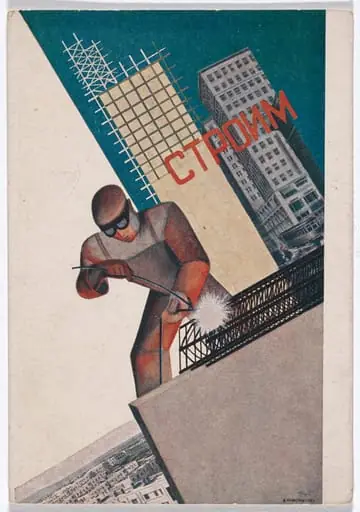
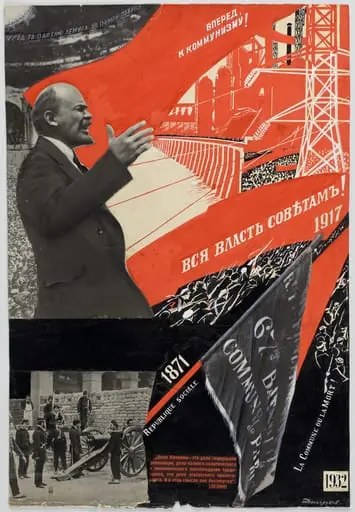
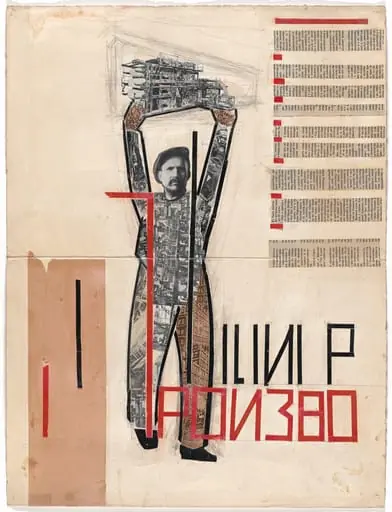
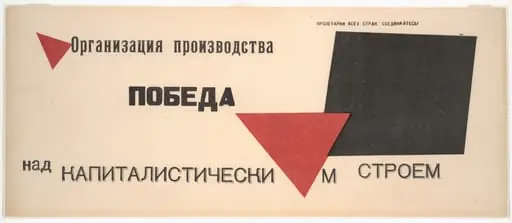
Artwork
Untitled
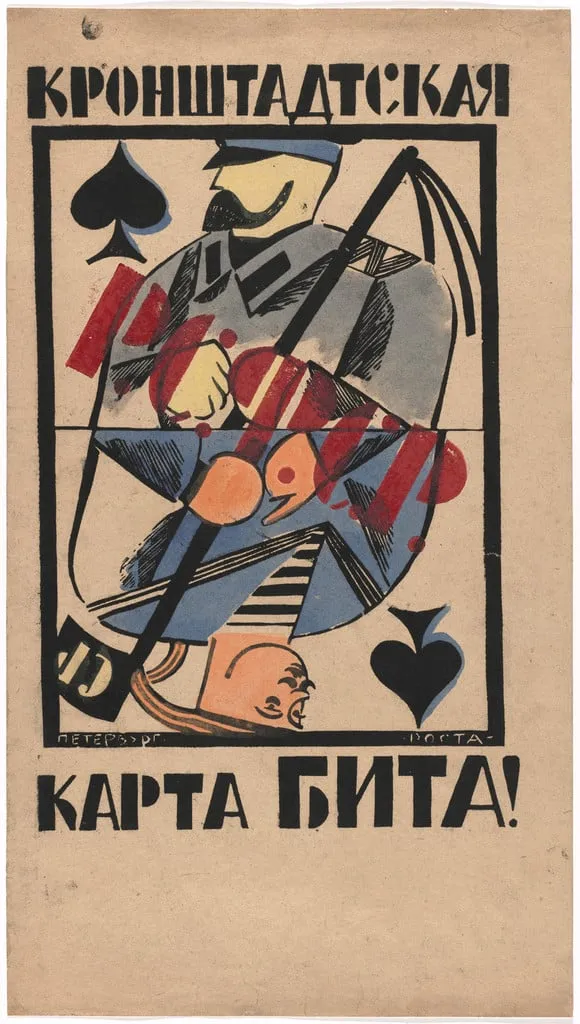
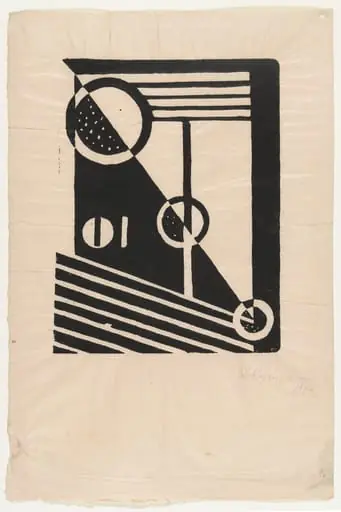
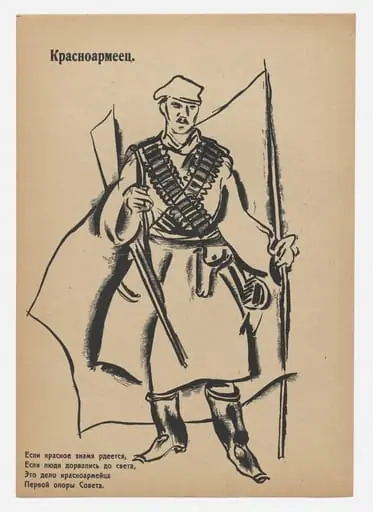
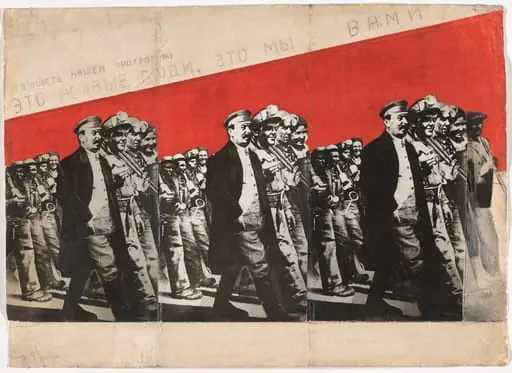
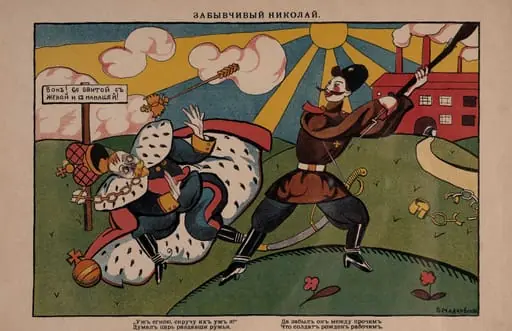
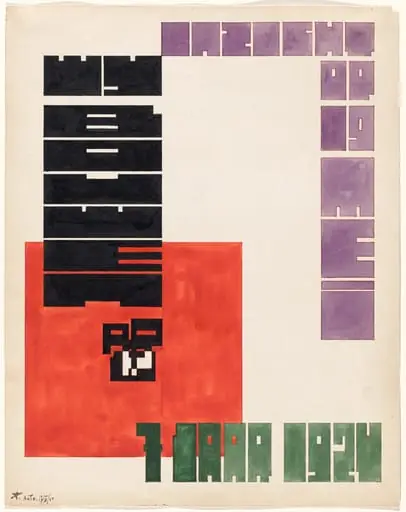
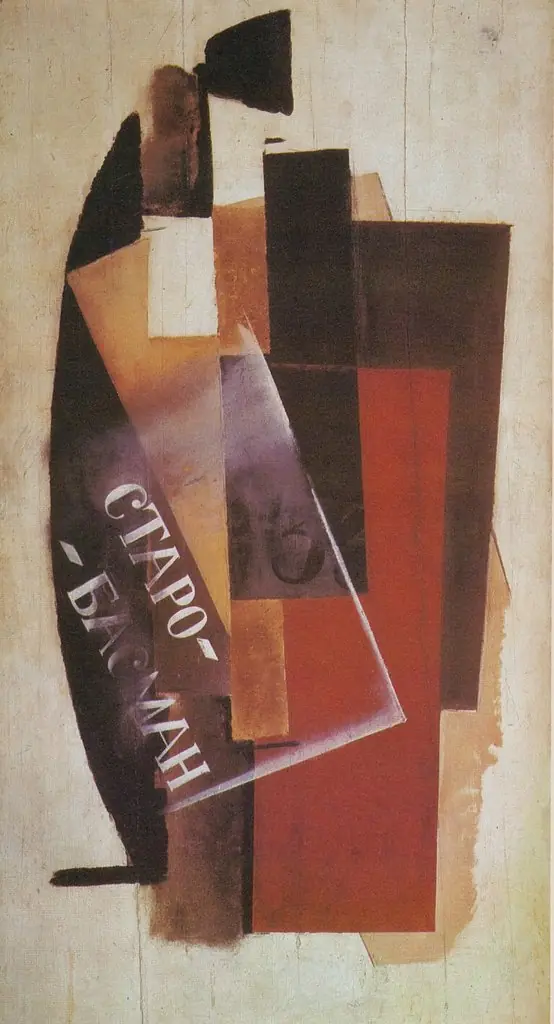
Untitled is a watercolor print by Vladimir Kozlinskii. It dates from 1921 and is held in the collection of the Museum of Modern Art.
About this work
Overview
The work was originally produced as a poster for the Russian Telegraph Agency, reflecting its functional role in early Soviet visual communication.
Untitled is a print made from a linoleum block, enhanced with watercolor, created in 1921 by Vladimir Kozlinskii. It is part of the collection at The Museum of Modern Art. The work was originally produced as a poster for the Russian Telegraph Agency, reflecting its functional role in early Soviet visual communication. Its graphic simplicity and vivid color palette were designed for public visibility and immediate impact.
Subject & Meaning
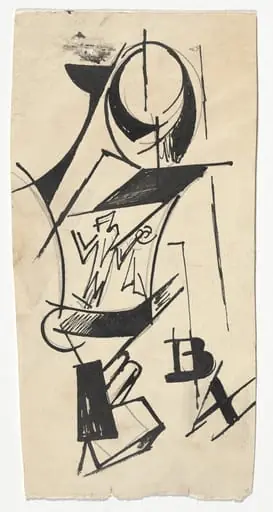
The image conveys no literal narrative but relies on abstract, bold forms to communicate urgency and authority. The interplay of red and black suggests political or informational intensity, consistent with the messaging needs of a state communications agency. Its abstraction aligns with the era’s preference for symbolic, non-representational design to convey collective purpose rather than individual story.
Technique & Style
Kozlinskii employed linoleum cutting, a method favored for its sharp, high-contrast lines and suitability for mass reproduction. Watercolor was applied selectively to add subtle tonal variation and visual warmth. The style reflects the influence of Constructivist aesthetics, prioritizing clarity, geometric form, and functional design over decorative detail.
History & Provenance
Created in 1921, the print was produced during a period of experimental graphic design in post-revolutionary Russia. It was likely distributed widely as a propaganda or informational poster. The work entered the Museum of Modern Art’s collection later, recognized for its role in the evolution of modern printmaking and political visual culture.
Context
In the early 1920s, Soviet artists frequently adapted industrial print techniques for public messaging. Linoleum cuts were economical and efficient, ideal for rapid dissemination. Kozlinskii’s work fits within a broader movement where design served state objectives, merging artistic innovation with the demands of mass communication in a newly formed society.
Legacy
The print exemplifies how avant-garde techniques were harnessed for civic function during the Soviet Union’s formative years. Though Kozlinskii is less widely known than some contemporaries, this work remains a representative example of how graphic design evolved as a tool of public engagement, influencing later generations of political and editorial illustrators.
Artist & collection