Artwork
At the Prado (Au Prado)
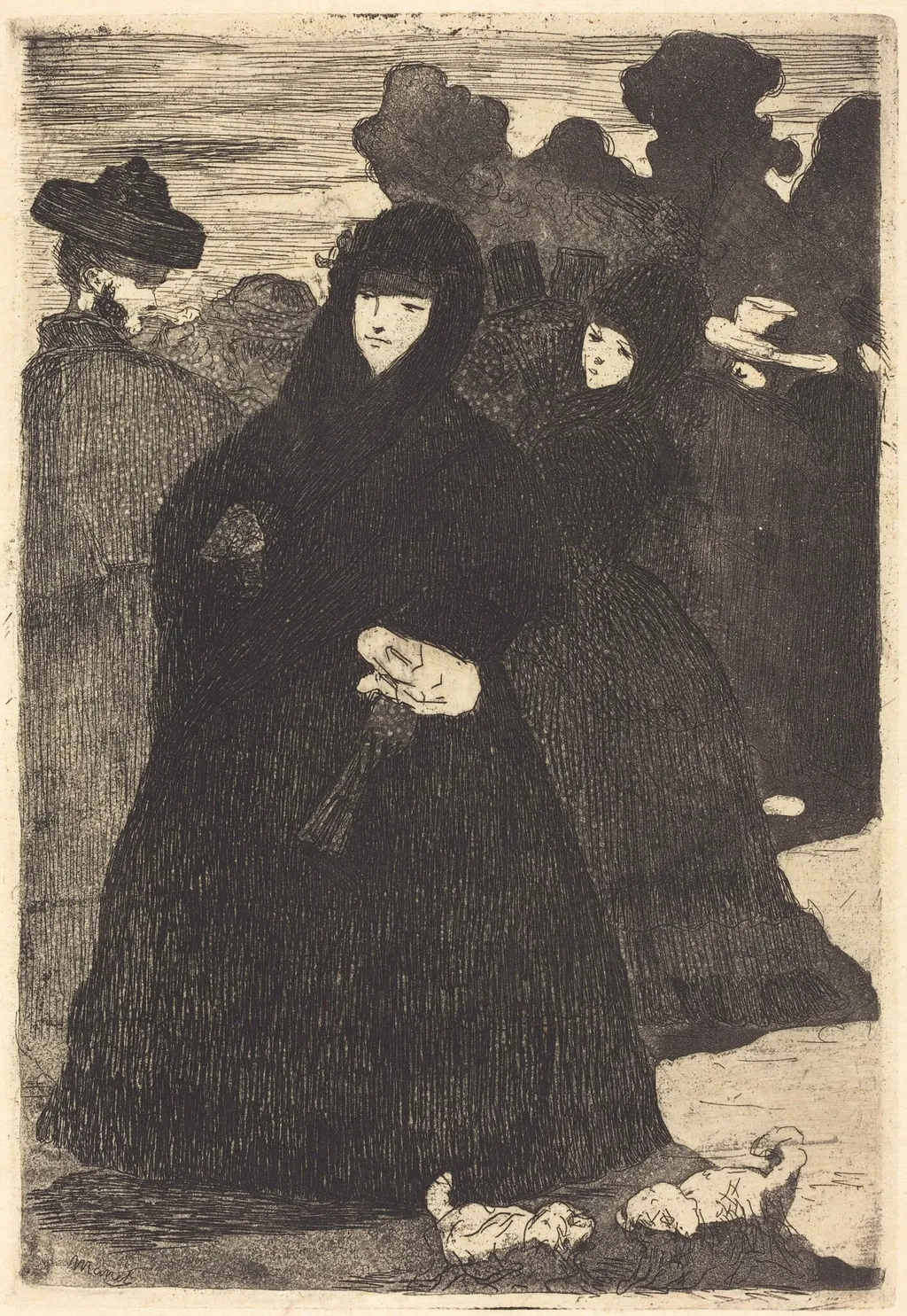
At the Prado (Au Prado) is an ink print by the Impressionist artist Edouard Manet. It dates from 1866 and is held in the collection of the National Gallery of Art. Created in 1866, At the Prado is a black-and-white print by Édouard Manet, produced using etching and aquatint on Japanese paper.
About this work
Overview
The composition emphasizes texture and movement over individual detail, with faces rendered indistinct and forms softened by the print’s tonal gradients.
Created in 1866, At the Prado is a black-and-white print by Édouard Manet, produced using etching and aquatint on Japanese paper. It captures a procession of women in heavy outerwear moving through an urban space. The composition emphasizes texture and movement over individual detail, with faces rendered indistinct and forms softened by the print’s tonal gradients. The work reflects Manet’s interest in modern life and the visual ambiguity of public spaces.
Subject & Meaning
The figures appear as anonymous silhouettes, their identities obscured by thick coats and broad hats, suggesting a collective rather than personal experience. Their movement through a crowded, indistinct environment evokes the anonymity of urban observation. Manet does not depict a specific event but rather a fleeting moment of pedestrian rhythm, aligning with his broader focus on everyday scenes in contemporary Parisian society.
Technique & Style
Manet employed aquatint to achieve subtle gradations of gray, creating a grainy, atmospheric effect that mimics the softness of charcoal or wash. Etching lines define edges and contours, while the aquatint’s tonal fields suggest depth and shadow without sharp definition. The result is a work that feels both spontaneous and deliberate, balancing the precision of line with the looseness of tone to evoke a sense of motion and environment.
History & Provenance
The print was made in 1866, during a period when Manet was experimenting with printmaking alongside his painting. Few impressions were produced, and the work remained relatively obscure until later 20th-century reassessments of his graphic output. It is now held in major museum collections, including the Metropolitan Museum of Art and the Musée d’Orsay, where it is studied for its technical innovation and thematic continuity with his painted works.
Context
Manet created this print shortly after his visits to the Prado Museum in Madrid, where he studied Velázquez and other Spanish masters. Though the scene is set in Paris, the somber palette and compositional restraint reflect the influence of Spanish painting. The work also responds to the rise of print culture in 19th-century France, where artists increasingly used etching to reach broader audiences with modern subjects.
Legacy
At the Prado exemplifies Manet’s role in elevating printmaking as a medium for serious artistic expression, not merely reproduction. Its emphasis on atmosphere and social observation influenced later generations of printmakers, including Degas and Toulouse-Lautrec. The work remains a key example of how 19th-century artists used etching to capture the transient qualities of modern urban life with emotional and visual economy.
Artist & collection

Artist
Édouard Manet didn’t have much time to make his mark—he died at 51—but he used every year.

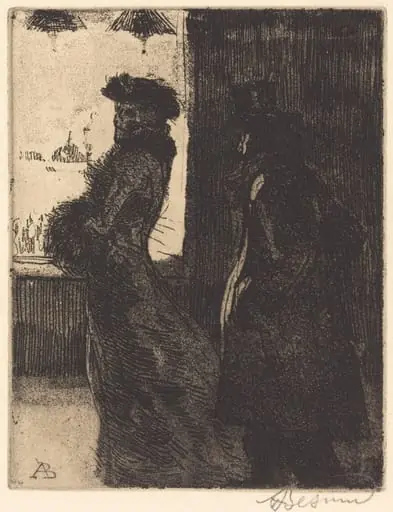 The Unknown Woman (L'inconnue)
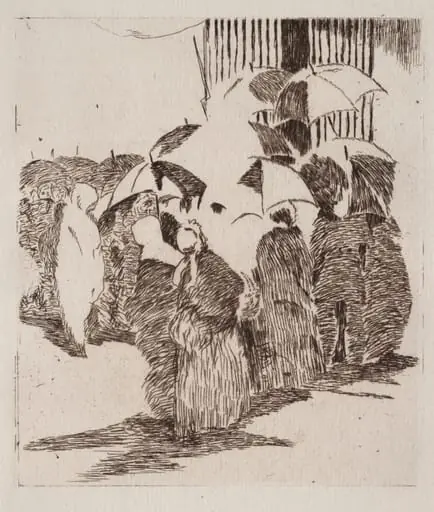 Line in Front of the Butcher Shop
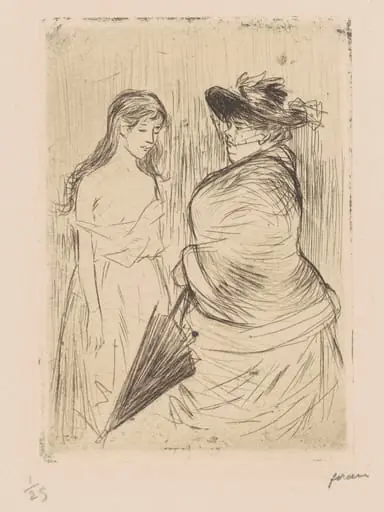 Le Traite des blanches (The White Slave Trade)
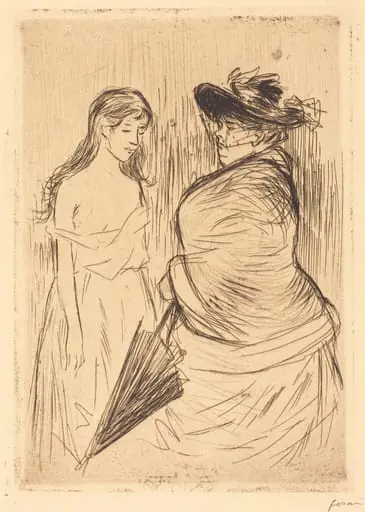 Le Traite des blanches (The White Slave Trade)
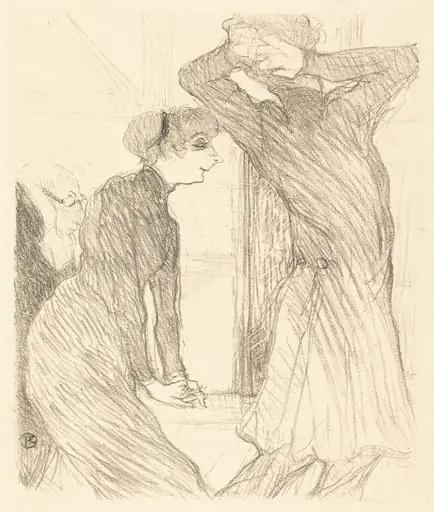 Lugne Poe and Baldy in "Au-dessus des forces humaines" (Lugne Poe et Baldy dans "Au-desses des forces humaines")
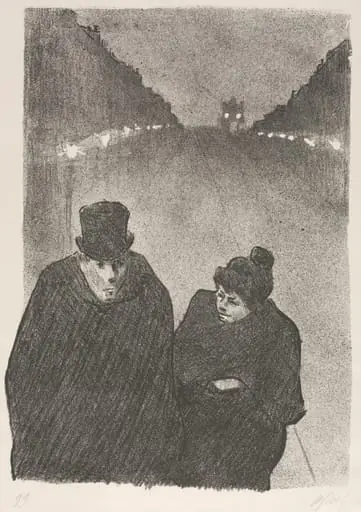 Ah, it's true, my poor old man, you would be the first to whom I would have made to miss his bus. "But I'll Miss My Bus" "My Customers Have Never Missed Their Bus"
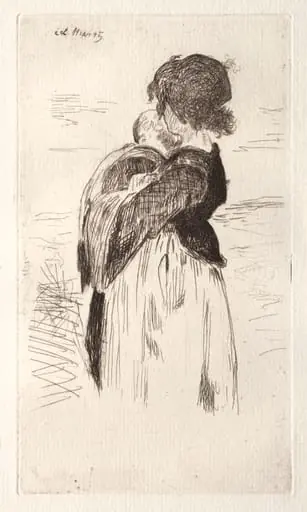 La petite fille tenant un bébé
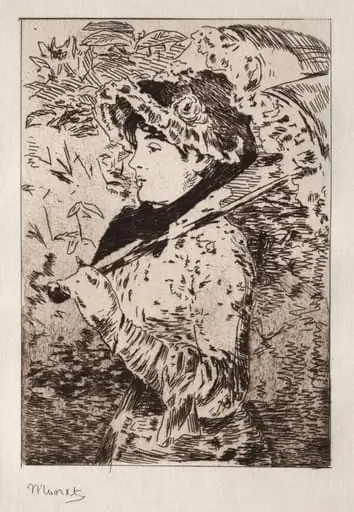 Jeanne: Spring
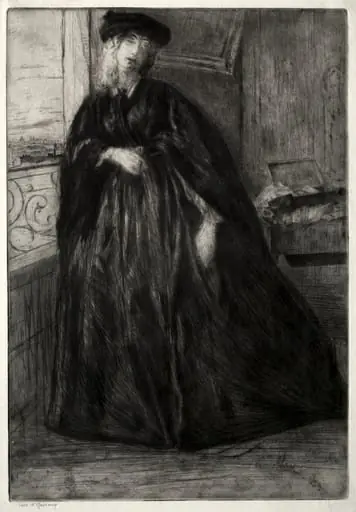 Finette
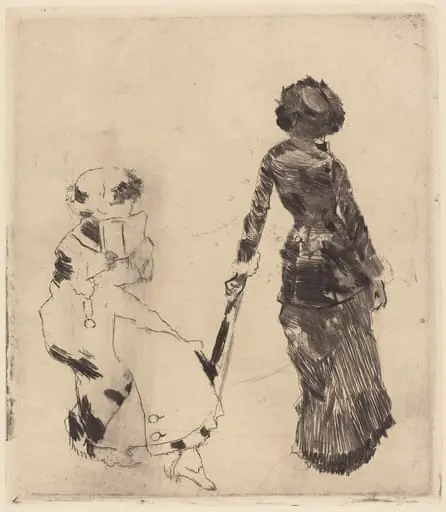 Mary Cassatt at the Louvre: The Etruscan Gallery