Artwork
Don Mariano Camprubi (Le Bailarin)
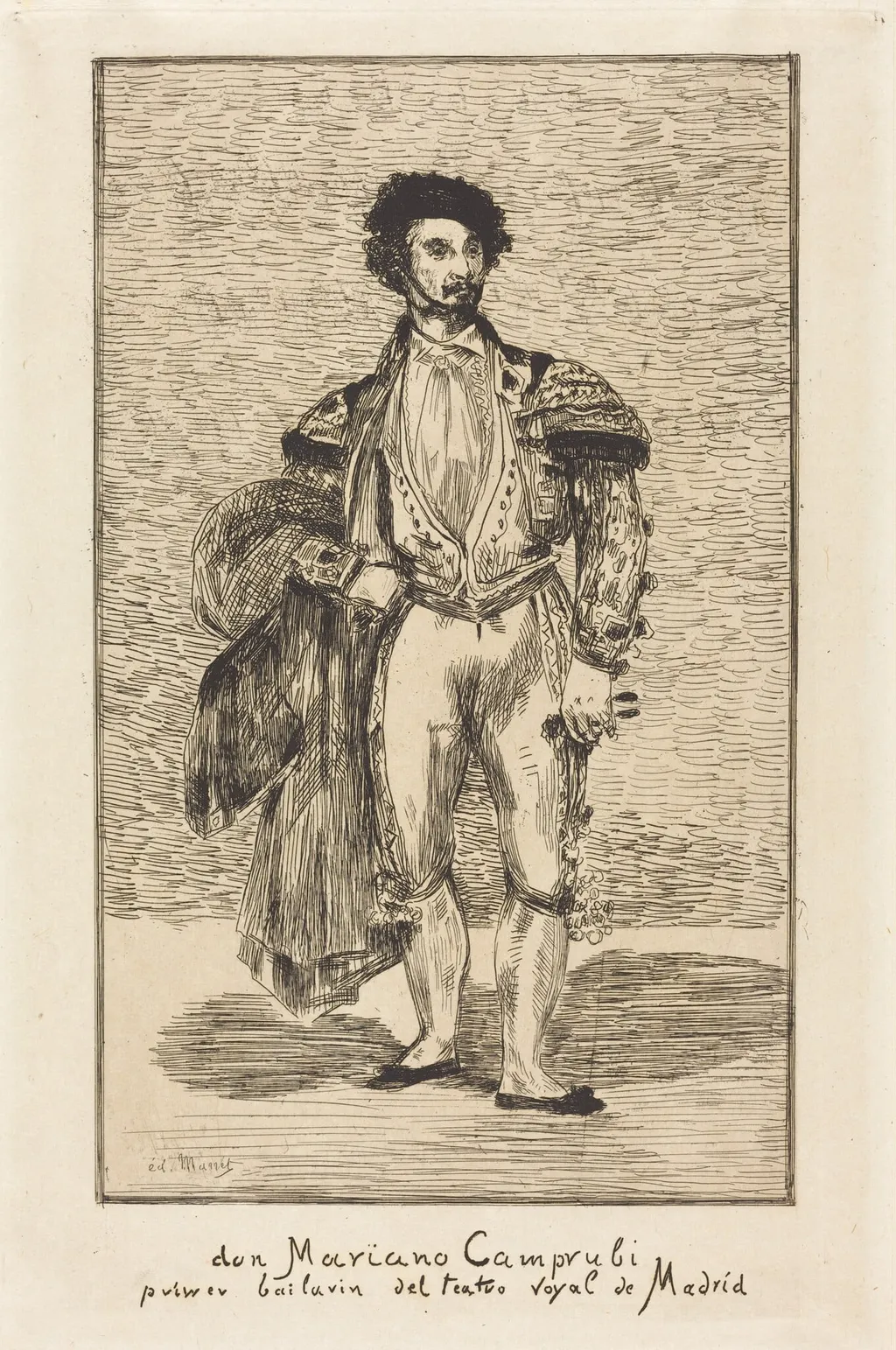
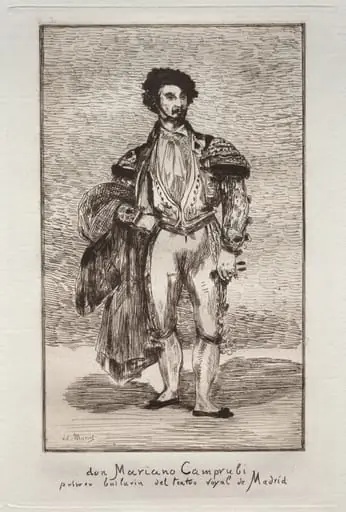
Don Mariano Camprubi (Le Bailarin) is an ink print by the Impressionist artist Edouard Manet. It dates from 1862 and is held in the collection of the National Gallery of Art. Created in 1862, this etching by Édouard Manet portrays Don Mariano Camprubi, identified in the inscription as a dancer.
About this work
Overview
Created in 1862, this etching by Édouard Manet portrays Don Mariano Camprubi, identified in the inscription as a dancer. Executed on paper, the work bears the artist’s signature and the sitter’s name at the lower edge, confirming its purpose as a portrait study. The composition is limited to a single figure rendered against an unadorned, textured background.
Subject & Meaning
The figure stands in profile, dressed in an elaborate costume that includes a long, buttoned coat, a loose shirt, and a cape draped over one arm. Curly, untamed hair frames his face, and his hand holds a small object, perhaps a prop associated with dance. The attire and pose emphasize the sitter’s professional identity as a performer.
Technique & Style
Manet employed traditional etching methods, incising lines into a copper plate before printing onto paper. The line work is precise yet fluid, capturing the folds of fabric and the texture of hair with minimal shading. The plain background, rendered in a subtle tonal wash, isolates the figure and highlights the crispness of the engraved contours.
History & Provenance
The print bears Manet’s signature and the inscription "don Mariano Camprubi," indicating it was likely produced as a commissioned portrait. While specific details of its ownership are scarce, the work fits within Manet’s early explorations of printmaking during the 1860s, a period when he experimented with various media beyond painting.
Context
In the early 1860s, Manet was expanding his artistic repertoire, engaging with the etching revival that attracted many French painters. Portraits of performers were popular, reflecting a growing public fascination with theatrical and dance culture. This piece exemplifies the intersection of fine art and popular entertainment of the era.
Legacy
Although not as widely reproduced as Manet’s oil paintings, this etching contributes to the understanding of his versatility and interest in contemporary subjects. It offers insight into the visual language Manet applied to print media and his engagement with the cultural figures of his time.
Artist & collection

Artist
Édouard Manet didn’t have much time to make his mark—he died at 51—but he used every year.

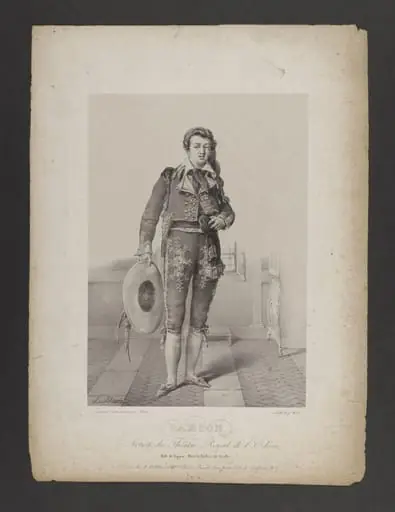 H Beard Print Collection
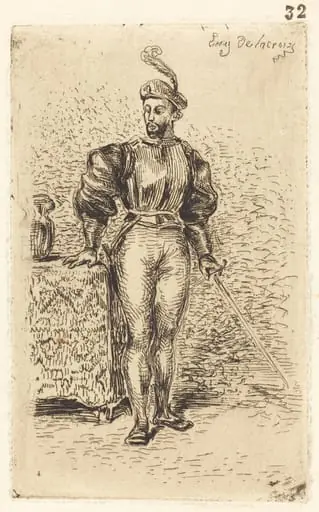 A Man with Weapons (Un Homme d'armes)
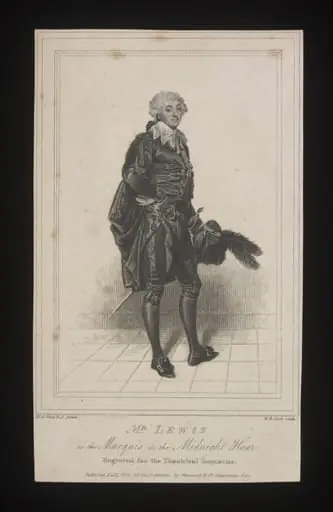 Mr. Lewis as the Marquis in the Midnight Hour
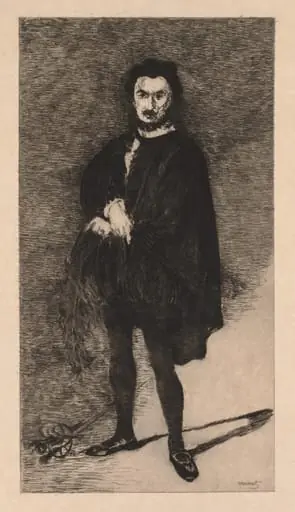 The Tragic Actor
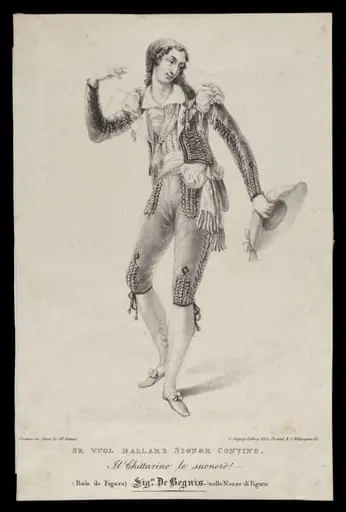 Harry Beard Print Collection
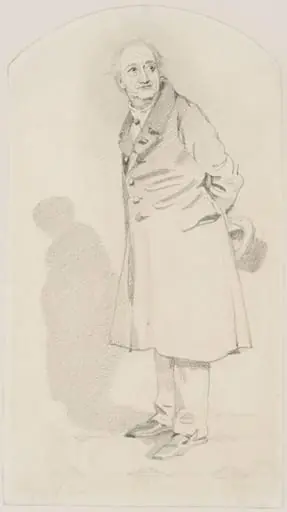 Johann Wolfgang von Goethe
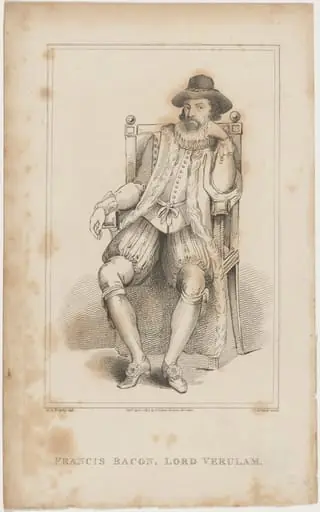 Francis Bacon, Lord Verulam
 Untitled
 The Tragic Actor (L'acteur tragique)
 H Beard Print Collection
 The Actor Clairval
 Le Bailarin ( Don Mariano Camprubi )