Artwork
The Tragic Actor (L'acteur tragique)
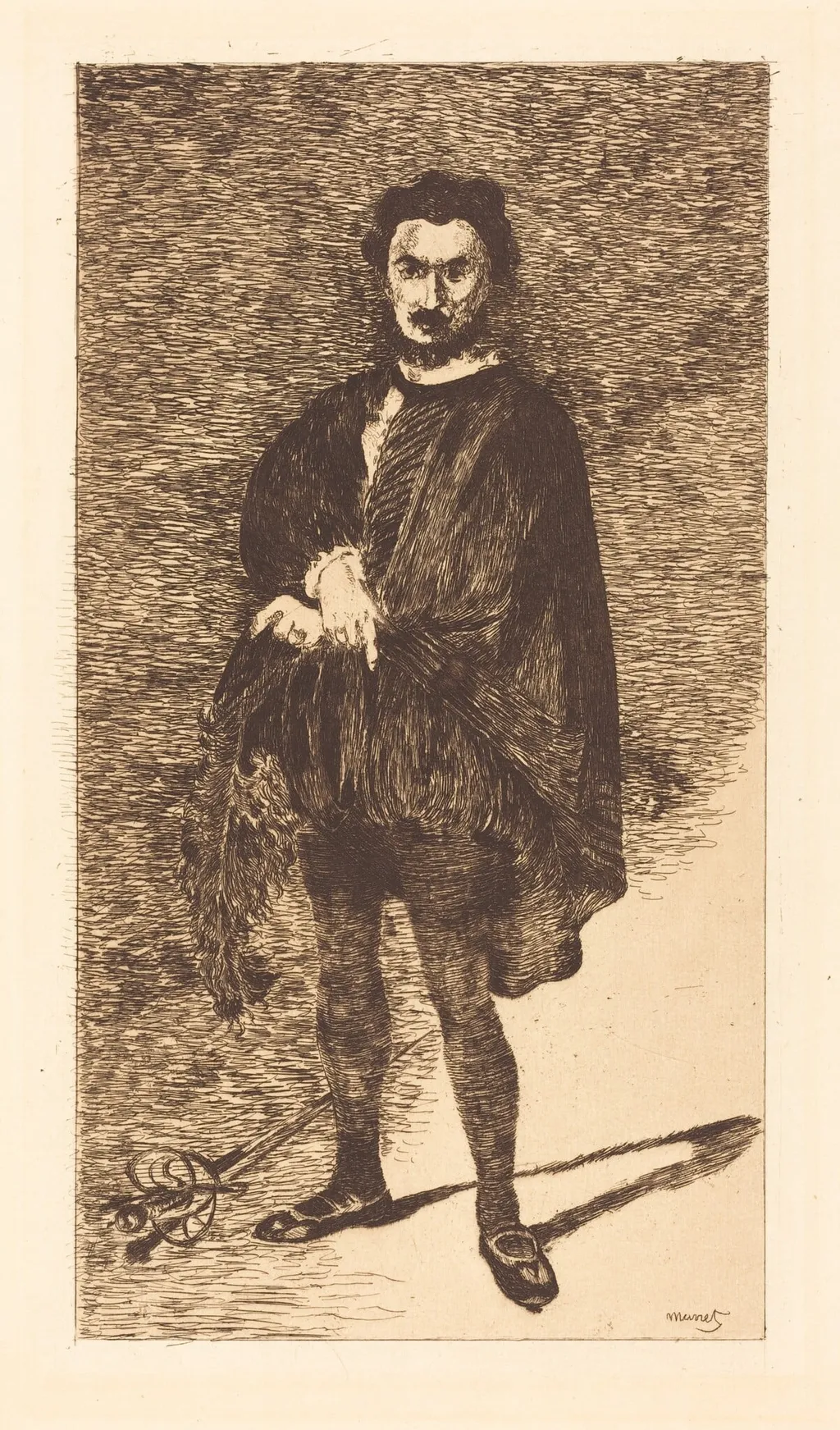
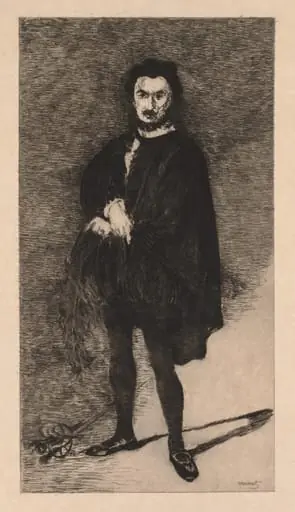
The Tragic Actor (L'acteur tragique) is an ink print by the Impressionist artist Edouard Manet. It dates from 1866 and is held in the collection of the National Gallery of Art.
About this work
Overview
The medium allowed Manet to experiment with line and shadow outside the conventions of oil painting.
Created in 1866, The Tragic Actor is an etching by Édouard Manet, part of his exploration of theatrical figures during a period when he was increasingly engaged with printmaking. Unlike his painted works, this piece relies on the directness and tonal contrast achievable through etching, capturing a solitary performer in a moment of quiet intensity. The medium allowed Manet to experiment with line and shadow outside the conventions of oil painting.
Subject & Meaning
The figure is a male actor dressed in a long, dark coat with a fur collar, his hat pulled low to obscure much of his face. He holds a cane loosely, suggesting a pause between performances. The anonymity of the subject invites interpretation: he may represent the isolation of the performer, the weight of the role, or the liminal space between stage and self. Manet avoids theatricality, focusing instead on a subdued, introspective presence.
Technique & Style
Manet employed etching to create sharp, angular lines with a deliberate roughness, using acid to bite into a metal plate after scratching through a wax ground. The background is minimally rendered with sparse, gestural strokes, emphasizing the figure’s silhouette. The contrast between the dense, textured coat and the open space around him heightens the sense of solitude. The print’s immediacy reflects Manet’s interest in capturing fleeting, unposed moments.
History & Provenance
The etching was produced in 1866, during a phase when Manet was actively experimenting with printmaking, influenced by contemporaries like Degas and the growing popularity of graphic art among avant-garde circles. Only a small number of impressions were made, and early examples were held in private collections in France. It entered public collections in the early 20th century, where it became a key example of Manet’s graphic work.
Context
In mid-1860s Paris, the theater was a frequent subject for artists drawn to its blend of spectacle and psychological depth. Manet, though not a regular theatergoer, was fascinated by performers as symbols of modern life. This etching aligns with his broader interest in figures on the margins—actors, flâneurs, and urban observers—rendered without idealization, reflecting a shift toward realism in both subject and technique.
Legacy
The Tragic Actor stands as one of Manet’s most compelling graphic works, influencing later artists who valued the expressive potential of etching over polished finish. Its unembellished portrayal of a performer contributed to a broader redefinition of artistic subject matter, where the ordinary and the introspective held equal weight to grand narratives. The print remains a quiet but significant marker in the evolution of modern printmaking.
Artist & collection

Artist
Édouard Manet didn’t have much time to make his mark—he died at 51—but he used every year.

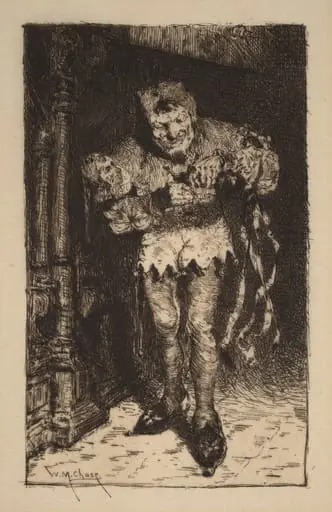 Keying Up: The Court Jester
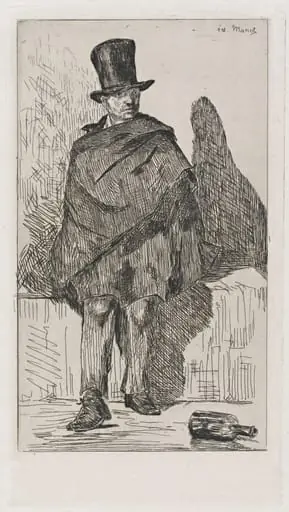 The Absinthe Drinker (Le buveur d'absinthe)
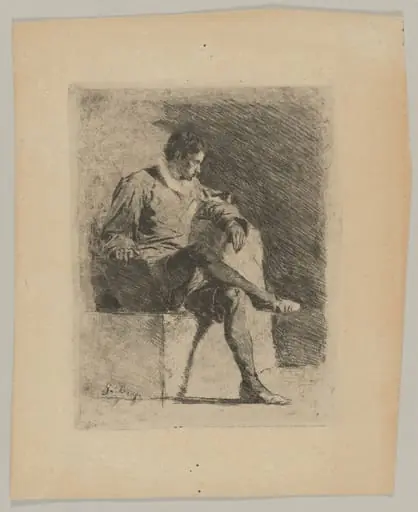 Seated Man in Sixteenth-Century Costume
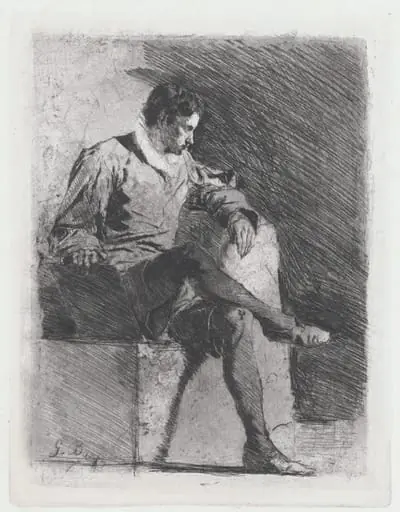 Seated Man in Sixteenth-Century Costume
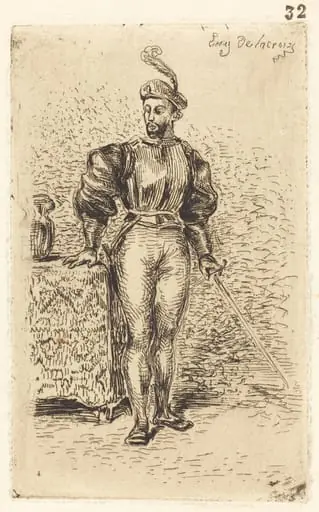 A Man with Weapons (Un Homme d'armes)
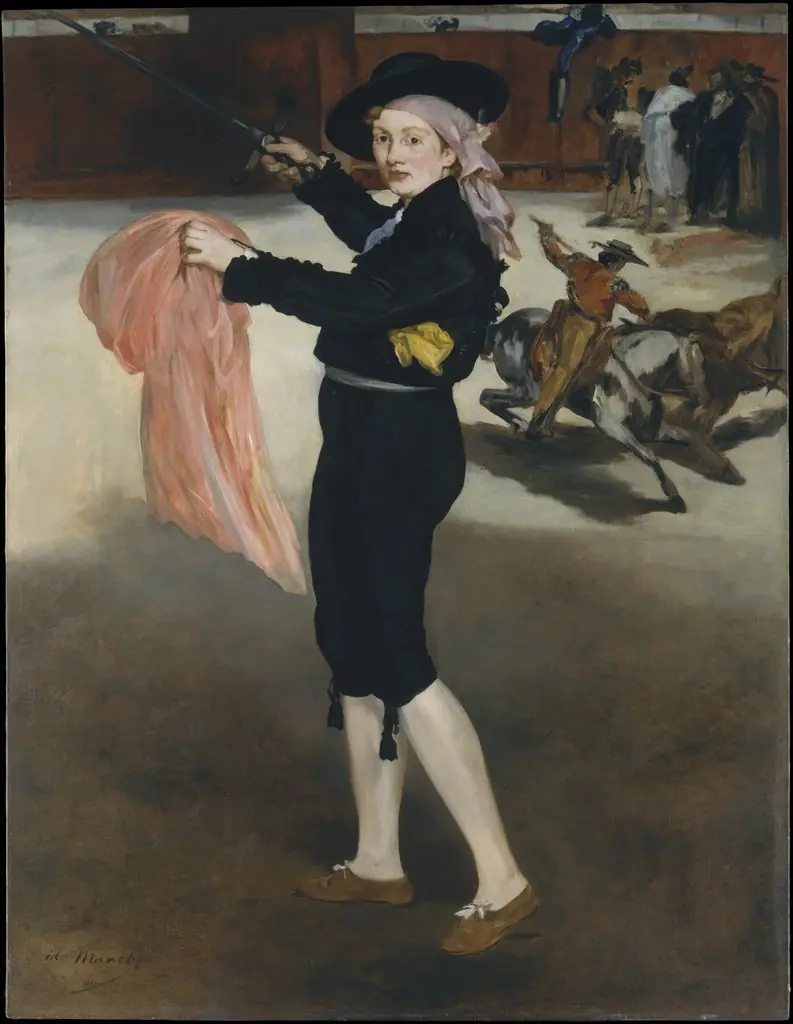
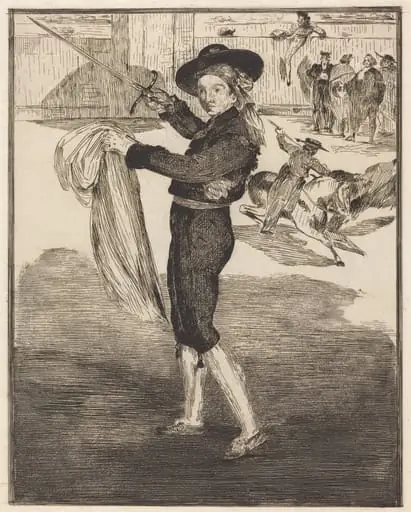 Mlle. Victorine in the Costume of an "Espada"(L'espada)
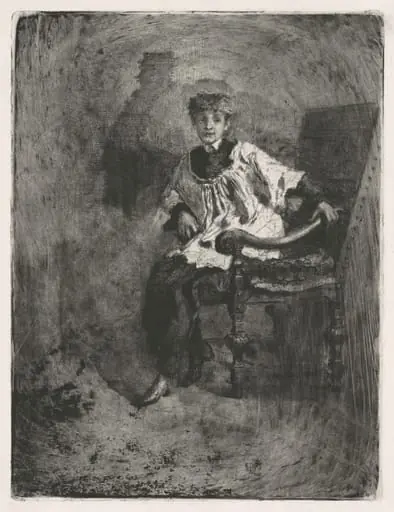 Seated Acolyte
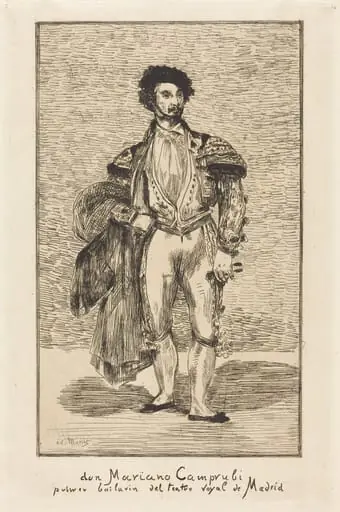 Don Mariano Camprubi (Le Bailarin)
 Punchinello, after Meissonier
 Draped Figure, Standing
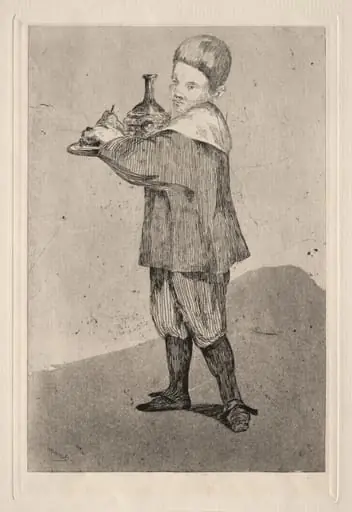 The Boy Carrying a Tray
 The Tragic Actor