Artwork
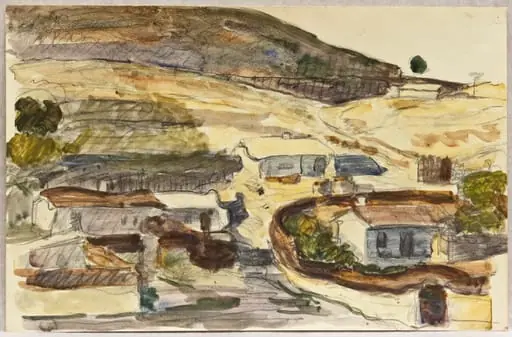
Peisaj cu case
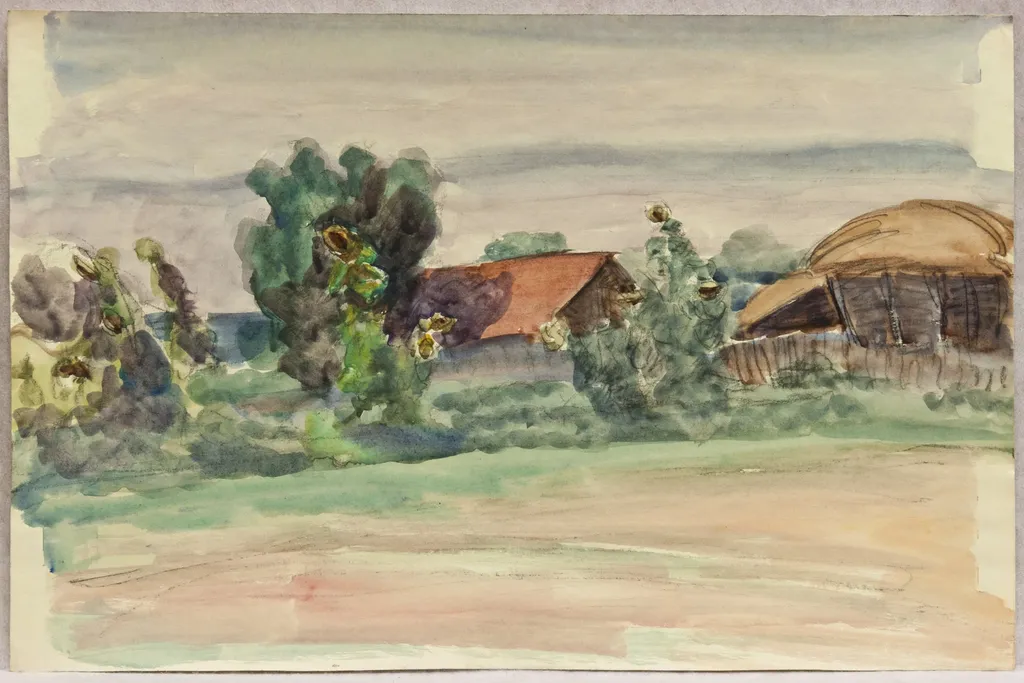
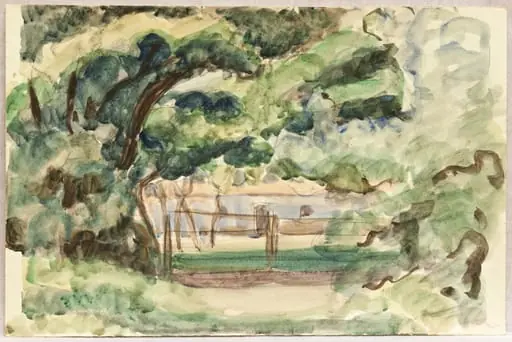
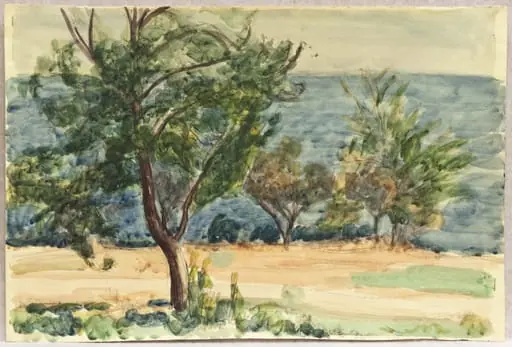
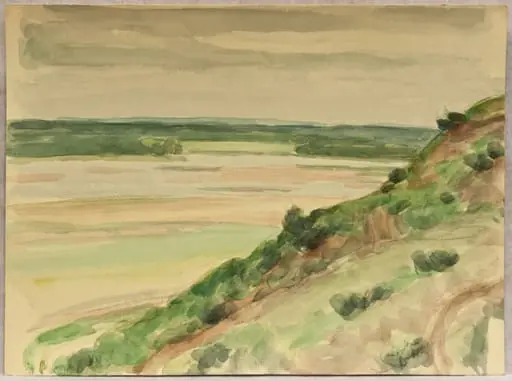
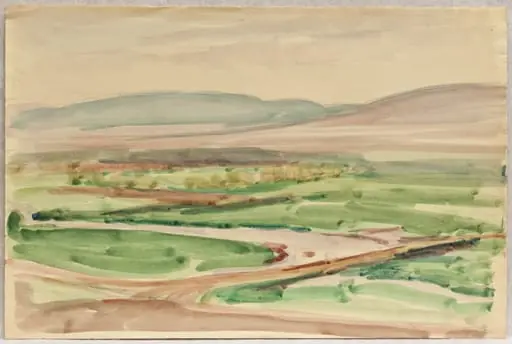
Peisaj cu case is a print by Rodica Maniu. It dates from 1950 and is held in the collection of the Gavrila Simion Eco-Museum Research Institute Tulcea.
About this work
Overview
Its delicate composition and restrained palette reflect a quiet observation of everyday life in the countryside.
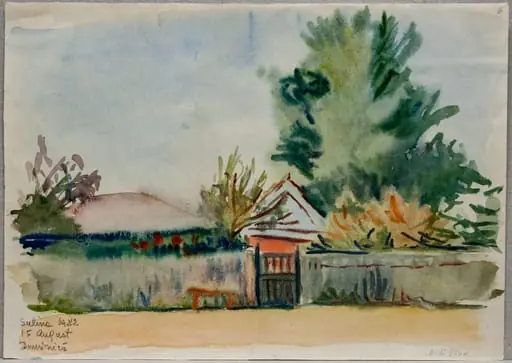
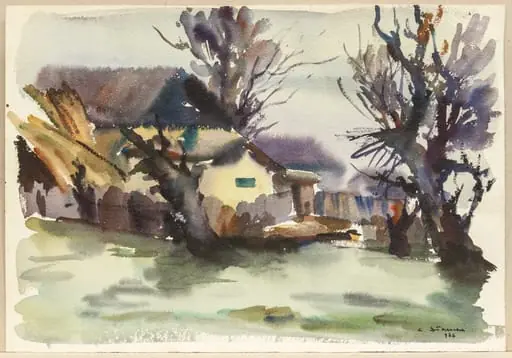
Peisaj cu case is a watercolor landscape by Romanian artist Rodica Maniu, dated around 1950. The work captures a tranquil rural setting with three modest dwellings nestled among trees and undergrowth. Its delicate composition and restrained palette reflect a quiet observation of everyday life in the countryside. The piece is part of the collection at the Museum of Ethnography, where it contributes to a broader documentation of vernacular architecture and regional visual culture.
Subject & Meaning
The painting depicts three small, closely spaced houses, suggesting a modest village or hamlet. Their simple wooden structures and sloping roofs imply local building traditions. The absence of human figures and the stillness of the scene evoke solitude and continuity rather than narrative. The arrangement of the dwellings hints at communal living, grounded in the rhythms of rural existence without romanticization or overt symbolism.
Technique & Style
Maniu employed loose, fluid brushwork in watercolor to suggest form and atmosphere rather than define it precisely. Soft washes of green, brown, and pale blue create a sense of lightness and air, while minimal detail invites the viewer to infer texture and depth. The sketchlike quality conveys immediacy, as if the scene was observed and recorded in a single moment, emphasizing perception over polish.
History & Provenance
Created circa 1950, the work entered the collection of the Museum of Ethnography, where it remains today. Its acquisition aligns with mid-20th century efforts to document folk life and regional artistic expression in Romania. While little is documented about its early ownership, its presence in the museum suggests it was selected for its ethnographic value as much as its aesthetic qualities.
Context
In postwar Romania, artists like Maniu turned to rural subjects as a means of preserving cultural identity amid rapid social change. Watercolor, a portable and accessible medium, was often used for field studies and personal sketches. This work reflects a broader trend among Romanian painters who sought to record traditional architecture and landscapes before they were transformed by industrialization and state planning.
Legacy
Peisaj cu case exemplifies a quiet, observational approach to landscape that contrasts with more monumental or ideological art of the period. Though not widely exhibited beyond institutional contexts, it stands as a representative example of Maniu’s engagement with vernacular environments. Its preservation in the Museum of Ethnography ensures its role as a visual record of rural Romania’s material culture in the mid-20th century.
Artist & collection
Museum
Gavrila Simion Eco-Museum Research Institute Tulcea
Continue through works from the same source collection.