Artwork
Quadrille Francaise
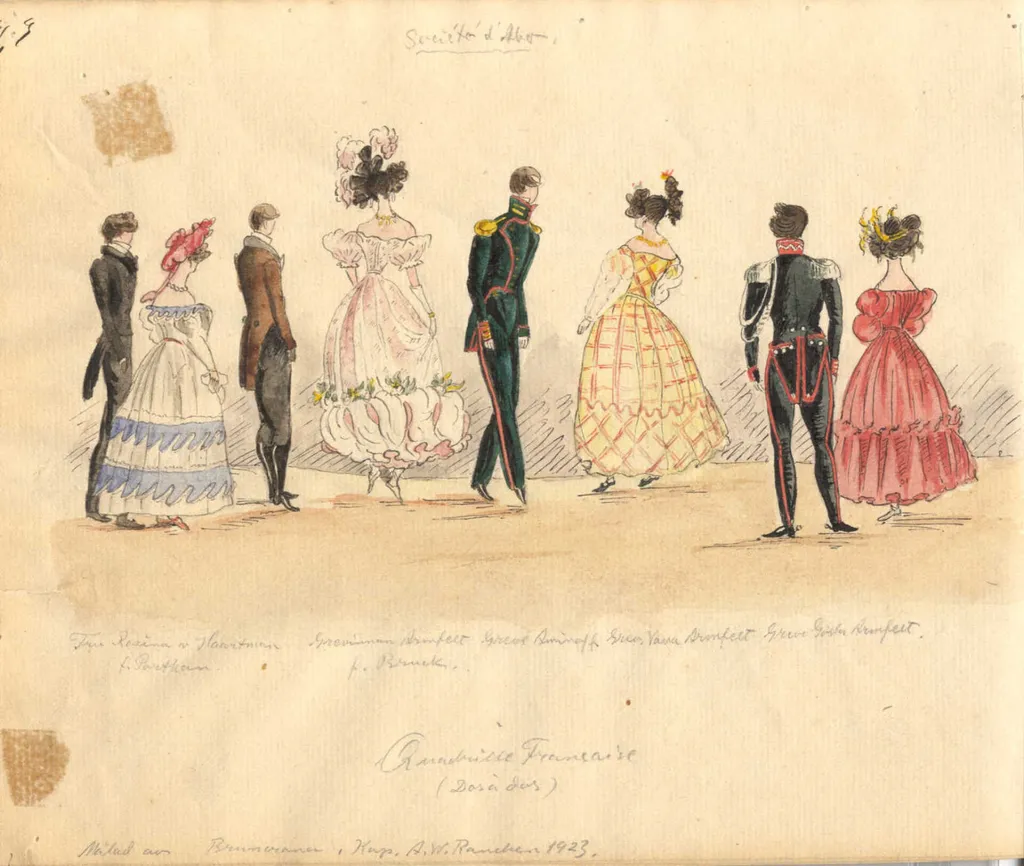
Quadrille Francaise is a drawing by August Erik Mannerheim. It is held in the collection of the Helsinki City Museum.
About this work
Overview
Quadrille Francaise is a 19th-century sketch depicting six individuals, paired, in formal attire, set against a minimalist background suggesting a stage or floor. The drawing's loose, rapid execution conveys a sense of capturing a fleeting moment.
Subject & Meaning
The subject is a group of six, likely in a social or dance setting, given their paired arrangement and elaborate clothing. The men's military-inspired jackets with sashes (notably one with a red cummerbund) and the women's pastel, ruffled dresses reflect the formal, possibly aristocratic, context of the scene.
Technique & Style
Executed in a loose and quick manner, the sketch emphasizes immediacy over detail, suggesting it was created rapidly to capture a moment. The simplicity of the background further highlights the subjects.
Context
The attire, particularly the men's use of cummerbunds (originally a part of Indian dress adopted by British military, then into European formal wear) and the women's pastel dresses, situates the sketch within the formal social gatherings of 19th-century Europe, possibly a quadrille dance.
Legacy
While specific legacy details of 'Quadrille Francaise' are not provided, works like this contribute to our understanding of 19th-century European formal attire and social dynamics. The cummerbund's depiction illustrates its integration into European formal wear by the 19th century.
Artist & collection
Artist
A Finnish artist who drew scenes of 19th-century social dance, August Erik Mannerheim specialized in ink and pencil sketches of balls and quadrilles.

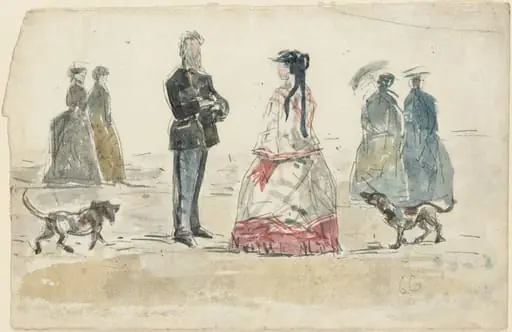 Ladies and Gentleman Walking on the Beach with Two Dogs
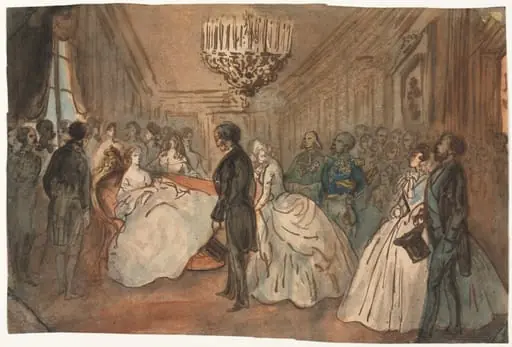 The Empress Eugénie Receiving the Diplomatic Corps after the Birth of the Imperial Prince
![Kensington Gardens [recto], by Walter Crane](https://artifactworldgallery.com/img/walter-crane--kensington-gardens-recto--dc8c93f0e2ebbd57-w320.webp) Kensington Gardens [recto]
Kensington Gardens [recto] H Beard Print Collection
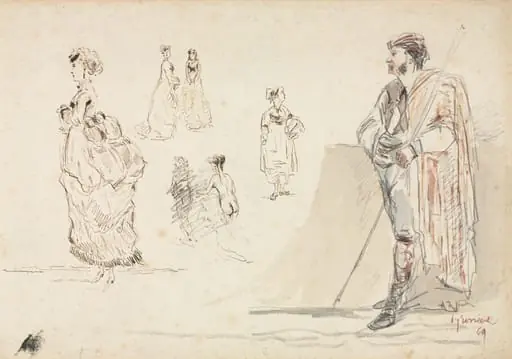 Sketches of Figures
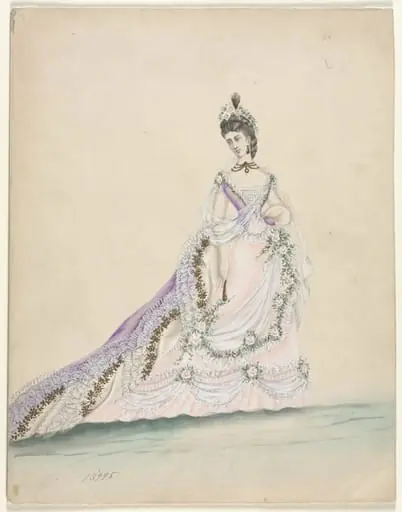 Fashion Study (designed for Worth)
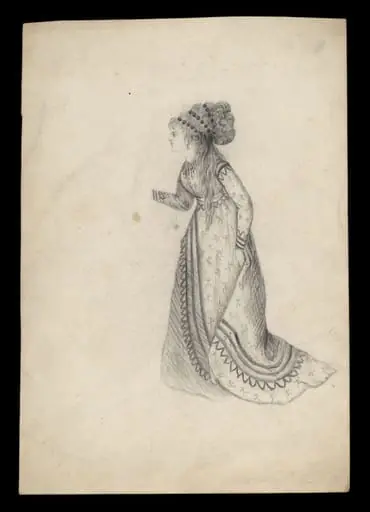 Untitled
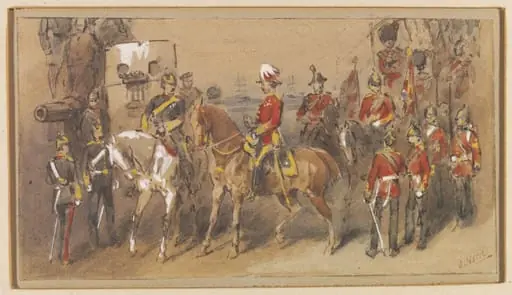 General Sir Garnet Wolseley at Alexandria
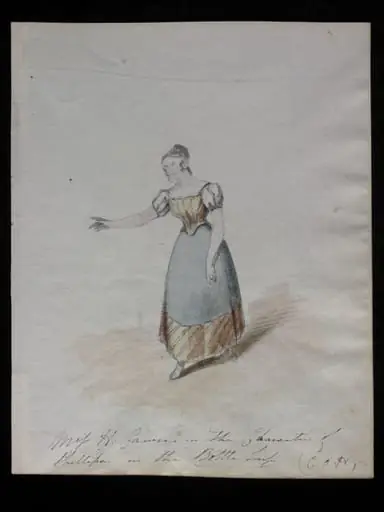 Miss H. Cawse in the character of Phillipa in The Bottle Imp
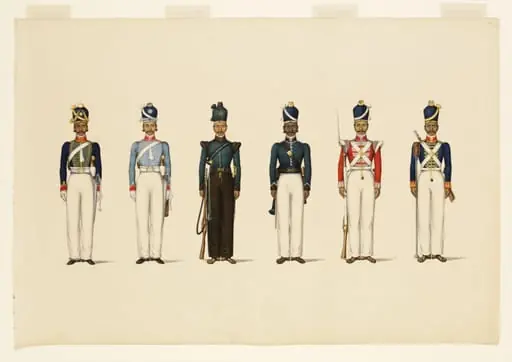 Six figures depicting military uniforms
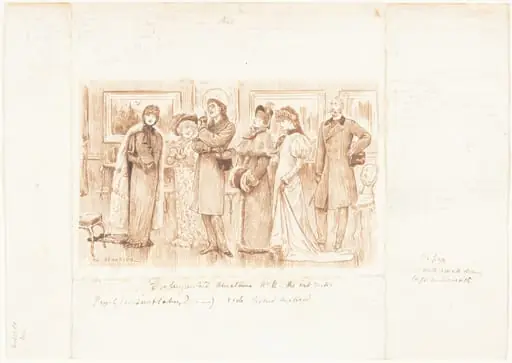 Distinguished Amateurs no. II: The Art Critic
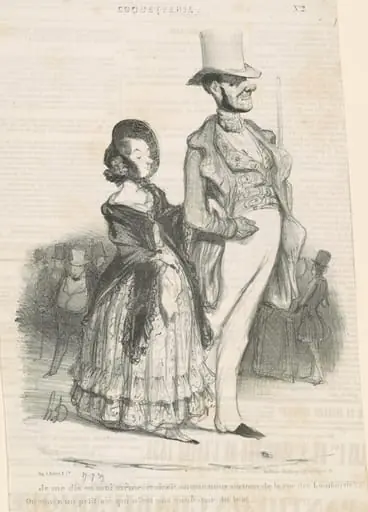 Je me dis en moi-même