Artwork
Eyerweib (Egg Seller)
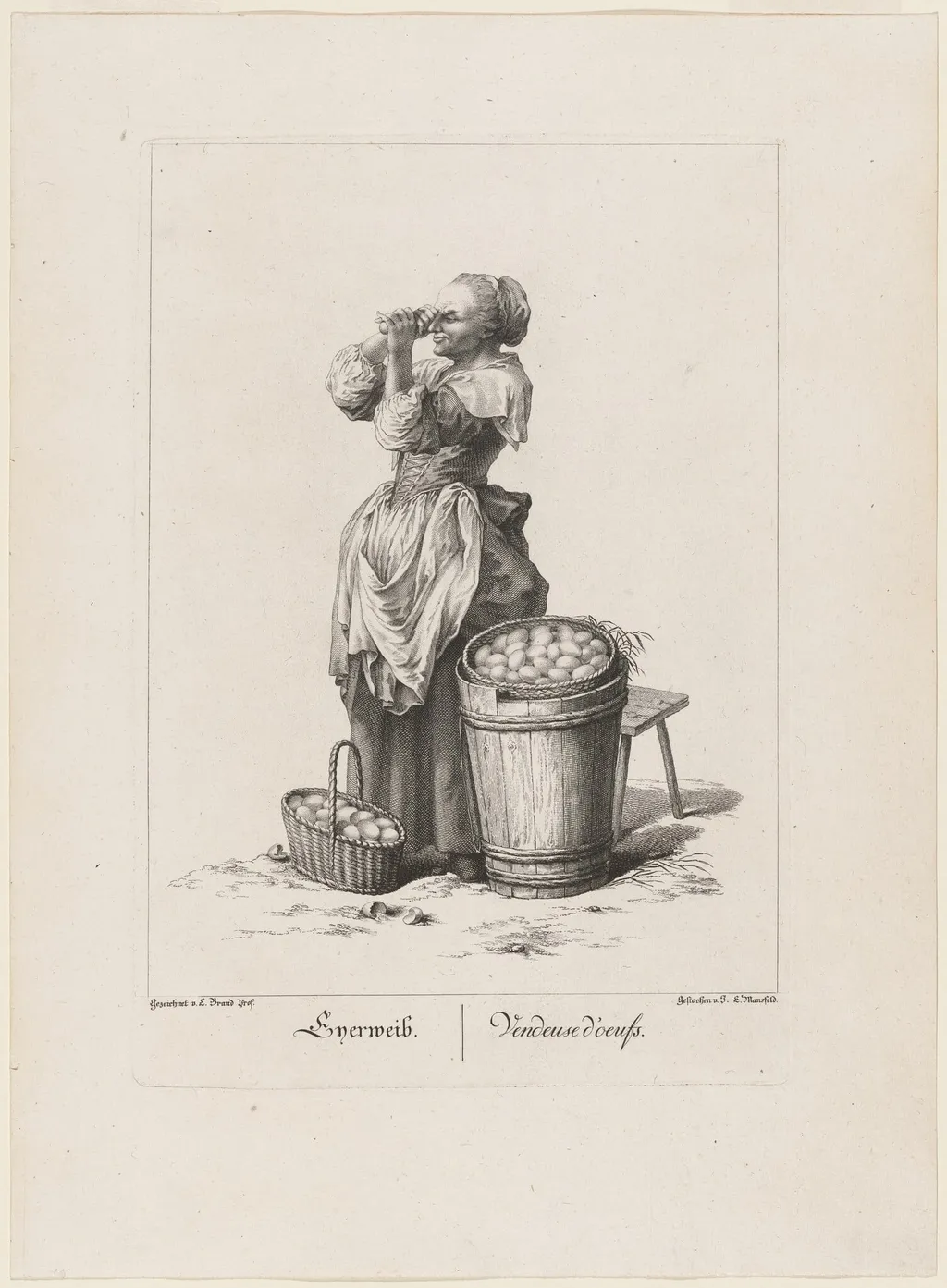
Eyerweib (Egg Seller) is an ink print by the Romanticist artist Johann Georg Mansfeld. It dates from 1775 and is held in the collection of the National Gallery of Art.
About this work
Overview
Johann Georg Mansfeld’s print, titled Eyerweib (Egg Seller), was produced in 1775. Executed as an engraving with etching on laid paper, the work measures a modest size typical of 18th‑century commercial prints and presents a single figure in a domestic setting.
Subject & Meaning
The composition shows a woman standing beside a large basket brimming with eggs, a smaller basket at her feet, and a simple, off‑white background. She wears a long skirt and a blouse with puffed sleeves, her hair gathered in a bun, and holds an egg up to her eye, suggesting a moment of careful inspection and the routine of market trade.
Technique & Style
Mansfeld combines line engraving with etched areas to achieve delicate modeling of fabric folds and subtle tonal variation on the eggs. The fine hatching and cross‑hatching convey texture, while the laid‑paper surface adds a faint tonal warmth. The work reflects Romantic‑era interests in everyday life and the emotional resonance of ordinary labor.
History & Provenance
The print was issued in the latter half of the 18th century, a period when prints served both decorative and instructional purposes. No specific patron or collection is recorded, and the piece likely circulated among the burgeoning market for affordable images of rural and urban trades.
Context
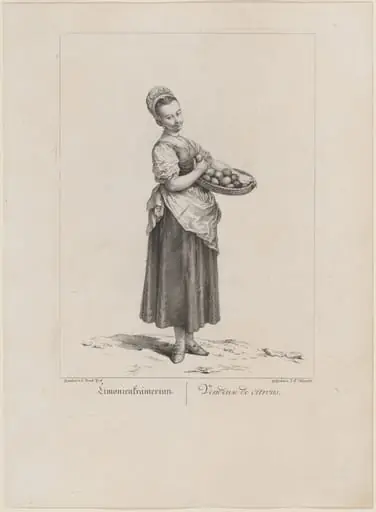
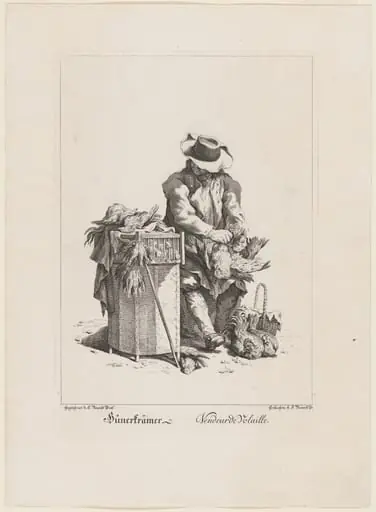
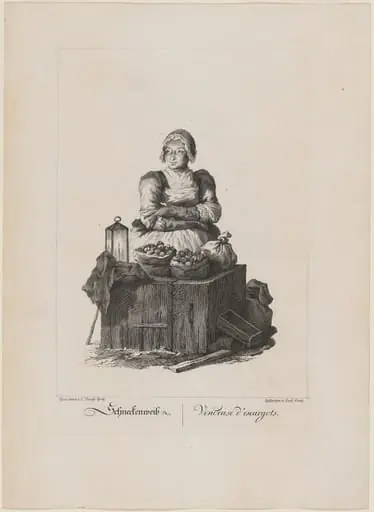
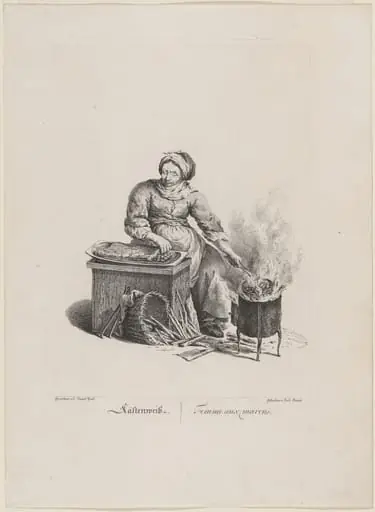
Eyerweib belongs to a broader genre of 18th‑century prints that documented domestic and commercial activities, aligning with the Romantic movement’s focus on the dignity of common people. Such images offered viewers a glimpse into the daily routines of market vendors, reinforcing contemporary ideas about labor and modest virtue.
Artist & collection