Artwork
Holy Family with Saints John the Baptist and Catherine of Alexandria
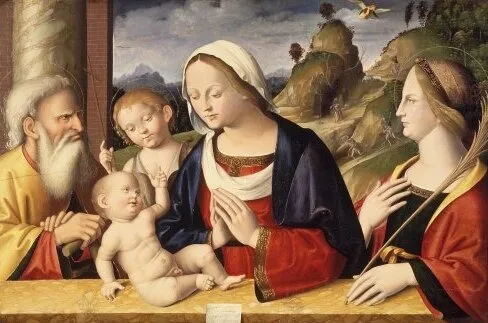
Holy Family with Saints John the Baptist and Catherine of Alexandria is an unspecified painting by the Mannerist artist Marco Palmezzano. It dates from 1521 and is held in the collection of the Brooklyn Museum.
About this work
Overview
Painted in 1521 by Marco Palmezzano, this work belongs to the Forlì school of painting and reflects early Mannerist tendencies.
Painted in 1521 by Marco Palmezzano, this work belongs to the Forlì school of painting and reflects early Mannerist tendencies. It presents a domesticated sacred scene, blending religious figures with a quiet, intimate atmosphere. Palmezzano, active as both artist and architect, infused his compositions with Northern European influences, evident in the detailed rendering and spatial organization. The painting remains part of the Brooklyn Museum’s permanent collection.
Subject & Meaning
The composition centers on the Virgin Mary holding the Christ Child, flanked by Saint John the Baptist as a youth and Saint Catherine of Alexandria. John, often associated with Christ’s future ministry, leans toward the infant, while Catherine, identified by her attribute of the broken wheel, observes with quiet reverence. Their grouping suggests a moment of spiritual contemplation rather than grand narrative, emphasizing familial tenderness within a sacred context.
Technique & Style
Palmezzano employs chiaroscuro to model the figures with subtle gradations of light and shadow, lending volume and presence to the forms. The figures are arranged in a compact interior space, with soft modeling of faces and fabrics that recall Northern Renaissance precision. The background landscape, visible through a window, is rendered with delicate atmospheric perspective, enhancing depth without distracting from the central group.
History & Provenance
Created during Palmezzano’s mature period, the painting reflects his long-standing engagement with the artistic traditions of Romagna and the influence of artists like Melozzo da Forlì. It entered the Brooklyn Museum’s collection in the 20th century, though its earlier ownership history remains undocumented. Its survival in good condition offers insight into regional devotional painting practices of the early 16th century.
Context
In early 16th-century Italy, devotional paintings like this one were often commissioned for private chapels or domestic settings. Palmezzano’s synthesis of local Emilian styles with Northern attention to detail catered to patrons seeking both spiritual resonance and refined aesthetics. The inclusion of Saint Catherine, a popular figure among educated women, suggests possible female patronage or a focus on learned piety.
Legacy
Though Palmezzano is less known than his Florentine or Venetian contemporaries, this work exemplifies the quiet innovation of provincial Italian painting during the transition from High Renaissance to Mannerism. Its restrained emotion and careful lighting anticipate later developments in devotional art, preserving a regional voice within a broader artistic evolution.
Artist & collection
Artist
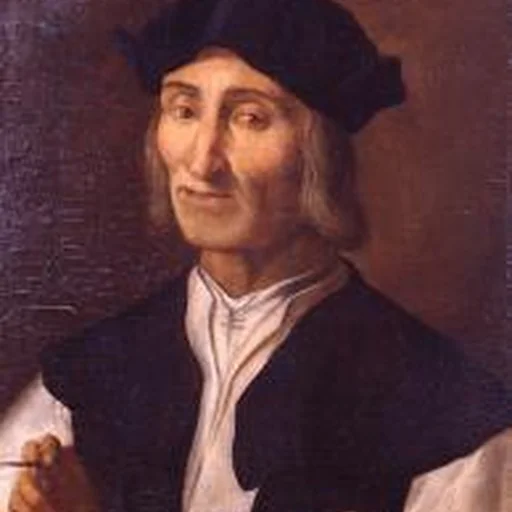
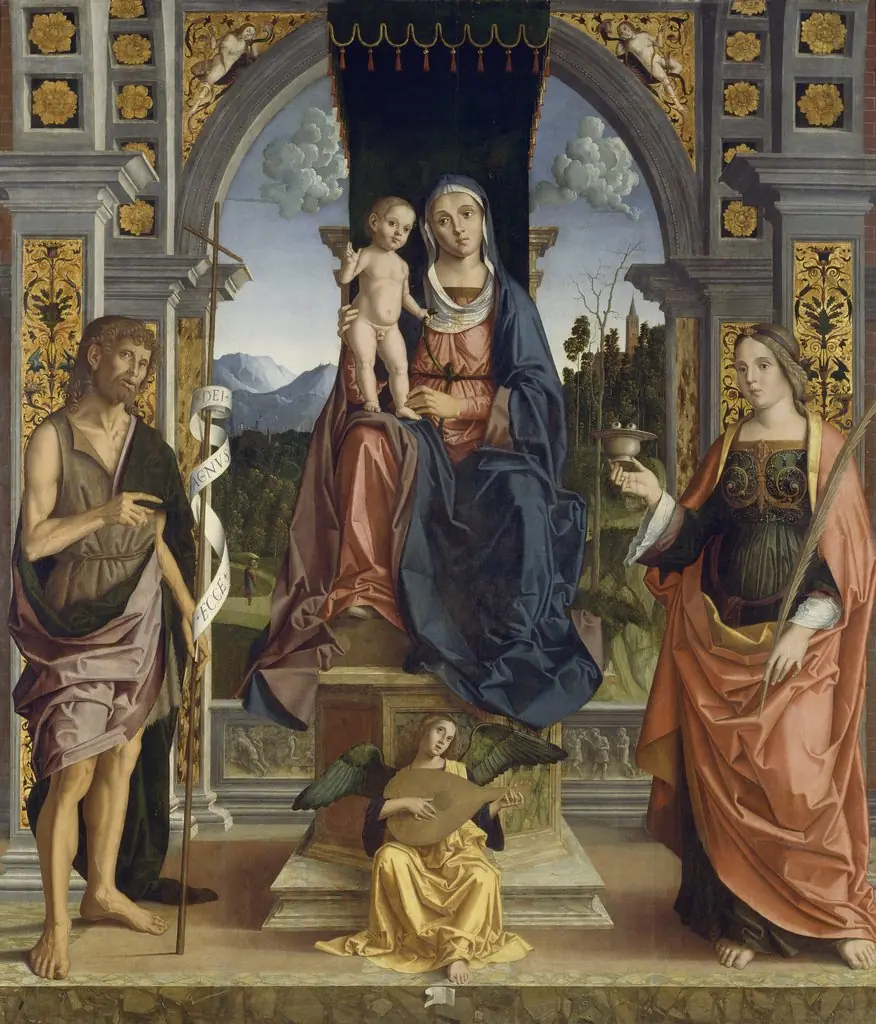
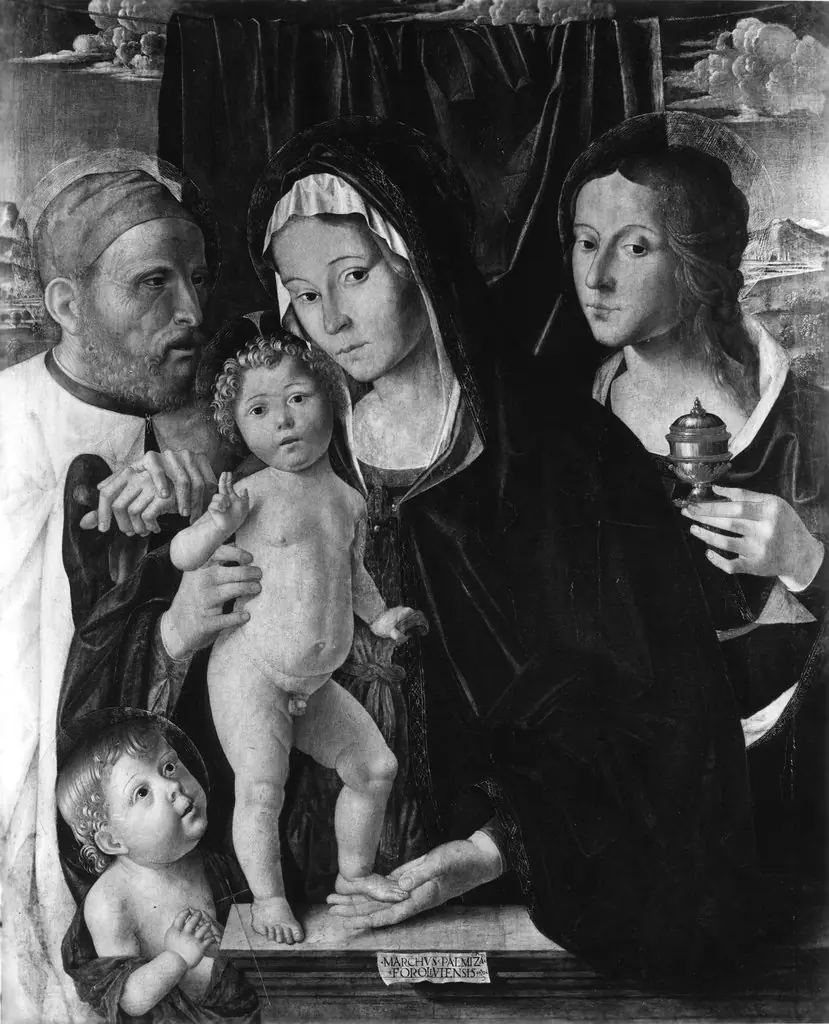
Marco Palmezzano (1460–1539) was an Italian painter and architect, belonging to the Forlì painting school, who painted in a style recalling earlier Northern Renaissance models. He was mostly active near Forlì.

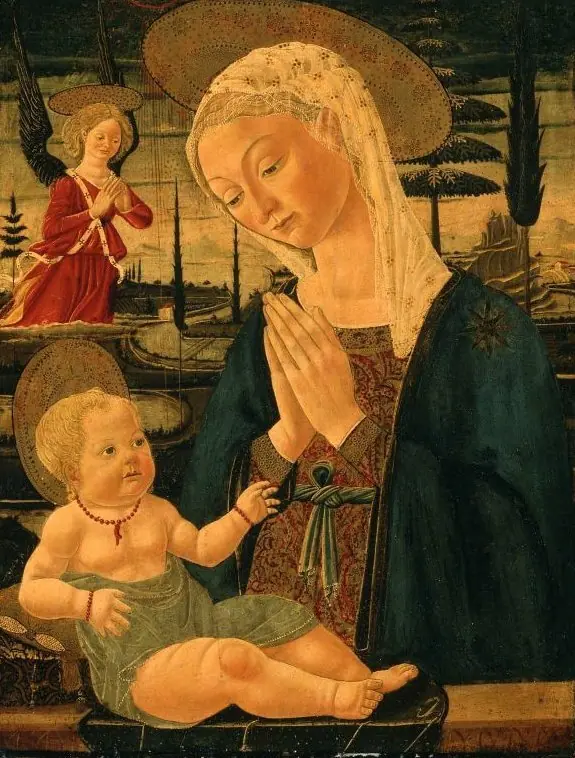 Virgin and Child with an Angel
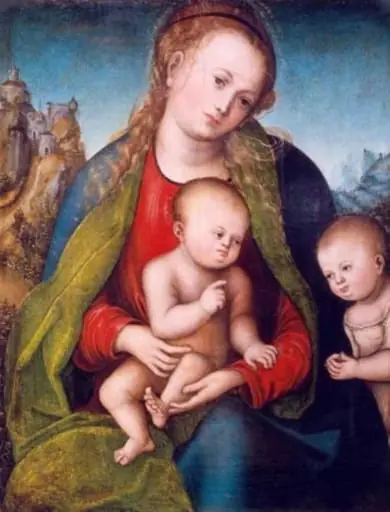 Maria cu Iisus si Sfântul Ioan
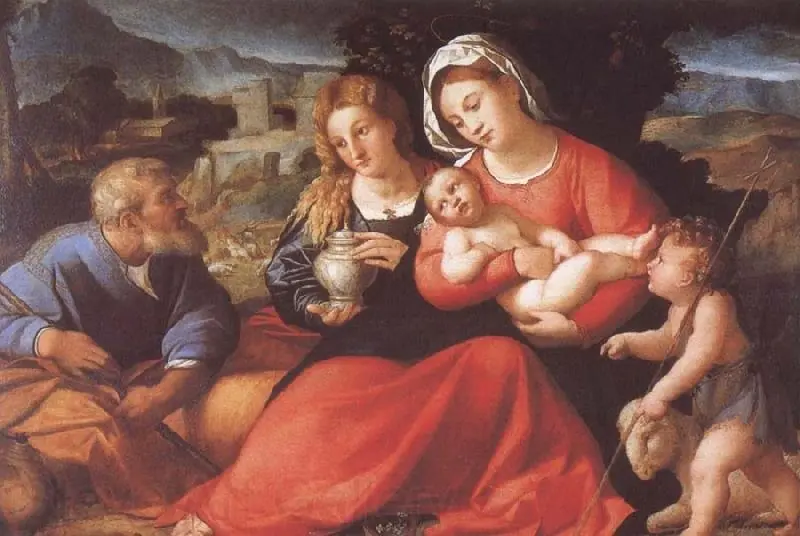 Holy Family with St. John and Mary Magdalene
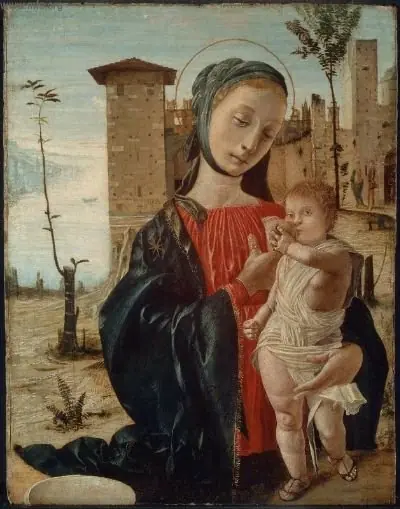 Madonna lactans
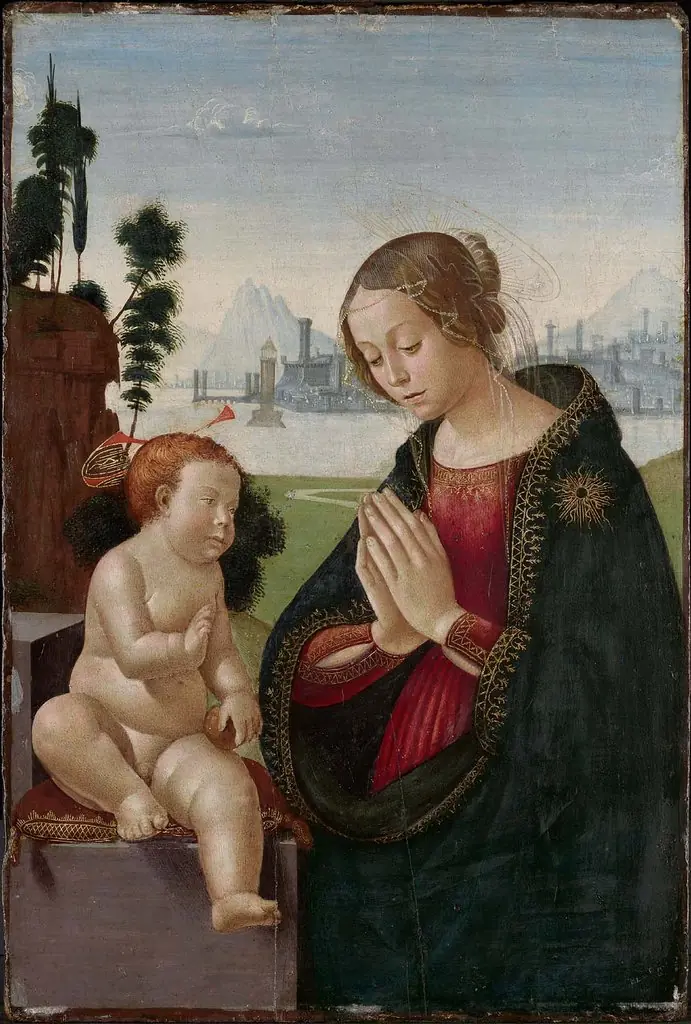 Virgin and Child
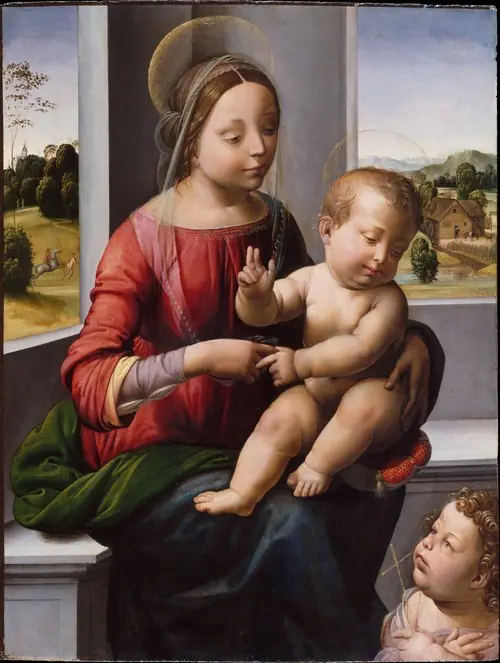 Madonna and Child with the Young Saint John the Baptist
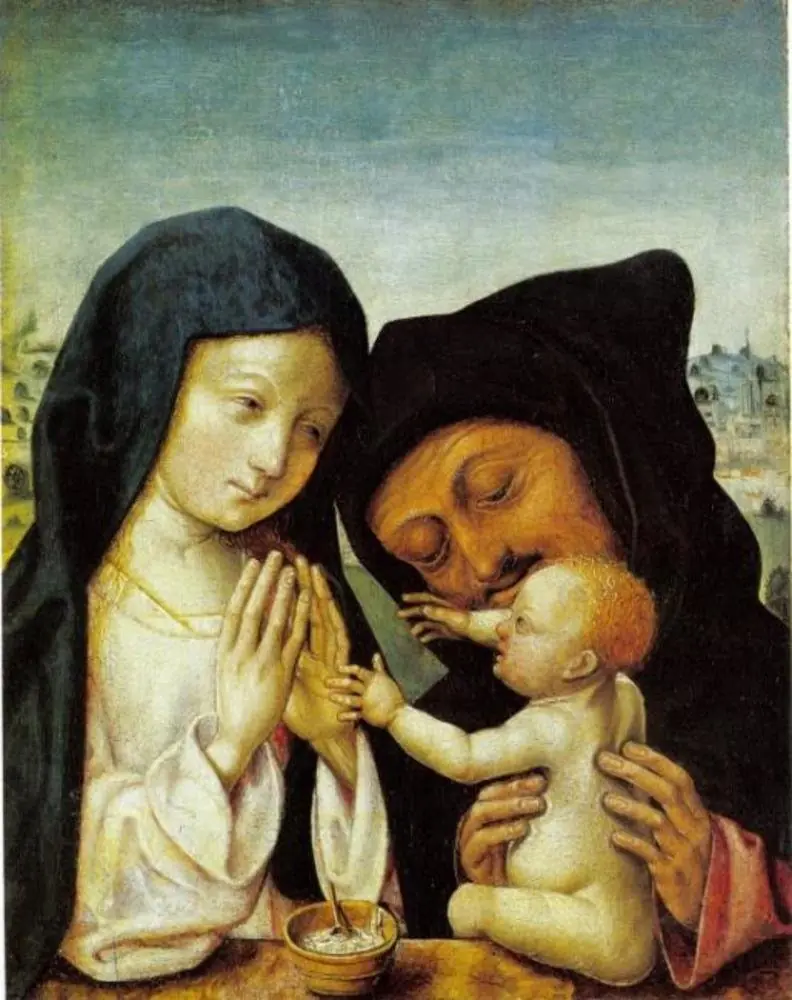 The Holy Family
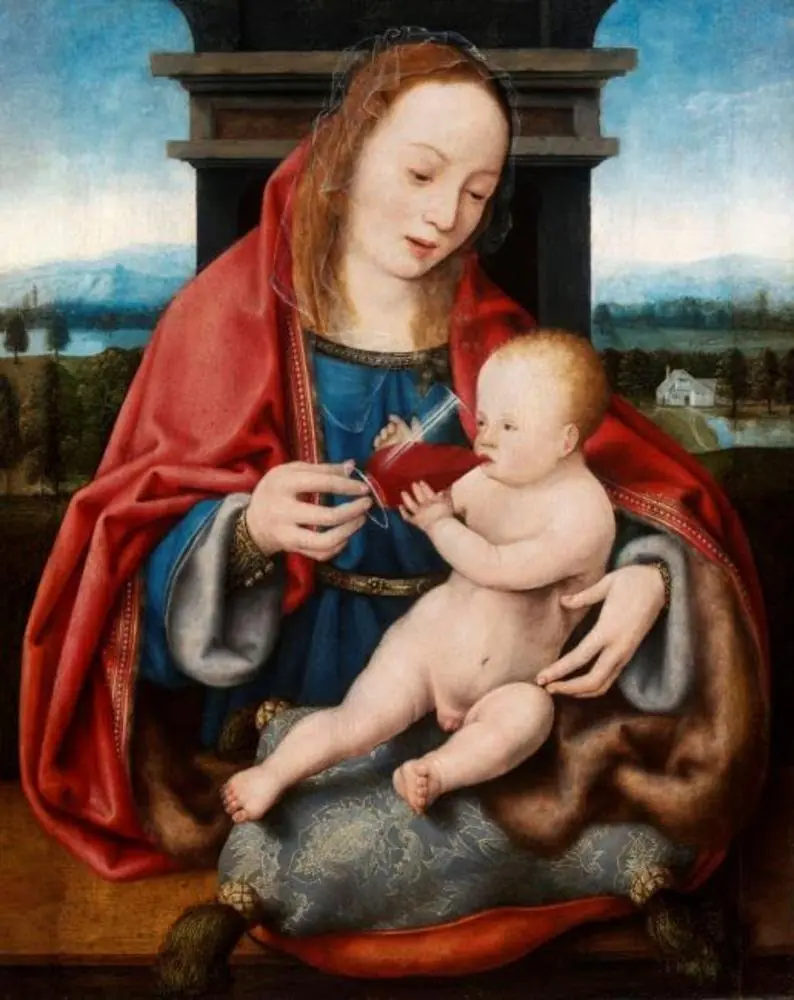 The Virgin with the Infant Christ Drinking Wine
 The Rest on the Flight into Egypt
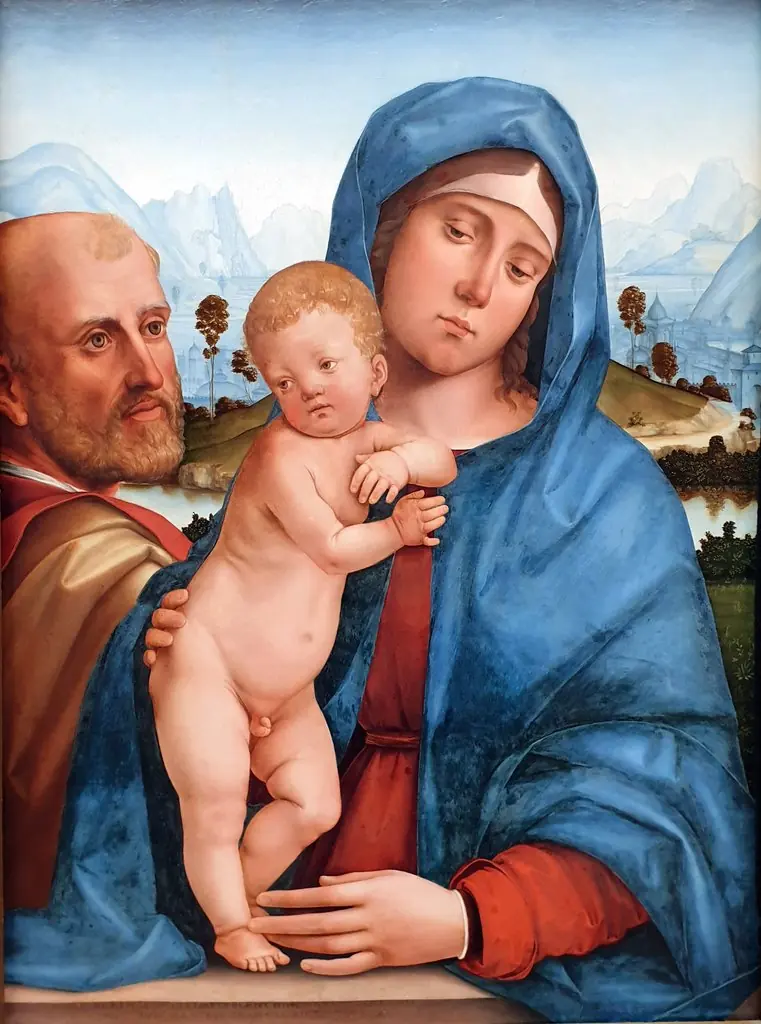 Holy Family
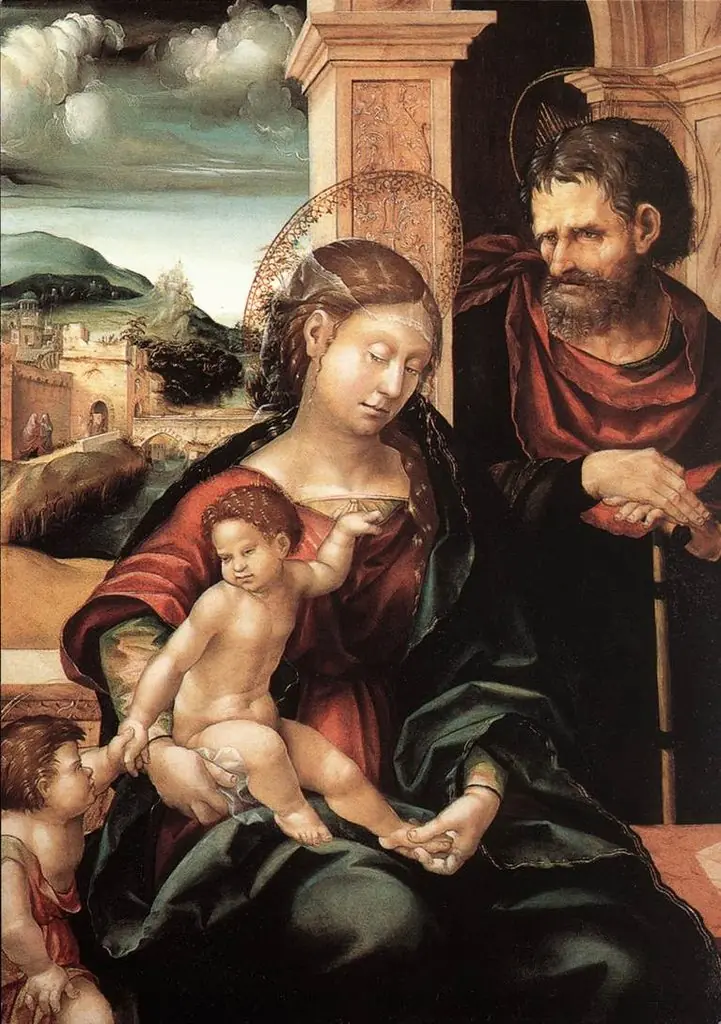 Holy Family with Child St. John
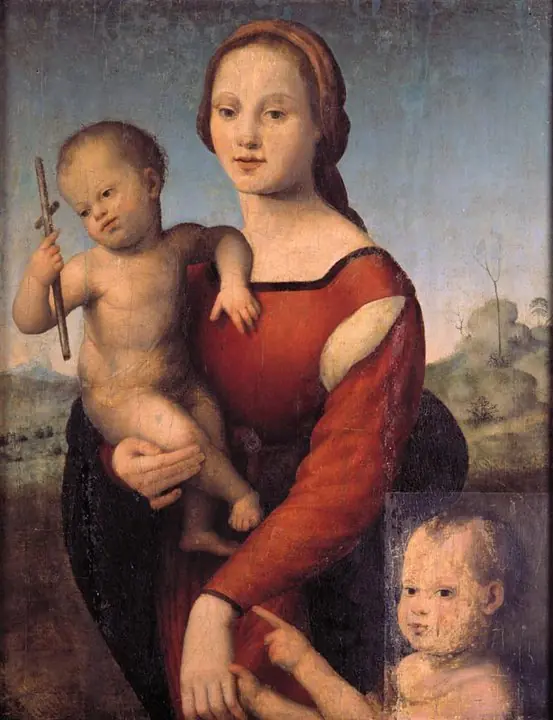 Virgin and Child with St. John