Artwork
Bed of a Stream
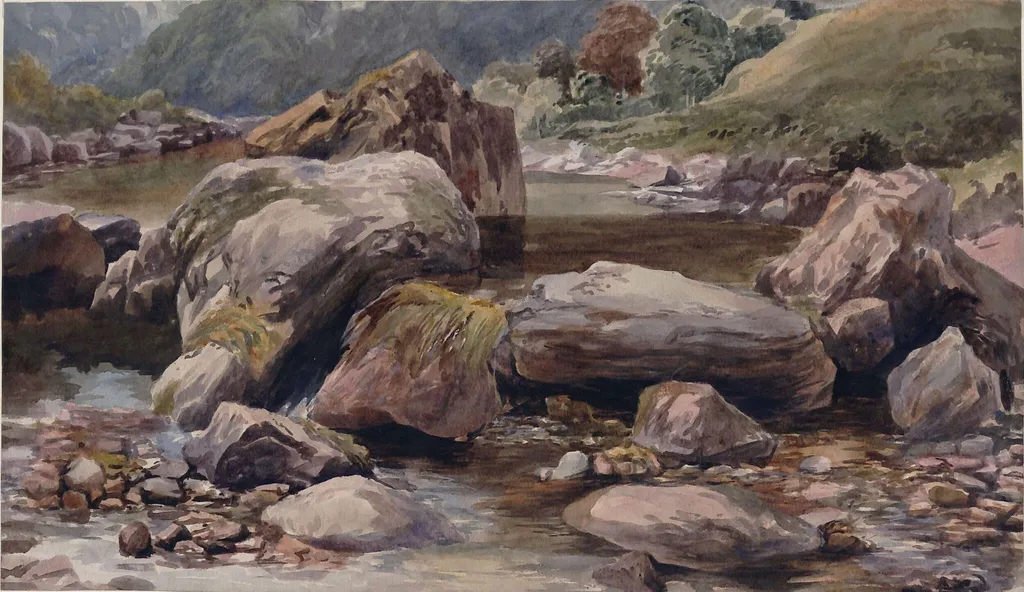
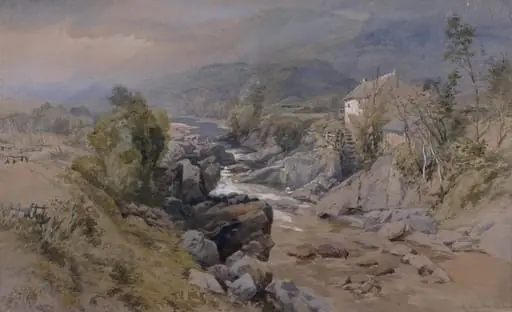
Bed of a Stream is a watercolor work on paper by the Barbizon school artist Maria Martineau. It dates from 1858 and is held in the collection of the Victoria and Albert Museum. Created in 1858, this watercolour on white wove paper captures the quiet geometry of a streambed.
About this work
Overview
Created in 1858, this watercolour on white wove paper captures the quiet geometry of a streambed. The work is signed by Maria Martineau and includes the name of her instructor, William Leighton Leitch, indicating a formal artistic lineage. Its modest scale and intimate subject reflect a tradition of detailed natural observation common among amateur and professional watercolourists of the period.
Subject & Meaning
The scene portrays a shallow, rocky watercourse, its stones partially submerged and textured with patches of moss. The stillness of the water reveals pebbles beneath its surface, while the surrounding slope suggests a quiet, undisturbed landscape. There is no human presence, emphasizing the natural rhythm of the environment rather than its utility or grandeur.
Technique & Style
The water’s clarity is rendered through subtle gradations, while the rocks’ roughness is implied through irregular edges and muted tones.
Martineau employed soft washes and loose brushwork to suggest light and texture without rigid definition. The water’s clarity is rendered through subtle gradations, while the rocks’ roughness is implied through irregular edges and muted tones. The absence of sharp outlines and the blending of hues create a sense of atmospheric cohesion, aligning with contemporary watercolour practices that valued spontaneity over precision.
History & Provenance
The work carries Martineau’s inscription, confirming authorship and date, as well as the name of her instructor, William Leighton Leitch, a noted watercolourist and teacher. This annotation suggests the piece was likely made during her training, possibly as a study or exercise. Its survival offers insight into the educational practices of 19th-century British watercolourists, particularly women working within domestic or semi-professional contexts.
Context
In mid-19th-century Britain, watercolour was widely practiced by amateurs and professionals alike, often as a means of recording landscapes during travel or study. Martineau’s focus on a modest, unremarkable streambed reflects a broader trend toward intimate, everyday natural scenes, distinct from the dramatic vistas favored by landscape painters of the time. Her work aligns with a growing interest in direct observation over idealized composition.
Legacy
Though not widely exhibited or collected in her lifetime, Martineau’s watercolour contributes to a quiet archive of 19th-century female artists who engaged with nature through disciplined, observational practice. Its technique anticipates later developments in plein-air painting, though it remains rooted in the conventions of its era. The piece endures as a record of personal artistic development within a structured educational framework.
Artist & collection
Artist
Maria Martineau painted quiet English landscapes in watercolour during the mid-1800s.

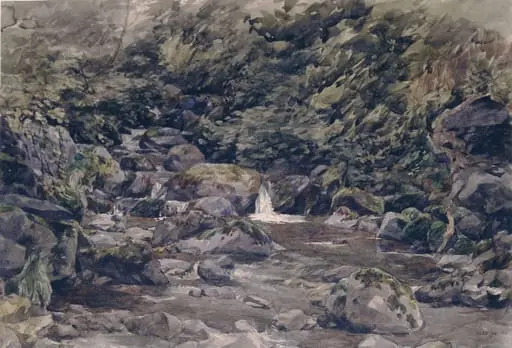 Mountain Stream with Trees
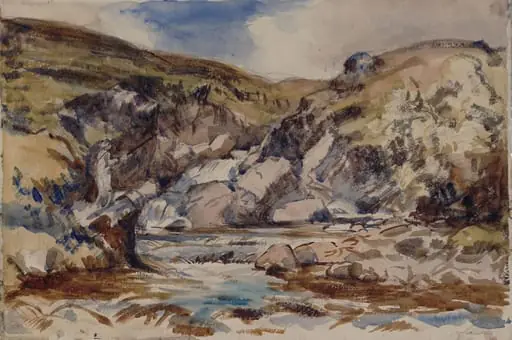 Rocky Landscape with River
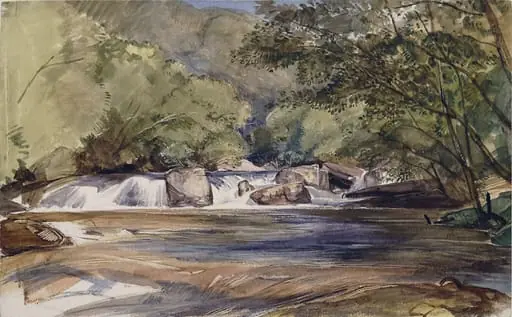 A Pool and Scottish River
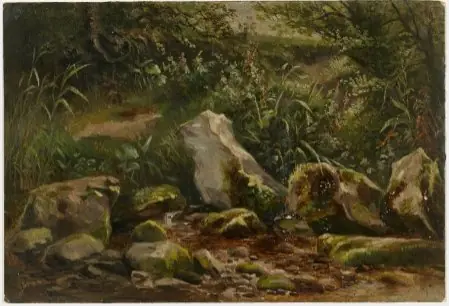 Stepping Stones in a Stream
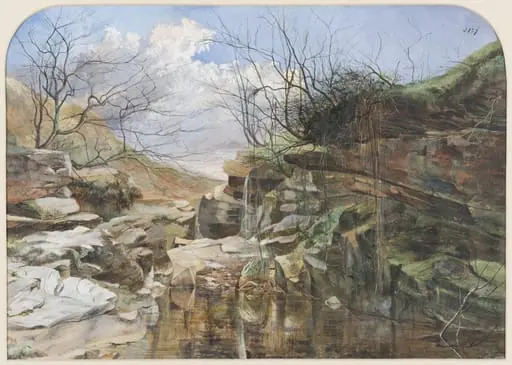 View near Chapeltown, near Bolton
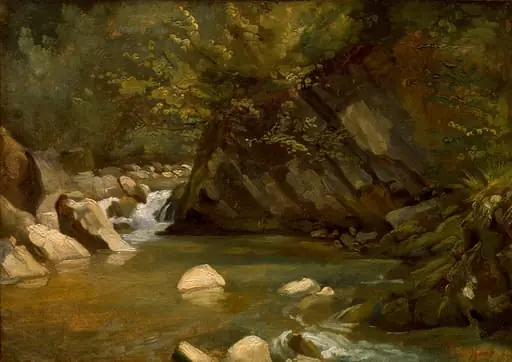 Woodland Stream
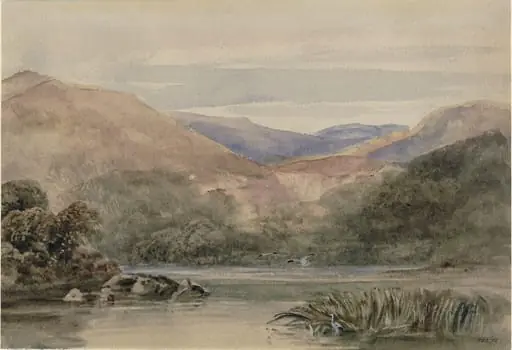 A Mountain Tarn
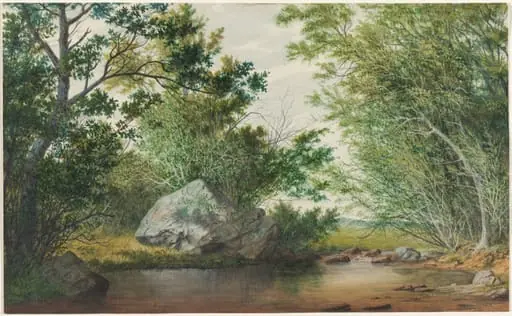 Landscape with Wooded Stream and Boulder
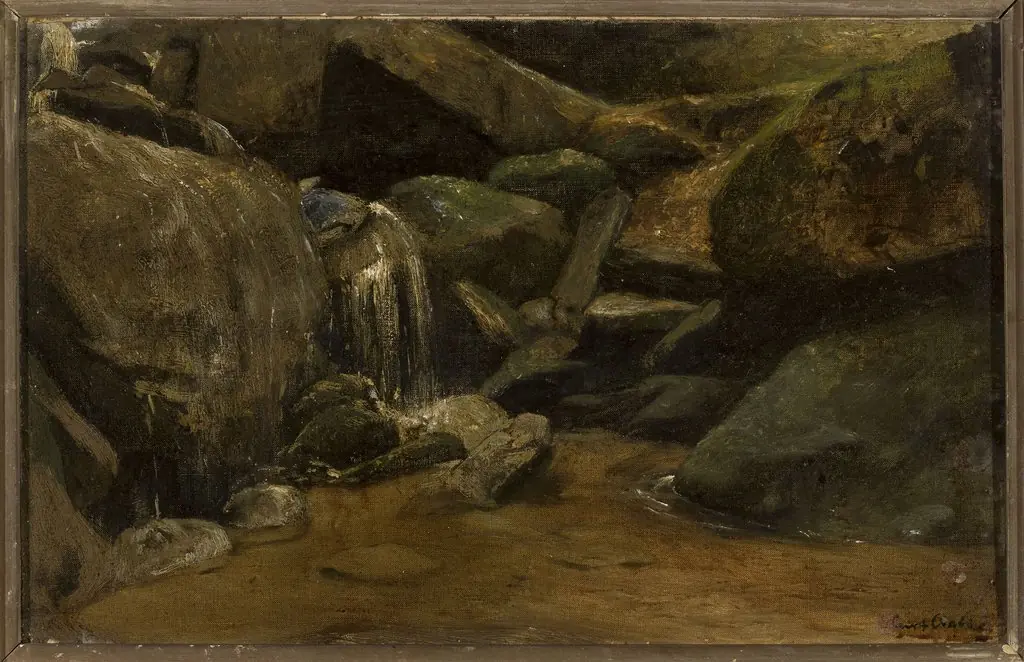 Waterfall
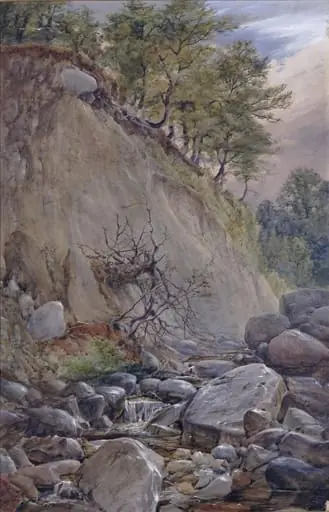 Bed of a mountain torrent, North Wales
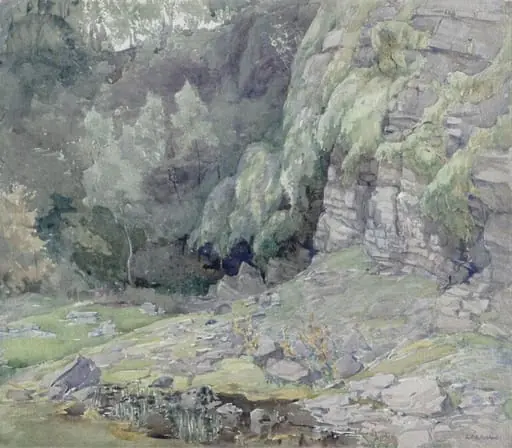 Quarry Long Disused near Llangollen
 On the River Dee, Braemar