Artwork
Waterfall
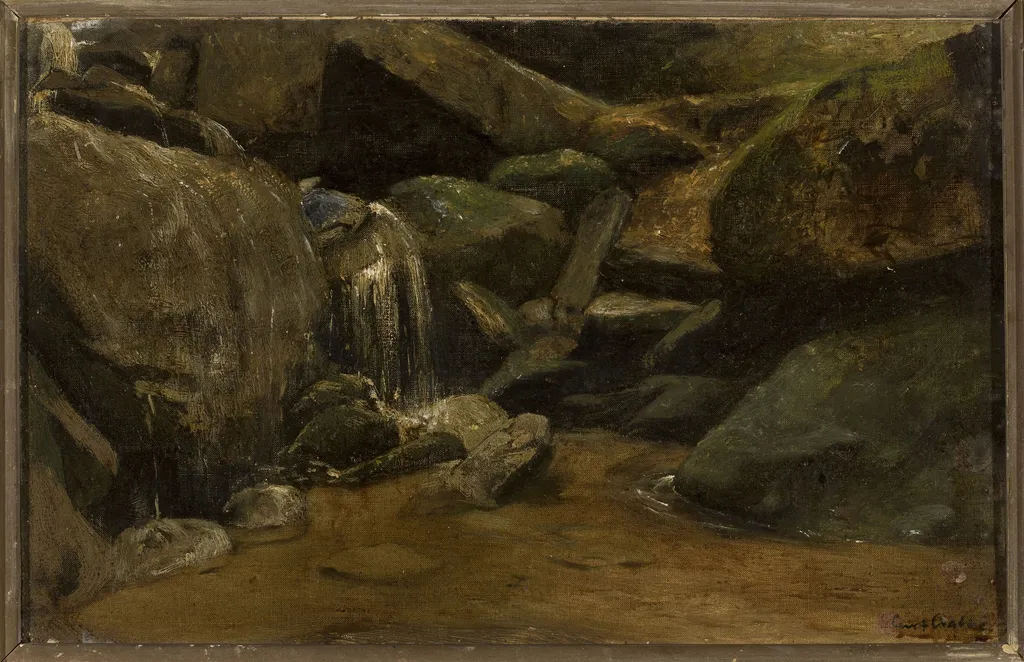
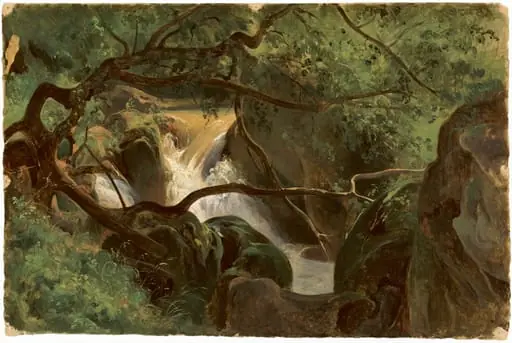
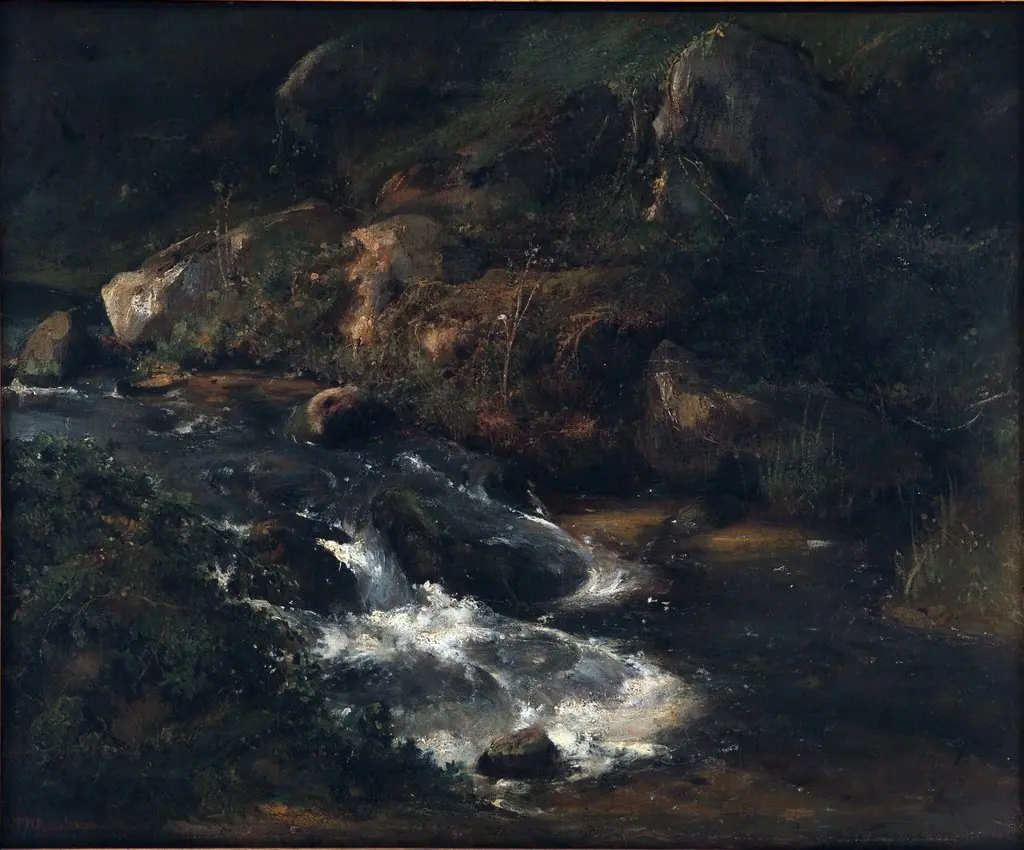
Waterfall is an oil painting by the Impressionist artist Curt Agthe. It dates from 1899 and is held in the collection of the National Museum in Warsaw.
About this work
Overview
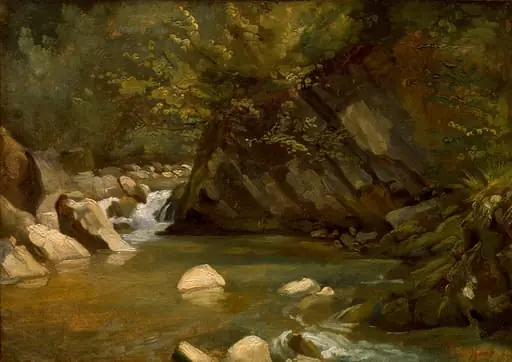
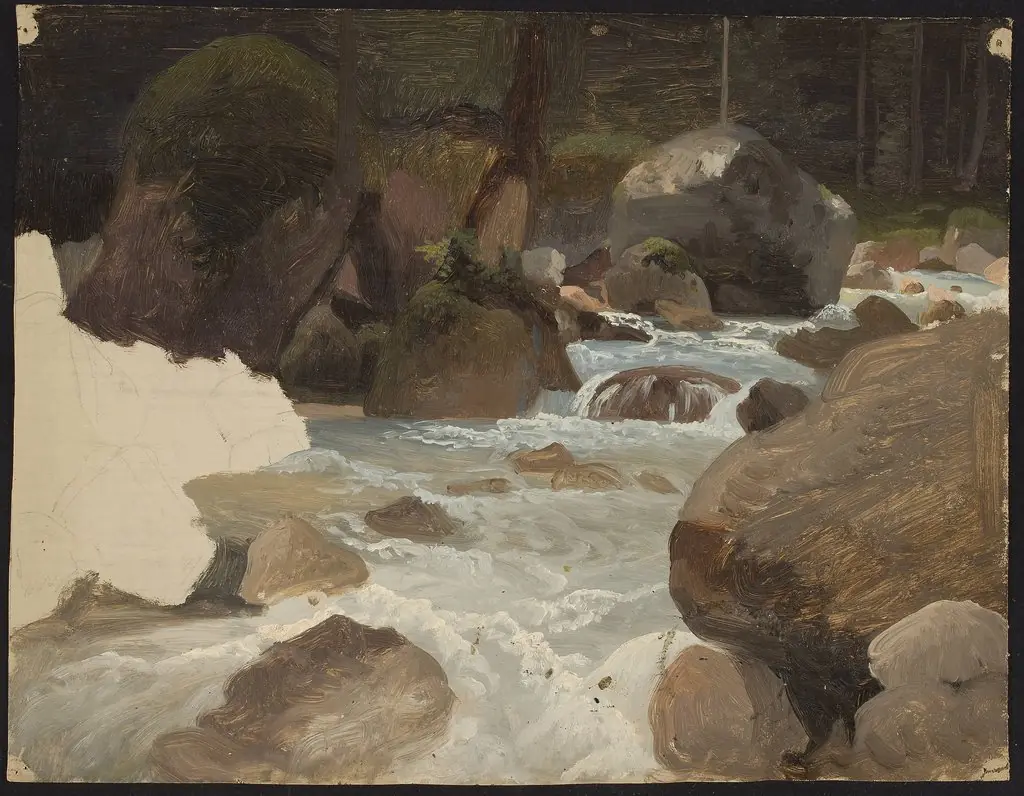
Curt Agthe painted Waterfall in 1899 using oil on canvas. The work is part of the collection at the National Museum in Warsaw. It depicts a natural cascade descending through a rugged, forested terrain, rendered in a subdued palette dominated by earth tones. The composition centers on the motion of water against static rock, emphasizing quiet grandeur over dramatic spectacle.
Subject & Meaning
The painting presents a solitary waterfall as the focal point, framed by dense, weathered rocks and patches of moss. There is no human presence or narrative, suggesting an interest in nature’s quiet persistence. The scene evokes stillness and timelessness, reflecting a 19th-century European tendency to view wilderness as a space of contemplation rather than conquest.
Technique & Style
Agthe employed layered oil glazes to achieve depth in the rocky surfaces, using muted browns and grays to suggest texture and shadow. The water is rendered with smooth, fluid brushwork, contrasting with the rough, broken strokes of the stone. Moss is suggested with delicate dabs of green, adding subtle life to the otherwise somber tones.
History & Provenance
Completed in 1899, the painting entered the National Museum in Warsaw’s collection shortly after its creation. Its provenance remains largely undocumented beyond its acquisition by the museum, with no record of prior ownership or exhibition history prior to its inclusion in the national holdings.
Context
Created during a period when European artists increasingly turned to natural landscapes as subjects of quiet reverence, Waterfall aligns with regional traditions of Romantic-influenced realism. While not part of a major movement, it reflects broader interests in depicting untouched nature with technical precision and emotional restraint.
Legacy
The painting remains a modest but representative example of late 19th-century Polish landscape art. It is not widely reproduced or studied outside institutional contexts, yet it contributes to the understanding of regional artistic responses to natural scenery during a time of growing national cultural identity.
Artist & collection