Artwork
Untitled
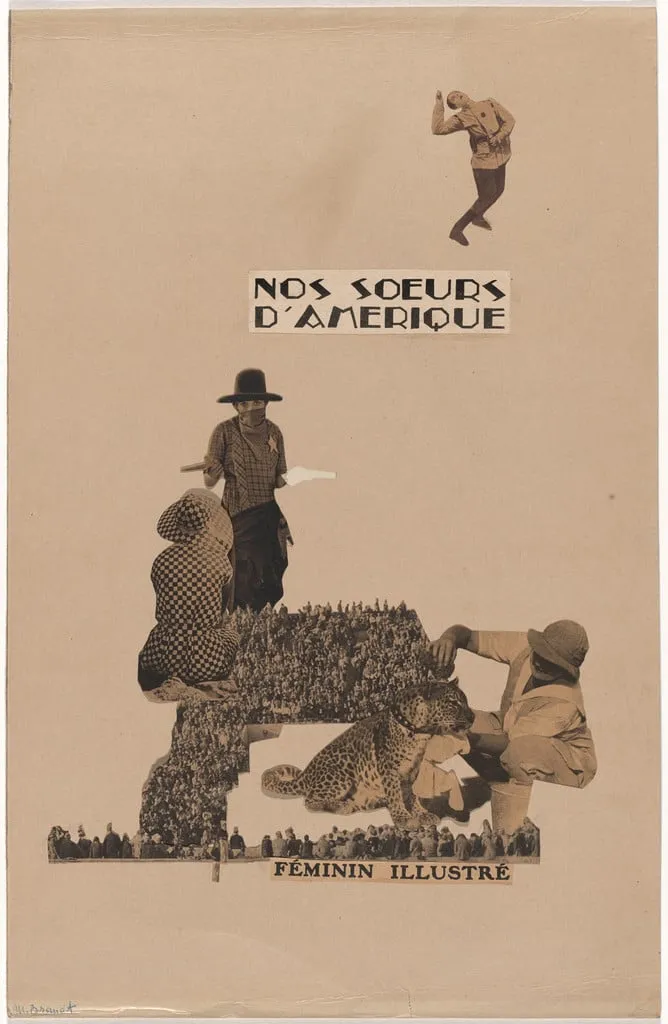
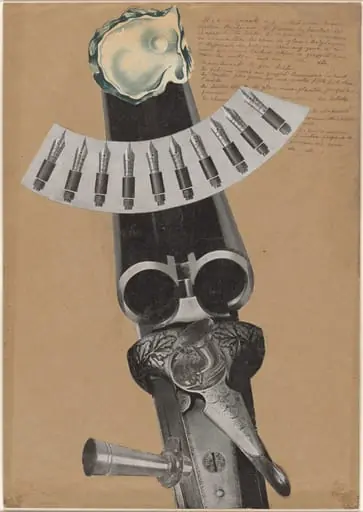
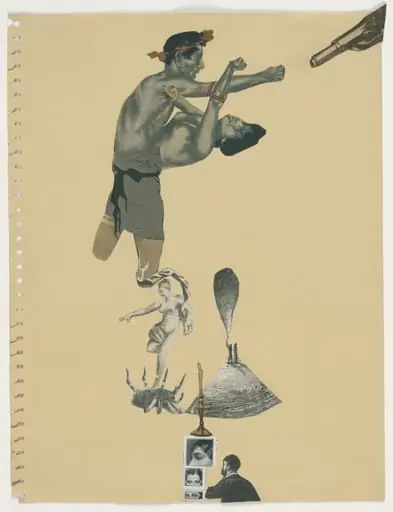
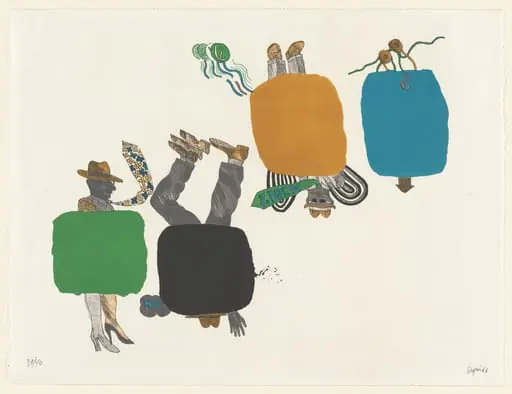
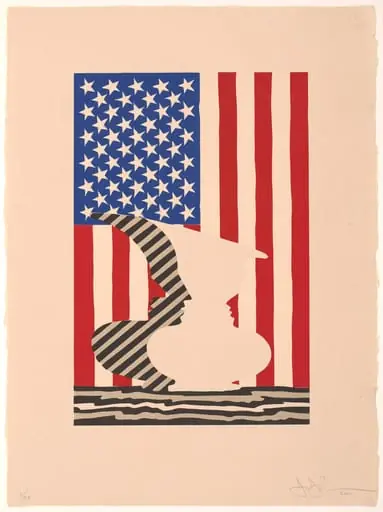
Untitled is a drawing by Marianne Brandt. It dates from 1926 and is held in the collection of the Museum of Modern Art.
About this work
Overview
Classified as a drawing, it combines commercial imagery with deliberate fragmentation to construct a surreal, theatrical scene.
Created around 1926, this work by Marianne Brandt is a collage composed of cut-and-pasted printed paper mounted on board. Classified as a drawing, it combines commercial imagery with deliberate fragmentation to construct a surreal, theatrical scene. The piece resides in the collection of The Museum of Modern Art, reflecting Brandt’s engagement with photomontage as a medium for visual experimentation during the Weimar era.
Subject & Meaning
The composition depicts a circus-like tableau: a woman in a checkered dress stands atop a precarious pile of animals, wielding a whip; two men, both wearing hats, perform acrobatic feats—one kneeling beside a leopard, the other inverted on a pole. Surrounding them, miniature spectators fill the bleachers, while fragments of text—'NOS SOEURS D'AMÉRIQUE' and 'FÉMININ ILLUSTRÉ'—anchor the scene in contemporary media culture, suggesting commentary on gender, spectacle, and mass reproduction.
Technique & Style
Brandt assembled the image using printed materials sourced from periodicals, cutting and repositioning figures and animals to create a flattened, graphic aesthetic. The animals appear stylized and two-dimensional, their surfaces defined by printed patterns rather than modeled form. The arrangement of figures defies gravity and logic, producing a rhythmic, disorienting composition that prioritizes visual tension over narrative coherence.
History & Provenance
The work dates from Brandt’s time at the Bauhaus, where she explored collage as part of her broader investigation into industrial design and visual communication. It entered The Museum of Modern Art’s collection as part of its early commitment to avant-garde European art, aligning with the institution’s interest in modernist experimentation during the 1930s and 1940s.
Context
Emerging in the mid-1920s, Brandt’s collage reflects the influence of Dada and Constructivism, movements that repurposed mass media imagery to critique social norms. The inclusion of French-language magazine titles hints at transnational cultural exchange, while the circus motif may allude to the performative nature of identity in urban modernity. Her work stands apart from purely functional design, revealing a critical, poetic dimension to Bauhaus practice.
Legacy
This piece exemplifies how female artists at the Bauhaus used collage to navigate a male-dominated field, asserting agency through visual subversion. Though less known than her metalwork, Brandt’s photomontages contributed to the evolution of modern graphic language. The work remains a quiet but significant reference in discussions of gender, media, and abstraction in interwar European art.
Artist & collection

Artist
Marianne Brandt was a German painter, sculptor, photographer, metalsmith, and designer who studied at the Bauhaus art school in Weimar and later became head of the Bauhaus Metall-Werkstatt in Dessau in 1928.