Artwork
Untitled
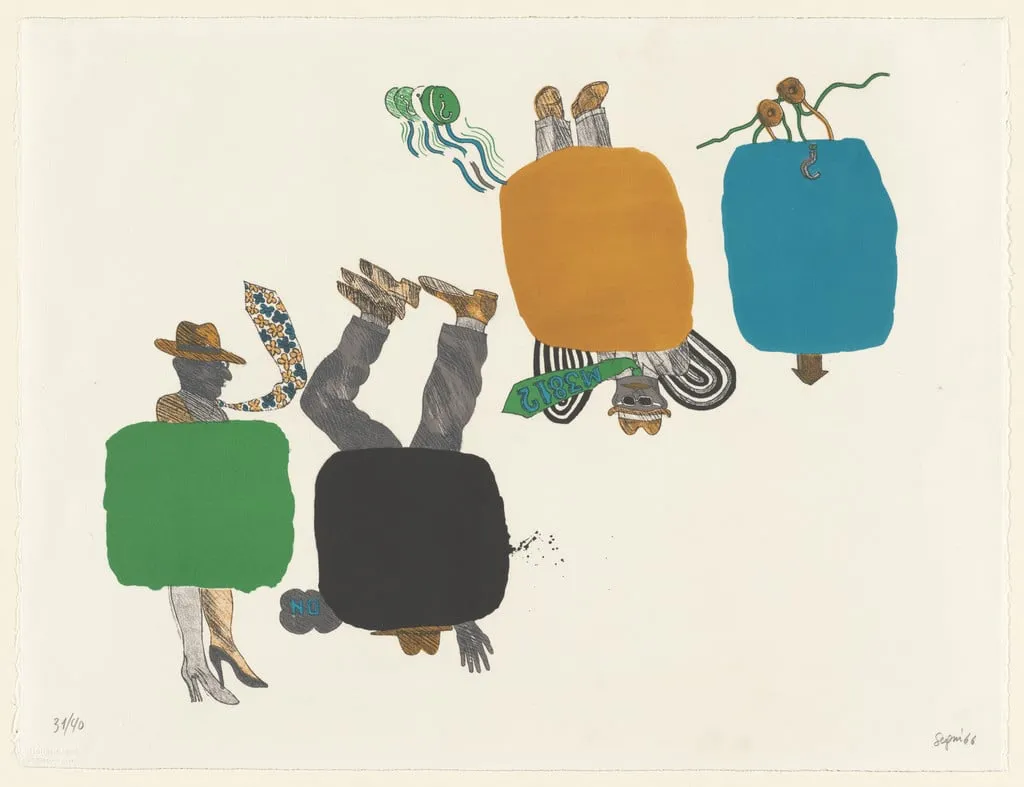
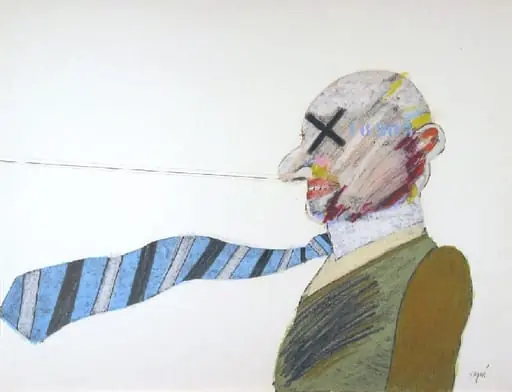
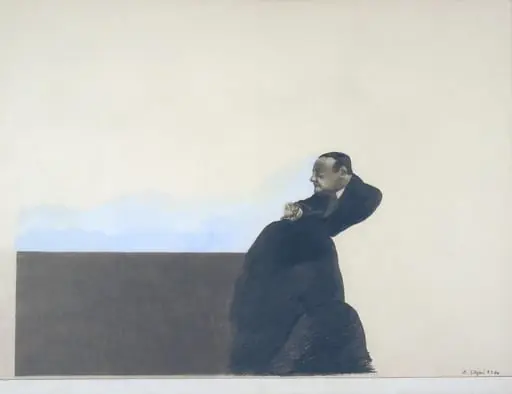
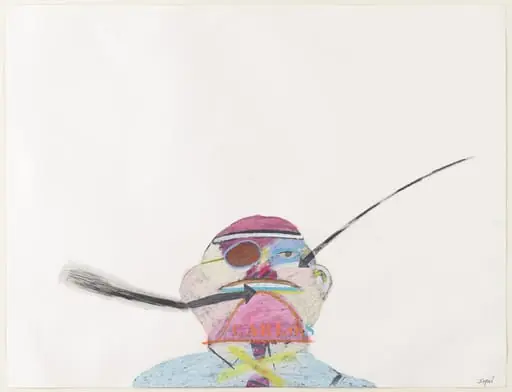
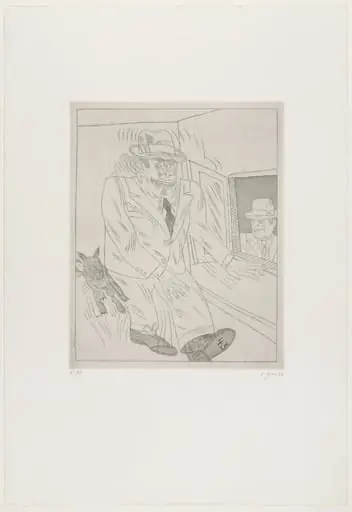
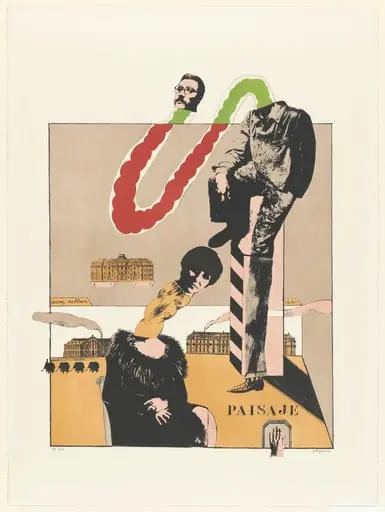
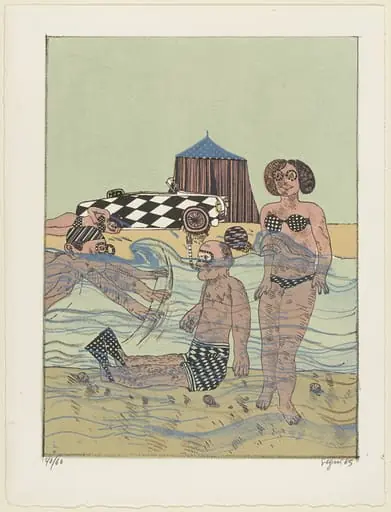
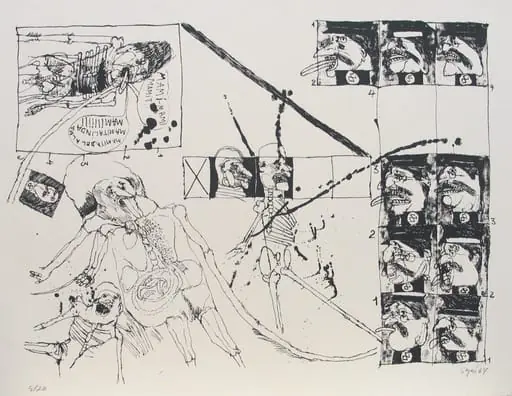
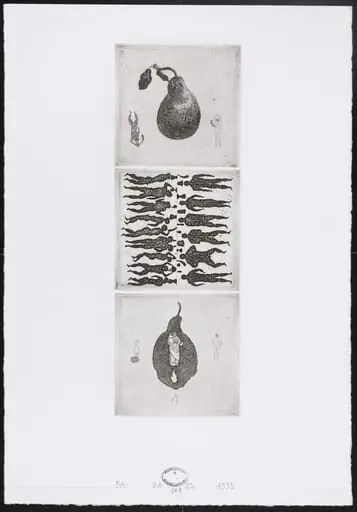
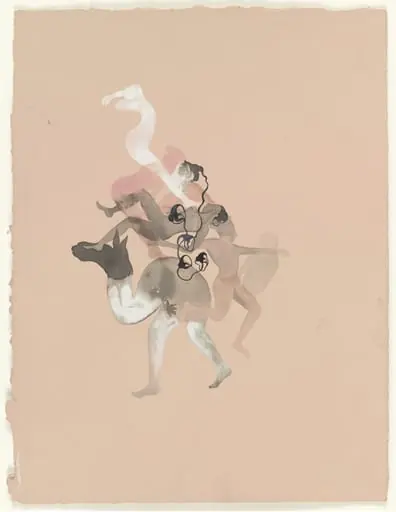
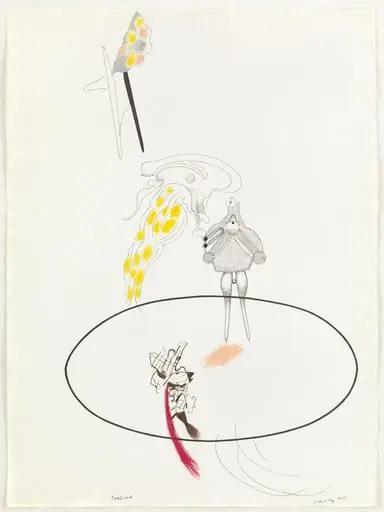
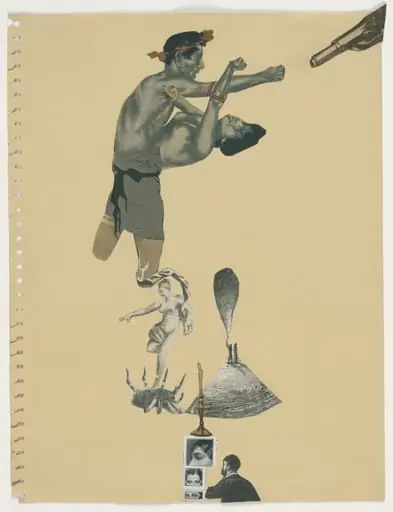
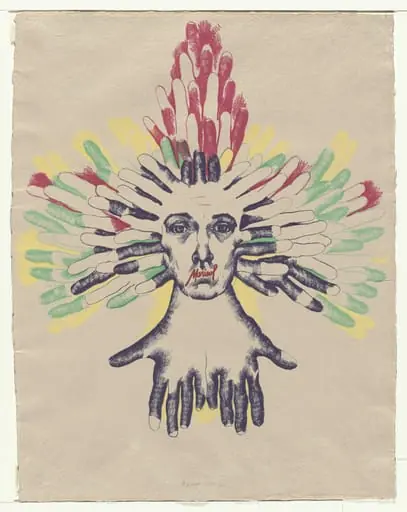
Untitled is an ink print by Antonio Segui. It dates from 1966 and is held in the collection of the Museum of Modern Art. Antonio Seguí created this lithograph in 1966, part of a body of work exploring identity through abstraction.
About this work
Overview
The composition avoids traditional portraiture, focusing instead on simplified forms and symbolic elements that suggest presence without individuality.
Antonio Seguí created this lithograph in 1966, part of a body of work exploring identity through abstraction. The print is held in the collection of The Museum of Modern Art. It features four stylized heads rendered in bold, flat hues—green, black, orange, and blue—against a stark white background. The composition avoids traditional portraiture, focusing instead on simplified forms and symbolic elements that suggest presence without individuality.
Subject & Meaning
The four head-like forms lack facial features, removing personal identity and inviting interpretation as archetypes or social masks. One bears a hat and scarf, hinting at attire or role, while the others extend limbs that float disconnected from their bodies. These disjointed appendages suggest movement or agitation, possibly reflecting urban alienation or the fragmentation of self in modern life.
Technique & Style
Executed in lithography, the print employs clean lines and unmodulated color fields, emphasizing graphic simplicity. Forms are reduced to blocky volumes with minimal detail—eyes, mouths, or contours are absent. The artist’s hand is evident in the precise, almost geometric rendering, yet the overall effect remains playful and surreal. The signature in the corner confirms authorship without disrupting the composition’s visual economy.
History & Provenance
Created in 1966, the work entered The Museum of Modern Art’s collection shortly after its production. It belongs to a series of prints from Seguí’s mid-1960s period, when he increasingly turned to printmaking to explore figuration beyond traditional representation. Its acquisition by MoMA reflects the institution’s interest in postwar Latin American artists engaging with European modernist techniques.
Context
In the mid-1960s, Seguí was part of a generation of Latin American artists responding to global modernism while addressing local social realities. His use of abstraction and symbolic forms aligned with broader trends in postwar art that questioned narrative and identity. The work’s lack of detail and emphasis on color and shape echo contemporaneous movements like Pop Art and Nouveau Réalisme, though rooted in a distinctly personal visual language.
Legacy
This lithograph exemplifies Seguí’s enduring interest in the human figure as a vessel for social commentary rather than psychological depth. Its inclusion in major collections has helped cement his reputation as a key figure in 20th-century Latin American printmaking. The work continues to be referenced in discussions about abstraction, anonymity, and the representation of the individual in contemporary art.
Artist & collection

Artist
Antonio Hugo Seguí was an Argentine cartoonist, painter, engraver, book illustrator, and sculptor, who lived and worked in Paris.