Artwork
Portrait of the Sculptor Jeroni Suñol
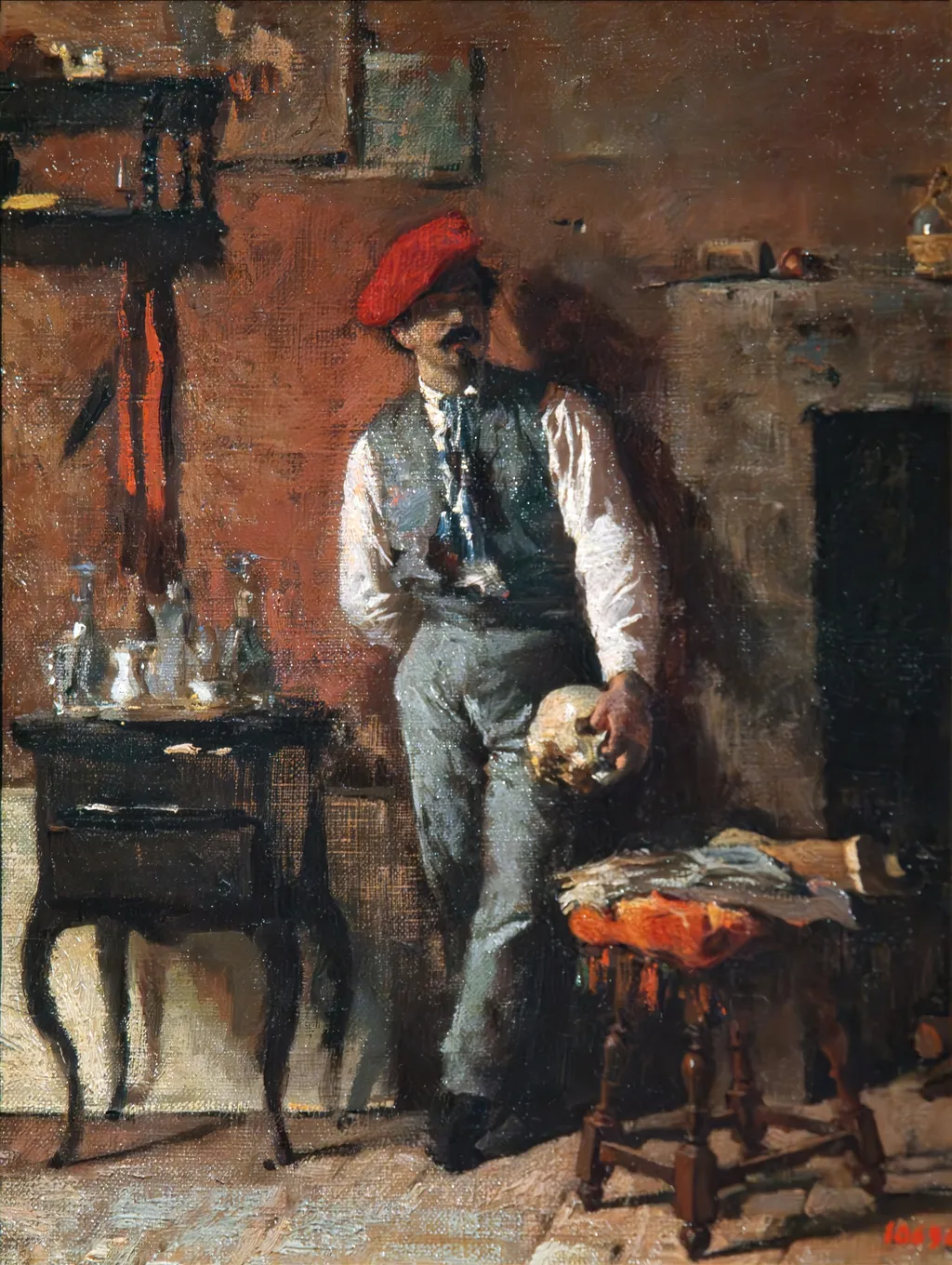
Portrait of the Sculptor Jeroni Suñol is an oil painting by Mariano Fortuny Marsal. It dates from 1864 and is held in the collection of the Museu Nacional d'Art de Catalunya. Painted in 1864 by Mariano Fortuny y Marsal, this oil portrait captures Jeroni Suñol, a Catalan sculptor, in his private workspace.
About this work
Overview
Painted in 1864 by Mariano Fortuny y Marsal, this oil portrait captures Jeroni Suñol, a Catalan sculptor, in his private workspace.
Painted in 1864 by Mariano Fortuny y Marsal, this oil portrait captures Jeroni Suñol, a Catalan sculptor, in his private workspace. The work is part of the Museu Nacional d'Art de Catalunya’s collection and exemplifies Fortuny’s interest in intimate, realistically rendered scenes of artists at work. Unlike grand historical compositions, this piece focuses on quiet concentration and personal identity within a domestic setting.
Subject & Meaning
Jeroni Suñol is depicted mid-pause, holding a small sculpted form in his right hand, his left elbow resting on his thigh. His attire—a red beret, white shirt, and dark vest—suggests an artisan’s practicality rather than formal elegance. The presence of tools and objects on the table reinforces his identity as a maker. The portrait conveys not just likeness, but the dignity of creative labor, framing the sculptor as a thoughtful, grounded figure.
Technique & Style
Fortuny employs precise brushwork to render textures: the wool of the beret, the sheen of the shirt, the roughness of the sculpture’s surface. Light falls naturally from a window, casting soft shadows that define the room’s depth and the figure’s form. The palette is restrained, dominated by earth tones and muted reds, enhancing the sense of intimacy. Details like the fireplace and scattered objects are rendered with observational clarity, typical of Fortuny’s realist approach.
History & Provenance
Commissioned during Fortuny’s early career, the portrait reflects his close ties to Barcelona’s artistic community. Suñol, a respected sculptor and educator, was part of the same cultural circle as Fortuny. The painting remained in Catalan collections after its creation and was later acquired by the Museu Nacional d'Art de Catalunya, where it has been preserved as a document of 19th-century Catalan artistic life.
Context
In mid-19th-century Catalonia, artists increasingly turned to depictions of their peers and studios, moving away from idealized historical subjects. Fortuny’s portrait aligns with this shift, reflecting a broader European trend toward documenting the lives of creatives. The emphasis on the sculptor’s environment and tools mirrors similar works by contemporaries who valued authenticity over theatricality.
Legacy
The portrait endures as a quiet testament to the dignity of artistic practice in 19th-century Spain. It stands apart from Fortuny’s more dramatic Orientalist or military scenes, revealing his versatility and sensitivity to individual character. Today, it remains a key example of how Catalan artists documented their own world, preserving the material and intellectual culture of their time.
Own this work as a print
Artist & collection
Artist
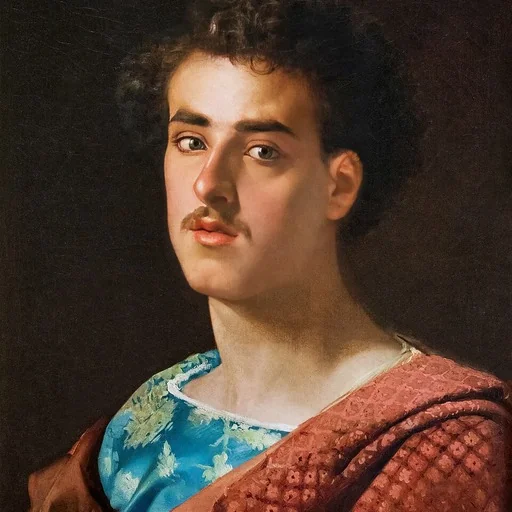
Mariano Fortuny y Marsal (Catalan: Marià Fortuny i Marsal, pronounced ; June 11, 1838 – November 21, 1874) was a Spanish painter known for works focusing on Romantic fascination with Orientalist themes, historicist…

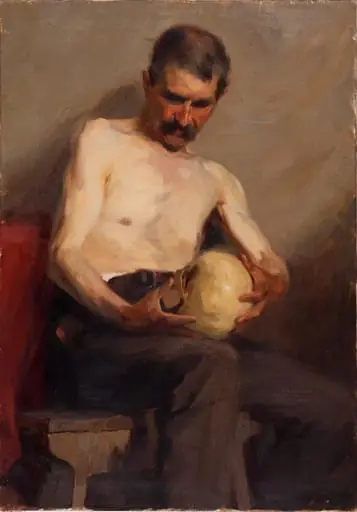 Study of seated man with skull
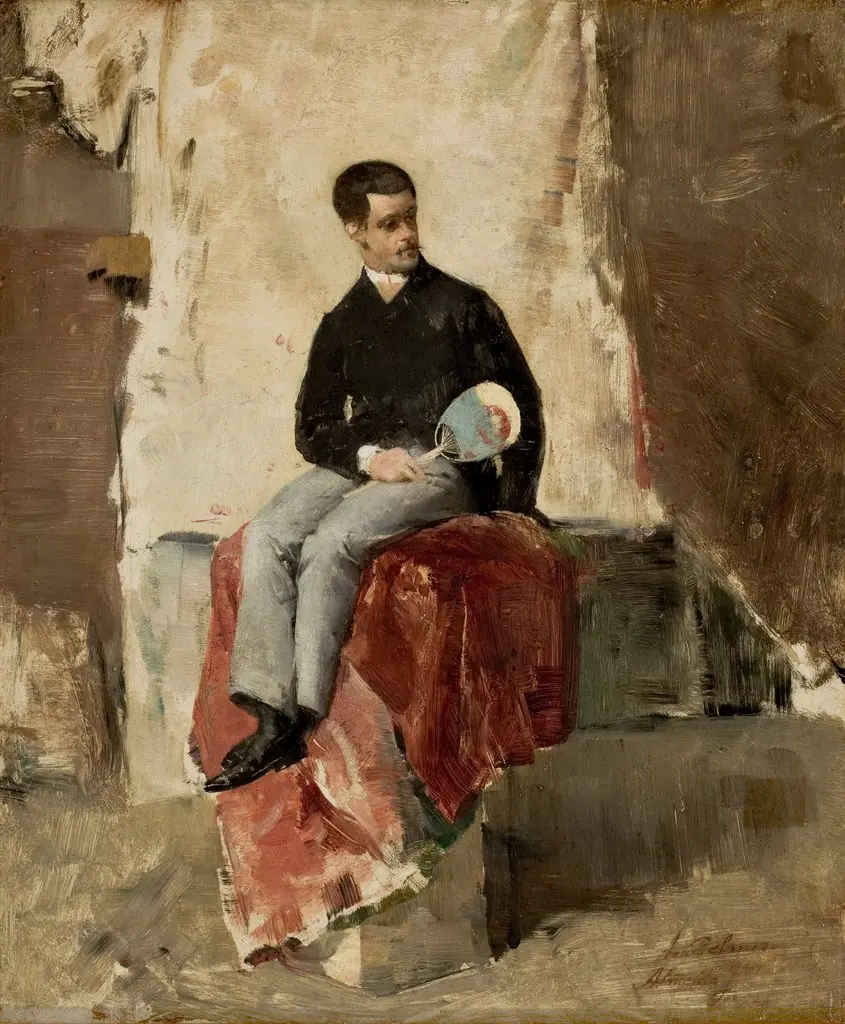 The Painter Belmiro de Almeida
 A Caucasian (Batumi)
 The Print Collector
 Krakovian Peasant
 Cavalier
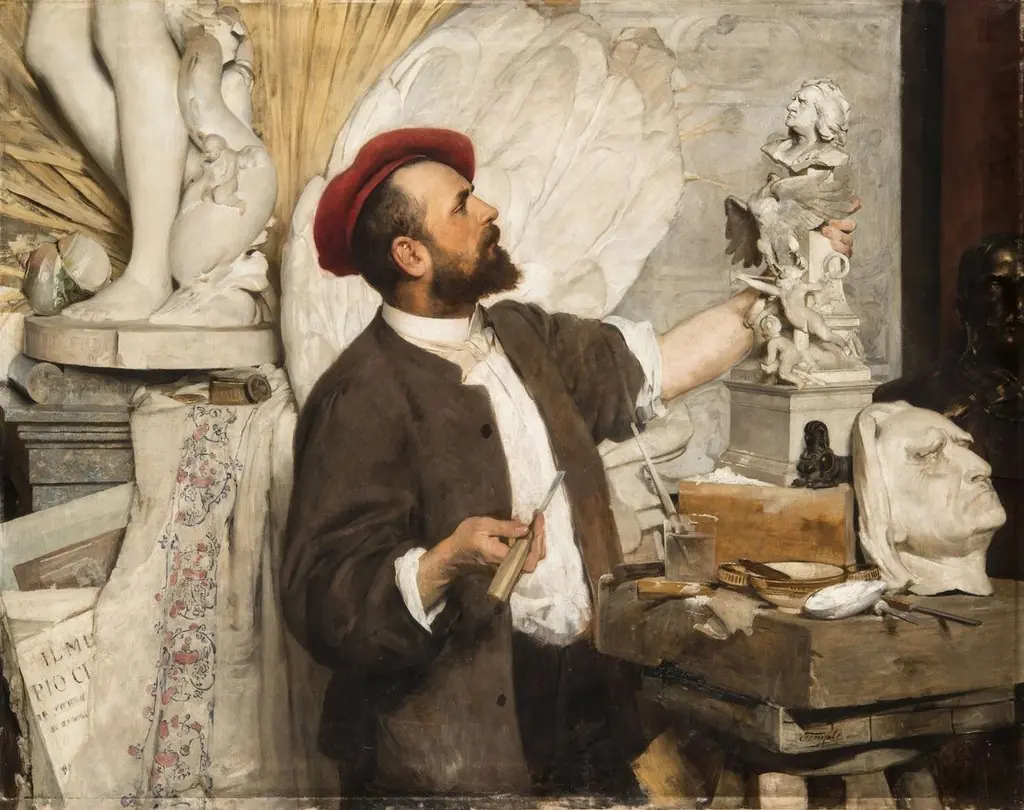 Alajos Stróbl at Work
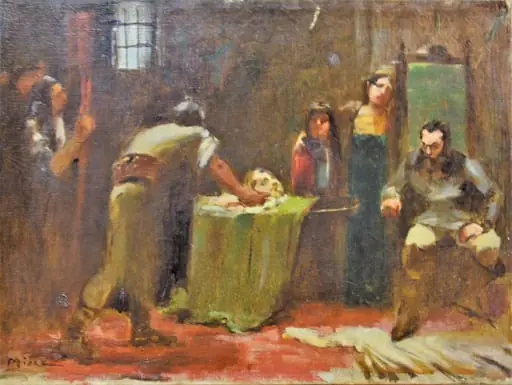 Capul voievodului Andrei Batory prezentat Domnitorului Mihai Viteazu
 Portrait of Mr. C.
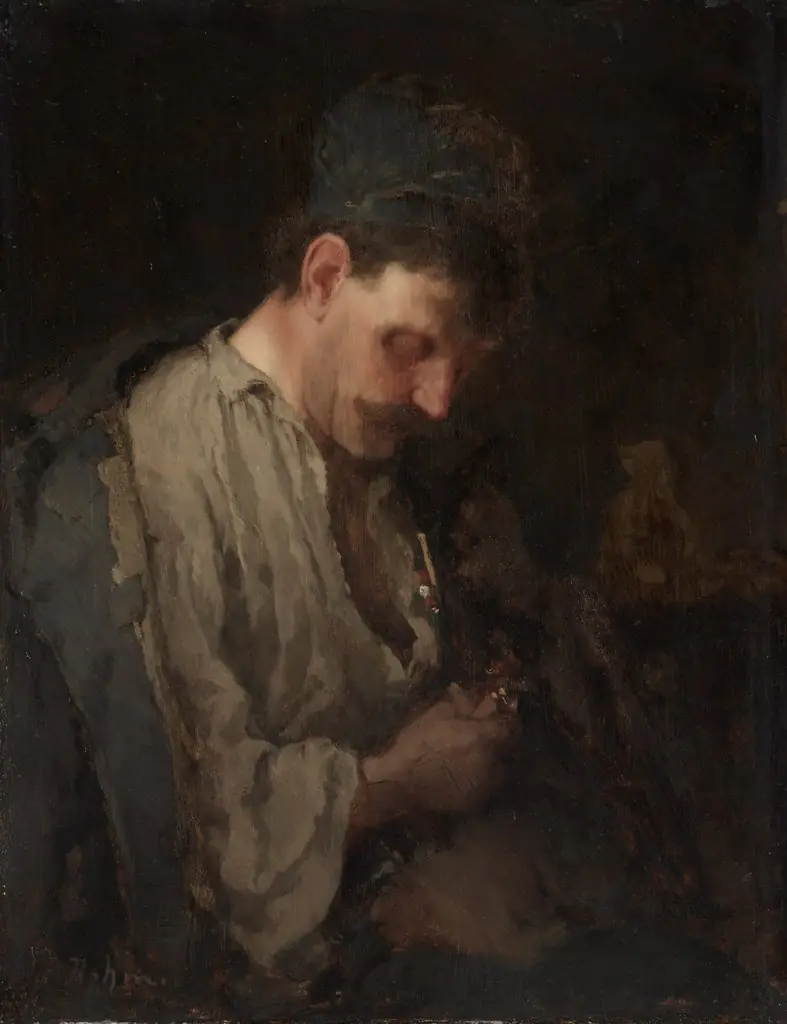 Portrait of Mr. C.
 The Alchemist
 Camille Lemonnier in the studio of the artist