Artwork
Krakovian Peasant
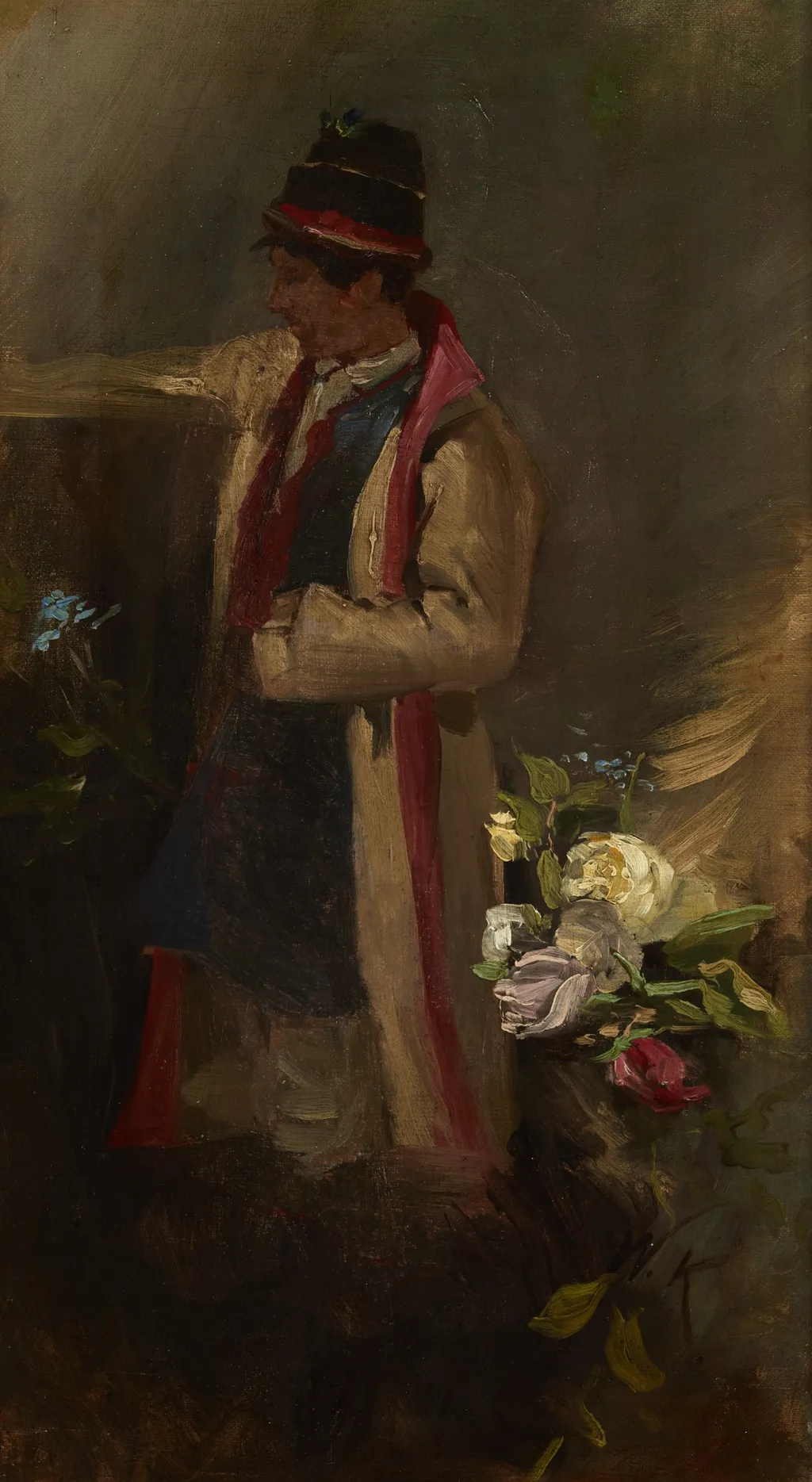
Krakovian Peasant is an oil painting by Wacław Koniuszko. It dates from 1887 and is held in the collection of the National Museum in Kraków.
About this work
Overview
Wacław Koniuszko painted Krakovian Peasant around 1887 in oil on canvas. The work is part of the collection at the National Museum in Kraków. It portrays a solitary male figure in regional dress, set against a muted natural backdrop. The composition centers on the subject’s presence, emphasizing cultural identity through costume and posture rather than narrative action.
Subject & Meaning
The figure is a peasant from the Kraków region, identified by his traditional garments: a fur-lined coat, a red scarf, and a broad-brimmed hat.
The figure is a peasant from the Kraków region, identified by his traditional garments: a fur-lined coat, a red scarf, and a broad-brimmed hat. He holds a walking stick, suggesting rural labor or travel. The portrait avoids idealization, presenting the man with quiet dignity. The focus on attire signals an interest in preserving local customs during a time of rapid social change in late 19th-century Poland.
Technique & Style
Koniuszko employed a restrained palette with earth tones and a single vivid red accent in the scarf to draw the eye. Brushwork is deliberate but not overly detailed, favoring texture over precision. The figure is placed slightly off-center, with the landscape receding softly behind him. This approach aligns with realist traditions that valued authenticity over theatricality in depicting rural life.
History & Provenance
The painting was completed in the late 1880s and entered the National Museum in Kraków’s collection shortly thereafter. It has remained in public ownership since, with no documented changes in custody. Its inclusion in the museum’s permanent holdings reflects its early recognition as a representative work of regional portraiture from the period.
Context
During the late 19th century, Polish artists increasingly turned to folk subjects as part of a broader cultural movement to affirm national identity under foreign partitions. Koniuszko’s work aligns with this trend, capturing regional dress and demeanor as symbols of continuity. Unlike romanticized depictions, his approach is observational, reflecting the influence of contemporary European realism.
Legacy
Krakovian Peasant remains a reference point for studies of regional identity in Polish art. While not widely reproduced, it is cited in scholarly works on 19th-century Polish portraiture. Its preservation in a major national institution underscores its role as a quiet but enduring record of rural life in the Kraków area during a transformative era.
Artist & collection

 Un cavaler - Porthos
 Self Portrait
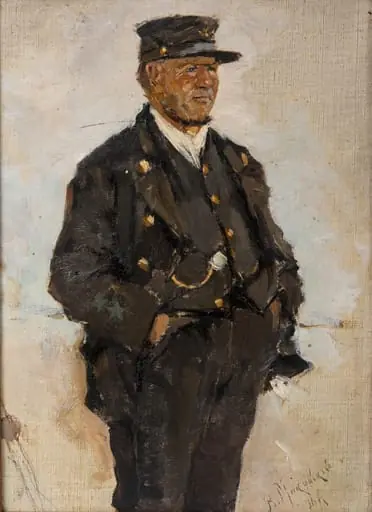 Postimies
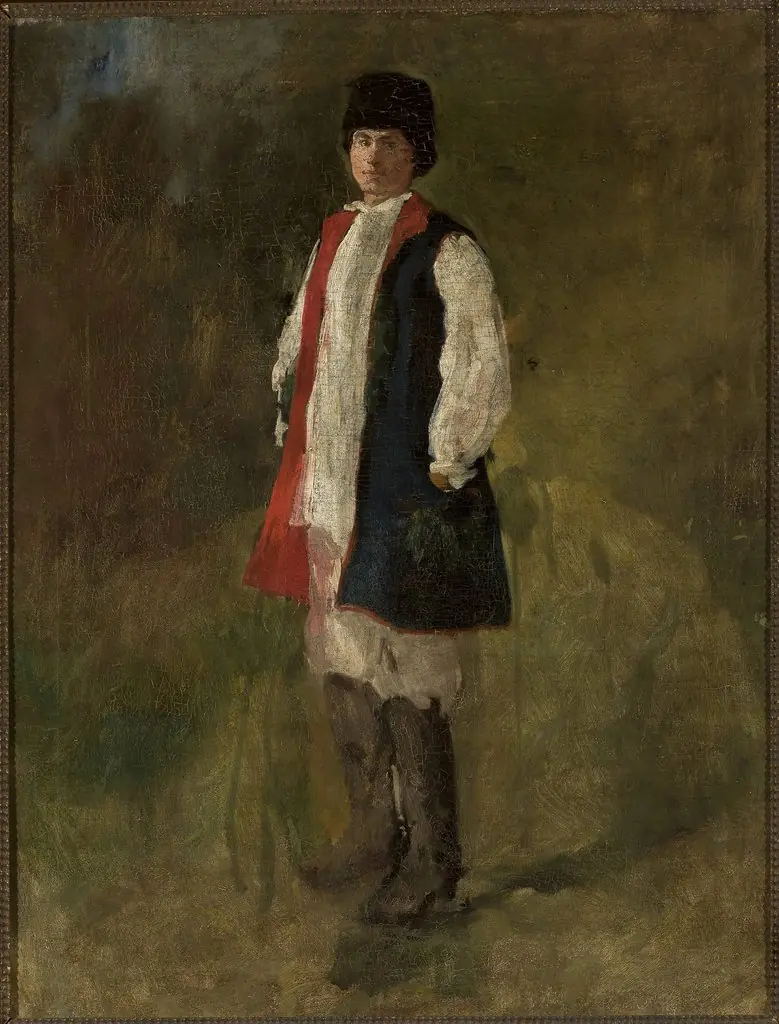 Peasant in the “sukmana” overcoat
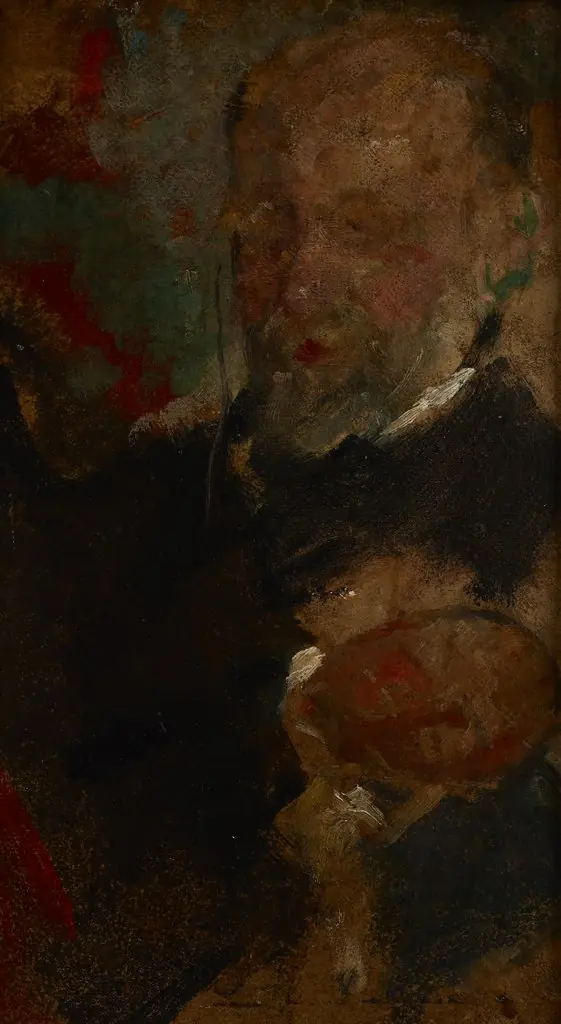 Portrait of Professor Jerzy Mycielski
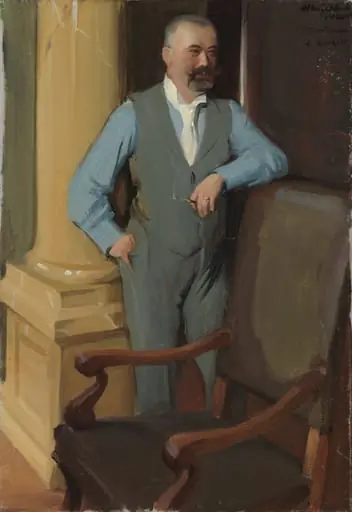 Ruukinpatruuna A.N:son Keirkner, muotokuvaharjoitelma
 Portrait Study of a Man
 The Russian Schube
 Arrangement in Grey and Green. Portrait of John James Cowan
 Alexander Arnold Hannay
 Smoker
 Dr van Hoorn