Artwork
Man Searching for Fleas
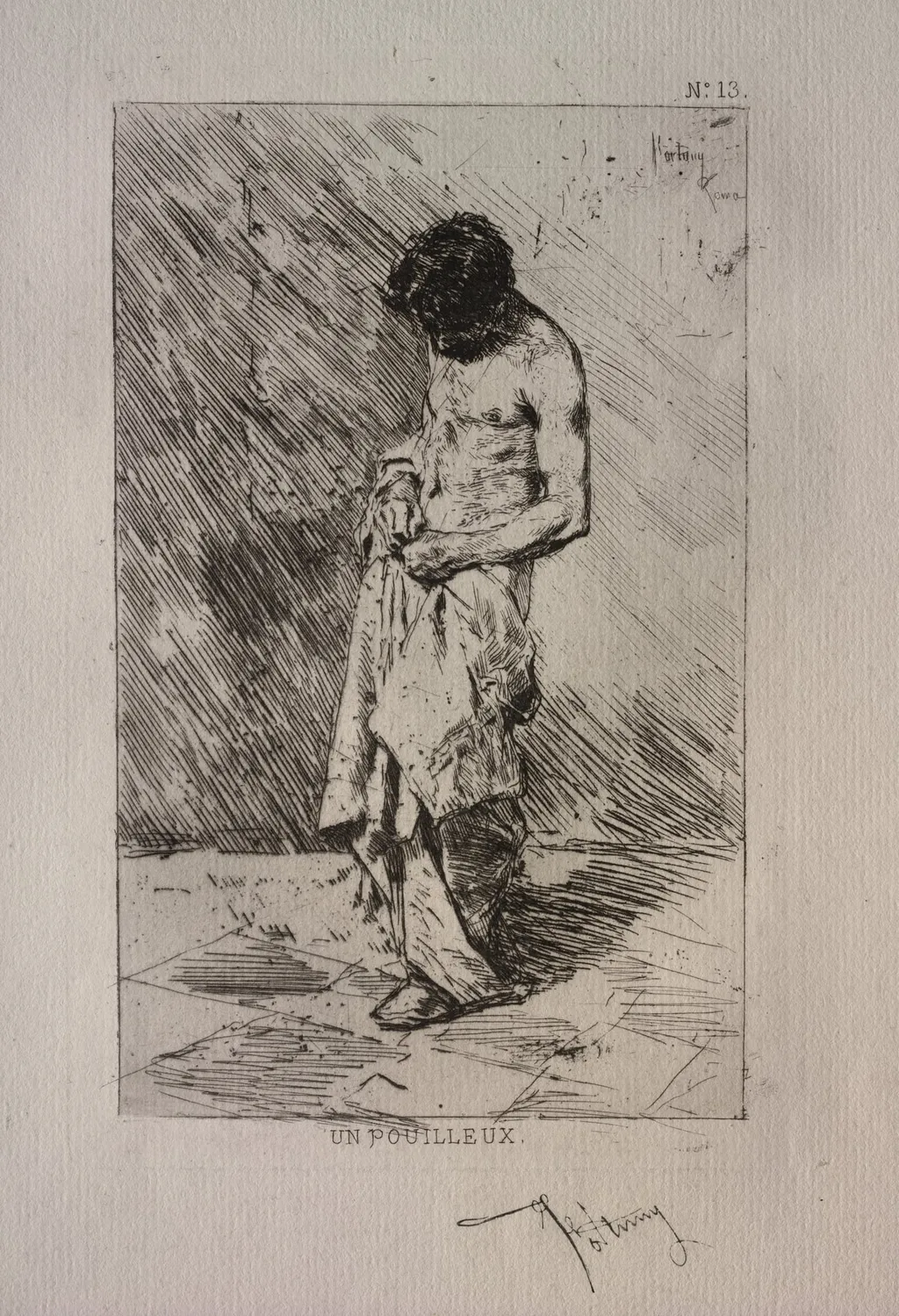
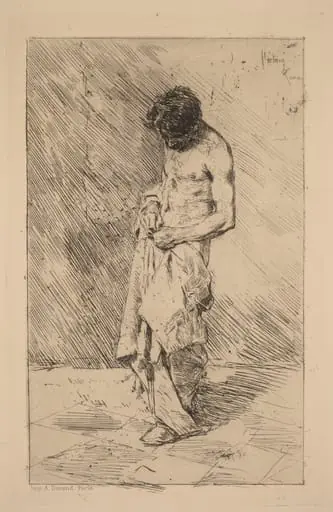
Man Searching for Fleas is a print by the Impressionist artist Mariano Fortuny Marsal. It dates from 1862 and is held in the collection of the Cleveland Museum of Art. Created around 1862 by Spanish artist Mariano Fortuny, this ink drawing captures a solitary figure engaged in a private, bodily ritual.
About this work
Overview
Created around 1862 by Spanish artist Mariano Fortuny, this ink drawing captures a solitary figure engaged in a private, bodily ritual.
Created around 1862 by Spanish artist Mariano Fortuny, this ink drawing captures a solitary figure engaged in a private, bodily ritual. Executed in rapid, expressive lines, the work belongs to a series of intimate studies Fortuny made during his travels, reflecting his fascination with unidealized human behavior. The medium—ink on paper—allows for immediacy and spontaneity, distinguishing it from his more polished oil paintings.
Subject & Meaning
The figure, barefoot and disheveled, bends forward in a moment of physical discomfort, searching for fleas on his legs. The scene lacks narrative grandeur, instead emphasizing a mundane, almost humorous act of personal hygiene. Fortuny’s choice to depict such an unglamorous moment reveals his interest in the raw textures of daily life, particularly among lower-class or transient populations, without moralizing or romanticizing.
Technique & Style
Fortuny employed bold, fluid ink strokes to convey movement and tension, contrasting dark contours against the untouched paper to suggest form and light. The background is minimized to a few suggestive lines, isolating the figure and heightening the focus on his posture and expression. The roughness of the lines and absence of finish reflect a sketchbook sensibility, prioritizing observation over refinement.
History & Provenance
This drawing emerged during Fortuny’s formative years, when he traveled extensively across Spain and North Africa, documenting local customs and folk life. Likely made in his studio or on the road, it was not intended for public display but served as a study for later compositions. Its survival offers insight into his working process and the private sketches that underpinned his more finished works.
Context
In mid-19th-century Spain, artists increasingly turned to everyday subjects as part of a broader shift toward realism. Fortuny, though associated with Romanticism and Orientalism, often embedded these movements within grounded, observational detail. This drawing aligns with contemporaneous interest in the lives of ordinary people, paralleling trends in French and Spanish art that rejected idealized narratives.
Legacy
Though lesser known than his large-scale paintings, this sketch exemplifies Fortuny’s commitment to capturing fleeting human moments with empathy and precision. It influenced later generations of Spanish realists who valued direct observation over academic convention. The work remains a quiet testament to the artist’s eye for the unremarkable, elevating the trivial through attentive rendering.
Artist & collection
Artist
Mariano Fortuny y Marsal (Catalan: Marià Fortuny i Marsal, pronounced ; June 11, 1838 – November 21, 1874) was a Spanish painter known for works focusing on Romantic fascination with Orientalist themes, historicist…

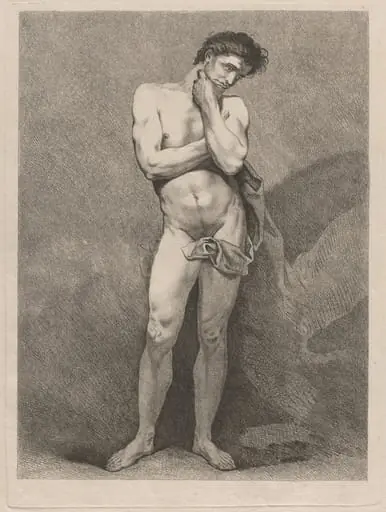 Standing Man in Pensive Pose
![Abbrutimento (Ricordo di Constantinopoli) [Brutalization (Souvenir of Constantinople)], by Alberto Pasini](https://artifactworldgallery.com/img/alberto-pasini--abbrutimento-ricordo-di-constantinopoli-brutalization-souven--634a4466009a10f7-w320.webp) Abbrutimento (Ricordo di Constantinopoli) [Brutalization (Souvenir of Constantinople)]
Abbrutimento (Ricordo di Constantinopoli) [Brutalization (Souvenir of Constantinople)]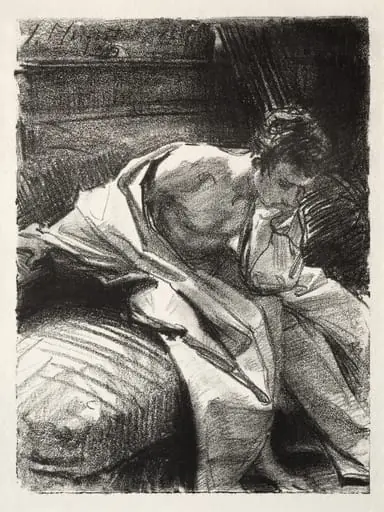 A Study
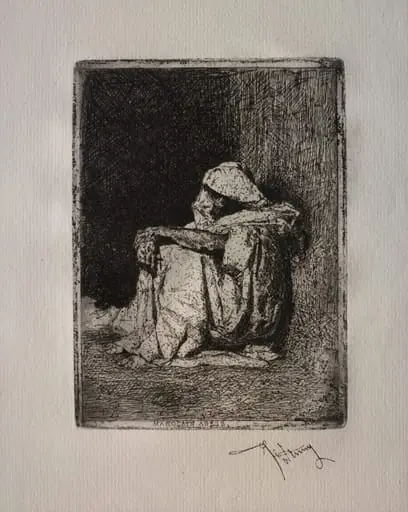 Seated Arabian
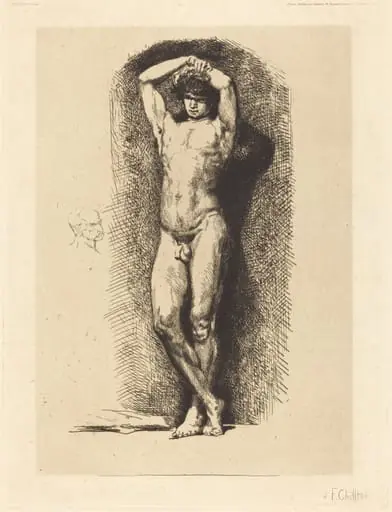 Male Academy
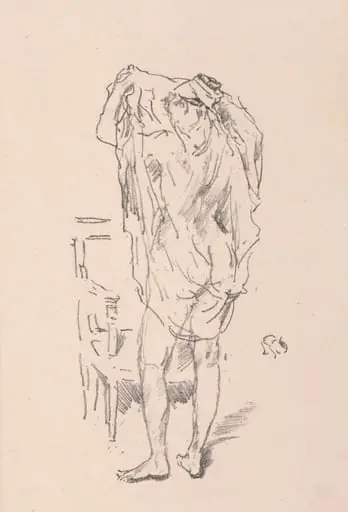 Study
Study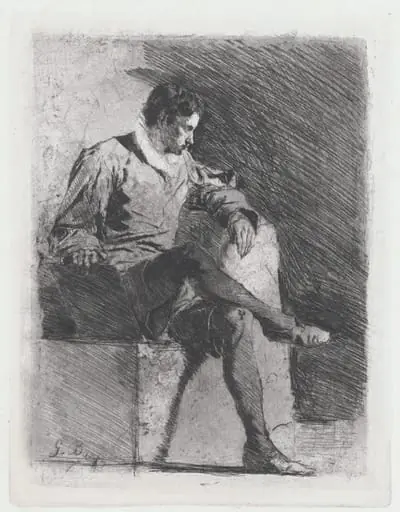 Seated Man in Sixteenth-Century Costume
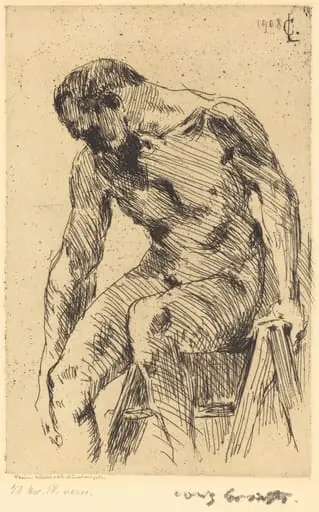 Sitzender Männlicher Akt (Seated Male Nude)
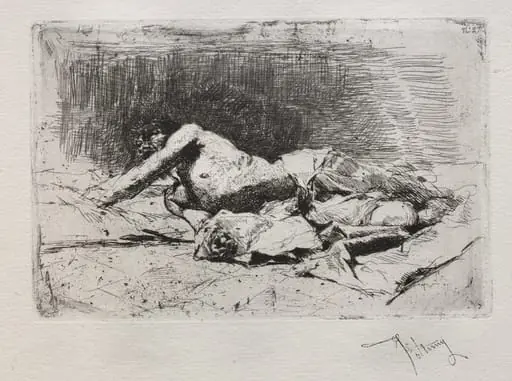 Man Rolling on the Ground
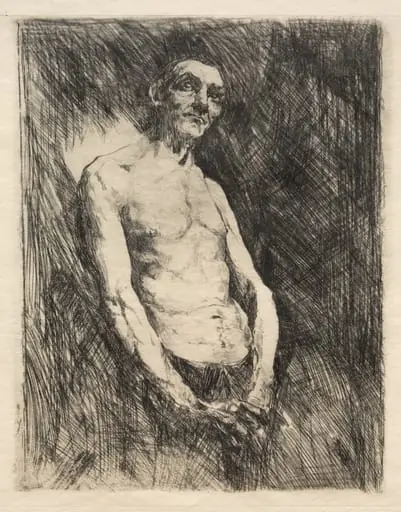 Half Nude Figure of a Man
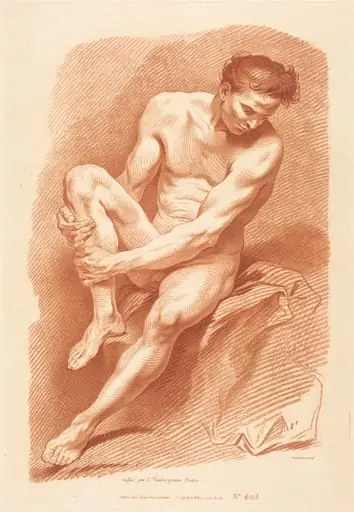 Academy
 Un Pouilleux (Flea Seeker)