Artwork
Standing Man in Pensive Pose
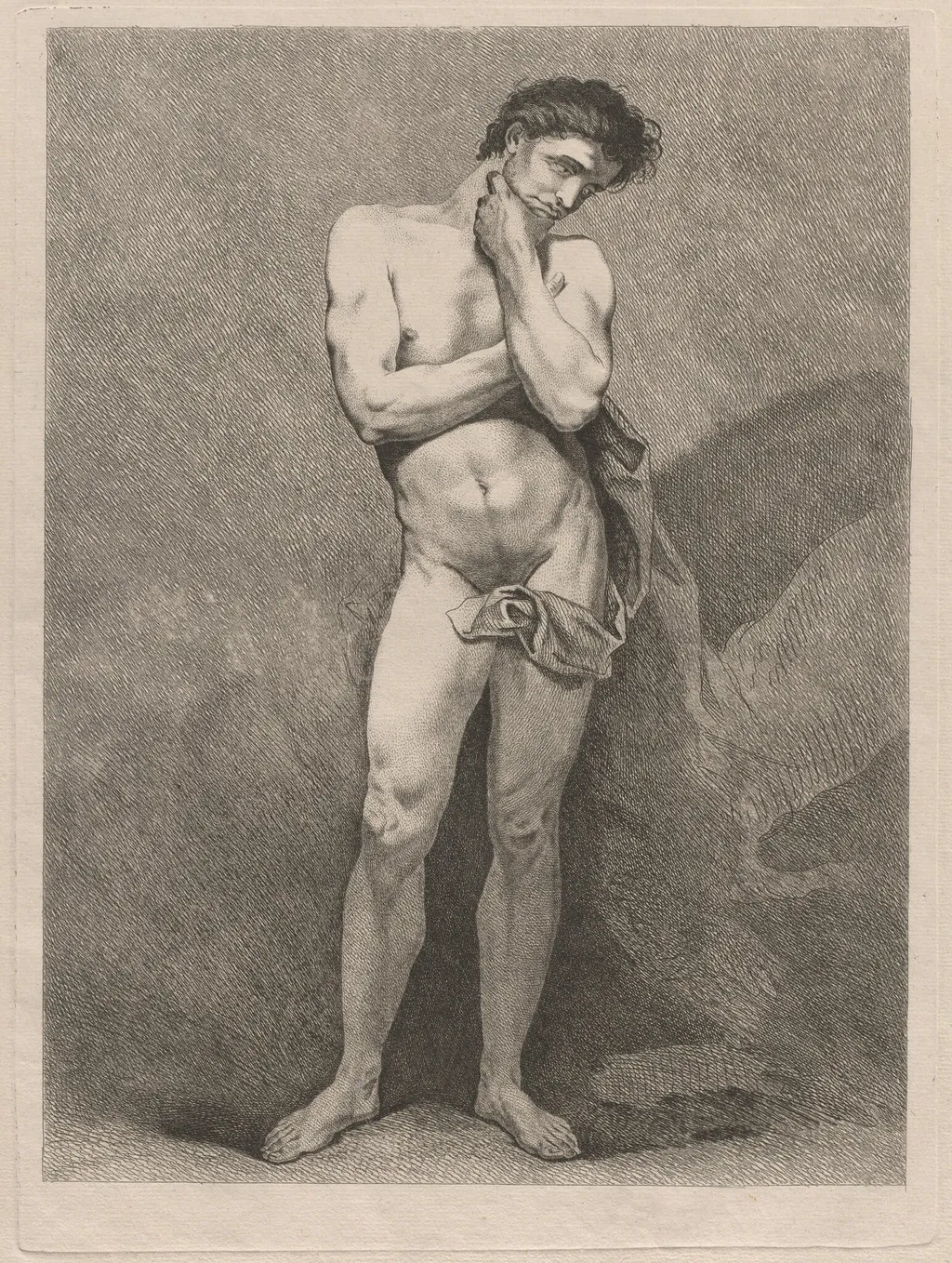
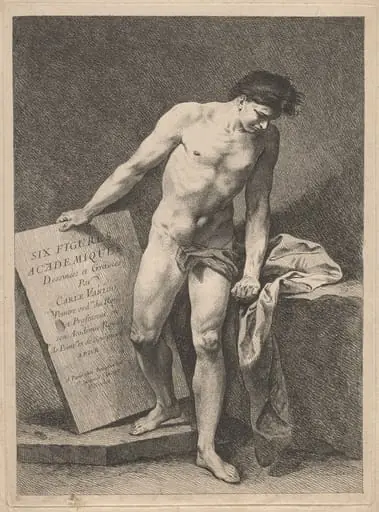
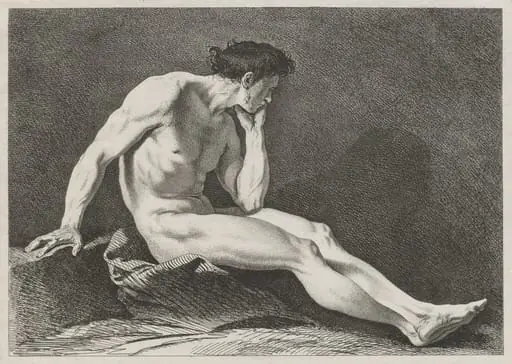
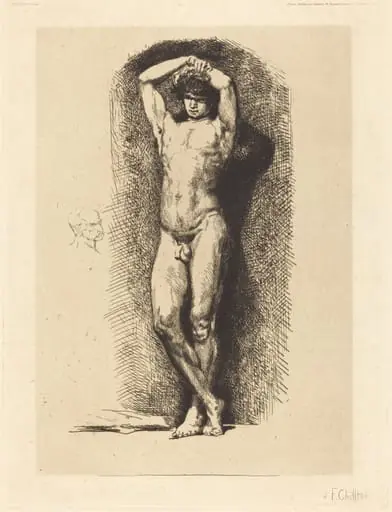
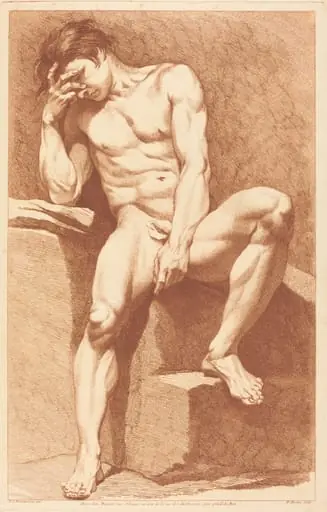
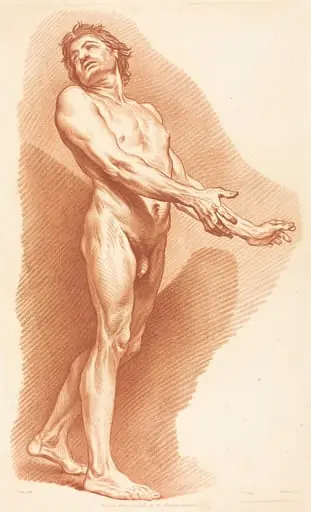
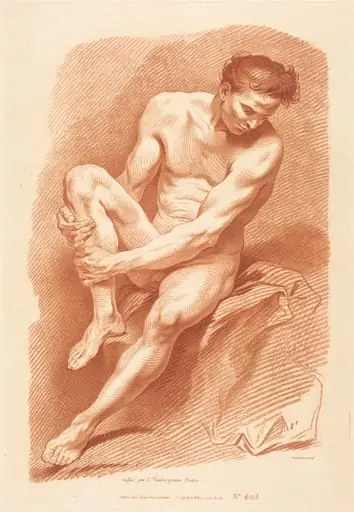
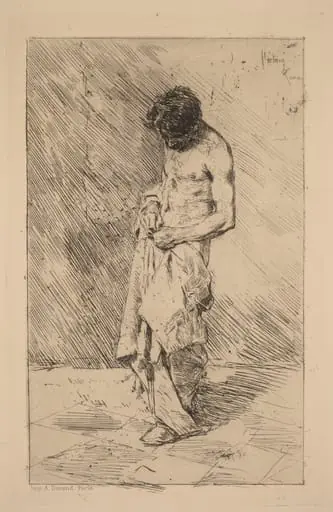
Standing Man in Pensive Pose is an ink print by the Baroque artist Carle Van Loo. It dates from 1743 and is held in the collection of the National Gallery of Art.
About this work
Overview
The work exemplifies the printmaking practices of mid‑18th‑century France, where artists often explored classical themes through intimate studies.
Carle Van Loo’s etching Standing Man in Pensive Pose, dated circa 1743, presents a solitary male figure rendered in black ink on laid paper. The composition isolates the nude body against a muted, textured ground, drawing attention to the model’s introspective stance. The work exemplifies the printmaking practices of mid‑18th‑century France, where artists often explored classical themes through intimate studies.
Subject & Meaning
The figure stands upright, his left hand supporting his chin while the right arm folds across his torso, a pose that conveys contemplation. A modest drapery covers his left hip, yet the rest of the body remains exposed, emphasizing the tension between vulnerability and intellectual poise. His downward gaze and serene expression suggest a moment of private reflection, a common motif in academic studies of the human form.
Technique & Style
Executed as an etching, the image relies on incised lines and varying densities of ink to model volume and surface texture. Van Loo employs subtle chiaroscuro, allowing light to fall across the musculature and fabric, while the background remains a flat, stippled field that heightens the figure’s presence. The overall aesthetic aligns with Baroque sensibilities, particularly its focus on dramatic gesture and emotional depth.
History & Provenance
Created around 1743, the print belongs to the period when Van Loo was active in Paris, producing both paintings and prints for academic circles. While specific ownership records are scarce, the work appears in several 19th‑century catalogues of French prints, indicating its circulation among collectors of academic art. Its survival on laid paper attests to the durability of the etching process and the continued interest in Van Loo’s studies of the human anatomy.
Artist & collection